
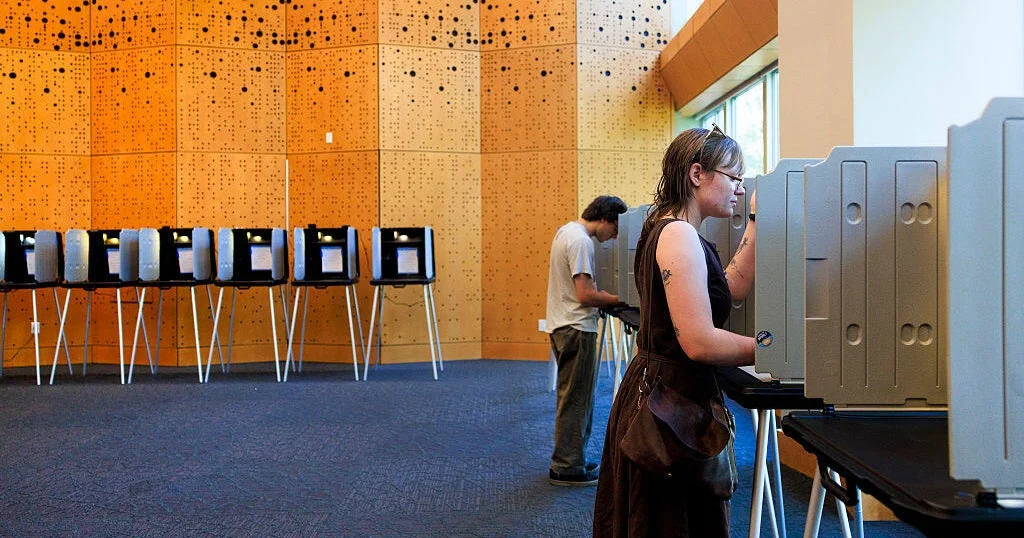
President Donald Trump made a significant and alarming claim on Thursday, July 16, 2026, asserting that China had orchestrated what he described as "the largest compromise of election data in history" through its "illicit acquisition of 220 million U.S. voter files." The pronouncement, delivered during a speech focused on national security and election integrity, immediately ignited a debate over the actual vulnerability of American election systems and the inherent accessibility of voter registration data across all 50 states. While the President’s statement underscored pervasive concerns about foreign interference, it also drew attention to the public nature of much of the data that comprises state voter rolls.
The President’s Assertions and Their Context
President Trump’s address on Thursday served as a potent reminder of the ongoing national dialogue surrounding election security, a topic he has frequently emphasized throughout his political career. He alleged that Chinese actors had gained access to an unprecedented volume of personal information, including "names, addresses, phone numbers, political party preferences and other sensitive data that would be needed to register to vote and engage in other nefarious activities." This claim was presented as a direct threat to the integrity of future American elections, suggesting a sophisticated state-sponsored operation aimed at undermining democratic processes. The rhetoric echoed past warnings from intelligence officials regarding foreign adversaries’ persistent efforts to probe U.S. election infrastructure and influence public opinion.
The timing of the President’s remarks, approximately four months ahead of the crucial midterm elections, amplified their political resonance. Historically, allegations of foreign interference have often become focal points in electoral campaigns, with candidates and parties leveraging them to bolster arguments about national security or to question the legitimacy of political outcomes. For President Trump, who has consistently championed a robust stance against perceived threats from China, the accusation aligned with his broader foreign policy narrative and his calls for heightened vigilance against external adversaries. However, the substance of his claim—specifically concerning the "illicit acquisition" of voter files—prompted immediate scrutiny from election experts and cybersecurity professionals.
Understanding U.S. Voter Roll Accessibility: A State-by-State Overview
A core aspect of the discussion following President Trump’s claim revolves around the public availability of voter registration data. Unlike highly confidential information such as Social Security numbers or driver’s license details, a significant portion of voter data is, by design and state law, publicly accessible. This transparency is rooted in principles of democratic accountability, allowing campaigns, political parties, news organizations, and researchers to engage with the electorate, ensure accurate voter rolls, and monitor electoral processes.
The mechanisms for accessing voter rolls vary considerably across the United States, reflecting a diverse patchwork of state regulations. This intricate system means that while some states offer broad access, others impose stricter controls:
- Open Access States (20 states and Washington, D.C.): In nearly two dozen jurisdictions, voter data is readily available. Individuals or entities can often obtain these records with a simple public request, by purchasing the data for a nominal fee, or, in some cases, through direct online download. This category of states prioritizes maximum transparency, believing that open access fosters public participation and oversight. Data released typically includes registered voters’ names, mailing addresses, phone numbers, and declared political party affiliations.
- Purpose-Restricted States (15 states): A substantial number of states permit access to voter rolls but require users to specify a legitimate reason. This often includes stating a political or research purpose, demonstrating state residency, being a registered voter within the state, or signing a legally binding use agreement. These restrictions aim to prevent indiscriminate or malicious use of the data while still supporting legitimate democratic functions like campaign outreach and academic study.
- Local Office-Dependent States (10 states): In these states, obtaining comprehensive statewide voter files is more challenging. Instead, records are primarily provided through local election offices (e.g., county registrars). Access might be limited to supervised inspection, requiring individuals to review data in person rather than receiving a downloadable file. This approach often reflects a more decentralized electoral administration philosophy, empowering local authorities to manage and protect their specific voter data.
- Group-Specific Access States (5 states): The most restrictive category limits voter-file access to a narrowly defined set of entities. This typically includes registered political candidates, official political parties, recognized political committees, accredited news organizations, or government officials. These states emphasize the sensitive nature of voter data and seek to restrict its distribution to those with a direct and legally recognized role in the electoral or public information process.
It is crucial to note that while much of this information is public, sensitive identifiers such as Social Security numbers, dates of birth (beyond year), and driver’s license numbers are almost universally excluded from publicly released voter files. Furthermore, most states explicitly prohibit the commercial use or resale of voter data, adding another layer of regulatory control over its distribution and application.
Expert Analysis: The Limits of Public Data for "Nefarious Activities"
The distinction between publicly available voter information and data capable of facilitating fraudulent activities is a critical aspect of debunking or contextualizing President Trump’s claim. David Becker, executive director for the Center for Election Innovation and Research and a respected CBS News election law contributor, provided crucial insights into this nuance. Becker emphasized that while foreign actors could indeed acquire the types of data President Trump described—names, addresses, phone numbers, and political party preferences—this information alone is largely insufficient to manipulate or create false voter registrations within the U.S. election system.
Becker highlighted a fundamental safeguard embedded in American election law: the requirements established by the Help America Vote Act (HAVA) of 2002. Enacted in the aftermath of the contentious 2000 presidential election, HAVA aimed to improve election administration and voting access nationwide. A key provision of HAVA mandates that individuals registering to vote must provide either a current and valid driver’s license number or the last four digits of their Social Security number. These identifiers are then cross-referenced with state Department of Motor Vehicles (DMV) databases or federal Social Security Administration records to verify a registrant’s identity and eligibility.
"There is no evidence the Chinese could create a match between voter roll information and Department of Motor Vehicles or Social Security numbers," Becker stated, underscoring the critical hurdle for anyone attempting to weaponize public voter data for registration fraud. Without these unique, government-issued identifiers, even a vast trove of names and addresses cannot be used to forge new voter registrations or alter existing ones successfully. The system is designed with these checks and balances precisely to prevent such misuse.
Furthermore, the source of any alleged data compromise remains a significant unknown. As the original report noted, it is unclear "whether all the information accessed by Chinese actors came from public records, commercial databases, stolen private data or actual computer intrusions." This ambiguity is vital because while public records are legally accessible, data acquired through commercial databases (which often aggregate and enrich public data) or, more nefariously, through stolen private data or computer intrusions, represents different levels of security breaches and potential harm. However, the core point remains: much of the category of information cited by the President is legally obtainable by members of the public, without any need for hacking or illicit acquisition.
Historical Context of Election Security Concerns
Concerns about election security, particularly involving foreign interference, are not new to the American political landscape. The 2016 presidential election brought these issues to the forefront, with confirmed reports of Russian government-backed efforts to influence the election through disinformation campaigns and cyber intrusions targeting political organizations. Since then, the U.S. intelligence community has consistently warned about the ongoing and evolving threats from state actors like Russia, China, and Iran, who seek to undermine public confidence in democratic institutions, sow discord, and potentially influence election outcomes.
China, in particular, has been identified as a persistent and sophisticated cyber threat actor. While its historical focus on economic espionage and intellectual property theft is well-documented, intelligence assessments have increasingly pointed to China’s growing capabilities and intent to engage in influence operations and potentially interfere with critical infrastructure, including election systems. These activities often involve a multi-pronged approach, ranging from cyberattacks on political entities and government networks to the exploitation of social media platforms for propaganda and disinformation.
President Trump’s current claim, therefore, fits into a broader narrative of heightened geopolitical tensions and cyber warfare. His administration, and subsequent ones, have prioritized cybersecurity defenses for election infrastructure, including efforts to secure voter registration databases, voting machines, and tabulation systems. State election officials, in collaboration with federal agencies like the Cybersecurity and Infrastructure Security Agency (CISA), have continuously worked to strengthen these defenses, share threat intelligence, and conduct vulnerability assessments. The constant vigilance is a testament to the recognized and ongoing nature of these threats, irrespective of the specific claims made by political leaders.
Broader Impact and Implications
The President’s assertion, irrespective of its factual basis concerning "illicit acquisition," carries several significant implications for the domestic political landscape, international relations, and public trust.
- Public Trust and Election Integrity: Claims of massive data breaches or foreign interference can profoundly impact public confidence in the integrity of elections. Even if the data acquired is publicly accessible, the narrative of "compromise" can fuel skepticism and mistrust among voters, potentially leading to decreased participation or an increased willingness to believe unsubstantiated claims of fraud. A CBS News poll, for instance, has previously shown that "Most Americans don’t think there’s widespread voter fraud," indicating a disconnect between official rhetoric and public perception. Such claims risk widening this gap and politicizing essential administrative functions.
- Policy Debate and Data Privacy: The controversy may reignite calls for a reevaluation of state laws governing access to voter registration data. While transparency is valued, the sheer volume of data now available and the sophistication of foreign adversaries could prompt legislators to consider stricter regulations on who can access these files and for what purposes. This could involve national standards for data anonymization, enhanced penalties for misuse, or a shift towards more restrictive access models akin to the five states that limit access to specific, authorized groups. The balance between transparency, privacy, and security remains a complex policy challenge.
- U.S.-China Relations: An explicit accusation of the "largest compromise of election data in history" directly implicates China in a hostile act against U.S. democracy. Such claims inevitably exacerbate already strained U.S.-China relations, which are characterized by intense competition across economic, technological, and geopolitical spheres. Beijing typically responds to such accusations with strong denials, often framing them as politically motivated smears. The allegations could lead to further diplomatic friction, retaliatory measures, or increased scrutiny of Chinese activities in cyberspace.
- Cybersecurity Focus and Resources: The President’s statement will undoubtedly intensify the focus on cybersecurity measures protecting election systems. While state and federal agencies are already engaged in robust defense efforts, high-profile claims of breaches can trigger renewed audits, allocation of additional resources, and development of advanced threat detection and response capabilities. This could lead to a more integrated national approach to election security, emphasizing information sharing and collaborative defense strategies across all levels of government.
- Disinformation and Information Warfare: The incident highlights the broader landscape of information warfare. Even if the alleged data acquisition involved publicly available information, framing it as an "illicit compromise" can serve strategic purposes. It can be used to mobilize political bases, deflect criticism, or create a pretext for future actions. Understanding the distinction between legitimate data collection and malicious cyber activity is crucial for the public and policymakers to navigate the complex world of modern information operations.
In conclusion, President Trump’s claim about China’s acquisition of 220 million U.S. voter files underscores the perennial challenges of election security in an increasingly digitized and interconnected world. While the volume of data cited is significant, a critical examination reveals that much of this information is legally accessible through various state public record laws. Experts emphasize that without highly sensitive identifiers like Social Security or driver’s license numbers, this data alone is insufficient to compromise the integrity of voter registrations as stipulated by the Help America Vote Act. The incident serves as a stark reminder of the delicate balance between transparency in democratic processes, the imperative for robust cybersecurity, and the potential for political rhetoric to shape public perception regarding the security of America’s elections. The ongoing debate will undoubtedly influence future policy discussions and continue to shape the narrative around foreign interference in U.S. democratic institutions.

