
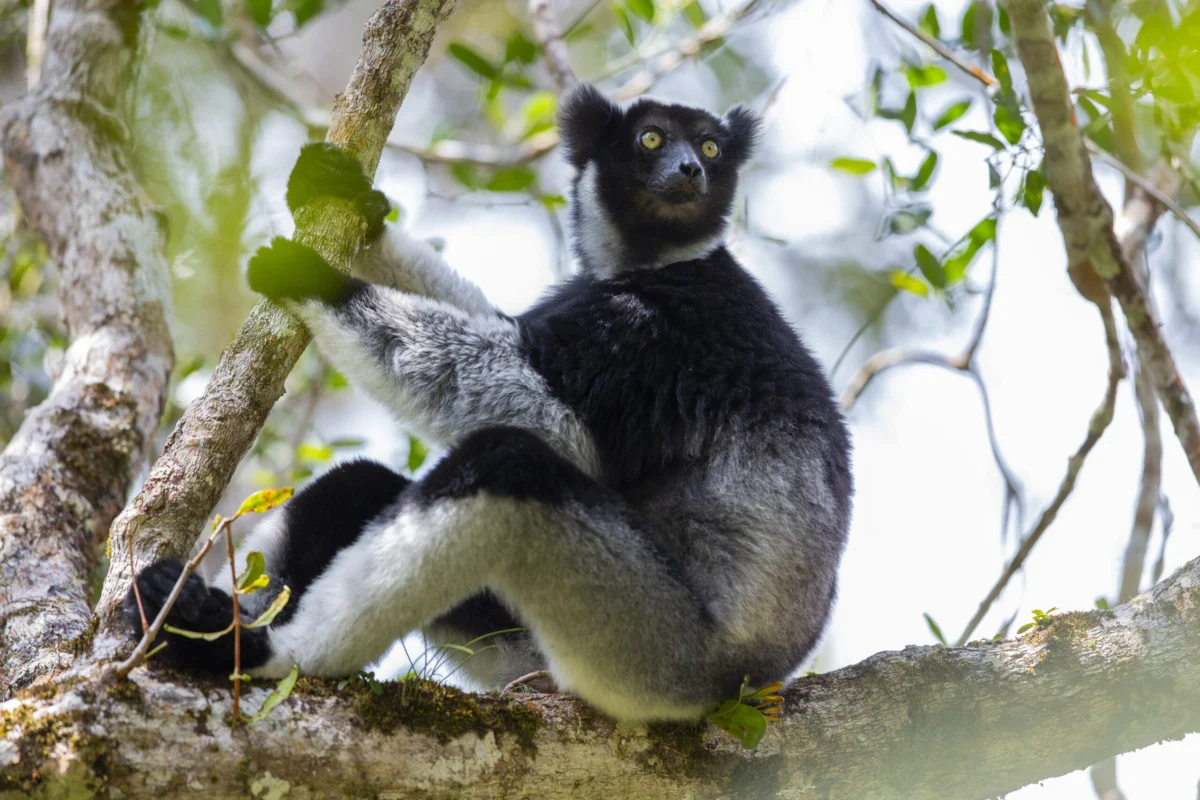
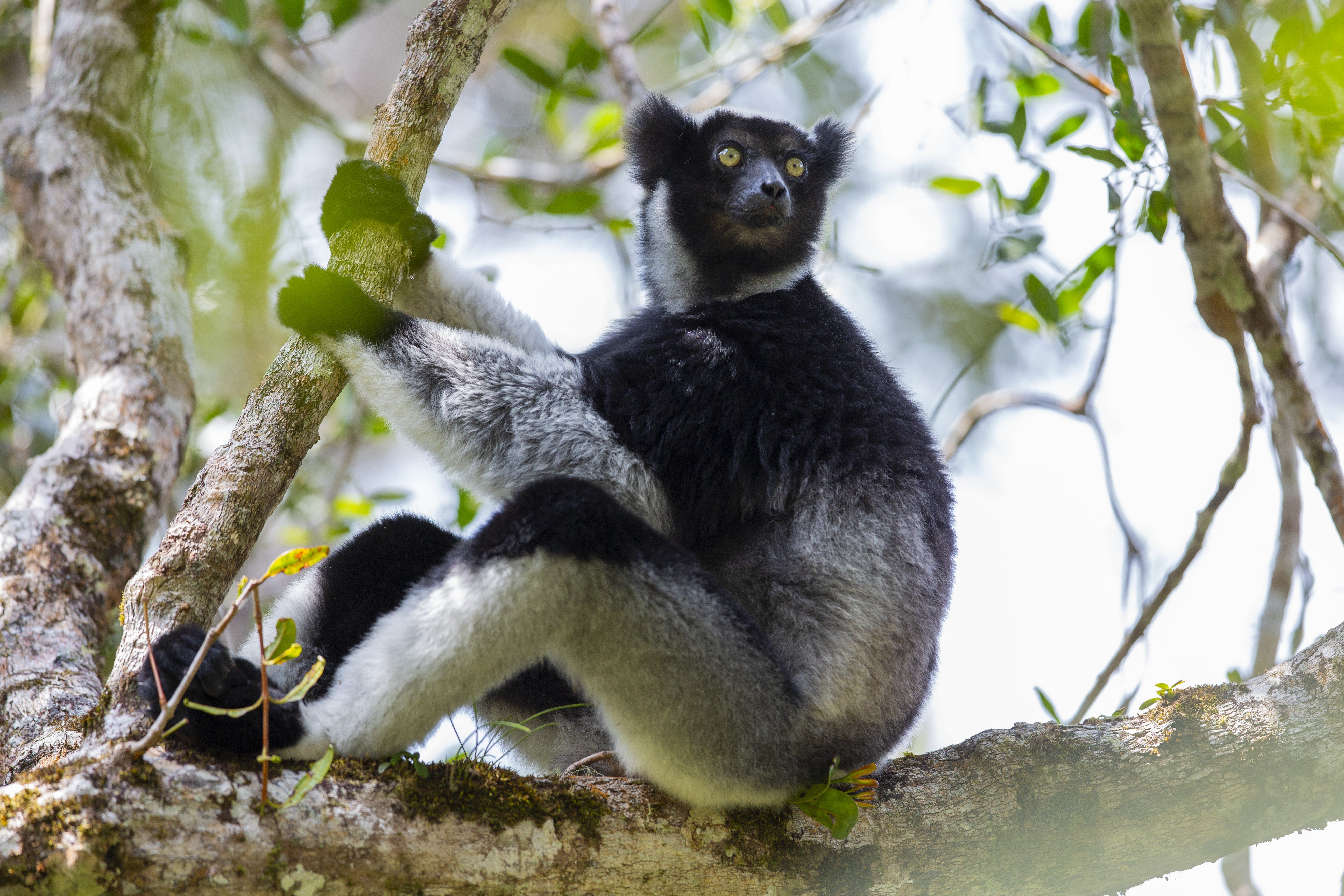
Deep within the lush, canopy-covered expanse of Madagascar’s Maromizaha forest, the indri (Indri indri) performs one of the most haunting and complex acoustic displays in the primate world. Known colloquially as the "singing lemur," this critically endangered species produces piercing, siren-like vocalizations that serve as both a social glue for family units and a territorial warning to rivals. Recent scientific investigation has uncovered a remarkable biological parallel: these primates utilize a sophisticated mechanical technique remarkably similar to that of professional human opera singers, adjusting their mouth geometry to manipulate vocal resonance and ensure their songs penetrate the dense foliage.
The Mechanics of Primate Vocalization
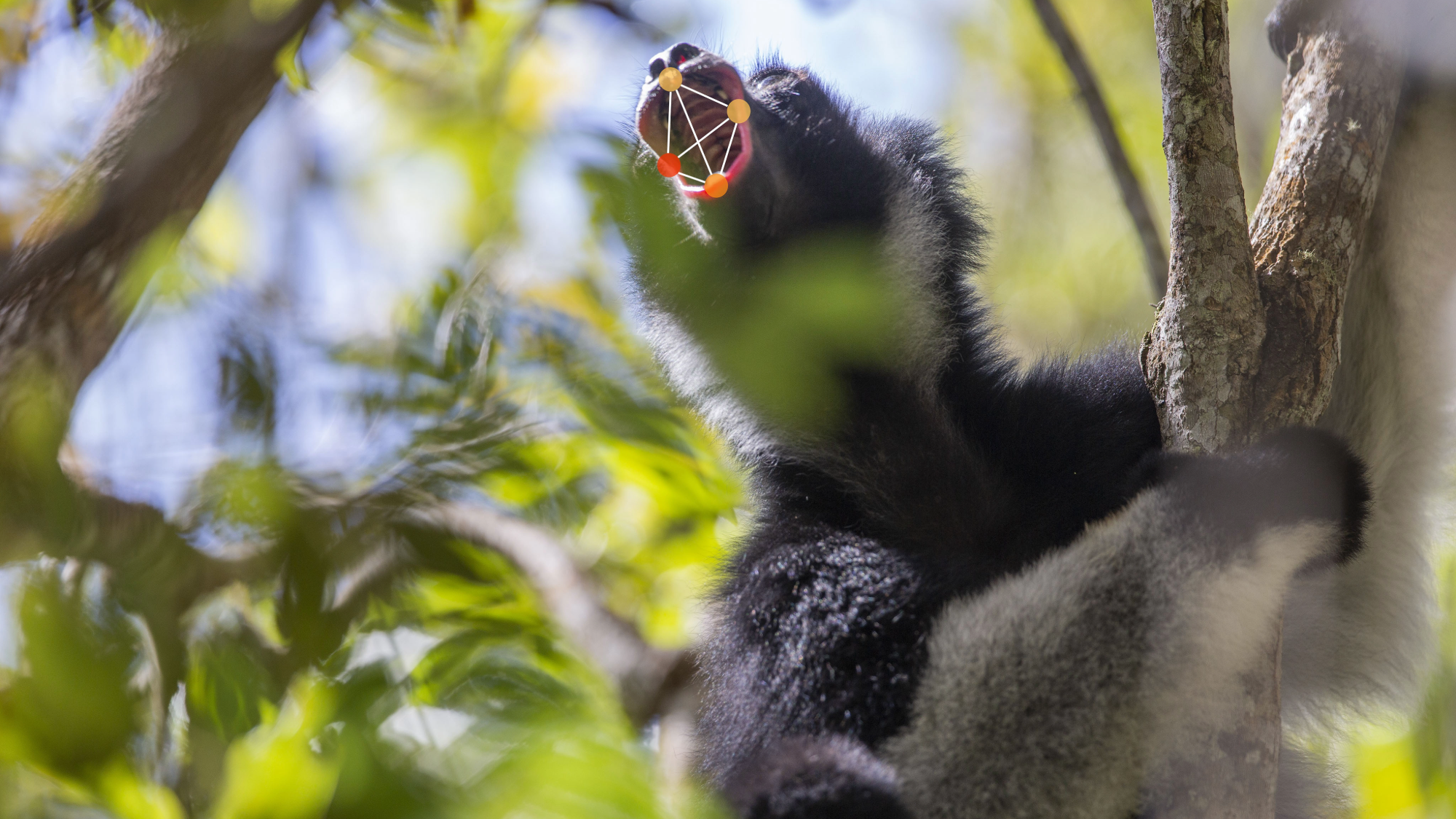
A study published in the journal PLOS Computational Biology has provided the first empirical evidence that indris actively coordinate the opening of their mouths with the frequency of their songs. Researchers have identified this process as a form of "formant tuning," a technique where singers adjust their vocal tract—specifically the shape and aperture of the mouth—to align the resonant frequencies of the vocal tract with the harmonics of their voice.
For the human vocalist, this adjustment is essential for projecting sound over the orchestral accompaniment in an opera house. For the indri, the stakes are environmental. The rainforest is a notoriously difficult medium for sound transmission, characterized by high levels of acoustic clutter and significant signal attenuation. By opening their mouths wider as the pitch of their call rises, indris appear to be maximizing the carrying power of their vocalizations, ensuring that their messages—which can be heard up to several kilometers away—remain intelligible to other members of their species.
Chronology of the Investigation
The research project, which spanned several years of field observation, represents a significant leap in how we study non-human vocal behavior. Traditionally, studies on animal communication were limited to stationary audio recordings, which lacked the necessary visual context to understand the physical mechanics behind the sound.
In this investigation, the research team—led by primatologists including Chiara De Gregorio of the University of Warwick and naturalist Filippo Carugati of the University of Turin—compiled a dataset of 83 high-quality video recordings featuring 19 wild indri subjects. Using advanced, markerless motion-tracking technology, the team performed a frame-by-frame analysis of the subjects’ facial movements. This allowed them to map the precise position of the upper and lower lips against the acoustic frequencies captured in the audio tracks. The data confirmed a consistent, positive correlation: as the pitch of the song increased, the mouth aperture expanded, providing the necessary acoustic boost to maintain signal clarity.
Supporting Data and Evolutionary Context
The evolutionary implications of this discovery are profound. Humans and the indri last shared a common ancestor approximately 74 million years ago, a divergence that occurred long before the evolution of the complex, music-capable vocal apparatus seen in modern humans. The existence of formant tuning in both species is a prime example of convergent evolution. In this biological phenomenon, distinct species develop similar physiological solutions to address identical functional challenges—in this case, the need for long-distance, high-fidelity acoustic communication in a complex environment.
The indri song itself is not merely a random set of noises; it is a highly structured social event. These vocalizations, which occur primarily in the early morning, serve as a mechanism for group cohesion. By singing together, family members reinforce their social bonds and reaffirm their ownership of specific territories. When one group begins to sing, it often triggers a "counter-singing" response from neighboring groups, creating a network of communication that maps the social and geographic boundaries of the forest.

Perspectives from the Research Team
The integration of computational biology with traditional field primatology has provided a new lens through which to view these animals. "Applying markerless pose estimation to footage recorded in the wild allowed us to look not just at the sounds indris make, but at the physical movements behind them," noted Filippo Carugati in a summary of the findings. "It let us study how the face and mouth move while an animal is singing, almost frame by frame, and connect those movements directly to changes in pitch. That’s something you simply cannot capture by listening to the audio alone."
Chiara De Gregorio emphasized the sophistication of the behavior, stating, "Every time the pitch of an indri’s song rose, we could see its mouth opening wider, frame by frame. It’s the kind of fine-tuned coordination between voice and body that we usually associate with trained human singers, not with a lemur singing from the forest canopy."
Broader Implications for Primatology and Conservation
This study challenges the long-held assumption that complex vocal control and physiological adaptation for sound production were uniquely human or restricted to highly social avian species. It suggests that the evolutionary "toolkit" for sophisticated communication is broader than previously recognized, provided the environmental pressure is sufficiently high.
From a conservation standpoint, the findings underscore the importance of protecting the structural integrity of the indri’s habitat. The indri’s survival is intrinsically linked to its ability to communicate; should the density of the rainforest be compromised by logging or fragmentation, the efficacy of their long-distance vocalizations could be severely diminished. If these lemurs cannot project their signals effectively, the resulting breakdown in social cohesion and territorial management could have catastrophic effects on their reproductive success and overall population stability.
Furthermore, this research sets a new standard for future studies in bioacoustics. The successful application of markerless tracking in a wild setting demonstrates that we no longer need to rely solely on captive or laboratory-based models to understand the nuances of animal behavior. By using AI-driven motion capture, researchers can observe animals in their natural habitats without the stress of interference, leading to more accurate, ecologically valid conclusions.
Future Research Directions
While this study provides a breakthrough in understanding the mechanics of indri song, it also opens several new avenues for scientific inquiry. Researchers are now looking to determine whether individual indris possess "vocal signatures" or variations in technique that could indicate different levels of social hierarchy or health. Additionally, further comparative studies may reveal whether other lemur species—or even other primates—employ similar resonance-tuning techniques, potentially rewriting our understanding of the evolution of the primate vocal tract.
As climate change and habitat loss continue to threaten the biodiversity of Madagascar, the indri remains a critical subject for ongoing study. Their "opera-like" performance is not just a curiosity of the natural world; it is a vital survival mechanism, a testament to the evolutionary pressure to connect, signal, and survive in the vast, hidden cathedrals of the rainforest. By decoding the physical and vocal strategies of the indri, science is gaining a deeper appreciation for the complex, ancient, and often-overlooked rhythms of life that define our planet’s remaining wild spaces.

