
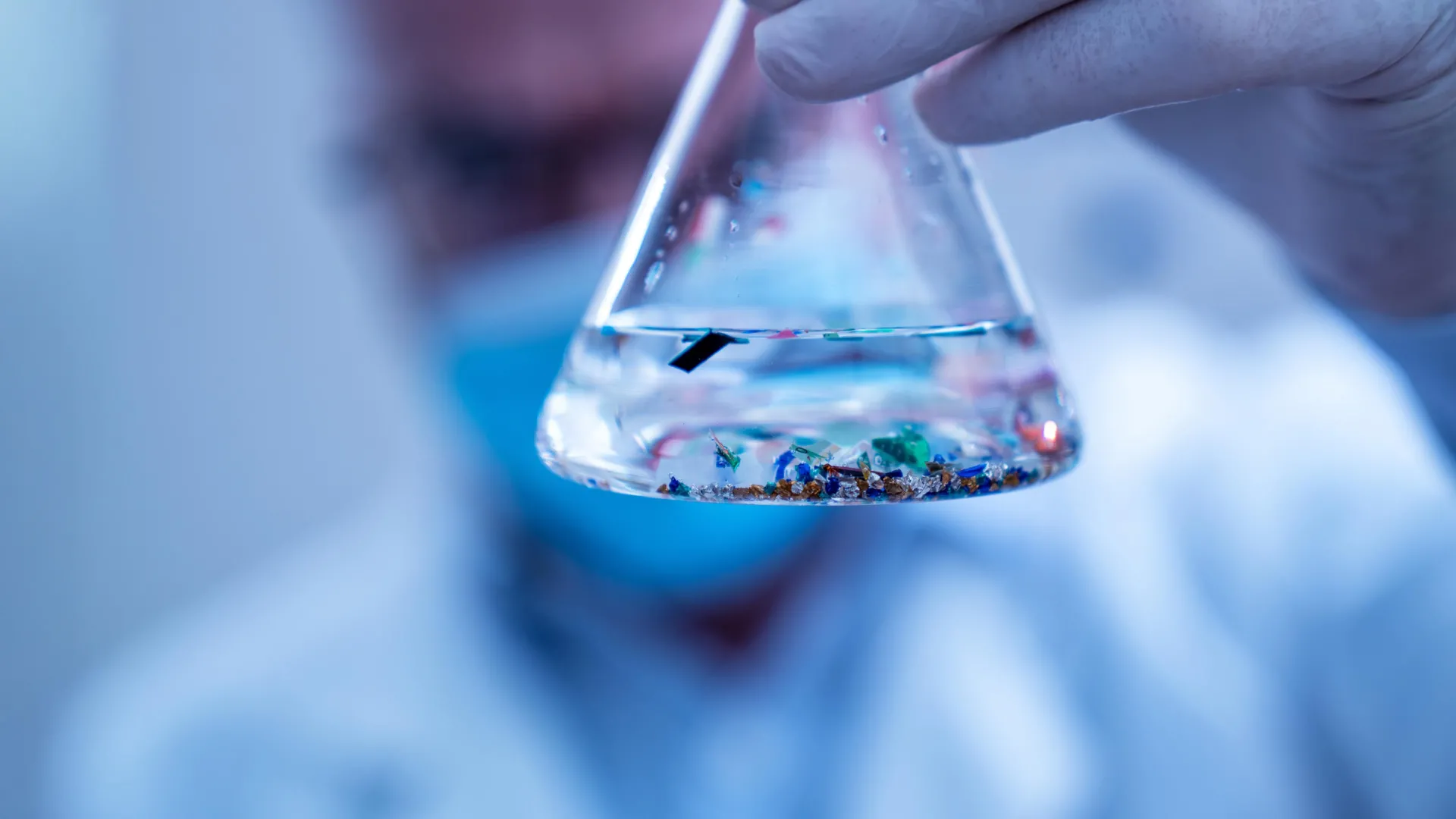
In a significant breakthrough for sustainable energy and waste management, researchers at the Department of Energy’s Oak Ridge National Laboratory (ORNL) have unveiled a novel chemical process capable of transforming polyethylene—the most ubiquitous plastic in the global waste stream—into gasoline- and diesel-grade fuels. By utilizing a molten salt medium that serves simultaneously as a reaction solvent and a catalyst, the team has achieved a 60 percent yield of fuel products under conditions remarkably milder than those required by existing industrial methods.
This innovation, recently detailed in the Journal of the American Chemical Society, addresses two of the most persistent hurdles in plastic upcycling: the extreme energy requirements of traditional pyrolysis and the reliance on expensive, noble-metal catalysts. As global plastic production continues to rise, with millions of tons of polyethylene from consumer goods like shopping bags and packaging accumulating in landfills and oceans, this technology offers a scalable path toward a circular economy.
A Legacy of Innovation in Molten Salts
The utilization of molten salts for this chemical transformation is rooted in a long history of expertise at ORNL. During the 1960s, the laboratory made headlines with the Molten Salt Reactor Experiment, which successfully demonstrated that molten salt mixtures could operate as both nuclear fuel and coolant in a reactor environment. This decades-long mastery of inorganic molten compounds provided the foundation for the current research led by Sheng Dai, an ORNL Corporate Fellow and section head for separations and polymer chemistry.
The transition from nuclear research to polymer chemistry represents a strategic pivot. While molten salts have historically been studied for their thermal stability and heat-transfer properties, the research team identified their potential to act as a highly acidic, reactive environment. Unlike traditional organic solvents, which can be volatile and environmentally hazardous, inorganic molten salts remain stable under demanding conditions, providing a robust medium for breaking down the stubborn, long-chain polymers that constitute polyethylene.
Decoding the Chemical Mechanism
To achieve this transformation, the researchers engaged in a multi-disciplinary effort to map the reaction at the atomic level. Polyethylene is characterized by its long, durable molecular chains, which are resistant to degradation. The team discovered that by introducing molten salts containing aluminum chloride, they could create highly acidic catalytic sites.
Through the application of advanced diagnostic tools—including soft X-ray spectroscopy and nuclear magnetic resonance (NMR)—the researchers observed that charged aluminum atoms bind with surrounding molecules to form these acidic sites. These sites act as chemical "scissors," attacking the long molecular chains of polyethylene and effectively cleaving them into shorter hydrocarbon segments.
The precision of this process was further verified through isotopic labeling. By tagging carbon ions with deuterium—an isotope of hydrogen—the team was able to track the movement and transformation of these molecules throughout the reaction. Furthermore, neutron scattering at ORNL’s Spallation Neutron Source allowed scientists to observe hydrogen dynamics in real-time, providing an unprecedented view of how the polymer’s structural complexity dictates the final fuel product. The experiments revealed that simpler polymer chains yield gasoline-like compounds, while more complex, branched structures tend to generate diesel-like hydrocarbons.
Breaking the 200-Degree Celsius Barrier
The most transformative aspect of this research is the dramatic reduction in operational temperature. Historically, the conversion of plastic to fuel has relied on pyrolysis, a thermochemical decomposition process that requires temperatures ranging between 450 and 500 degrees Celsius. These extreme temperatures necessitate heavy infrastructure, significant energy input, and high-maintenance hardware to prevent reactor degradation.
In contrast, the ORNL process operates at temperatures below 200 degrees Celsius—a threshold comparable to that of a household oven. This reduction is made possible by the unique chemical environment provided by the molten salts. The system operates without the need for external hydrogen, organic solvents, or chemical initiators—all of which are standard requirements in conventional industrial catalytic processes.
"This is the first time molten salts were used as media to produce high-value-added chemicals from waste without any catalytic initiator or solvent and at a temperature below 200 degrees Celsius," said Zhenzhen Yang, an ORNL staff scientist and co-corresponding author of the study. By removing these auxiliary requirements, the researchers have effectively simplified the chemical pathway, potentially lowering the capital expenditure required for future industrial-scale implementation.
Collaborative Scientific Rigor
The project, managed by ORNL’s Tomonori Saito, integrated expertise from across the laboratory’s divisions and partner institutions. The complexity of the chemical reaction required a multi-pronged analytical approach. While postdoctoral researcher Liqi Qiu performed the bulk of the experimental work at ORNL, external partners played vital roles in validating the underlying physics.
At the Lawrence Berkeley National Laboratory’s Advanced Light Source, researchers Min-Jae Kim and Jinhua Guo utilized soft X-rays to examine the electronic structure of the aluminum-polyethylene interaction. Their findings confirmed the formation of aromatic ring intermediates, which serve as a critical bridge in the catalysis process. Meanwhile, computer simulations conducted by Bobby Sumpter at the Center for Nanophase Materials Sciences provided a theoretical framework for the energy shifts observed during the reaction. At the University of Tennessee, Knoxville, Michael Koehler utilized in situ X-ray diffraction to monitor phase changes within the reaction mixture, ensuring the stability of the molten salt medium as the conversion progressed.
Implications for Energy Security and Industry
The potential scalability of this system carries significant implications for U.S. energy security and industrial competitiveness. Currently, the reliance on virgin feedstocks for fuel production leaves the market vulnerable to geopolitical and supply chain disruptions. By diverting plastic waste from landfills and converting it into "value-added" fuels, the ORNL method could establish a domestic source of energy that is decoupled from traditional petroleum extraction.
"The ORNL system solves two fundamental issues," noted Sheng Dai. "One, for a stable system, the process can be radically easier to scale up. Two, the previous system needed an initiator to kick off catalytic reactions. Our system requires neither."
However, the researchers remain transparent regarding the remaining challenges. A primary concern is the hygroscopic nature of the aluminum-based salts, which readily absorb moisture from the atmosphere. This moisture sensitivity can undermine the stability of the catalyst over extended periods of use. Future phases of the research will focus on confinement strategies—potentially utilizing carbon-based materials or halogen encapsulation—to isolate the salts from environmental moisture while maintaining their catalytic efficiency.
Future Outlook and Economic Potential
As the team prepares to move beyond laboratory-scale experiments, the economic feasibility of the process is being evaluated. Because the catalyst system relies on inexpensive, commercially available inorganic salts rather than precious noble metals like platinum or palladium, the cost-benefit analysis appears promising for industrial adoption.
The research also opens doors for broader applications. If this method can be adapted for other types of plastic waste, it could mitigate the environmental impact of the global plastic crisis, which sees millions of tons of non-biodegradable material enter ecosystems annually. By turning a liability into a commodity, the ORNL team is aiming to shift the perspective on plastic waste from a disposal problem to a resource management opportunity.
The study has been met with interest from the scientific community, as it bridges the gap between fundamental polymer science and practical, large-scale chemical engineering. While the path to commercialization involves rigorous pilot testing and infrastructure development, the fundamental science established at ORNL provides a robust platform for the next generation of plastic-to-fuel technologies. As the team continues to refine the stability and yield of the molten salt catalyst, the prospect of a cleaner, more efficient fuel production process moves one step closer to reality.

