
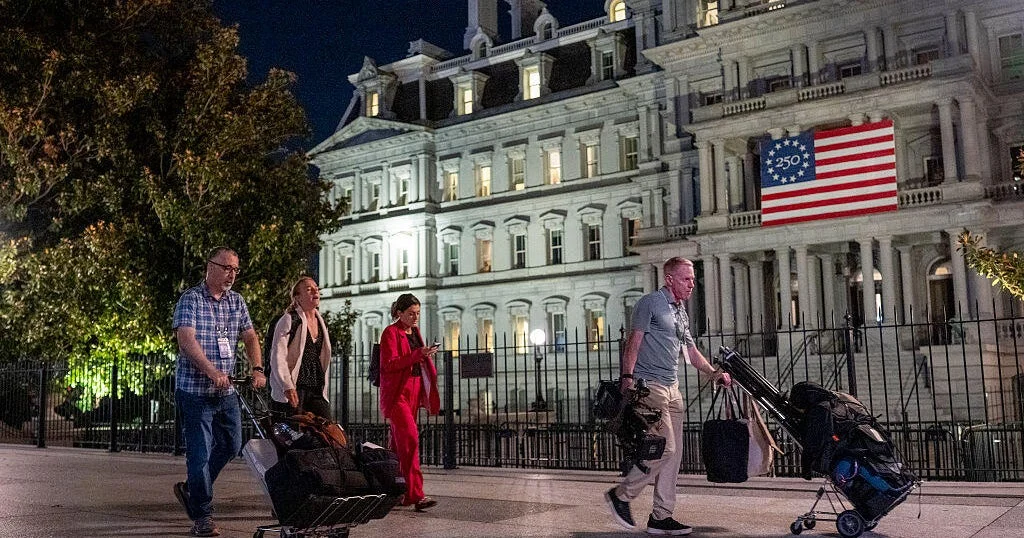
Major news organizations CNN, MS NOW, and Politico have formally filed a federal lawsuit against the Trump administration following an unprecedented directive that barred their reporters from entering the White House complex and revoked their press credentials. The legal action, filed in the U.S. District Court for the District of Columbia, alleges that the administration’s actions constitute a direct, flagrant violation of the First Amendment rights of the press and the public.
The lawsuit escalates an escalating constitutional showdown over executive authority, government transparency, and the limits of presidential power in regulating access to the executive mansion. The complaint names President Donald Trump, White House Chief of Staff Susie Wiles, White House Spokesperson Steven Cheung, and Secret Service Chief Sean Curran as defendants. Plaintiffs are seeking an immediate emergency injunction to reverse the bans and restore credentials before operational restrictions severely disrupt daily reporting loops.
The Genesis of the Ban and Immediate Fallout
The controversy erupted when President Trump announced via Truth Social that his administration was officially barring CNN, MS NOW, and Politico from the White House premises. The decision followed months of mounting tension between the executive branch and independent media outlets over editorial tone, coverage framing, and institutional scrutiny.
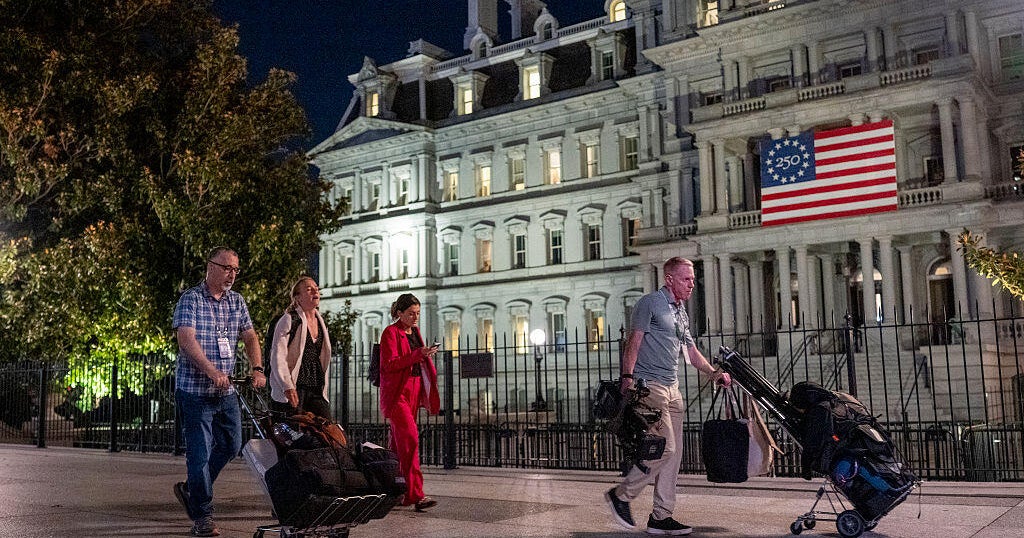
When reporters from the affected organizations attempted to enter the complex, they were turned away by security personnel, and their electronic press passes were deactivated. The timing of the ban caused immediate logistical chaos within the White House press apparatus. Under normal protocols, television networks rotate through a designated "pool" system to cover the president’s movements, share footage, and report live updates to the broader public and international news agencies.
Because CNN was scheduled to lead the television network pool rotation on the day following the announcement, the ban effectively left the presidency temporarily uncovered by a traveling television pool team—a scenario without modern precedent in American political history. Representatives for the news organizations argue that beyond the immediate operational headache, the decision sets a dangerous precedent for government censorship and viewpoint-based exclusion from public forums.
First Amendment Arguments and Legal Precedent
At the core of the lawsuit is the legal argument that the White House grounds, while subject to stringent security requirements, function as a designated public forum for the press corps, where viewpoint-based discrimination is strictly unconstitutional.
In their joint legal filing, the organizations emphasized that political disagreement with press coverage is a standard feature of American democracy, but weaponizing access privileges to punish unfavorable journalism crosses a definitive legal line. "There could not be a more direct assault on the First Amendment," the motion states. "Presidents from the earliest days of the Republic have disagreed with and complained about the tenor and content of press coverage of their administrations. None, however, have attempted to impose an outright blanket ban on targeted news entities simply for reporting facts and viewpoints the executive branch dislikes."
Legal scholars note that the case rests heavily on established constitutional jurisprudence. The lawsuit was assigned to U.S. District Judge Timothy Kelly, an appointee of President Trump during his first term. Notably, Judge Kelly presided over a strikingly similar lawsuit in 2018, when then-CNN reporter Jim Acosta had his press pass revoked following a contentious press conference. In that instance, Judge Kelly ruled in favor of CNN, determining that the White House had violated Acosta’s Fifth Amendment due process rights by stripping his credentials without adequate notice or a fair hearing. The Trump administration ultimately complied with that ruling and restored Acosta’s access.
However, the legal landscape surrounding executive press access has evolved through subsequent litigation, creating a complex web of precedents regarding restricted spaces versus open areas.
A History of Escalating Press Restrictions
The current standoff is part of a broader, sustained campaign by the Trump administration to reshape the relationship between the executive branch and the news media. Over the past several years, the administration has systematically deployed access restrictions, policy modifications, and credential revocations against outlets that refuse to align with official executive narratives.
Last year, the administration barred reporters from The Associated Press (AP) from attending select Oval Office events and press briefings. The dispute stemmed from the wire service’s editorial refusal to adopt a presidential decree renaming a major body of water. The AP filed a federal lawsuit on First Amendment grounds, yielding mixed judicial outcomes. While a lower district court initially ordered the White House to reinstate full access, a federal appeals court ultimately allowed the ban to stand regarding highly restricted, non-public spaces such as the Oval Office and Air Force One.
The appeals panel ruled that while the executive branch cannot bar journalists from spaces "generally open to the press" (such as the James S. Brady Press Briefing Room) based on viewpoint, it retains broader discretionary control over access to exclusive, highly secured zones. The administration subsequently weaponized this distinction, restructuring the press pool operations to limit wire service access to elite presidential travel spaces.
Simultaneously, the administration has targeted military and defense reporting infrastructure. The Department of Defense implemented strict new policies requiring journalists embedded at the Pentagon to sign agreements acknowledging that soliciting or reporting on sensitive national security information could classify them as security risks. Major news organizations—including CBS News, ABC News, NBC News, Fox News, and CNN—refused to sign the coercive policy and withdrew their permanent bureaus from the building. Although a federal judge subsequently struck down portions of the policy for violating constitutional free-press protections, the Defense Department pivoted to a restrictive escort-only policy that severely hampered daily reporting, which an appeals court later permitted to remain in place.
Official Responses and Administration Defense
Defending the White House’s latest actions, President Trump doubled down on social media and in statements to reporters, framing the exclusion not as an assault on the free press, but as a necessary counter-offensive against what he characterized as systemic falsehoods.
"The White House is not instituting an assault on the Free Press, something which I cherish," Mr. Trump posted on Truth Social. "It is instituting an assault on the FAKE NEWS, something that has grown like Cancer in our beloved United States of America." In a follow-up post, he added, "FAKE NEWS IS A THREAT TO DEMOCRACY, and I will do whatever is necessary to make sure that the U.S.A. thrives."
When pressed by reporters on the specific justification for the ban, the president suggested that no single precipitating incident triggered the decision, pointing instead to cumulative grievances over reporting standards and institutional credibility. "I don’t think somebody should be allowed to come and write fake stories. They’re fake news. And they have no credibility," Mr. Trump remarked. "Now, if they want to write them, that’s fine, but I don’t have to let them into my—into the people’s house."
Civil liberties and media advocacy groups immediately condemned the administration’s rationale. Bruce Brown, president of the Reporters Committee for Freedom of the Press, described the ban as "flatly unconstitutional," asserting that blocking specific news outlets from the White House is "textbook viewpoint discrimination" that fails to survive judicial review.
Broader Implications for American Democracy and Journalism
The outcome of the CNN, MS NOW, and Politico lawsuit carries profound implications for the future of government accountability, executive transparency, and constitutional rights in the United States.
If the courts uphold the administration’s sweeping ban, it could establish a dangerous constitutional blueprint for future executives of any political affiliation to selectively purge critical media organizations from institutional access points. Such a precedent would effectively transform press access—historically viewed as a public trust designed to facilitate government oversight—into a conditional privilege granted only to outlets approved by the sitting administration.
Conversely, a ruling in favor of the news organizations would reaffirm foundational First Amendment principles, establishing clear boundaries against government retaliation for critical reporting. As the legal battle unfolds before Judge Kelly, media institutions, legal scholars, and the public await an emergency ruling that will test the resilience of the American press corps and the constitutional checks on executive power.

