
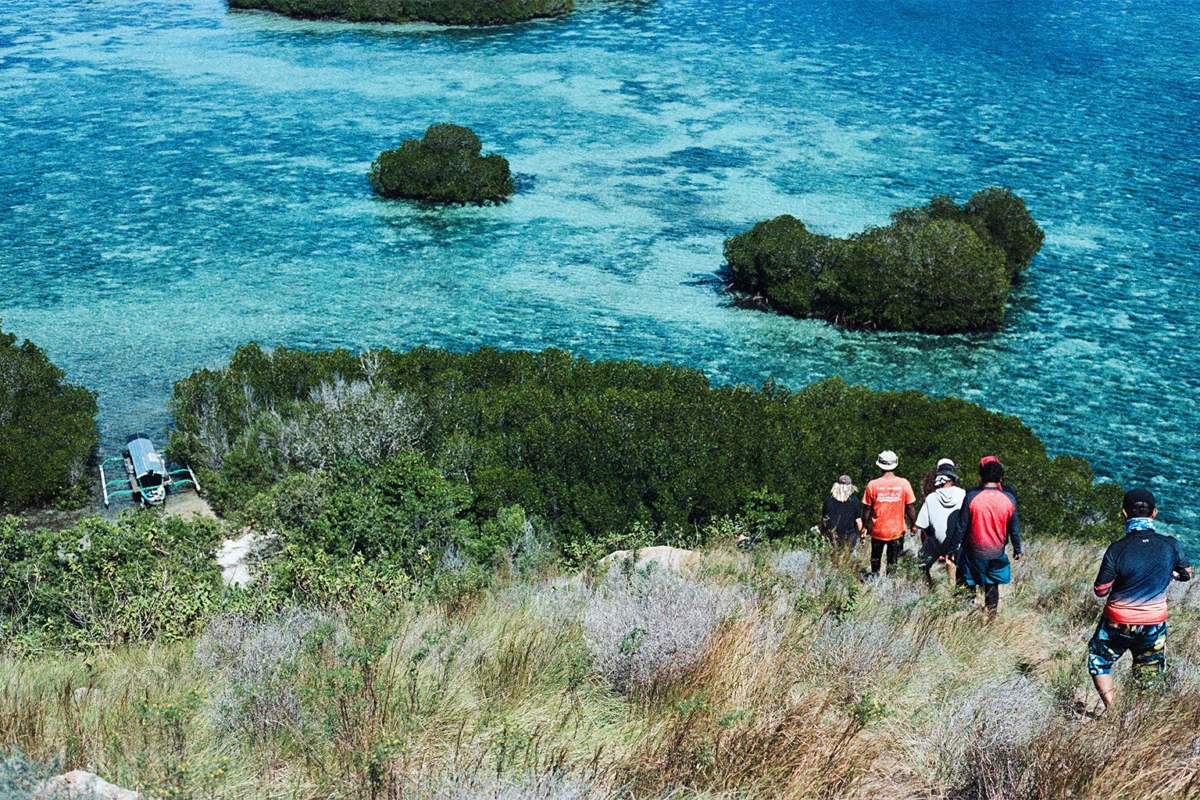
Off the coast of Poto Tano, a quiet fishing village on the island of Sumbawa, Indonesia, the rhythm of the tide dictates the survival of the Bajau people. Mahari, the ketua—or leader—of a local collective of octopus fishers, stands at the bow of a wooden vessel, his eyes scanning the horizon. He is not looking for landmarks or modern navigation tools; he is reading the water. In the Bajau tradition, a culture defined by its nomadic relationship with the ocean, the sea is not merely a resource, but a home. Today, however, that home is undergoing a profound transformation as the community pivots away from the dangerous, modern practice of compressor diving toward the ancestral art of freediving.
The Bajau, often referred to as "sea nomads," have inhabited the waters spanning Indonesia, Malaysia, and the Philippines for centuries. Their physiology, shaped by generations of aquatic labor, has long been a subject of scientific fascination. Studies published in journals such as Cell have suggested that the Bajau possess genetic adaptations, such as larger spleens, that allow them to hold their breath for extended periods underwater. Yet, in recent decades, this biological edge has been pushed to its limits by the introduction of air compressors—a method that allowed divers to remain submerged for hours, often with catastrophic consequences for both the marine ecosystem and the divers themselves.

The Rise and Fall of Compressor Diving
For many years, the allure of the compressor was purely economic. By pumping air from a surface-level engine through a hose into a diver’s mask, fishers could stay at depths of 15 to 20 meters far longer than any human lung capacity would allow. For a family reliant on daily yields, the temptation to maximize the catch was overwhelming.
However, the human cost of this efficiency became impossible to ignore. The systems are frequently improvised, lacking pressure gauges or safety valves, and the divers are often undertrained in the complexities of decompression physiology. Reports from the region indicate that chronic health issues, including paralysis, nitrogen embolism, and permanent lung damage, have become commonplace among those who spent years using compressors. Mahari himself acknowledges the harrowing toll, noting that he has faced paralytic episodes on numerous occasions, only to return to the sea as soon as he regained the ability to move.
The turning point for the community in Poto Tano arrived when the physical toll became a community-wide crisis. With many of the most experienced divers becoming disabled or losing their lives, the sustainability of the practice—both physically and economically—collapsed.

A Return to the Pocong and Traditional Wisdom
In 2020, the provincial government of West Nusa Tenggara enacted a formal ban on compressor diving, categorizing it alongside other destructive and illegal fishing practices. While the regulation provided a legal framework for change, the shift in Poto Tano was driven primarily by community-led initiatives. Through the formation of the PELITA (Persaudaraan Nelayan Gurita, or Octopus Fishermen Brotherhood) group, local fishers began the difficult process of unlearning the dependence on mechanical air.
Central to this transition is the pocong, a traditional fishing tool. The name, which translates to "ghost" in Indonesian, describes a hand-carved wooden lure wrapped in felt, designed to mimic the appearance and movement of an octopus. The technique is a masterclass in skill; the diver must descend on a single breath, dangling the decoy just above the reef to entice a curious octopus. If the octopus detects that the lure is artificial, it will vanish instantly. This method requires not only immense physical stamina but an intimate knowledge of octopus behavior, reef topography, and current patterns.
Chronology of a Community Shift
The evolution of Poto Tano’s fishery management can be viewed through several distinct phases:

- Pre-2018: Widespread adoption of compressor diving as the primary means of commercial octopus harvesting.
- 2018–2020: Growing recognition of the health risks and environmental degradation caused by compressor diving; initial advocacy by local NGOs.
- 2020: The West Nusa Tenggara provincial government officially bans compressor-assisted diving.
- 2022: Formation of Women for Marine Conservation (WMC) to integrate female perspectives into fisheries data collection and management.
- December 2025: Local government grants Poto Tano authority to govern its own marine resources, marking a significant win for rights-based fisheries management.
- 2026–Present: Consolidation of the PELITA group’s practices, including the establishment of rotating "no-take" zones to allow reefs to regenerate.
Institutional Support and the Jari Foundation
The transition has been facilitated by the Jari Foundation, a marine-based organization that works across Lombok and Sumbawa. According to Hani Nusantari, who directs the foundation alongside her husband, Boen, the strategy is not to impose top-down regulations, but to empower the Bajau to reclaim their traditional ecological stewardship.
"PELITA represents a guiding light," Hani explains. The organization facilitates training, supports the development of ecotourism as an alternative income stream, and acts as a bridge between the fishers and government policy. By formalizing the community’s right to manage their waters, Jari has helped the Bajau move from being passive subjects of state regulation to active guardians of the reef.
Data-Driven Conservation and Future Implications
The shift to traditional methods is not merely nostalgic; it is a pragmatic response to the changing state of the ocean. Modern industrial fishing has decimated many coral reefs, and the Bajau are now documenting the recovery of these areas. By collecting data on catch size and frequency, PELITA members are able to implement "ecological management," which includes closing specific areas for months at a time to allow populations to bounce back.

This approach aligns with global "rights-based fisheries management" models, where local communities are granted long-term, secure access to resources in exchange for adhering to sustainable harvesting practices. Such models have seen success in regions like Australia and Canada, where indigenous knowledge is used to complement modern marine science.
The implications for the broader Indonesian archipelago are significant. With thousands of miles of coastline and a vast population dependent on marine protein, the Poto Tano experiment offers a potential blueprint for other coastal communities. If the Bajau can successfully prove that traditional, low-impact methods can provide a viable living while simultaneously preserving biodiversity, they may provide a template for national fisheries policy.
The Cultural Legacy
Beyond the economics and the biology, there is a cultural imperative at play. The younger generation of Bajau, many of whom have seen their parents suffer from the side effects of compressor diving, are increasingly drawn to the sustainable, heritage-based methods of their ancestors. Plans are currently underway to develop a local museum dedicated to Bajau history and seafaring traditions, ensuring that the knowledge of the stars, the wind, and the currents is not lost to the digital age.

"Bajau people will always rely on the sea," Mahari reflects. His niece’s decision to study marine science is a testament to this evolution—a fusion of ancestral wisdom and modern scientific understanding. The future of the Bajau in Poto Tano remains uncertain, as the pressures of a global market and climate change loom large. However, by turning back to the pocong and the breath-hold, the Bajau are proving that the most sustainable way forward may, in fact, be the way they have always lived.
As the sun sets over the waters of Sumbawa, the members of PELITA return to the shore, their catch modest but secured without the aid of machines, without the risk of paralysis, and with a deep, quiet respect for the reefs that have sustained them for generations. The "ghost" of the pocong is not a specter of the past, but a tool for a more sustainable future.

