

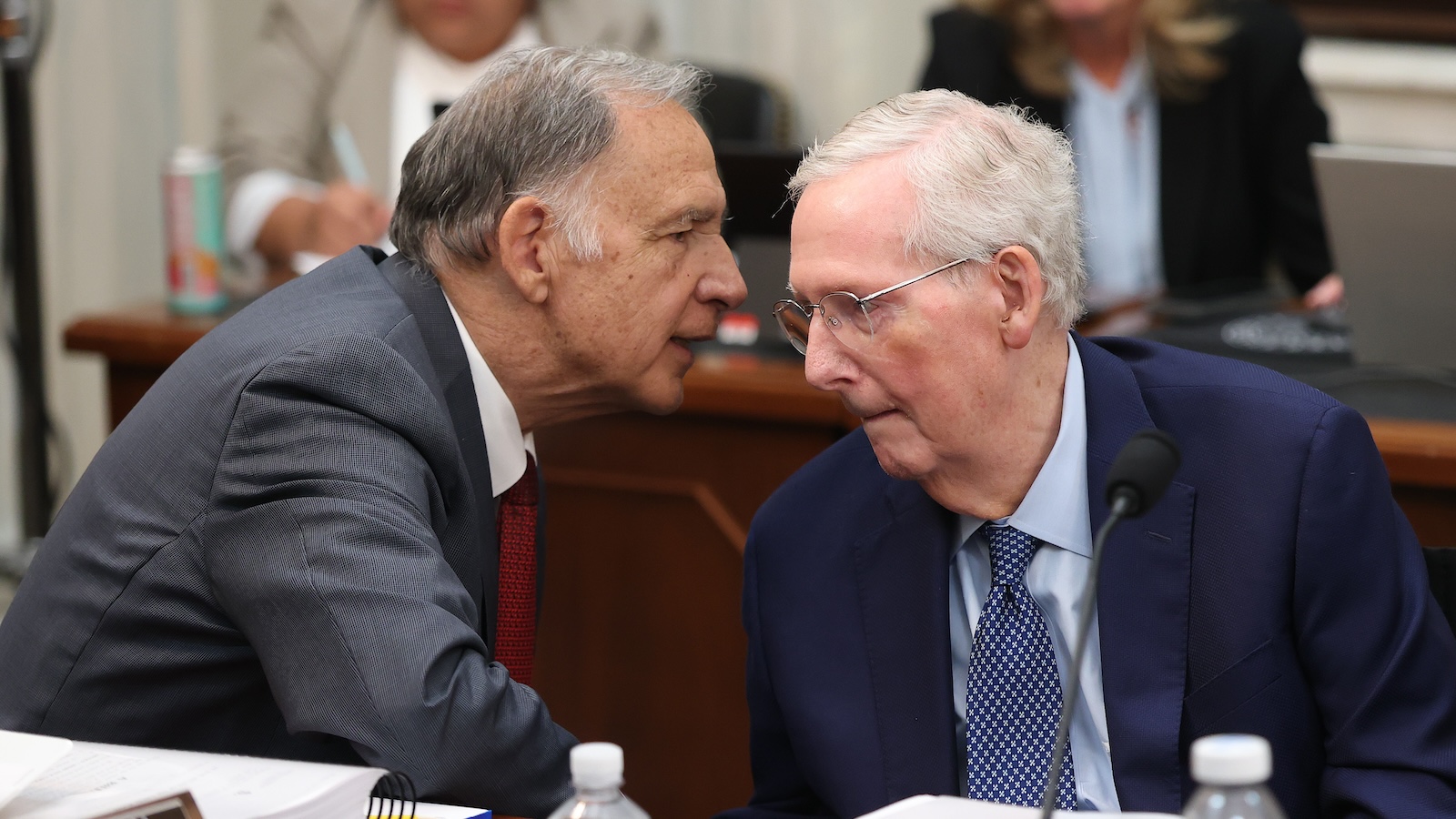
Last Tuesday, Senator Mitch McConnell made a high-profile return to the Senate floor following a three-month absence, casting a decisive vote within the Republican-led Agriculture Committee to advance the latest iteration of the federal farm bill. While this move provided a brief glimmer of momentum for a legislative package that had been effectively deadlocked since August, the path to enactment remains fraught with political volatility. As Congress approaches the November midterm elections, the prospect of failing to pass a comprehensive farm bill for the fourth consecutive year appears increasingly likely, signaling a deepening crisis for the nation’s primary agricultural policy framework.
The current impasse is a product of fundamental ideological friction between the two parties. Although Republicans hold a slim majority with 53 seats, the Senate’s requirement for a 60-vote threshold to overcome procedural hurdles necessitates a bipartisan consensus that currently does not exist. Senate Democrats have remained steadfast in their opposition, citing deep concerns over the bill’s failure to address critical funding shortfalls for the Supplemental Nutrition Assistance Program (SNAP).
A Legislative History of Stagnation
The farm bill, which historically undergoes a reauthorization process every five years, serves as the bedrock for domestic food policy, rural economic development, and conservation efforts. However, the legislative cycle has been marred by partisan gridlock since 2023. The tension intensified significantly last summer when the passage of the One Big Beautiful Bill Act—a sweeping legislative package championed by the Trump administration—resulted in a staggering $186 billion reduction in SNAP funding.
This massive budgetary contraction has redefined the current farm bill debate. Senate Democrats, led by committee members who view the protection of food security as a non-negotiable pillar of the legislation, have refused to entertain a bill that does not move to restore these funds. Furthermore, they are calling for a formal delay in a pending restructuring of SNAP’s administrative cost-sharing requirements, which they argue would place an unsustainable financial burden on individual states. Because the committee-approved draft currently fails to address either of these provisions, the path toward a floor vote is effectively blocked.
The Economic Ripple Effect on Rural America
The implications of this legislative failure extend far beyond the corridors of Washington. SNAP is a critical lifeline for millions of low-income Americans, but it also functions as a vital economic engine for rural communities. Because rural populations often demonstrate a higher per-capita utilization of food assistance than their urban counterparts, the current cuts are disproportionately impacting the customer base of small- and medium-sized agricultural producers.
Jody Osmund, a founding member of the FACE Ag Network, a coalition representing pasture-based livestock producers, notes that the degradation of SNAP funding creates a direct negative feedback loop for farmers. "The farmers in our network live in rural areas that have a higher uptake of SNAP participation than urban areas," Osmund explained. "When you degrade the purchasing power of the local community, you are fundamentally eroding the customer base that sustains our producers."
Beyond the consumer level, the fiscal pressure on states is reaching a breaking point. Mike Lavender, policy director for the National Sustainable Agriculture Coalition, warns that the lack of federal support forces state governments into impossible budgetary choices. Without federal relief, states may be forced to cannibalize funding from education, transportation, or other essential infrastructure to cover the mounting administrative costs of managing food assistance programs under the new, more restrictive mandates.
Conservation and the Cost of Sustainability
While the SNAP debate captures the majority of the headlines, the farm bill also serves as the primary vehicle for federal conservation funding. The current draft has drawn fire from environmental groups for proposing cuts to the Environmental Quality Incentives Program (EQIP) and the Conservation Stewardship Program.
Critics of the current trajectory, including many in the sustainable agriculture movement, argue that the issue is not merely the quantity of funding, but the quality of its distribution. Currently, a significant portion of conservation dollars is directed toward managing waste on large-scale industrial livestock operations. Advocates like Osmund argue that in an era of climate instability, these funds should be pivoted toward climate-adaptive farming techniques, such as soil health restoration and regenerative grazing practices.
One notable point of contention that has been resolved in the current draft is the exclusion of the "Save Our Bacon Act." This provision, which had faced intense lobbying from animal welfare groups, would have codified lower standards for the confinement of livestock. Its removal is being viewed as a minor victory for agricultural reformers, though it remains insufficient to secure broader support for the bill.
The Financial Calculus of Modern Farming
Small- and medium-sized farmers are currently operating under a "triple threat" of economic instability. In addition to the uncertainty surrounding federal support, producers are grappling with record-high input costs—specifically in energy and diesel—and a volatile global trade environment.
The financial calculus of running a sustainable operation has become increasingly difficult. As international trade deals fluctuate and domestic support programs remain in flux, small farmers are finding it harder to compete with the economies of scale enjoyed by massive corporate agricultural entities. The failure to pass a stable, multi-year farm bill exacerbates this uncertainty, as producers are unable to project their financial outlook beyond the next few months.
Looking Toward 2027
As the midterm elections approach, the political cost of a "bad deal" is beginning to outweigh the benefits of passing legislation. Many advocacy groups are now openly suggesting that a continuation of the 2018 farm bill, while far from ideal, may be preferable to the current proposal.
"A continuation of the 2018 farm bill may be better," Osmund suggested. "It is not good, and it is certainly not ideal, but in our opinion, no deal on the current version of the farm bill is much better than a very, very bad deal."
This sentiment reflects a broader resignation among agricultural stakeholders. If the Senate remains unable to bridge the divide between the demand for SNAP restoration and the current fiscal priorities of the Republican majority, the legislative clock will effectively run out. Should the status quo persist through the end of the year, Congress will be forced to return to the drawing board in 2027, leaving the nation’s agricultural policy in a state of extended, high-stakes limbo.
Data at a Glance: The State of the Debate
- SNAP Funding Impact: $186 billion in projected cuts following the enactment of the One Big Beautiful Bill Act.
- Legislative Timeline: The last successful, full-scale reauthorization occurred in 2018. If no action is taken by year-end, 2027 will mark four years of failed renewal.
- Senate Composition: Republicans maintain 53 seats; however, the requirement of 60 votes for cloture necessitates at least seven Democratic defections, which remains unlikely given the current stance on SNAP.
- Key Programs at Risk: EQIP and the Conservation Stewardship Program remain vulnerable to funding reductions, which environmental advocates argue will hamper long-term climate adaptation in the agricultural sector.
Ultimately, the impasse highlights a growing disconnect between federal legislative priorities and the ground-level needs of the American food system. As Congress remains locked in its cycle of partisan maneuvering, the nation’s farmers and low-income families are left to navigate a landscape defined by fiscal instability and administrative uncertainty. Whether a breakthrough can be achieved in the final weeks of the legislative session remains the central question facing the Agriculture Committee, yet for many stakeholders, the focus has already shifted to the prospect of a blank slate in the new year.

