
A spring break family expedition into the rugged and often unforgiving backcountry of Moab, Utah, took a catastrophic turn on Friday, April 10, 2026, when a parent plummeted an estimated 70 to 80 feet off a treacherous cliff face in the Pritchett Canyon area. The harrowing incident initiated a complex, life-or-death rescue operation involving specialized teams scrambling against time and formidable terrain to reach the critically injured victim. The event serves as a stark reminder of the inherent dangers lurking within even the most picturesque wilderness landscapes, underscoring the critical importance of vigilance, preparedness, and the increasingly vital role of advanced communication technologies in remote environments.
The Ill-Fated Hike: A Family’s Adventure Takes a Dangerous Detour
The family of four, like countless other outdoor enthusiasts drawn to Moab’s stunning red rock vistas and challenging trails, had embarked on what was intended to be a memorable spring break adventure. Their day began with an off-road excursion, parking their vehicles at a trailhead in Pritchett Canyon, a locale renowned for its demanding hiking routes, technical rock climbing, and popular off-road trails that weave through intricate canyons and over slickrock formations. The objective of their hike was to explore the area’s iconic natural rock arches, a common pursuit for visitors seeking to immerse themselves in Utah’s unique geological wonders.
During their trek, the family inadvertently split into two groups. One parent and child, perhaps maintaining a faster pace or exploring a slightly different route, moved ahead of the other parent and child. It was during this separation that the accident occurred. The adult who was trailing behind, navigating the uneven and deceptive terrain, reportedly ventured too close to the precipitous edge of a cliff. Without warning, the ground gave way, or a misstep occurred, sending the individual plunging into the chasm below. Crucially, no one in the immediate vicinity witnessed the initial fall, leaving the exact circumstances leading to the plunge shrouded in uncertainty.
The first indication of disaster came not from a visual confirmation, but from a chilling sound. One of the children, part of the trailing pair, heard a scream pierce the quiet canyon air, a sound that immediately signaled that something terrible had transpired. Rushing down the hiking route with a mixture of fear and urgency, the child quickly alerted the other parent to the unfolding crisis. This quick action, born of instinct and terror, was the first crucial step in initiating what would become a complex and high-stakes rescue.
A Race Against Time: The Activation of Emergency Services
Upon being alerted to the fall, the uninjured parent immediately recognized the gravity of the situation and the remoteness of their location. Traditional cell phone service is notoriously unreliable, often non-existent, in many parts of Utah’s vast backcountry, including the depths of Pritchett Canyon. Fortunately, the parent was equipped with a modern smartphone featuring a satellite communication function, a technological advancement increasingly proving its worth in emergency scenarios far from cellular towers. This innovative feature allowed them to send a text message directly to 911, transmitting their precise GPS coordinates and a brief description of the dire situation.
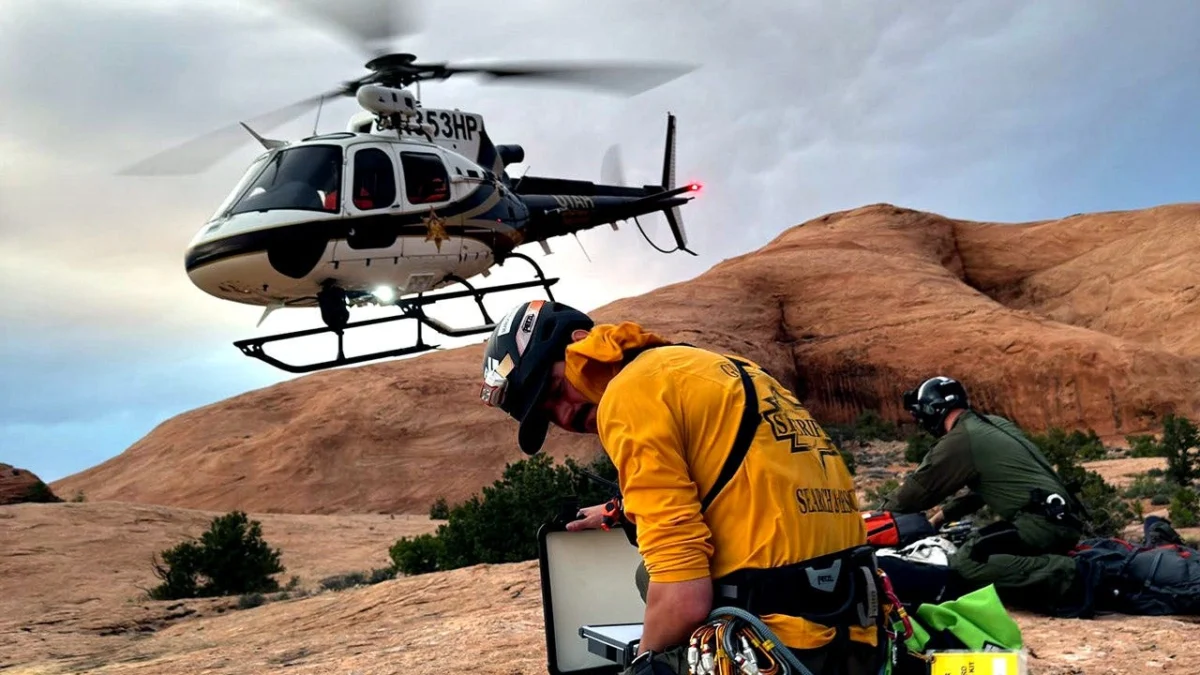
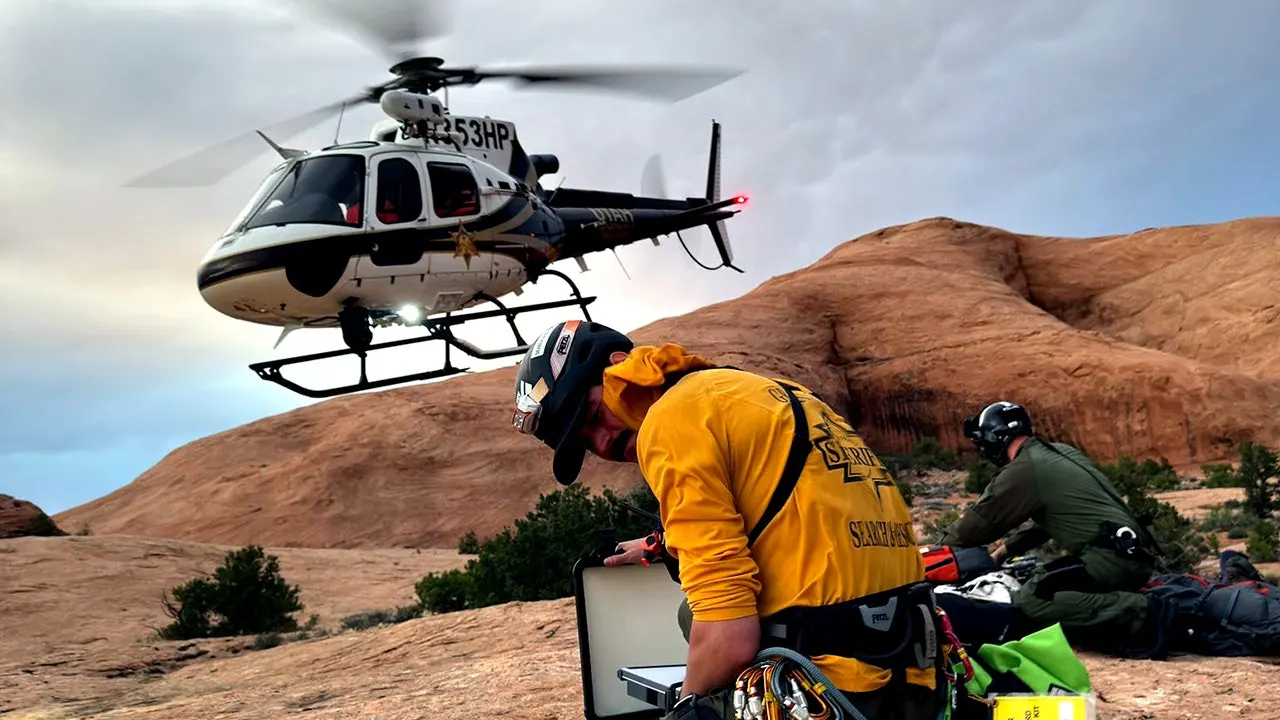
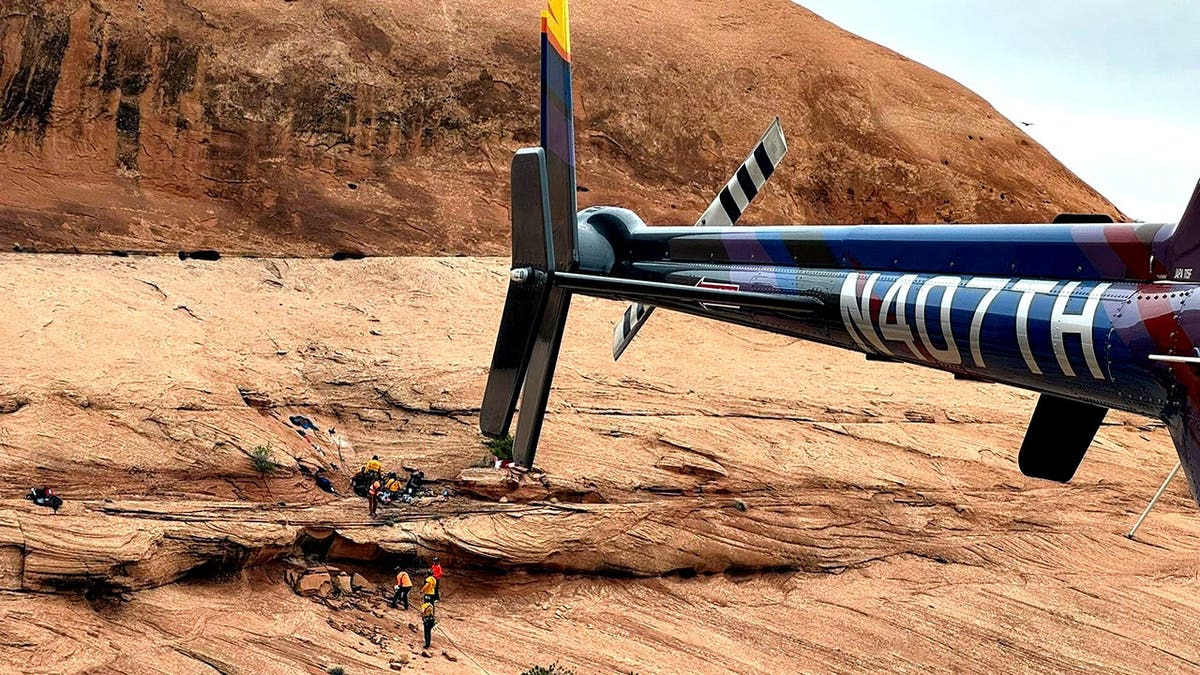
The satellite distress signal was a game-changer, providing emergency dispatchers with critical information almost instantaneously, bypassing the delays often associated with traditional search-and-rescue efforts that rely on vague descriptions or broader search parameters. Within minutes of receiving the alert, the Grand County Sheriff’s Search and Rescue (GCSAR) team was mobilized. Given the remote location and the reported severity of the fall, a rescue helicopter was dispatched without delay. The swift response was crucial, as every minute counted in accessing a critically injured patient in such an isolated and challenging environment. The helicopter, a vital asset in backcountry rescues, managed to land approximately 150 yards from the injured hiker’s precarious position, providing a rapid staging point for the ground teams.
Confronting the Terrain: A Technical Rescue in Pritchett Canyon
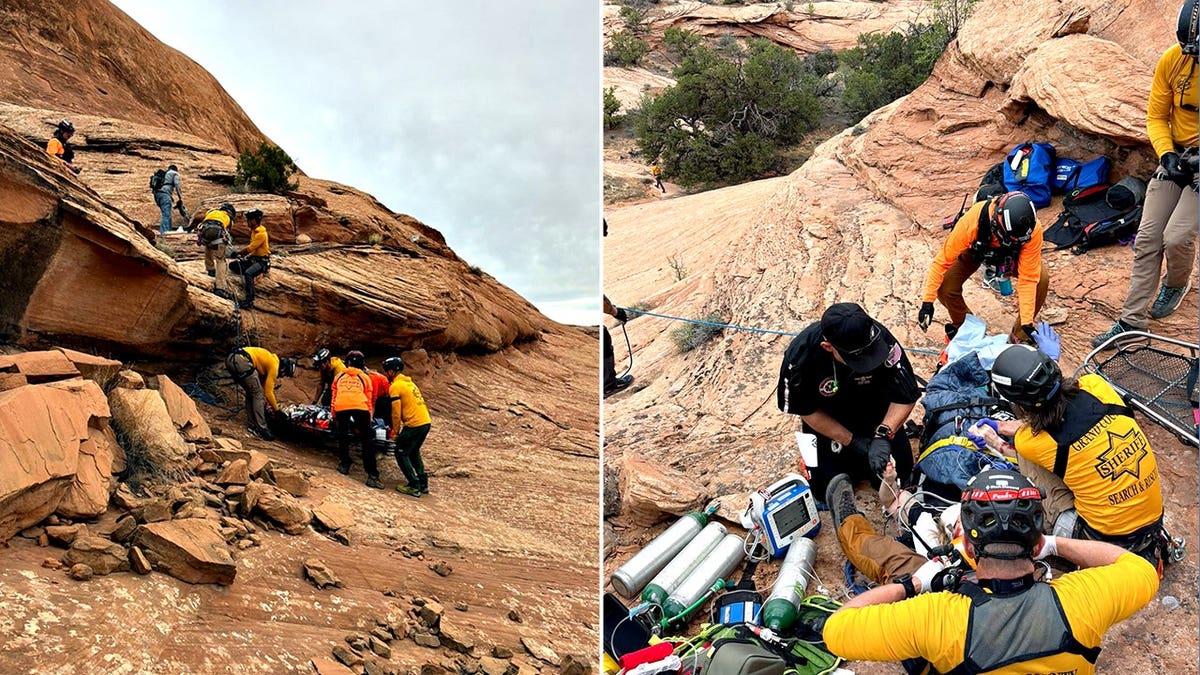
Upon reaching the accident site, rescuers were immediately confronted with the immense challenges posed by Moab’s unique geological features. The victim was found "lodged in a sloping sandstone gully," a description that hints at the unstable and precarious nature of their resting place. The GCSAR characterized the operation as a "difficult rescue," a common descriptor for missions in the region where sheer cliffs, slickrock, and deep canyons combine to create formidable obstacles. The estimated fall distance was revised to between 70 and 80 feet, followed by an additional "50-foot bouncing tumble, all on slickrock." This secondary tumble, likely involving uncontrolled impacts against the abrasive sandstone, exacerbated the initial injuries.
The hiker’s condition was immediately assessed as critical, with rescuers noting a "badly broken body," including "open fractures and possible internal injuries." Such severe trauma necessitates immediate and expert medical attention, but extracting the victim from their confined and dangerous position required a highly specialized technical rescue. The terrain’s deceptive nature, with gentle slopes transitioning abruptly into vertical drops, makes navigating these areas perilous even for experienced individuals. The slickrock, while visually stunning, offers little purchase when wet or covered in loose scree, and its hard, unyielding surface delivers devastating impact forces during a fall.
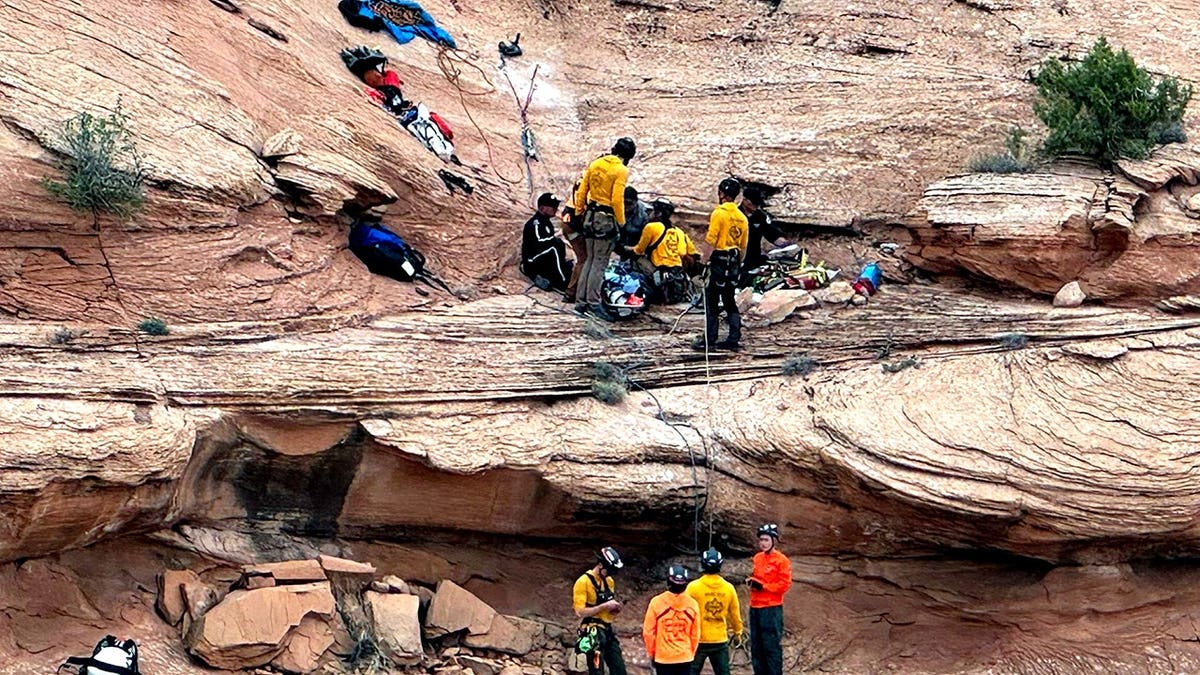
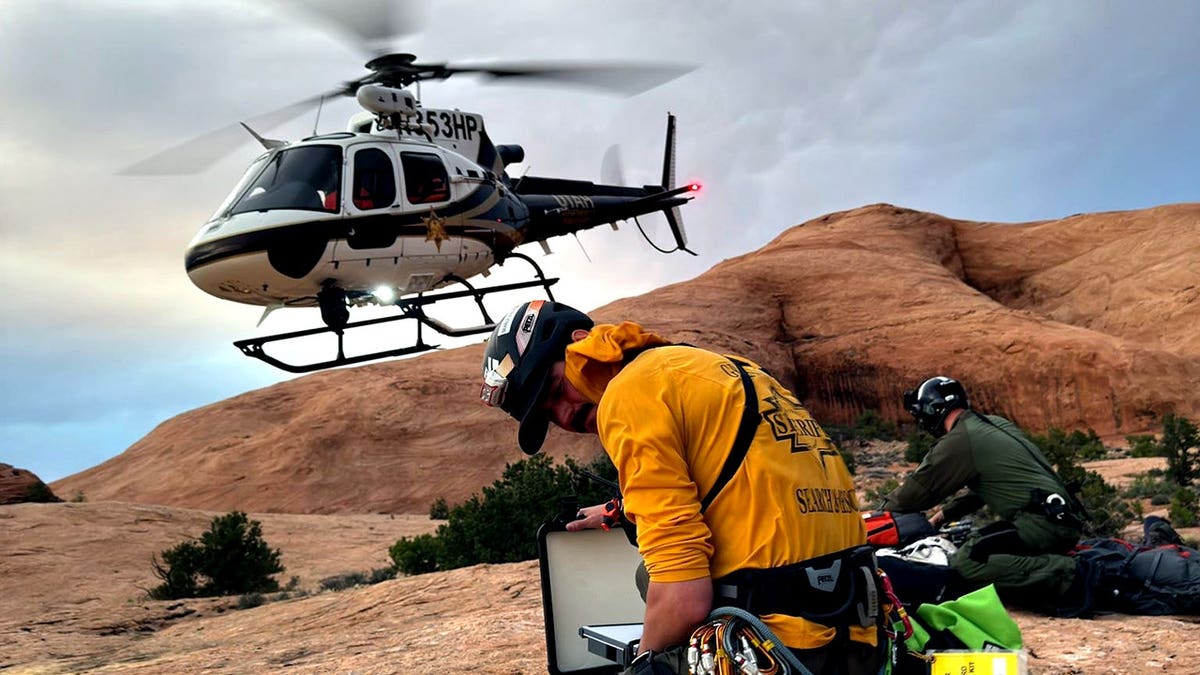
The GCSAR team, comprised of highly trained volunteers and professionals, deployed a comprehensive array of specialized equipment. This included an intricate system of ropes, webbing, carabiners, anchoring bolts, and descent devices. Ropes are the lifeline, used to create secure pathways and lower or raise personnel and the patient. Webbing and carabiners facilitate connections within the rope system, while anchoring bolts are drilled into stable rock to provide fixed points of attachment, distributing loads and ensuring safety. Descent devices, controlled by rescuers, allow for a controlled lowering of individuals or the patient. The victim had to be carefully secured in a rescue litter – a specialized stretcher designed to immobilize and protect patients during transport over rough terrain – before being moved. The precision and coordination required for such a technical extraction in a remote, unstable environment are immense, demanding extensive training and experience from every member of the team. The entire arduous operation, from initial contact to the successful extraction of the patient, lasted three intense hours.
Moab’s Allure and Its Inherent Risks: A Broader Context
Moab, situated amidst some of the most spectacular red rock landscapes in the world, is an undisputed mecca for outdoor recreation. Each spring break, it draws tens of thousands of visitors eager to hike, mountain bike, rock climb, and off-road through its iconic Arches and Canyonlands National Parks, as well as the vast expanses of surrounding public lands. While its beauty is undeniable, Moab’s rugged terrain also presents significant inherent risks, often underestimated by visitors unfamiliar with the unique challenges of desert wilderness.
The popularity of outdoor activities has, predictably, led to an increase in search and rescue incidents across Utah and in national parks nationwide. According to data from the National Park Service, thousands of search and rescue operations are conducted annually across U.S. national parks, with falls, medical emergencies, and getting lost being among the most common causes. Utah, with its extensive backcountry and high visitation rates, sees a substantial share of these incidents. The unique geology of areas like Pritchett Canyon, characterized by towering sandstone formations, deep slot canyons, and vast expanses of exposed slickrock, creates an environment where even a minor misstep can have severe consequences. Temperatures can fluctuate wildly, from scorching daytime heat to freezing nights, and weather conditions can change rapidly, posing additional threats. Furthermore, the sheer remoteness of many popular trails means that help, even with modern technology, can be hours away.
The Grand County Sheriff’s Search and Rescue team is at the forefront of managing these risks. Comprised of dedicated volunteers and emergency professionals, GCSAR members undergo rigorous training in high-angle rope rescue, wilderness medicine, tracking, and survival. They are the guardians of the backcountry, responding to hundreds of calls annually, from lost hikers to critically injured climbers. Their expertise and selfless commitment are indispensable to the safety of visitors and residents alike in this challenging region.
Official Responses and Lessons for Future Explorers
In the aftermath of the harrowing rescue, the GCSAR released a statement reflecting on the incident, offering insights and emphasizing critical safety messages. They noted the lack of direct witnesses to the fall, preventing a definitive understanding of what exactly led to the accident. However, they highlighted a common danger in the Moab area: "The cliff edges in many places around Moab are deceptive. They slope gently from the top at first and quickly progress to vertical." This geological characteristic means that what appears to be a safe, gradual incline can suddenly give way to a sheer drop, catching unsuspecting individuals off guard. The team concluded their observations with a universal truth: "It is not known what led up to the accident or what/if anything could have prevented it."
The critically injured hiker was airlifted to a regional hospital, where they are receiving advanced medical care. While their current condition remains undisclosed, the severity of their injuries – open fractures and potential internal trauma – underscores the life-threatening nature of the fall. The family, undoubtedly shaken by the traumatic event, faces a long road to recovery for their loved one, both physically and emotionally. The GCSAR extended their best wishes to the family, acknowledging the profound impact such an incident has on all involved.
This incident serves as a critical reminder for all who venture into the wilderness, particularly during popular travel periods like spring break. Authorities and rescue teams consistently urge hikers to prioritize safety:
- Stay on Marked Trails: While the urge to explore off-trail can be strong, marked trails are designed to avoid the most hazardous areas.
- Maintain Awareness of Surroundings: Pay constant attention to footing and the proximity to cliff edges. Assume all edges are potentially unstable.
- Understand Terrain Deception: Be acutely aware that seemingly gentle slopes can abruptly become sheer drops. Look ahead and understand the topography.
- Hike with a Buddy and Stay Together: While the family in this incident split up, having a companion close by can provide immediate assistance and faster notification in an emergency.
- Carry Essential Gear: This includes adequate water, food, navigation tools (map, compass, GPS), a first-aid kit, extra layers of clothing, a headlamp, and a reliable communication device.
- Inform Others of Your Plans: Always leave a detailed itinerary with someone responsible, including your route, destination, and expected return time.
- Know Your Limits: Do not attempt trails or climbs beyond your skill level or physical capabilities.
- Utilize Communication Technology: The iPhone’s satellite function proved invaluable in this rescue. For those exploring truly remote areas, dedicated satellite messengers or personal locator beacons (PLBs) offer even more robust emergency communication capabilities.
The advancement of satellite communication in personal devices represents a significant leap forward in wilderness safety. Features like the iPhone’s satellite SOS capability provide a crucial lifeline in areas where traditional cellular networks are non-existent, drastically reducing response times for emergency services. This technology, while not a substitute for proper planning and caution, can be the difference between a minor incident and a tragic outcome.
In conclusion, the dramatic rescue in Pritchett Canyon is a poignant testament to both the inherent risks of exploring the raw beauty of places like Moab and the unwavering dedication of the search and rescue professionals who stand ready to answer the call. It underscores that while the wilderness offers unparalleled beauty and adventure, it demands respect, preparedness, and an unceasing commitment to safety from all who seek to explore its magnificent, yet perilous, domains.

