

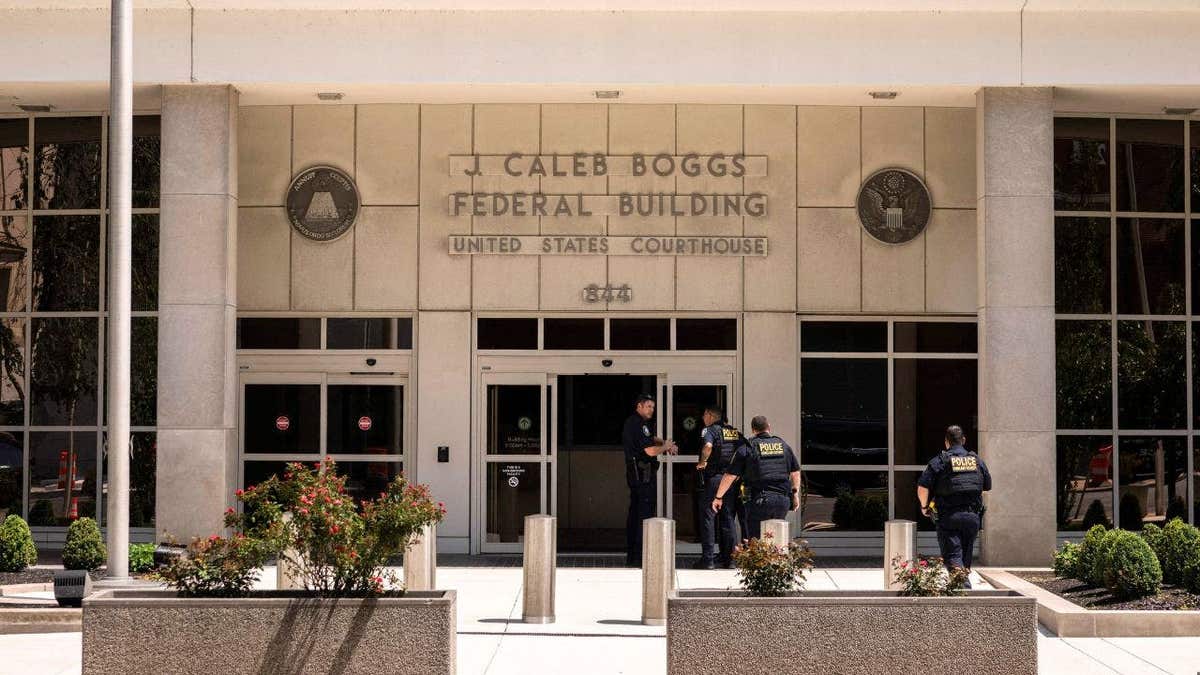
In a significant legal victory for federal immigration enforcement and a setback for the home state of former President Joe Biden, a U.S. District Judge has mandated that Delaware officials surrender confidential employer and employee data to Immigration and Customs Enforcement (ICE). The ruling by U.S. District Judge Colm Connolly, a Trump appointee, requires the Delaware Department of Labor (DDOL) to comply with a federal subpoena seeking detailed wage reports and employee records from 15 businesses suspected of hiring undocumented workers. This decision underscores the federal government’s broad authority in immigration matters and has ignited discussions about state-federal cooperation and the balance of power.
The directive comes after a prolonged dispute where Delaware officials initially resisted the federal request, citing concerns that compliance would undermine worker reporting mechanisms and harm various state programs. However, Judge Connolly unequivocally dismissed these arguments, stating they were "political" rather than legal, and thus outside the purview of judicial consideration. His ruling reinforces the principle of federal supremacy in immigration law, asserting that state entities, much like private ones, must adhere to federal statutes and subpoenas.
The Genesis of the Dispute: Federal Subpoenas and State Resistance
The conflict began to escalate in early 2025 when ICE, acting under its mandate to enforce federal immigration and customs laws, issued multiple administrative subpoenas to the Delaware Department of Labor. These subpoenas were part of a targeted investigation into 15 specific businesses within the state, where federal agents suspected the hiring of individuals unauthorized to work in the United States. The records sought by ICE included sensitive employee data such as names, Social Security numbers, and wages reported to the state’s unemployment insurance system. Federal investigators articulated that these records are crucial for identifying potentially fraudulent Social Security numbers, cross-referencing reported employees with those observed on-site during inspections, and detecting undeclared or "off-the-books" labor practices often associated with undocumented employment.
Despite follow-up warnings from federal prosecutors, Delaware officials initially ignored the subpoenas. This non-compliance prompted the U.S. government to file a lawsuit seeking judicial enforcement of the administrative subpoenas, bringing the matter before the District Court. Delaware’s resistance was rooted in a broader philosophical stance, reflecting a growing trend among some states and localities to limit cooperation with federal immigration enforcement agencies, often out of concern for protecting immigrant communities and ensuring all residents feel safe reporting labor violations or accessing state services without fear of deportation.

Judge Connolly’s Unambiguous Ruling
In his detailed opinion, Judge Colm Connolly systematically dismantled Delaware’s arguments against compliance. The state had primarily contended that handing over such sensitive data would deter workers, particularly those in vulnerable populations, from reporting workplace issues or engaging with state agencies like the DDOL for fear that their information could be used for immigration enforcement purposes. This, Delaware argued, would ultimately undermine the integrity and effectiveness of its unemployment insurance system and other state-run programs designed to protect workers.
Judge Connolly, however, found these claims to be unsupported by evidence and largely speculative. He explicitly stated, "This is a political argument; not a legal one," further adding, "This Court is not the proper forum in which to air [DDOL’s] generalized grievances about the conduct of government. It would be wholly inappropriate for me to consider this line of argument, and I decline to do so." He emphasized that the subpoena was lawful, directly relevant to a legitimate federal investigation, and not unduly burdensome for the state to fulfill, given it sought only 30 records covering two quarters for the 15 businesses.
The judge also dismissed Delaware’s "cynical view" regarding the potential impact on employers, asserting his unwillingness to adopt the state’s premise that businesses would cease compliance with state reporting requirements if data were shared with federal agencies. His ruling effectively prioritized federal enforcement imperatives over the state’s policy preferences and concerns about potential "chilling effects" on worker engagement with state services.
The Broader Context of Immigration Enforcement and Federal Authority
This ruling is not an isolated incident but rather reflective of ongoing tensions between federal immigration enforcement agencies and state or local governments that seek to limit their cooperation. The debate often revolves around the Tenth Amendment, which reserves powers not delegated to the federal government to the states, and the Supremacy Clause, which establishes that federal laws are supreme to state laws when there is a conflict. In matters of immigration, federal authority is generally considered expansive, stemming from Congress’s power to establish a uniform rule of naturalization and the inherent sovereign power to control borders.
Historically, federal administrations have varied in their approach to immigration enforcement, with some emphasizing cooperation with state and local entities and others pursuing more aggressive, unilateral actions. While the Biden administration has, in some respects, sought to differentiate itself from the highly aggressive immigration policies of its predecessor, it has also continued to pursue enforcement actions, particularly those related to employer compliance and combating fraudulent documentation. This case illustrates that even under an administration perceived as more moderate on immigration, the federal government is prepared to exert its legal authority to compel state cooperation where it deems necessary for national security and enforcement objectives.
Delaware’s stance mirrors that of several other "sanctuary" jurisdictions across the U.S. that have implemented policies to limit their involvement in federal immigration enforcement, often by refusing to share data or hold individuals for ICE without a judicial warrant. For example, the Department of Justice previously sued New Jersey over an executive order limiting ICE cooperation and expanding sanctuary status, highlighting the nationwide nature of this legal and political battle. These state policies are typically enacted to foster trust between immigrant communities and local authorities, encouraging reporting of crimes and engagement with public services, regardless of immigration status. However, federal authorities often argue that such policies impede legitimate investigations and compromise public safety.
Implications for Delaware and Beyond
The immediate consequence for Delaware is the mandatory disclosure of the requested employer and employee data. This data, including Social Security numbers and wage records, will provide ICE with valuable tools to verify employment eligibility, detect identity fraud, and identify businesses that may be knowingly or unknowingly employing unauthorized workers. For the 15 businesses under investigation, this could lead to audits, fines, and potential criminal charges if widespread violations are found. For the employees involved, particularly those without legal authorization to work, the risk of identification and deportation increases significantly.
The ruling also carries broader implications:
- State-Federal Relations: It serves as a stark reminder to states that federal courts may not entertain "political arguments" when federal law and subpoena power are clearly at play. This could temper the enthusiasm of other states or localities considering similar resistance to federal immigration enforcement requests.
- Worker Reporting: While Judge Connolly dismissed Delaware’s concerns, advocates for immigrant rights and labor groups are likely to reiterate warnings about a potential "chilling effect." If workers fear that their personal information shared with state labor departments could be used by ICE, it might deter them from reporting wage theft, unsafe working conditions, or other labor abuses, thereby potentially undermining state efforts to protect workers and regulate workplaces.
- Business Compliance: The decision reinforces the need for businesses to meticulously verify the work authorization of their employees and to maintain accurate records. It also signals that federal agencies are actively pursuing investigations into employer compliance, leveraging state-held data when necessary.
- Data Privacy: The case also touches upon the complex issue of data privacy and the extent to which state agencies can protect sensitive personal information from federal access, particularly when federal law enforcement is involved.
Reactions and the Path Forward

Benjamin Wallace, Delaware’s newly appointed U.S. Attorney, welcomed the ruling, emphasizing its broader significance. "We are gratified that the court recognized the simple truth at the core of this case: federal law applies to everyone, whether they are a state or private entity, and whether they agree or disagree with the federal government’s policy priorities," Wallace told the Delaware News Journal. His statement underscores the federal government’s firm stance on the universality of federal law and its application to all entities within its jurisdiction.
As of the immediate aftermath of the ruling, Delaware officials have not publicly indicated whether they intend to appeal Judge Connolly’s decision. An appeal would elevate the case to the U.S. Court of Appeals for the Third Circuit, potentially prolonging the legal battle and further clarifying the legal boundaries of state resistance to federal immigration enforcement. Should Delaware choose not to appeal, or if an appeal is unsuccessful, the Department of Labor will be legally compelled to turn over the requested data to ICE.
This case highlights the enduring tension between state autonomy and federal authority in the complex landscape of U.S. immigration policy. While states often seek to tailor policies to their unique populations and social objectives, federal courts continue to uphold the preeminent role of the national government in matters of immigration and border security. The Delaware ruling serves as a powerful judicial affirmation of this federal power, ensuring that even states with differing policy priorities cannot unilaterally impede federal investigations deemed essential for national enforcement efforts. The ultimate impact on worker reporting, business practices, and state-federal relations will unfold as Delaware and other states navigate these challenging legal and political waters.

