
Ukraine is significantly increasing its deployment of ground robots on the battlefield, a strategic shift aimed at mitigating the extreme risks posed to human soldiers by the pervasive threat of drones. This development, highlighted by Ukrainian President Volodymyr Zelenskyy’s claims of autonomous robotic victories, signifies a critical evolution in modern warfare, where unmanned systems are increasingly undertaking the most dangerous tasks. The escalating reliance on robotic platforms for reconnaissance, combat, and logistical support underscores a broader trend in military technology adoption, with potential implications for global defense strategies.
Robotic Milestones and Autonomous Operations
President Zelenskyy recently asserted that Ukrainian ground robots and drones have independently overcome Russian military positions, leading to the surrender of enemy soldiers. While this claim has not been independently verified, it represents a significant potential milestone in robotic warfare. Such an achievement, if confirmed, would demonstrate a leap in autonomous capability, moving beyond remote operation to independent mission execution. The accompanying promotional video showcased Ukraine’s military robots completing over 22,000 missions in the preceding three months, a testament to their burgeoning role.
Further supporting this narrative, Ukraine’s defense ministry reported a threefold increase in uncrewed ground vehicle (UGV) missions over the last five months, with March alone witnessing over 9,000 such operations, according to Scripps News. This surge in robotic ground presence is a notable development in a conflict that has already been fundamentally reshaped by the widespread use of drones, transforming the very nature of the battlefield.
Historical Context: From Drones to Ground Robots
The current push for robotic ground forces echoes earlier instances of robotic engagement. The Independent reported on an event in the Kharkiv Oblast last year where Ukraine’s 3rd Separate Assault Brigade allegedly utilized flying drones and "kamikaze" ground robots against fortified Russian positions. The brigade’s statement detailed how Russian soldiers surrendered to one of their robots after abandoning their defenses. This incident, alongside previous documented cases of individual Russian soldiers surrendering to Ukrainian drones and even a single robot, suggests that a group surrender to robotic units is not entirely unprecedented. A video released by the Ukrainian government-run platform United24 also depicted a similar or identical incident involving the same brigade, further emphasizing the growing capabilities of these robotic units.
The Drone Dominance and the Rise of the "Kill Zone"
The intensified focus on battlefield robots is inextricably linked to the extreme lethality introduced by aerial drones. Persistent drone surveillance and strike capabilities have effectively created a "kill zone" extending up to 12 miles (20 kilometers) beyond frontline positions. This has forced soldiers to remain largely static, rely on nighttime operations, or employ advanced countermeasures like anti-thermal cloaks and foggy conditions to evade constant aerial observation and attack. As the full-scale war enters its fifth year, drones are now responsible for the majority of battlefield casualties on both sides, according to a report by Politico. The latest generation of Ukrainian military drones are increasingly incorporating autonomous, onboard software and artificial intelligence (AI)-powered capabilities, enabling them to track and strike targets even when communication links with human operators are disrupted by enemy jamming.
Robots Reporting for Duty: Expanding Roles and Capabilities
While drone operations have been the hallmark of this conflict, the deployment of ground robots has been comparatively more modest, with thousands of ground robot missions per month versus hundreds of thousands of drone sorties. However, the recent surge in UGV missions indicates a deliberate Ukrainian effort to expand their role. These robots are being utilized for critical tasks such as supply runs and medical evacuations, thereby reducing direct human exposure to drone threats. Furthermore, Ukraine is increasingly deploying these robots in offensive combat roles, equipping them with machine guns and grenade launchers, or modifying them to function as explosive ordnance disposal units or even mobile explosive devices.
DevDroid’s Droid TW 12.7: A New Generation of Robotic Warriors
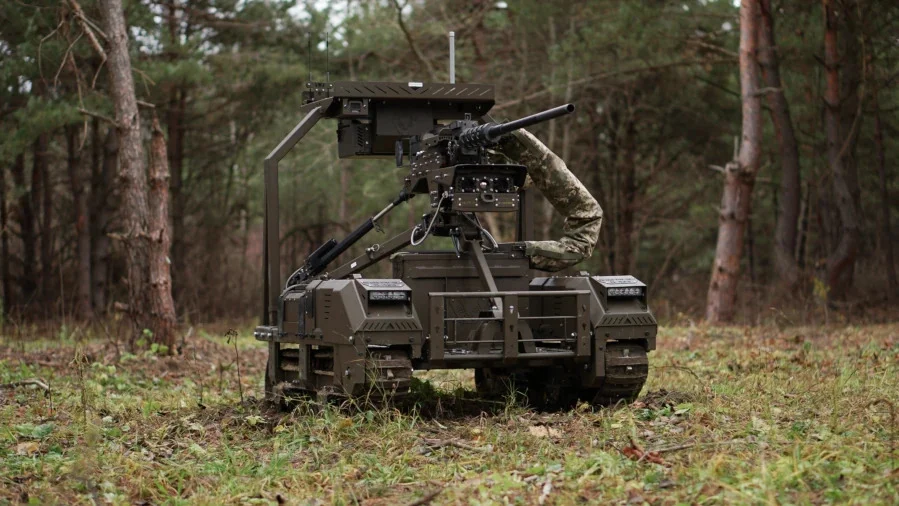
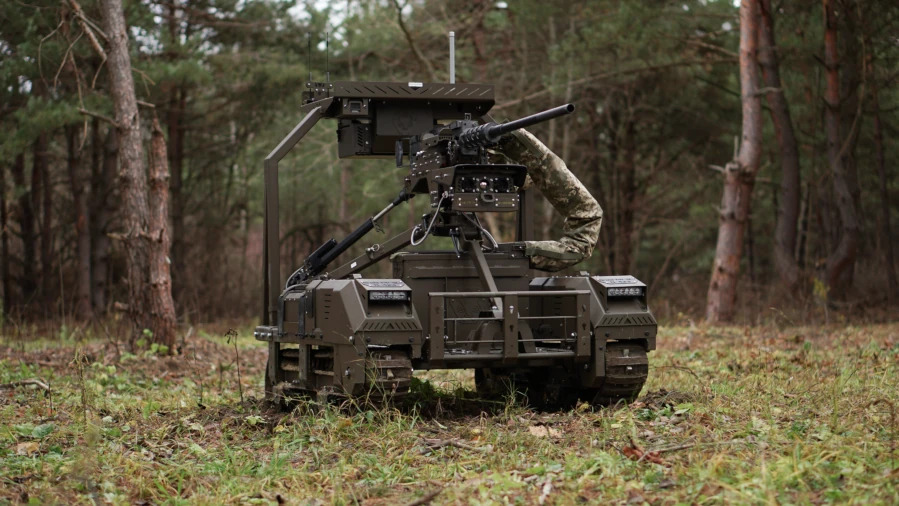
A prime example of this evolving robotic landscape is the Droid TW 12.7, developed by the Ukrainian company DevDroid. This tracked robot is equipped with a remotely controlled M2 Browning machine gun, offering significant firepower. It boasts a operational range of up to 15 miles (25 kilometers) and a top speed comparable to an adult’s walking pace. Operators can maintain communication with the robot via radio, and its capabilities can be further enhanced by integrating with Starlink’s satellite service, ensuring robust connectivity even in contested electronic warfare environments. DevDroid’s marketing materials highlight the robot’s capacity to perform various missions, underscoring its versatility in modern combat scenarios.
Challenges and Competition in the Robotic Arms Race
Despite these advancements, military robots are not without their vulnerabilities. They remain susceptible to enemy drones and face significant challenges navigating the complex, battle-scarred terrain. A deputy battalion commander of Ukraine’s 38th Marine Brigade shared with The Kyiv Independent that, in four out of five attempted missions, robots tasked with evacuating wounded soldiers failed to reach their objectives due to these environmental and operational impediments.
Communication disruptions, including signal loss and enemy electronic warfare, also pose a considerable threat, as noted by the Lowy Institute. Moreover, Ukraine’s robotic advancements are occurring within a broader arms race, with the Russian military also escalating its deployment of robots on the frontlines during the winter of 2025-2026. This competitive dynamic underscores the rapid pace of innovation and adoption in robotic warfare.
Implications for Future Warfare and Force Structure
The surge in ground robot deployment can be viewed as a direct response to the heightened lethality of modern warfare, driven by drone technology. Current-generation robots may not offer a decisive technological advantage in themselves but serve as crucial tools for military commanders to mitigate risks to human soldiers on the battlefield. This strategic rationale is exemplified by the commander of Ukraine’s 3rd Army Corps, who suggested that units integrating more robots could potentially reduce their infantry ranks by up to 30 percent by the end of the year. If Ukraine achieves this goal, it would represent another significant step in the increasing integration of robotic systems into conventional military operations, potentially redefining force structures and combat doctrines for years to come.

The ongoing development and deployment of these robotic systems highlight a profound shift in military strategy, where the preservation of human life is increasingly being prioritized through the delegation of dangerous tasks to autonomous and remotely operated machines. This trend, accelerated by the realities of the Russo-Ukrainian War, is likely to influence military planning and technological investment worldwide, shaping the future of conflict.
Timeline of Key Developments:
- Last Year (Kharkiv Oblast): 3rd Separate Assault Brigade allegedly uses flying drones and "kamikaze" ground robots against fortified Russian positions, leading to reported surrenders.
- Early 2026: Ukrainian military sees a threefold increase in uncrewed ground vehicle missions over five months.
- March 2026: Over 9,000 robotic missions conducted by Ukrainian forces.
- Recent Months: Ukrainian President Volodymyr Zelenskyy claims autonomous robotic victories and highlights over 22,000 robot missions in three months.
- Winter 2025-2026: Russian military also increases its use of robots on the frontlines.
- February 2026: Drones create a "kill zone" extending 12 miles beyond frontline positions.
- Current: Ukraine actively integrates robots for supply, medical evacuation, and combat roles, with a goal to reduce infantry ranks by up to 30 percent.
Official Responses and Analysis:
President Zelenskyy’s pronouncements serve as a key indicator of Ukraine’s strategic emphasis on robotic warfare. While the claims of autonomous battlefield victories require independent verification, they reflect a powerful narrative of technological advancement and resilience. The Ukrainian Ministry of Defense’s reported increases in UGV missions provide concrete data supporting this strategic pivot.
The challenges acknowledged by military personnel, such as the failure of evacuation robots and communication vulnerabilities, offer a realistic counterpoint to the optimistic claims. These issues highlight the ongoing development needed to ensure the reliability and effectiveness of robotic systems in complex combat environments.
The analysis from institutions like the Lowy Institute and reports from outlets like Politico and The Kyiv Independent provide broader context, framing Ukraine’s robotic surge within the larger trends of modern warfare dominated by drones and electronic warfare. The competitive aspect with Russia’s own robotic advancements further emphasizes the strategic importance of this technological domain.
The potential reduction in infantry ranks, as suggested by a 3rd Army Corps commander, points to a fundamental re-evaluation of military manpower requirements in the face of robotic integration. This could signal a paradigm shift in how armies are structured and operated in the future, with significant implications for recruitment, training, and overall military doctrine.

