
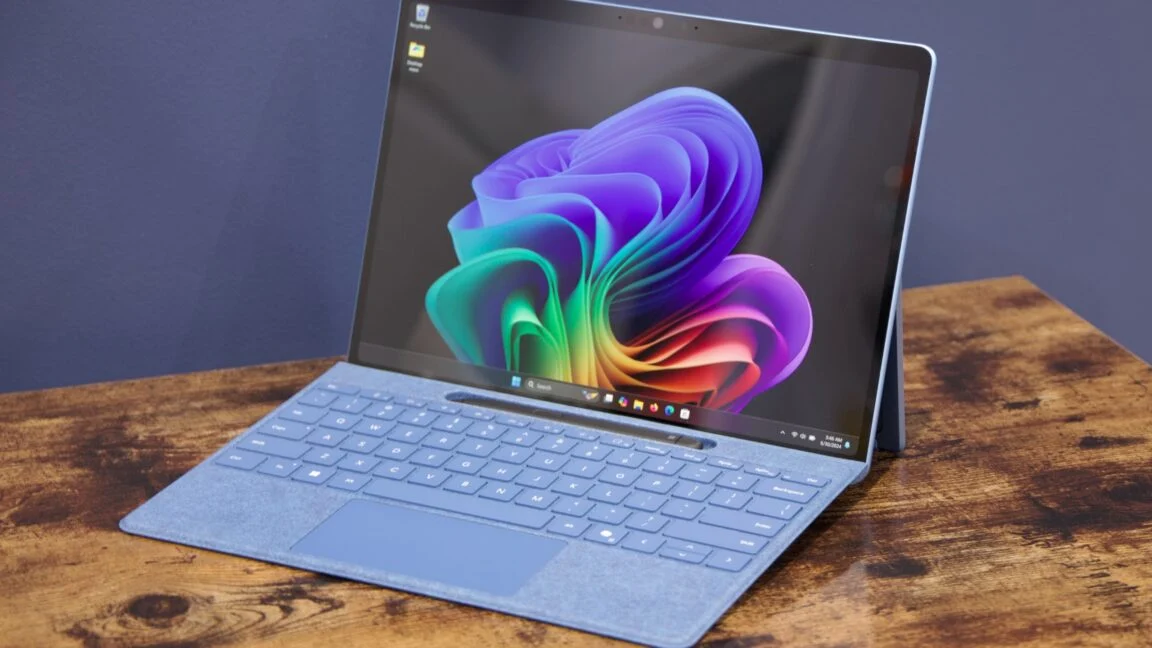
Microsoft has implemented substantial price increases across its Surface PC lineup, a move that will see consumers paying significantly more for devices that were once available at considerably lower price points. This escalation in cost, particularly for entry-level and higher-end models, comes as the company cites escalating memory and component costs as the primary driver. The shift marks a notable departure from the brand’s previous pricing strategies, effectively raising the baseline cost of entry for new Surface devices to $1,500, with no new models now available below the $1,000 threshold.
The price adjustments are widespread, affecting both the popular Surface Pro tablet and the Surface Laptop ranges. The 12-inch Surface Pro tablet, which initially launched with a starting price of $799, has seen its entry-level cost climb to $1,049, representing a $250 increase. Similarly, the 13-inch Surface Laptop, which debuted at $899, now commands a starting price of $1,149, also a $250 jump. These increases represent a substantial premium for consumers looking to acquire these devices.
Even more pronounced are the price hikes for the more premium configurations and newer iterations. The 2024 models of the higher-end Surface Laptop and the 13-inch Surface Pro, which both initially launched at $999, have experienced a significant surge. In 2025, their entry-level versions, equipped with 256GB of storage, were discontinued. Subsequently, the remaining configurations of these models have seen their starting prices escalate to $1,499. This represents a substantial $500 increase from their initial launch price of $999 for the higher-end versions, and a $300 increase from their 2025 price point of $1,199. This tiered approach to price increases suggests a strategic recalibration of the Surface brand’s positioning within the premium PC market.
The Root of the Price Surge: Component Costs and Supply Chain Disruptions
Microsoft’s official explanation for these aggressive price hikes centers on "recent increases in memory and component costs." This statement aligns with a broader trend impacting the entire consumer electronics industry throughout the past year. The global technology sector has been grappling with persistent supply chain challenges, particularly concerning critical components like RAM (Random Access Memory) and storage chips (SSDs).
These shortages have created a ripple effect across the market, leading to a cascade of consequences:
- Delayed Product Launches: The scarcity of essential components has forced many manufacturers, including those in the PC and smartphone sectors, to postpone the release of new products. This has frustrated consumers eager for the latest technology and disrupted product roadmaps for tech giants.
- Depleted Stock of Existing Products: Even for devices already on the market, the inability to secure sufficient components has led to widespread stockouts. This has made it difficult for consumers to purchase popular models, further exacerbating demand and potentially contributing to inflated aftermarket prices.
- Increased Manufacturing Costs: The reduced availability of RAM and storage chips, coupled with increased demand, has naturally driven up their prices. This directly impacts the Bill of Materials (BOM) for any electronic device that relies on these components, forcing manufacturers to either absorb the costs, which impacts profit margins, or pass them on to consumers.
- Broader Economic Factors: Beyond specific component shortages, broader economic factors such as inflation, rising shipping costs, and geopolitical instabilities have also contributed to the overall increase in manufacturing expenses for electronics.
The impact of these supply chain issues is not confined to high-end devices. As evidenced by the price hike on Raspberry Pi units, even small, single-board computers have been affected by the ongoing RAM crisis, experiencing multiple price increases within a short period. This underscores the pervasive nature of the problem, affecting manufacturers of all sizes and across various product categories.
A Timeline of Escalating Prices
To fully grasp the magnitude of the current price adjustments, a brief look at the historical pricing of Surface devices provides valuable context.
- Early Generations (e.g., Surface Pro 3/4, Surface Laptop 1): These devices often launched with competitive pricing, aiming to establish a strong foothold in the nascent 2-in-1 and premium laptop markets. Entry-level configurations were frequently priced below $1,000, making them accessible to a wider range of professionals and students.
- Mid-Generation Evolution (e.g., Surface Pro 7, Surface Laptop 3): While prices remained relatively stable for many models, there were gradual increases in the cost of higher-end configurations and for devices offering enhanced specifications. The introduction of more powerful processors and larger storage options naturally led to higher price tags.
- The Pre-2024 Era (e.g., Surface Pro 8/9, Surface Laptop 4/5): The trend of consistent pricing for entry-level models continued, with the $999 starting price point for some Surface Pro and Surface Laptop configurations becoming a common benchmark. This strategy aimed to position Surface as a premium yet attainable option within the Windows ecosystem.
- The 2024-2025 Transition and the Current Hikes: This period marks a significant inflection point. As detailed earlier, devices that previously started at $999 have now ascended to $1,499. The discontinuation of 256GB entry-level models and the subsequent price increase for remaining configurations signify a deliberate move to elevate the perceived value and price point of the Surface brand. This aligns with the broader industry trend of manufacturers focusing on higher-margin premium devices amidst supply chain pressures.
This timeline illustrates a gradual evolution in pricing, but the recent hikes represent a more abrupt and substantial shift, signaling a potential redefinition of the Surface brand’s market segment.
Analysis of Implications for Consumers and the Market
The significant price increases for Microsoft’s Surface line have several critical implications for both consumers and the broader PC market.
For Consumers:
- Reduced Affordability: The most immediate impact is the decreased affordability of Surface devices. Consumers who previously considered a Surface as a premium but attainable option may now find it out of their budget. This could lead to a search for alternative devices from competing manufacturers or a reconsideration of their hardware needs.
- Shifting Value Proposition: Microsoft’s decision to raise prices suggests a strategic shift in how it wants the Surface brand to be perceived. The focus may be moving more explicitly towards the high-end, premium segment, where profit margins are typically higher, and where the brand can differentiate itself through superior build quality, unique form factors, and potentially exclusive features.
- Increased Competition: As Surface devices become more expensive, competitors offering comparable specifications at lower price points will likely see increased interest. Brands like Dell, HP, and Lenovo, which offer a wide range of laptops and 2-in-1s at various price tiers, may become more attractive alternatives for budget-conscious consumers.
- The "Snapdragon X Elite" Factor: While not directly mentioned as the cause of the price hikes in the provided text, the anticipation of new Surface devices featuring Qualcomm’s Snapdragon X Elite processors, known for their enhanced AI capabilities and power efficiency, might be a contributing factor to Microsoft’s pricing strategy. If these new devices are positioned as premium offerings, the current price increases could be a prelude to the pricing of those upcoming models. Consumers might be expected to pay a premium for these next-generation processors and the associated advancements in computing.
For the Market:
- Reinforcing the Premium Segment: Microsoft’s move could further solidify the trend of premiumization within the PC market. As component costs remain elevated, manufacturers may increasingly focus on higher-margin premium devices rather than competing aggressively in the budget segment.
- Potential for Market Share Shifts: If the price increases are perceived as excessive by consumers, it could lead to a decline in Surface market share, particularly in segments where price is a primary purchasing factor. Conversely, if the premium positioning is successful, Microsoft could strengthen its hold on the high-end market.
- Impact on Innovation Pace: While component shortages can slow down innovation, the increased investment in premium devices by manufacturers might also spur innovation in areas like advanced materials, display technology, and integrated AI features, which are often hallmarks of high-end computing.
- Microsoft’s Ecosystem Strategy: The Surface line is an integral part of Microsoft’s broader hardware and software ecosystem strategy. By repositioning Surface devices at a higher price point, Microsoft might be aiming to create a clearer distinction between its premium hardware offerings and the more accessible Windows experience delivered through third-party manufacturers.
Official Responses and Industry Context
While specific direct quotes from Microsoft executives regarding these recent price hikes beyond the "component cost" explanation are not provided in the initial source material, the company’s rationale is consistent with industry trends. Reports from sources like Windows Central and Ars Technica have consistently highlighted the pervasive nature of the component shortage crisis.
The timing of these increases, particularly as new processor generations like the Snapdragon X Elite are on the horizon, suggests a calculated strategy. Manufacturers often use such transitions to re-evaluate their pricing structures. The current market conditions, characterized by elevated component costs and robust demand for high-performance devices, provide a conducive environment for such adjustments.
It’s also worth noting that the tech industry has seen price increases for various products in recent years, from gaming consoles to graphics cards, all attributed to similar supply chain and manufacturing cost pressures. Microsoft’s decision to hike Surface prices, therefore, is not an isolated event but rather a reflection of broader economic realities impacting the global electronics market. The company’s ability to maintain its premium brand image while implementing these price increases will be a key factor in its future success within the competitive PC landscape.

