
Five months ago, a meticulously planned assassination attempt orchestrated by Iran’s Islamic Revolutionary Guard Corps (IRGC) targeting Eina Kranz Neiger, the Israeli ambassador to Mexico, was successfully thwarted, starkly exposing the insidious reach of state-sponsored terrorism within the North American nation. This alarming incident has cast a critical spotlight on Mexico’s foreign policy, which increasingly deviates from the unified regional stance against the Islamic Republic and its proxies, a position bolstered by a reinvigorated U.S. foreign policy initiative.
The thwarted plot, which intelligence officials confirm involved IRGC operatives, underscored a dangerous precedent for a country that shares a vast and porous border with the United States. While details of the specific methods and individuals involved in the conspiracy remain under wraps due to ongoing investigations, the intent was clear: to destabilize regional diplomatic relations and project Iranian power into the Western Hemisphere. The incident served as a stark reminder of Iran’s global network of influence and its willingness to employ violence far from its borders, particularly against Israeli and American interests. This attempt, occurring in late 2025, followed a period of escalating tensions in the Middle East and intensified scrutiny of Iran’s activities worldwide, including its support for various militant groups.
A Region Galvanized: Latin America’s Decisive Shift Against Tehran
In the wake of the broader geopolitical landscape characterized by heightened conflict and global counter-terrorism efforts, much of Latin America has demonstrably closed ranks against the Iranian regime and its allied groups. This concerted regional shift marks an unprecedented departure from past ambiguities, with numerous nations taking decisive steps to counter what they perceive as a growing threat to their national security and regional stability. This pivot is largely attributed to a revised U.S. foreign policy, informally dubbed the "Donroe Doctrine," a corollary to the historic Monroe Doctrine, which emphasizes robust engagement and security cooperation in the Americas to counter adversarial foreign influences.
Across the continent, a wave of legislative and diplomatic actions has swept through capitals. Alleged members of Hezbollah, a Lebanese Shiite political party and militant group backed by Iran, have been apprehended in several countries. Military cooperation agreements with Tehran, once discreetly nurtured, have been severed. Iranian diplomats suspected of illicit activities have faced expulsion, and, crucially, both Hamas and the Islamic Revolutionary Guard Corps have been officially designated as terrorist organizations by an increasing number of Latin American states. This collective action signals a significant recalibration of regional priorities, prioritizing counter-terrorism and security partnerships over non-alignment or engagement with states hostile to U.S. and Israeli interests.
Mexico’s Isolated Path: Divergence from Regional Consensus
In stark contrast to its Latin American neighbors, Mexico has conspicuously refrained from adopting any of these counter-terrorism measures. This policy choice has positioned Mexico as an outlier, raising concerns among international observers and its closest allies, particularly the United States. The reasons behind Mexico’s reluctance are multifaceted, ranging from historical non-interventionist principles to a perceived desire to maintain diplomatic distance from Middle Eastern conflicts. However, the practical implications of this stance are increasingly problematic.
The Iranian Embassy in Mexico City, for instance, is reported to operate not merely as a diplomatic mission but as a significant media hub for disseminating propaganda against the United States and Israel. This alleged activity, which includes the propagation of anti-Western and anti-Semitic narratives, directly contravenes established diplomatic protocols, including the fundamental tenets of the Vienna Convention on Diplomatic Relations, which strictly governs the conduct and functions of diplomatic missions. Such operations from sovereign territory raise serious questions about Mexico’s commitment to upholding international norms and its vigilance against foreign influence operations.
Furthermore, migration data reveals an alarming trend: more than 1,200 Iranian nationals entered Mexico between January and February of this year (2026), a figure that represents a three-fold increase compared to the entirety of 2025. This record influx of individuals from a nation designated as a state sponsor of terrorism by the U.S. raises significant security concerns regarding potential infiltration by agents or sympathizers of the Iranian regime or its proxies. The lack of robust screening mechanisms or heightened scrutiny for these arrivals poses a tangible risk to both Mexican and regional security.
Mexico, despite being the United States’ primary trading partner, has chosen to align itself with the more radical political stances adopted by the governments of Colombia and Brazil. These nations have openly labeled Israel’s actions in ongoing conflicts as "genocidal" and have vociferously condemned U.S. military interventions, including those targeting Iranian assets and previous actions against the Venezuelan government. This ideological convergence places Mexico in a bloc that is increasingly at odds with Washington on critical geopolitical issues, creating friction in an otherwise vital bilateral relationship.
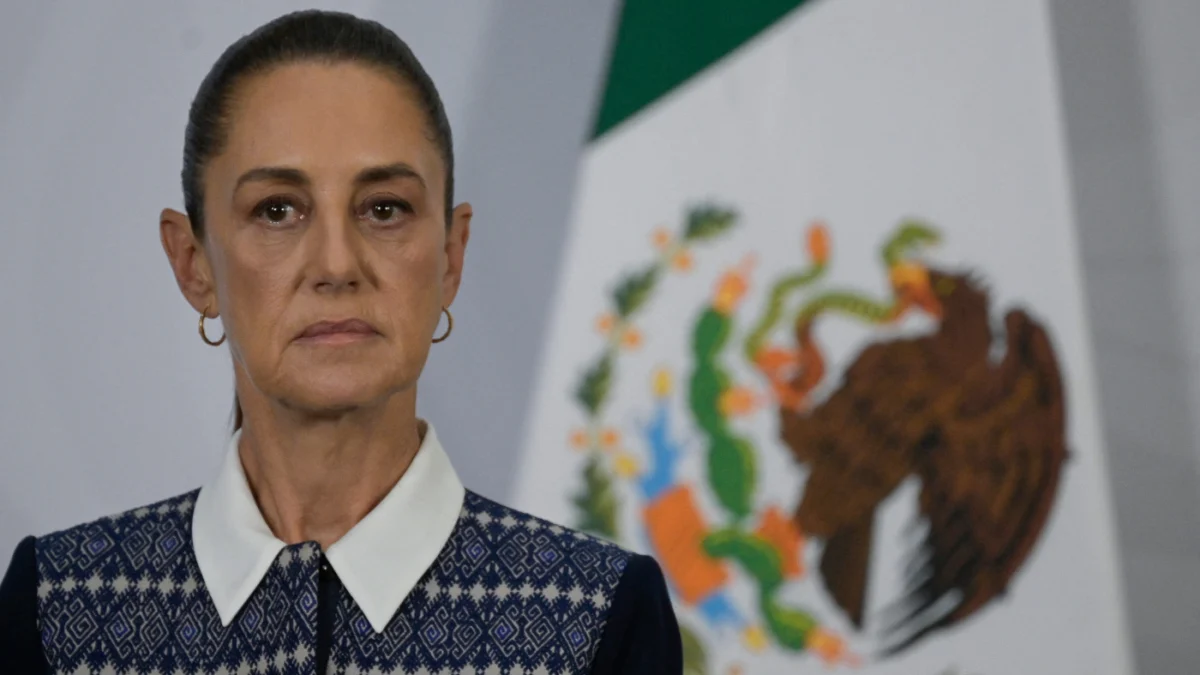
Adding to this complex picture, Mexican President Claudia Sheinbaum recently announced plans to deepen ties with Spain, a European Union member state that has demonstrated a reluctance to cooperate with the United States regarding the conflict with Iran. President Sheinbaum is also slated to participate in a "Summit for Democracy" alongside countries that maintain hardline positions against Israel and the broader global effort to combat Iranian-backed terrorism. This strategic outreach further underscores Mexico’s independent, and at times oppositional, foreign policy direction, which complicates multilateral efforts to forge a united front against global security threats.
The "Donroe Doctrine": A Catalyst for Change in the Americas

Despite Mexico’s opposition, the broader Latin American landscape has been dramatically reshaped by what is referred to as the "Donroe Doctrine." This policy, championed by the Trump administration, represents a more assertive U.S. posture in the Western Hemisphere, specifically aimed at countering the influence of adversarial states like Iran, China, and Russia. It re-emphasizes the principles of hemispheric security and stability, demanding greater accountability from regional partners regarding their engagement with hostile foreign powers. The tangible results of this doctrine are evident across South and Central America:
-
Bolivia’s Reversal: Following the conclusion of two decades of socialist rule, Bolivia’s new government has embarked on a significant foreign policy overhaul. It has reestablished diplomatic relations with Israel, which had been severed during the previous administration. Crucially, La Paz has cancelled a military cooperation agreement with Iran, originally signed in 2023 under the previous government, and suspended exchanges concerning border security and the supply of drones. This abrupt shift comes after years of dangerously close ties with Tehran, during which there were credible reports of Hamas and Hezbollah operatives being present within Bolivian territory. The new Bolivian government has since solidified its alliance with the United States and reactivated its partnership with the Drug Enforcement Administration (DEA), signaling a renewed commitment to counter-narcotics and counter-terrorism efforts. This turnaround is particularly significant given Bolivia’s historical receptiveness to Iranian overtures, including potential arms deals and intelligence sharing.
-
Venezuela’s Hesitation: Even Venezuela, long considered Iran’s staunchest ally in South America, has shown signs of distancing itself from the regime. Initially, Caracas issued a statement condemning a recent U.S. action against the "Persian dictatorship." However, within minutes, the statement mysteriously vanished from official channels, and with it, all expressions of solidarity with Tehran. This swift retraction, likely influenced by diplomatic pressures and a pragmatic assessment of its own geopolitical vulnerabilities, suggests a cautious re-evaluation of its alignment with Iran, particularly as U.S. pressure on the Maduro regime remains intense.
-
Costa Rica’s Firm Stance: In Central America, Costa Rica has unequivocally slammed the door on Iran’s theocratic regime. San José has formally designated Hezbollah, Hamas, the IRGC, and Ansar Allah (the Houthi militia) as terrorist organizations. This comprehensive designation reflects a proactive approach to national security, acknowledging the interconnectedness of global terrorist networks and the need for clear legal frameworks to combat them.
-
Argentina’s Decisive Action: Under the leadership of President Javier Milei, Argentina has adopted a markedly pro-Western foreign policy. Buenos Aires expelled Mohsen Soltani, Iran’s top diplomatic representative, from the country, citing national security concerns. Concurrently, Milei’s government officially declared the IRGC a terrorist organization, a move that carries significant legal and financial implications for any entities or individuals found to be supporting it within Argentina. This action is particularly resonant given Argentina’s history as the target of two major terrorist attacks in the 1990s (AMIA and Israeli Embassy bombings), widely attributed to Iran and Hezbollah.
-
Ecuador’s Crackdown: Ecuador has similarly designated Hamas, Hezbollah, and the Islamic Revolutionary Guard Corps as terrorist organizations. The country’s government has reported the capture of an alleged Hezbollah member and the deportation of an Iranian national, demonstrating a tangible commitment to enforcing these new designations and rooting out foreign terrorist elements within its borders. These actions come amidst a broader crackdown on organized crime and drug trafficking, with authorities increasingly recognizing the nexus between these illicit activities and international terror groups.
-
Paraguay’s Unwavering Support: Paraguayan President Santiago Peña has been unequivocal in expressing his nation’s unwavering support for Israel and the United States in their fight against Iran and its proxies. He highlighted that Paraguay has already designated Hamas, Hezbollah, and the IRGC as terrorist organizations, reflecting a long-standing commitment to counter-terrorism efforts in the Tri-Border Area, a region notorious for illicit trade and a historical presence of Hezbollah financing networks.
-
Panama’s Condemnation: Panama has also voiced strong condemnation of Iran’s brutal attacks against non-military targets in Middle Eastern nations. The strategically vital Central American country has joined international calls to ensure freedom of navigation in the Strait of Hormuz and uphold respect for international trade laws, recognizing the global economic implications of Iranian aggression in critical maritime chokepoints.
Implications for US-Mexico Relations and Regional Security
Mexico, while a great nation with immense cultural and economic ties to the United States, presents itself as an increasingly complicated partner on critical security matters. On one hand, it struggles to accept robust U.S. assistance to effectively eradicate powerful drug trafficking organizations that plague both nations. On the other, its persistent refusal to officially designate Hezbollah, Hamas, and the IRGC as terrorist organizations creates a significant blind spot in regional counter-terrorism efforts. This inconsistency undermines shared security objectives and raises questions about Mexico’s strategic alignment.
The contrast between Mexico’s stance and the overwhelming regional consensus creates a unique geopolitical challenge. While the "New Monroe Doctrine" has undeniably spurred an unprecedented wave of designations against Iran’s destructive proxies across Latin America—a region that previously often welcomed Iranian diplomats and military personnel—Mexico remains a crucial exception. This divergence complicates bilateral security cooperation and could potentially make Mexico a more attractive haven for malign actors seeking to operate under less scrutiny.
These are neither random nor isolated events; they are the direct results of a deliberate and consistent leadership strategy emanating from the United States. A policy of "peace through strength" is not merely an aspirational promise but a consistent strategy that is yielding tangible, if sometimes uneven, results across the Western Hemisphere. The message from Washington, and increasingly from its Latin American allies, is clear: the Iranian regime and its network of proxies are no longer welcome to operate with impunity in the Americas. Mexico’s ongoing recalcitrance therefore stands as a significant test for both its own security and the broader regional architecture against global terrorism. The pressure on Mexico to align with its neighbors and its most important ally on these critical security issues is expected to intensify.
Arturo McFields is an exiled journalist, former Nicaraguan ambassador to the Organization of American States, and a former member of the Norwegian Peace Corps. He is an alumnus of the National Defense University’s Security and Defense Seminar and the Harvard Leadership course.

