
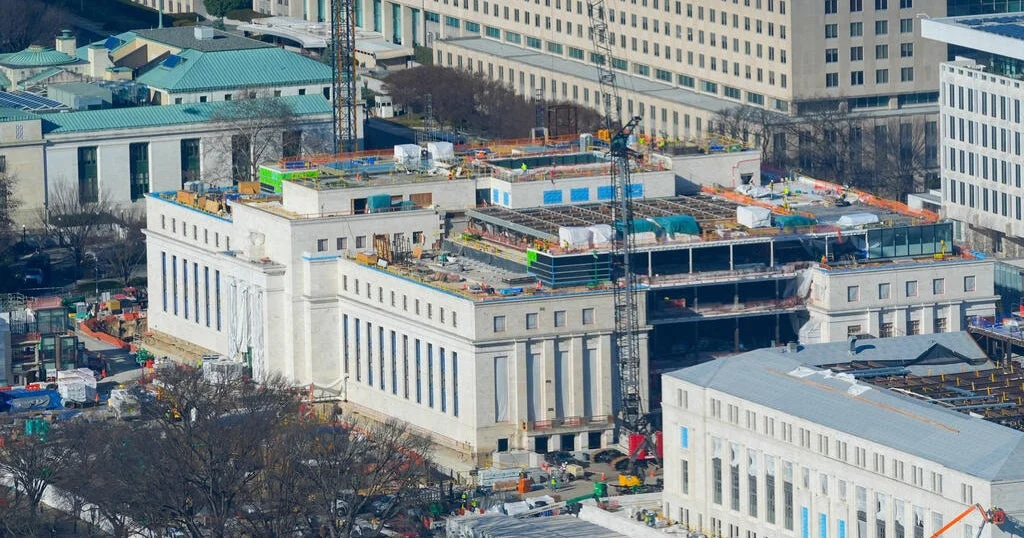
Prosecutors from the U.S. Attorney’s Office led by Jeanine Pirro in Washington D.C. made an unannounced visit to the Federal Reserve’s headquarters on Tuesday, attempting to gain access to ongoing renovations at the building. This highly unusual move comes amidst a months-long active criminal investigation into the renovation project and testimony given by Federal Reserve Chair Jerome Powell, which has been widely perceived as politically motivated. The two prosecutors, accompanied by an investigator, were denied access to the site and were instead directed to contact the Fed’s legal team, according to a source familiar with the matter and a letter reviewed by CBS News.
An Unprecedented Visit and Immediate Rebuff
The incident unfolded with Carlton Davis and Steven Vandervelden, two prosecutors, and investigator Matthew Fox-Moles, appearing at the Federal Reserve without prior notification. They reportedly informed staff that their objective was to "check on progress" of the renovations and requested a "tour" of the site. Such direct, unannounced visits by federal prosecutors to an institution under active investigation, particularly one as sensitive as the nation’s central bank, are considered highly unorthodox within legal circles. The Federal Reserve’s robust security protocols and its standard operating procedures for handling legal inquiries ensured the uninvited party was quickly turned away.
Robert Hur, serving as the Fed’s outside legal counsel, promptly articulated the institution’s position in a letter to the prosecutors, reviewed by CBS News. Hur, notably a former Justice Department special counsel who investigated former President Joe Biden, underscored the inappropriateness of the prosecutors’ actions. "As you know, Chief Judge Boasberg has concluded that your interest in the Federal Reserve’s renovation project was pretextual," Hur wrote, adding, "Should you wish to challenge that finding, the courts provide an avenue for you; it is not appropriate for you to try to circumvent it." This firm rebuke highlighted the legal team’s view that the visit was an attempt to bypass judicial authority and established legal procedures.
The Genesis of a Controversial Investigation
The criminal investigation at the heart of this dispute was initiated by the U.S. Attorney’s Office in D.C. in November, focusing on a multi-year, costly renovation project at the Federal Reserve’s headquarters. The project has drawn scrutiny due to its substantial cost, estimated at about $2.5 billion so far, which Pirro’s office claims represents "almost 80% over the original construction budget." Pirro, in a statement to CBS News, emphasized this point, stating, "Any construction project that has cost overruns of almost 80% over the original construction budget deserves some serious review. And these people are in charge of monetary policy in the United States?"
The probe intensified in January when Federal Reserve Chair Jerome Powell publicly revealed that the central bank had received grand jury subpoenas from the Justice Department. These subpoenas were part of a criminal investigation specifically targeting Powell, related to his testimony before the Senate Banking Committee in June 2025 regarding the renovation project. Powell, however, quickly characterized the investigation as an attempt to intimidate the Fed, particularly given his past disagreements with President Trump over interest rate policy.
Judicial Intervention and the "Pretextual" Finding
The legality and motivation behind the subpoenas were soon challenged. In a significant development in March, Chief Judge James Boasberg of the U.S. District Court for the District of Columbia took the extraordinary step of quashing the pair of subpoenas. His ruling delivered a scathing assessment of the Justice Department’s actions, concluding that the subpoenas were a "pretext" designed to pressure Powell into either voting for lower interest rates or resigning from his position.
Judge Boasberg’s ruling, as detailed in court filings, stated: "There is abundant evidence that the subpoenas’ dominant (if not sole) purpose is to harass and pressure Powell either to yield to the President or to resign and make way for a Fed Chair who will. On the other side of the scale, the Government has offered no evidence whatsoever that Powell committed any crime other than displeasing the President." He unequivocally added, "these subpoenas are mere pretexts." This judicial condemnation underscored concerns about the integrity of the investigation and the potential for political weaponization of the justice system against independent institutions.
Despite this forceful ruling, the Justice Department sought reconsideration from Judge Boasberg, a request he subsequently denied earlier this month, reinforcing his original decision to quash the subpoenas. This sequence of events, culminating in the unannounced visit, suggests a continued determined effort by Pirro’s office to pursue the investigation despite clear judicial directives challenging its legitimacy.
Broader Implications for Prosecutorial Conduct and Institutional Independence
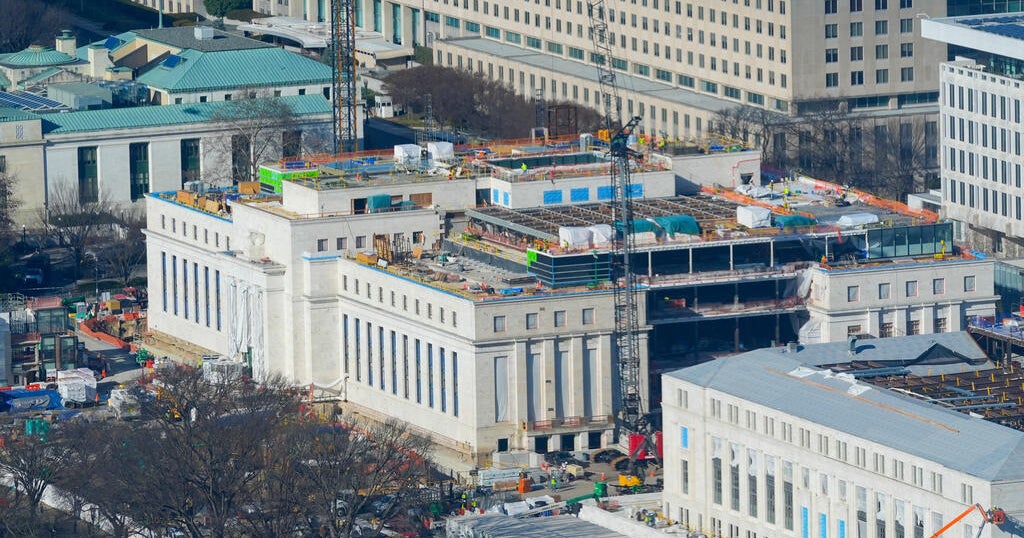
The decision by federal prosecutors to physically visit the renovation site, particularly after a federal judge had deemed their subpoenas "pretextual," raises serious questions about adherence to legal norms and professional conduct. The original article draws a parallel to a similar move by Pirro’s predecessor, who reportedly visited New York Attorney General Letitia James’s house. That action had drawn allegations from James’s attorney that the office had violated rules of professional conduct for attorneys and internal Justice Department policies, which mandate fair and even-handed treatment in criminal cases. This pattern of behavior suggests a potential disregard for established protocols, risking accusations of impropriety and overreach.
The Federal Reserve, established by Congress in 1913, functions as the central bank of the United States. Its primary responsibilities include conducting monetary policy, supervising and regulating banking institutions, and maintaining the stability of the financial system. Crucially, the Fed is designed to operate independently of direct political influence, a principle considered vital for effective monetary policy decisions that often require long-term perspectives free from short-term political pressures. Unlike most government agencies, the Federal Reserve is not funded through congressional appropriations or tax dollars; instead, it generates its own income primarily from interest on government securities acquired through open market operations. This financial independence further underpins its operational autonomy.
Political Undercurrents and the President’s Influence
The investigation into Jerome Powell and the Federal Reserve’s renovations is deeply intertwined with the broader political landscape, particularly the strained relationship between President Trump and Chair Powell. President Trump has frequently expressed his displeasure with Powell’s monetary policy decisions, specifically his reluctance to implement rapid interest rate cuts. This public criticism has been a consistent feature of Trump’s presidency, signaling a desire for greater presidential influence over the ostensibly independent central bank.
Last summer, President Trump personally visited the Fed’s headquarters to tour the renovation project. During this visit, with television cameras rolling, Powell and Trump reportedly engaged in an open argument about the scope and cost overruns of the project. This public confrontation served as a clear indicator of the tensions simmering between the executive branch and the Federal Reserve, setting a backdrop for the subsequent criminal investigation.
The ongoing probe has also created complications for President Trump’s efforts to nominate a successor to Powell as Fed chair when his term concludes in May. Republican Senator Thom Tillis of North Carolina, a member of the influential Senate Banking Committee, has publicly stated that he will not vote to advance President Trump’s preferred nominee for the position, Kevin Warsh, until the Justice Department’s investigation into Powell is fully resolved. This stance highlights how the probe has spilled over into the legislative process, impacting crucial appointments and potentially delaying the leadership transition at the central bank. Powell, even after his term as chair ends, can remain a member of the central bank’s board and continue voting on monetary policy until early 2028, further extending his potential influence.
The Prosecutors’ Background and Continued Pursuit
The prosecutors involved in the unannounced visit, Carlton Davis and Steven Vandervelden, have previously been associated with other controversial cases under Jeanine Pirro’s leadership. They were reportedly involved in a "failed bid" to indict six sitting congressional Democrats who had produced a video urging military members to reject "illegal orders." In that instance, a grand jury unanimously rejected the charges, a fact CBS News had previously reported. This history adds another layer to the scrutiny surrounding their current actions, suggesting a pattern of aggressive, and at times unsuccessful, prosecutorial endeavors against politically sensitive targets. The investigator who accompanied them to the Fed, Matthew Fox-Moles, is assigned to a special prosecutions team within Pirro’s office, a detail that further underscores the focused nature of this particular investigation.
A spokesperson for the Federal Reserve declined to comment on the matter, a standard institutional response to ongoing legal proceedings. The prosecutors’ surprise visit to the headquarters renovation was initially reported by the Wall Street Journal, bringing the latest development in this contentious saga to public attention.
Looking Ahead: A Test of Institutional Norms
The unannounced visit by prosecutors to the Federal Reserve marks a significant escalation in an already fraught investigation. It challenges established norms of interaction between the Justice Department and independent government bodies, especially in the wake of a clear judicial ruling against the legitimacy of the probe’s underlying motives. The episode underscores the ongoing tensions between political actors seeking to influence economic policy and institutions designed to operate free from such pressures.
The continued pursuit of this investigation, despite judicial setbacks and allegations of political motivation, poses a critical test for the rule of law, the independence of the Federal Reserve, and the ethical boundaries of prosecutorial conduct. The outcome will likely have lasting implications for how future administrations interact with independent agencies and for the public’s perception of fairness and impartiality within the justice system. As the legal and political battles continue, all eyes remain on the delicate balance of power that underpins American governance.

