
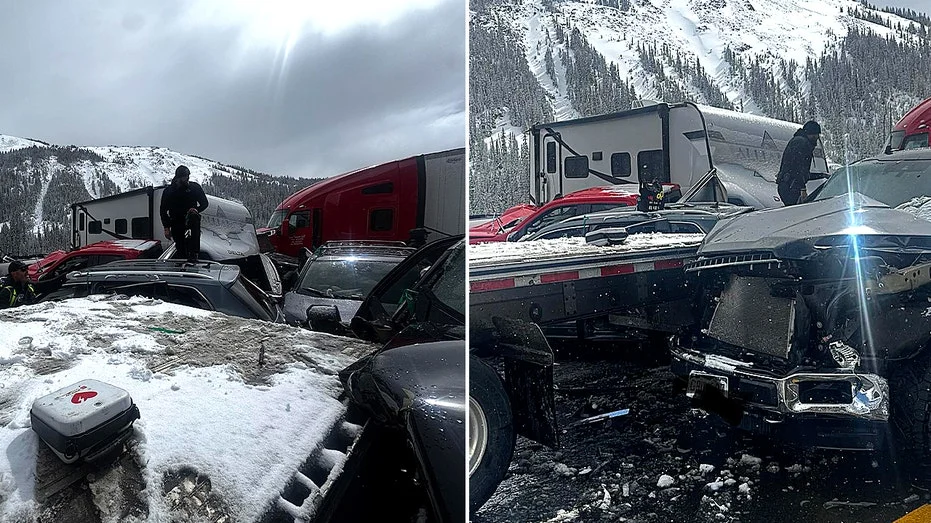
A sprawling, chain-reaction pileup involving at least 75 vehicles brought Interstate 70 to a standstill in the rugged Colorado Rocky Mountains on Tuesday, marking a day of severe travel disruption and hazardous driving conditions. The colossal accident, which unfolded near the Loveland Ski Area and east of the Eisenhower-Johnson Memorial Tunnel, followed a morning plagued by multiple smaller crashes, underscoring the dangers inherent in navigating the high-altitude corridor during inclement weather.
The catastrophic incident, described by authorities as a "severe multi-vehicle crash," forced a complete closure of both eastbound lanes of I-70, a critical artery traversing the Continental Divide. Photos released by the Clear Creek County Sheriff’s Office depicted a chaotic scene of mangled cars, trucks, and SUVs strewn across a snow-covered roadway, with emergency crews meticulously navigating the wreckage to assist stranded motorists. While officials have not yet reported any serious injuries or fatalities from the main pileup, the sheer scale of the incident prompted an immediate and indefinite closure of a vital section of the interstate, causing significant delays and travel headaches for thousands.
A Day of Escalating Highway Hazards
The Tuesday chaos on I-70 was not an isolated event but rather the culmination of a day marked by perilous driving conditions. The Clear Creek County Sheriff’s Office confirmed that the major afternoon pileup was preceded by a series of six separate wrecks earlier in the morning. Five of these earlier incidents occurred on I-70 westbound near mile marker 221, while another was reported on U.S. Highway 40, a parallel route often used to access mountain communities. These initial collisions, which ranged from single-vehicle spinouts to multi-vehicle fender-benders, had been cleared before the afternoon’s monumental crash.
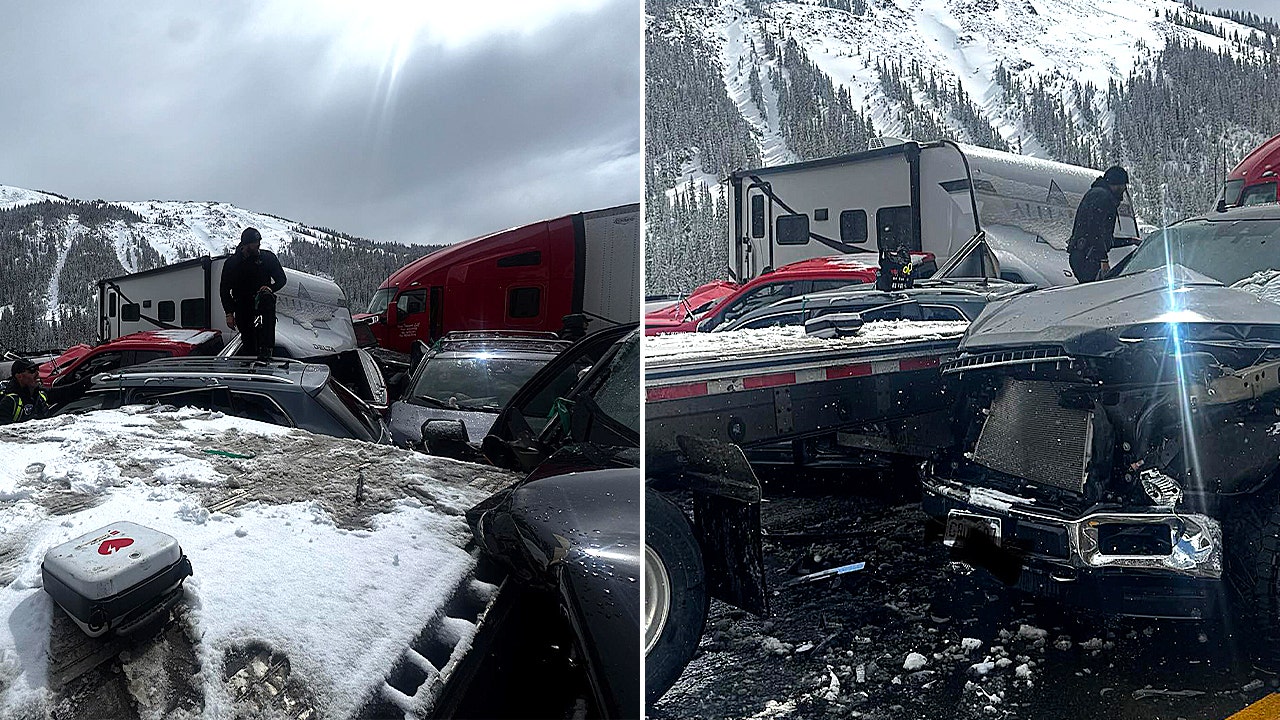
However, the pattern of these earlier incidents served as a stark precursor to the afternoon’s disaster. The primary 75-vehicle pileup occurred on I-70 eastbound near mile marker 216, a mere five miles east of the previous cluster of accidents, further highlighting the localized nature of the severe weather and its impact on road safety. The consistent presence of snow and ice, coupled with potentially reduced visibility, had rendered the mountain passes exceptionally dangerous, challenging even the most experienced drivers.
The Perilous I-70 Mountain Corridor
Interstate 70 through the Colorado Rockies is a lifeline for both local commuters and the state’s vibrant tourism industry, particularly connecting Denver with popular ski resorts and outdoor recreation areas. However, this critical transportation artery is also notoriously challenging, especially during the winter and spring months when snowstorms can descend rapidly and unpredictably. The stretch of highway near the Eisenhower-Johnson Memorial Tunnel, situated at an elevation of over 11,000 feet, is particularly susceptible to extreme weather phenomena.
The Eisenhower-Johnson Memorial Tunnel itself is an engineering marvel, one of the highest vehicular tunnels in the world, facilitating travel through the Continental Divide. Its eastern approach, where the pileup occurred, features steep grades and winding sections of road that can become treacherous with even a light dusting of snow. This area, in proximity to Loveland Ski Area, is well-known to locals as a significant bottleneck. During peak ski season weekends and spring break, the convergence of recreational traffic heading back to Denver, coupled with regular commuter flow, often leads to heavy congestion. When adverse weather is layered onto this already high-traffic scenario, the potential for large-scale incidents like Tuesday’s pileup increases dramatically.
Winter conditions in the Colorado Rockies are characterized by sudden changes in temperature, heavy snowfall, and the formation of black ice, which is virtually invisible to drivers. These factors drastically reduce tire traction, increase braking distances, and impair driver visibility, creating a recipe for disaster in high-speed, high-volume traffic corridors. The images from the scene, showing vehicles buried in fresh snow and twisted metal, serve as a grim testament to the potent combination of challenging geography and unforgiving weather.

Emergency Response and Lingering Disruptions
The immediate aftermath of the 75-vehicle pileup triggered a massive emergency response involving multiple agencies. The Clear Creek County Sheriff’s Office, Colorado Department of Transportation (CODOT), Colorado State Patrol, and local fire and rescue units mobilized quickly to the scene. Their primary objectives were to assess the situation, provide aid to any injured individuals, and begin the arduous task of disentangling the dozens of vehicles.
CODOT swiftly announced the complete closure of both directions of I-70 at the scene, specifically stating, "The closure is due to a severe multi-vehicle crash on the east side of Eisenhower-Johnson Memorial Tunnel that took place this afternoon. There is currently no estimated time for reopening." This declaration underscored the severity and complexity of the incident, signaling that the cleanup and investigation would be a prolonged effort. Drivers approaching the tunnel were advised to expect to be turned around, effectively halting east-west travel through the mountain pass for an unknown duration.
The closure of I-70, a critical commercial and commuter route, carries significant implications. Beyond the immediate inconvenience to travelers, such disruptions can lead to substantial economic losses, impacting freight transport, tourism, and local businesses dependent on the free flow of traffic. Alternate routes, often less direct and equally susceptible to winter weather, quickly become overloaded, further exacerbating travel delays across the region.
Official Guidance and Investigation

In the wake of the extensive pileup and the day’s earlier accidents, officials reiterated crucial safety messages for motorists. The Clear Creek County Sheriff’s Office issued a direct plea to the public: "Bottom line, we need folks to slow down, increase following distance, and make it to their destination safely." This statement highlights a common contributing factor to multi-vehicle accidents in adverse conditions: drivers failing to adjust their speed and following distance adequately for slippery roads and reduced visibility.
The Colorado State Patrol, as the lead agency, has commenced a comprehensive investigation into the exact causes of the 75-vehicle pileup. Their inquiry will likely examine various factors, including road conditions, driver behavior, vehicle speeds, and potential contributing mechanical failures. While no injuries have been reported, the investigation will meticulously document the scene, interview witnesses, and analyze vehicle damage to reconstruct the sequence of events. The absence of initial injury reports is remarkable given the scale of the collision and points to the possibility that many impacts, while extensive, may have occurred at relatively lower speeds due to the congestion, or that modern vehicle safety features absorbed much of the impact energy.
Broader Implications and Future Outlook
The incident serves as a potent reminder of the inherent risks of mountain driving, particularly during periods of volatile weather. It underscores the critical importance of preparedness, both for individual drivers and for state agencies responsible for road maintenance and emergency response. Colorado’s transportation authorities continually invest in technologies and practices to mitigate winter driving hazards, including extensive plowing, de-icing operations, and electronic signage to warn drivers of impending dangers. However, even with these measures, the sheer unpredictability of mountain weather can quickly overwhelm preventive efforts.
Looking ahead, the long-term implications of such an event include a renewed focus on driver education regarding winter driving techniques, the potential for enhanced traffic management strategies during peak hazardous periods, and an ongoing evaluation of road infrastructure in vulnerable areas. As the climate continues to experience variability, with more intense and unpredictable weather patterns, the challenges of maintaining safe and efficient transportation corridors like I-70 will only grow.

The cleanup and reopening of I-70 will be a complex operation, requiring the careful removal of damaged vehicles, thorough inspection of the roadway for structural integrity, and potentially further snow removal and de-icing. Until then, travelers are strongly advised to check CODOT’s cotrip.org website or other official travel resources for the latest road conditions and alternative routes. The massive pileup on I-70 is a stark illustration of how quickly normal travel can devolve into a chaotic and dangerous situation when nature’s forces collide with human activity on the open road.

