
While the decline in enrollment across America’s traditional public school systems has evolved into a persistent, slow-moving crisis, a parallel phenomenon is taking hold: the rapid proliferation of microschools. Often described as a 21st-century iteration of the historic one-room schoolhouse, these boutique educational institutions are typically private-pay operations serving fewer than 20 students. Once a niche alternative, the sector has seen an unprecedented surge in interest and investment, fueled by post-pandemic shifts in parental priorities and new federal legislative support. According to data from the National Microschooling Center, the number of microschools across the United States has exceeded 100,000, with an estimated total enrollment between one and two million students. As federal tax credits from the Trump administration’s "One Big Beautiful Bill" begin to permeate the educational economy and local districts experiment with their own micro-models, the movement is positioned to move from the periphery of American education to its center.
The Evolution of the Microschooling Movement: A Chronology
The trajectory of microschooling can be divided into three distinct phases: the pre-pandemic niche era, the pandemic-era "pod" explosion, and the current era of institutionalization and legislative expansion. Prior to 2020, microschools existed primarily as experimental outliers or high-end private alternatives in specific urban markets. However, the COVID-19 pandemic served as a massive catalyst. When traditional schools shuttered and shifted to remote learning, parents began forming "learning pods" to provide social interaction and supervised instruction.
By 2022, these temporary pods began to formalize into permanent microschools. The period between 2023 and 2025 saw the rise of national networks such as KaiPod, Prenda, and Primer, which provided the back-end infrastructure—curriculum, insurance, and regulatory compliance assistance—necessary for individual founders to launch schools in their living rooms or commercial spaces. This growth was particularly pronounced in states with robust school-choice policies, such as Arizona and Florida.
The current phase, beginning in 2026, is defined by the implementation of the federal "One Big Beautiful Bill." This legislation introduced significant federal tax credits for educational expenses, effectively lowering the barrier to entry for middle-class families. Simultaneously, traditional school districts, facing the loss of per-pupil funding due to declining enrollment, have begun to launch their own "public microschools" in an attempt to retain families who might otherwise exit the system entirely.
Addressing the "Boy Crisis" in Traditional Classrooms
One of the most significant drivers of the microschooling boom is the growing perception that traditional classroom environments are failing male students. National data from the National Assessment of Educational Progress (NAEP) consistently reveals a widening gender gap; boys are lagging behind girls in reading and writing proficiency, while their historical lead in mathematics and science has largely evaporated as girls have reached parity.
Analysis by the National Center for Education Statistics (NCES) further illustrates this disparity. Statistically, boys earn lower grades throughout their K-12 careers and are significantly less likely to graduate from high school or enroll in college compared to their female counterparts. Furthermore, approximately 18 percent of boys are diagnosed with learning disabilities or special education needs, compared to just 10 percent of girls.
Educational experts suggest that the "sit and self-regulate" model of traditional schooling is often at odds with the developmental needs of many boys, who may require more physical movement and vocalization during the learning process. Microschools, by virtue of their small scale, offer a degree of flexibility that larger institutions struggle to replicate. The intimate setting allows for stronger relational bonds between students and educators, a factor the American Psychological Association’s Task Force on Boys in School has identified as critical for male academic success.
Neurodiversity and the "Neurospicy" Learning Revolution
Beyond gender-based trends, microschools have become a sanctuary for neurodiverse learners. Field research and sector analysis indicate a high concentration of students with ADHD, dyslexia, dysgraphia, anxiety, and autism spectrum disorders within these small-scale environments. Many of these students are classified as "twice-exceptional" (2e)—possessing both high academic potential and significant learning challenges.
To accommodate these students, microschool leaders are reimagining the physical and pedagogical landscape of the classroom. Common adaptations include:
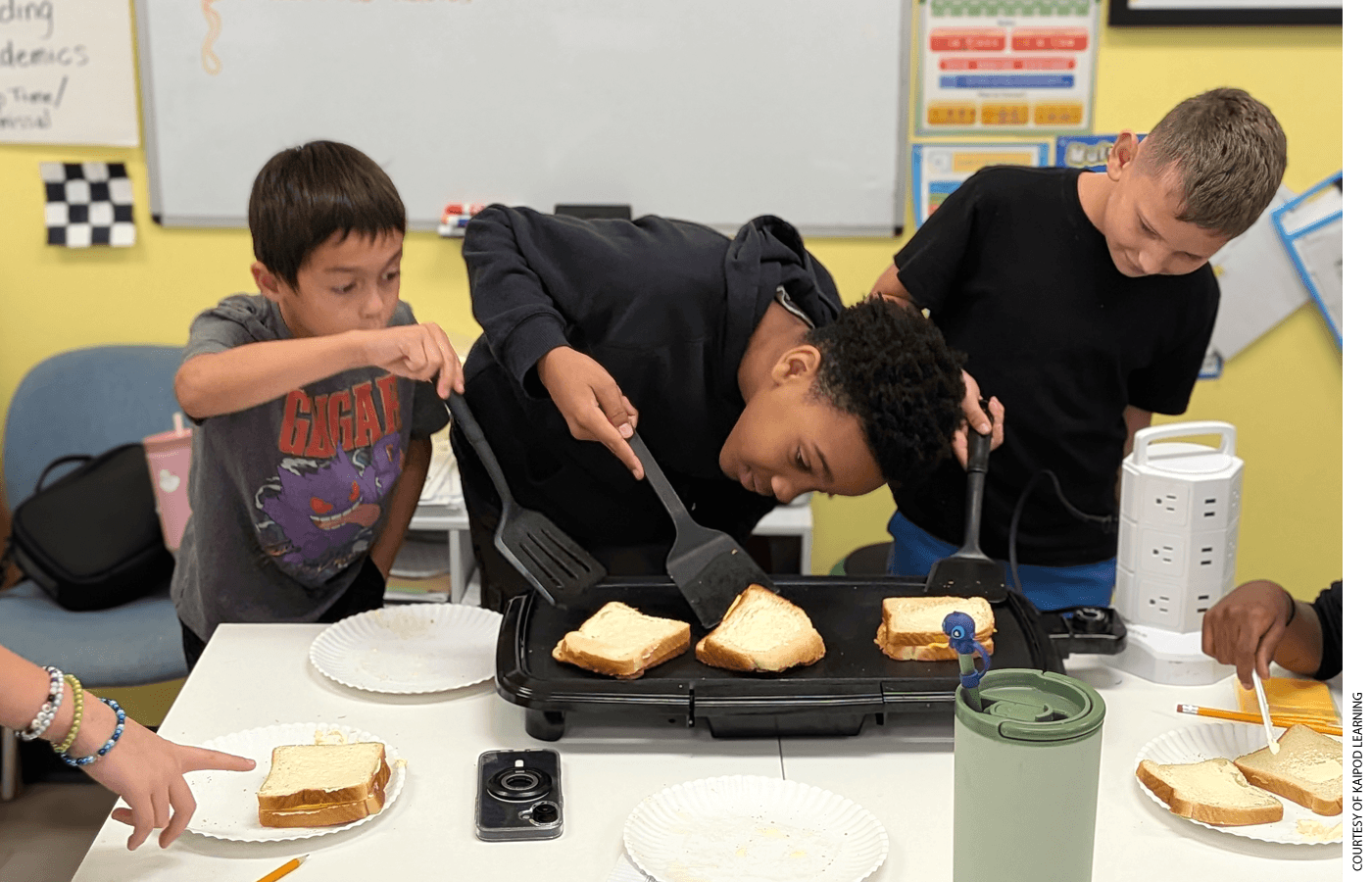
- Flexible Seating: Replacing traditional desks with bean bags, standing desks, or floor mats.
- Sensory Zones: Dedicated areas where students can decompress or engage in sensory-seeking behaviors without disrupting others.
- Indirect Lighting: Reducing the overstimulation often caused by harsh fluorescent lights in public school buildings.
- Personalized Digital Pathways: The use of platforms like the Ignite Academy curriculum, which allows students to toggle between "Fire" (extra support for disabilities) and "Spark" (accelerated tracks for gifted learners).
For students like Jed, a young man with ADHD attending KaiPod Gilbert, the shift was transformative. "I’d be in trouble all the time for not thinking or acting the way the teacher wanted me to," he noted. "It’s much less stressful here where I can work on what I want when I want and sit wherever I feel comfortable."
The Regulatory Debate: Permissionless Innovation vs. Accountability
As microschools proliferate, they have sparked a fierce debate over regulation and oversight. Advocates for the movement argue that microschooling should be "permissionless," requiring only basic fire safety and criminal background checks. They contend that the market—empowered by parental choice—is the most effective mechanism for weeding out low-quality providers. Founders often express frustration with local ordinances designed for large-scale daycare centers, which they claim create unnecessary "red tape" regarding physical locations and staffing ratios.
Conversely, critics and policy advocates express concern over the lack of a standardized regulatory framework. The Center for American Progress, in a 2025 report titled The Importance of Holding Microschools Accountable, argued that the ambiguity surrounding these schools raises serious questions about their compliance with civil rights laws and educational standards.
A primary point of contention involves the support services for students with disabilities. In the traditional public system, students are entitled to a "Free Appropriate Public Education" (FAPE) under federal law, which includes "wraparound" therapeutic and academic supports. Critics argue that tiny schools with limited staff cannot possibly provide the same level of specialized care, potentially leaving neurodiverse students underserved even if they utilize Education Savings Account (ESA) funds to pay for tuition.
Economic and Structural Implications for the K-12 Landscape
The migration of students to microschools carries profound economic implications for the broader education system. In most states, public school funding is tied to Average Daily Attendance (ADA). As families opt for microschools, traditional districts face "stranded costs"—fixed expenses like building maintenance and debt service that do not decrease even as student numbers drop.
This has led to a bifurcated response from public education officials. Some districts have adopted an adversarial stance, lobbying for stricter regulations on microschools to stem the tide of "exiters." Others, however, are adopting a "if you can’t beat them, join them" strategy. By creating "micro-academies" within larger district structures, these schools hope to offer the intimacy and flexibility of the microschooling model while maintaining the oversight and resource base of the public system.
Furthermore, the rise of "private-pay" microschools has raised concerns about educational equity. While ESAs and federal tax credits have made these options more accessible, a significant portion of the microschooling market remains out of reach for the lowest-income families. The "diversity" celebrated by microschool advocates—ranging from mini-farm schools to LGBTQ+ centers—is currently more accessible to those with the social and financial capital to navigate the emerging marketplace.
Future Outlook: A Permanent Shift in Pedagogy
The microschooling movement represents more than just a change in school size; it is a fundamental shift in the philosophy of education. Kenneth Mims, executive director of Science Prep Academy—a STEM-focused microschool for students on the autism spectrum—argues that the traditional model of "pulling kids out" for therapy is outdated. "We build our therapies right into the school day," Mims stated, highlighting a move toward integrated, holistic learning environments.
As the 2020s progress, the success of the microschooling sector will likely depend on its ability to prove its academic efficacy through long-term data. While parental satisfaction is currently high, the lack of standardized testing and reporting in many "permissionless" microschools makes direct comparisons to traditional schools difficult.
Nevertheless, the momentum is undeniable. With the "One Big Beautiful Bill" providing a fiscal tailwind and a growing cohort of parents seeking alternatives to the "one-size-fits-all" traditional classroom, microschools are no longer a temporary reaction to a pandemic. They are a permanent and expanding feature of the American educational mosaic, forcing a total reconsideration of how, where, and with whom children learn.

