
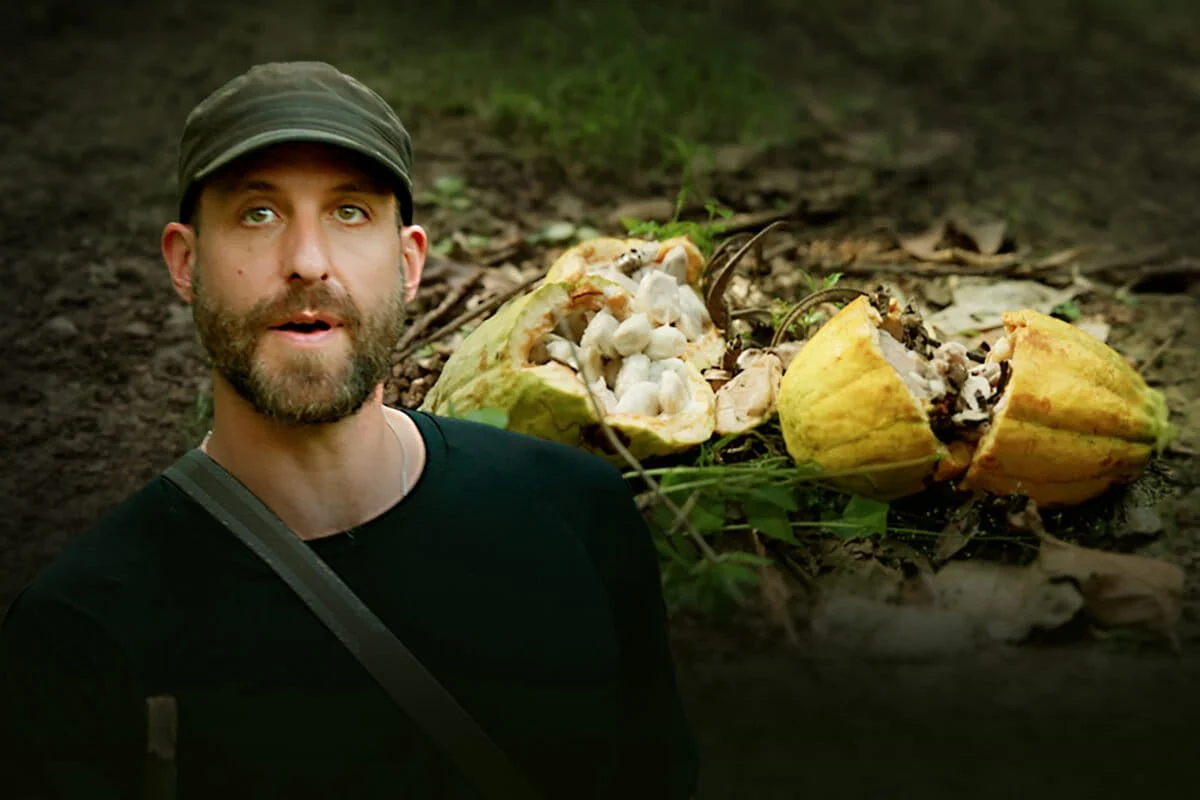
In the heart of West Africa, a region once defined by an unbroken emerald canopy stretching from Guinea to Togo, a quiet but devastating transformation is underway. The Upper Guinean rainforest, a global biodiversity hotspot, has seen the vast majority of its original extent vanished over the last century, swallowed by the demands of commercial logging, infrastructure expansion, and industrial agriculture. Today, more than half of the remaining fragments of this ancient ecosystem are concentrated within the borders of Liberia. However, this final stronghold now faces an existential threat from the very commodity that decimated the forests of its neighbors: cacao.
In southeastern Liberia, particularly within the county of Grand Gedeh, a "cocoa rush" is currently redrawing the landscape. Driven by high global demand and the promise of economic mobility, vast tracts of primary forest are being cleared to make way for the "brown gold." This rapid expansion, documented through satellite imagery and on-the-ground investigations, reveals a complex web of migrant labor, local desperation, and a global supply chain that remains largely opaque to those at its source. As the world’s appetite for chocolate grows, the survival of Liberia’s most sensitive habitats—home to critically endangered species—hangs in the balance.
The Last Frontier of the Upper Guinean Forest
The Upper Guinean forest is one of the most biologically diverse regions on Earth. It is the habitat of the Western chimpanzee, the forest elephant, and the pygmy hippopotamus—species that are found nowhere else in the entire world. Historically, this forest belt covered much of West Africa, but decades of intensive land use have reduced it to a series of disconnected islands. Liberia’s forests represent the largest and most contiguous blocks left, making them the "lungs" of the region and a critical site for global conservation efforts.
In Grand Gedeh, the pressure on these forests has reached a fever pitch. Conservationists and forest rangers are engaged in a daily struggle to protect areas designated as "proposed national parks." These are regions that the Liberian government and international partners have earmarked for permanent protection but which have yet to receive full legal status. This "proposed" status creates a jurisdictional gray area that many are eager to exploit.
George, a ranger with the Wild Chimpanzee Foundation, spends his days patrolling these dense forests. His mission is to identify and halt illegal farming activities before they become permanent settlements. "In the name of cocoa farming, people are destroying the forest," George explains. The difficulty of his task is underscored by the sheer scale of the encroachment. During a recent patrol, investigators discovered a single cocoa plantation spanning approximately 100 hectares deep within a protected area. The saplings were young—less than a year old—indicating that the clearing was part of a very recent and aggressive wave of expansion.
The Economic Engine: Why "Brown Gold" is Winning
The driving force behind this deforestation is not malice, but a desperate search for economic opportunity. In the local communities of Grand Gedeh, cocoa is viewed as a transformative crop. Five years ago, many of the towns in this region consisted of simple huts and subsistence farms. Today, the landscape is dotted with newly constructed houses and bustling markets, all funded by cocoa profits.
For the residents of these forest-fringe communities, the choice between conservation and cultivation is often a matter of survival. "If you say I shouldn’t do it, what do you expect me to do? How do you expect me to live?" asks one local landowner. This sentiment is echoed throughout the region. The transition from extreme poverty to a cash-based economy has made cocoa farming an irresistible proposition for local citizens and government officials alike.
This economic magnet has also drawn thousands of migrant workers, particularly from Burkina Faso. These "Burkinabe" workers often bring with them decades of experience from the Ivorian cocoa sector, which has largely collapsed due to soil exhaustion and total deforestation. Many are invited into Liberia by local community leaders who offer them land in exchange for a share of the crop.
However, this labor model often involves significant risks. During field investigations, workers—including children who should be in school—are frequently found working on illegal farms. When forest rangers approach, these workers often flee into the bush to avoid arrest, highlighting the precarious and often exploitative nature of the industry. While the migrant workers provide the muscle, the legal and social risks are often borne by those at the bottom of the hierarchy.
The Broker System and Global Supply Chains
The cocoa produced in the remote forests of Grand Gedeh does not stay there. It enters a sophisticated, multi-tiered supply chain that begins with local brokers in towns like Zleh City. These brokers, such as a local businessman named Lincoln, act as the bridge between the forest floor and the global market.
"The business is increasing on a daily basis because of the cocoa work," Lincoln notes. For the brokers, the cocoa trade is a lucrative endeavor. They buy raw beans from farmers at a set price and sell them to larger exporters in Monrovia, the capital of Liberia. At each step of the journey, the price of the cocoa rises, and with it, the profit margins.
One of the most striking aspects of this trade is the total lack of transparency for the producers. Farmers and local brokers have no knowledge of where their cocoa ends up. "We are very curious to know where our cocoa is going," says Lincoln. "We do not know which company it is—whether a European or an American company. We’re just blind."
This lack of traceability is a significant hurdle for international efforts to combat deforestation. Currently, more than half of Liberia’s cocoa exports are destined for the European Union, the world’s largest market for chocolate. Yet, under current conditions, there is no way for a consumer in Brussels or Paris to know if the chocolate they are eating contributed to the destruction of a chimpanzee habitat in Liberia.
The European Response: A Legislative Battle
In an effort to address its role in global deforestation, the European Union recently passed the European Deforestation Regulation (EUDR). This landmark law aims to ban the import of products—including cocoa, coffee, palm oil, and timber—that are linked to deforestation occurring after December 31, 2020.
According to EU legislators, the goal is to shift the responsibility onto companies to prove that their supply chains are "clean." By setting these standards, the EU hopes to incentivize sustainable agricultural practices in producing nations and stop the one-sided exploitation of natural resources.
However, the implementation of the EUDR has been fraught with political tension. Originally slated to go into effect in 2024, the regulation has faced significant pushback from both industry groups and some producing nations, leading to delays. Supporters of the law argue that these delays are not technical, but political. They claim that powerful industries are lobbying to maintain the status quo, even as the world’s remaining primary forests continue to disappear.
For Liberia, the EUDR represents a double-edged sword. On one hand, it could provide the necessary pressure to halt illegal farming in protected areas. On the other hand, if Liberian farmers cannot prove their cocoa is "deforestation-free," they may find themselves excluded from their most important market, potentially driving the trade underground or toward markets with fewer environmental protections.
Learning from the Ivorian Precedent
The situation in Liberia is a haunting echo of what occurred in neighboring Ivory Coast (Côte d’Ivoire) decades ago. Ivory Coast was once home to massive rainforests, but the country’s rise to become the world’s leading cocoa producer came at a staggering environmental cost. Today, Ivory Coast has lost nearly 90% of its forest cover, much of it replaced by cocoa monocultures.
As the Ivorian forests vanished, the industry moved westward into Liberia. The "cocoa rush" currently seen in Grand Gedeh follows the same patterns: migrant labor, the clearing of primary forest, and the eventual depletion of soil nutrients. Conservationists warn that unless Liberia adopts a different model—one that prioritizes forest protection and sustainable agroforestry—it is destined to repeat the history of its neighbor.
"Cocoa is winning the battle, and very fast," George the ranger observes. The speed of the transformation is perhaps the most alarming factor. In just a few years, landscapes that had remained untouched for millennia have been converted into agricultural plots.
The Path Forward: Conservation vs. Consumption
The fate of Liberia’s rainforests ultimately rests on whether the global community can align economic incentives with environmental preservation. Simply banning cocoa production is not a viable solution for a country struggling with poverty and recovering from years of civil conflict. Instead, experts suggest that a "middle path" is required.
This path would involve:
- Formalizing Land Rights: Ensuring that local communities have clear, legal ownership of their land so they can make long-term decisions rather than seeking short-term gains from illegal clearing.
- Improving Traceability: Utilizing satellite technology and GPS mapping to track every bag of cocoa from the farm to the port, ensuring that only "clean" cocoa reaches the international market.
- Supporting Sustainable Intensification: Helping farmers increase yields on existing land so they do not feel the need to clear new forest to maintain their income.
- International Funding: Providing financial compensation to countries like Liberia for the ecosystem services their forests provide, such as carbon sequestration and biodiversity preservation.
As it stands, the "brown gold" of Grand Gedeh continues to flow out of the forest and into the global market. The chimpanzees, elephants, and hippos that call these forests home are being pushed further into the margins. The story of Liberia’s forests is an old and familiar one, but the ending has not yet been written. Whether these ancient trees survive will depend on the resolve of the Liberian government, the strength of international regulations like the EUDR, and ultimately, the willingness of global consumers to pay the true price of their chocolate.

