
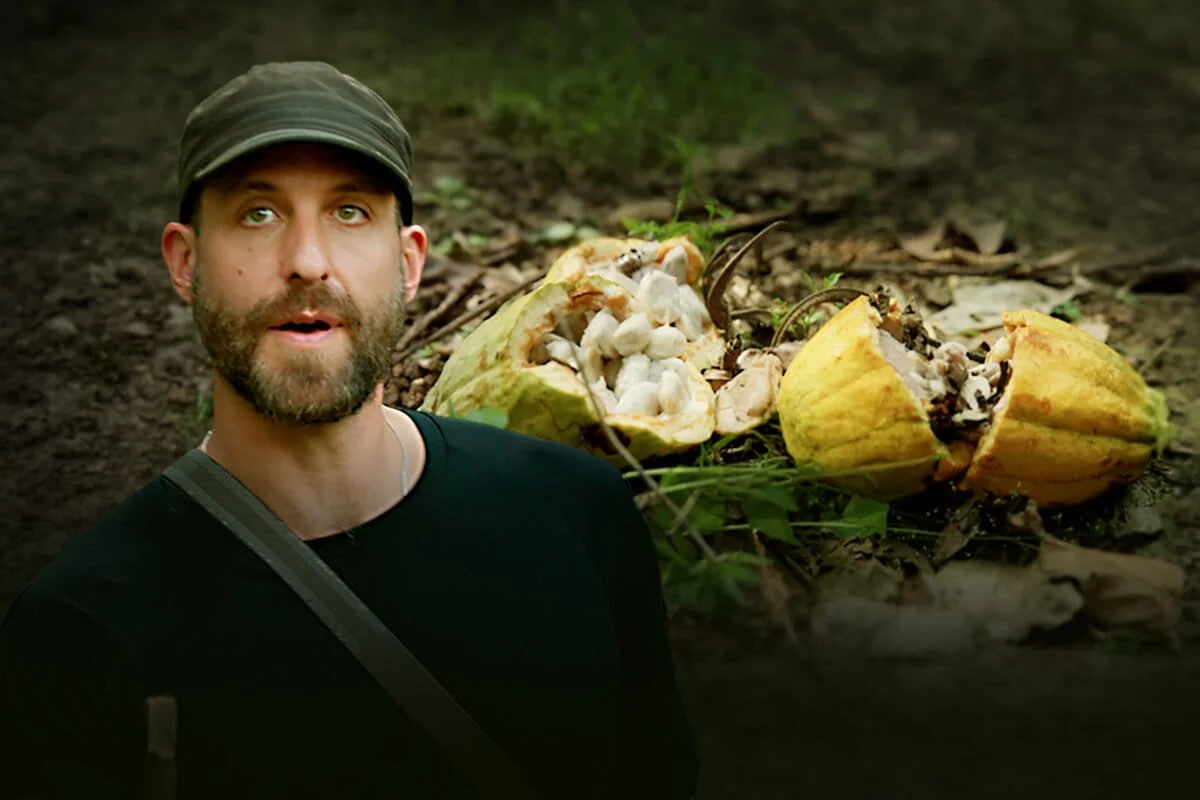
Deep within the dense, humid interior of Grand Gedeh County, a transformative and potentially catastrophic economic shift is underway. For decades, the Upper Guinean rainforest of West Africa has been under siege, falling victim to the relentless demands of commercial logging, infrastructure expansion, and large-scale industrial agriculture. Today, Liberia stands as the final frontier for this ancient ecosystem, holding more than half of the region’s remaining primary forest. However, a new threat has emerged that mirrors the destruction seen in neighboring Côte d’Ivoire and Ghana: the rapid, unregulated expansion of cacao production. Known locally as "brown gold," cocoa has become the focal point of a modern-day land rush that pits the immediate survival of impoverished communities against the long-term preservation of one of the world’s most critical biodiversity hotspots.
The Epicenter of the Cocoa Rush
In southeastern Liberia, specifically within the borders of Grand Gedeh, the landscape is changing at a pace that has alarmed environmentalists and satellite monitoring agencies alike. Recent data reveals massive tracts of forest being cleared to make way for cocoa seedlings. This expansion is not merely the work of small-scale subsistence farmers but represents a systemic shift in the regional economy. The allure of cocoa is driven by its status as a reliable cash crop in a region where economic opportunities are vanishingly thin.
Local residents and officials describe the current atmosphere as a fever. The pursuit of cocoa wealth has permeated every level of society, from rural villagers and migrant workers to government officials and wealthy urban investors. As the global price of cocoa fluctuates—recently hitting record highs due to crop failures and aging plantations in traditional hubs like Côte d’Ivoire—the pressure on Liberia’s untouched forests has intensified. For many in Grand Gedeh, the forest is no longer viewed as a sanctuary for wildlife but as a dormant asset waiting to be converted into capital.
Conservation Under Siege: The Case of the Proposed National Park
The frontline of this conflict is often found in "proposed" protected areas—regions identified for their ecological importance but lacking the full legal and physical protections of a gazetted national park. One such area in Grand Gedeh serves as a vital habitat for the Western chimpanzee, an endangered species whose numbers have plummeted across West Africa. The forest is also home to forest elephants, pygmy hippos, and rare leopard species, many of which are found nowhere else on Earth.
George, a representative of the Wild Chimpanzee Foundation (WCF), has spent years attempting to safeguard this landscape. His task has become increasingly difficult as the cocoa industry moves in. During a recent investigative journey into the heart of the proposed park, forest rangers discovered massive illegal plantations. In one instance, a single farm spanned approximately 100 hectares—a staggering size for an illicit operation within a sensitive conservation zone.
The environmental impact is immediate. As the canopy is thinned to allow sunlight for young cocoa trees, the microclimate of the forest shifts. The humidity levels drop, the risk of fire increases, and the corridors used by migratory animals are severed. For the Western chimpanzee, the loss of these forests is existential; they require large, contiguous areas of primary forest to forage and maintain social structures. When the forest is fragmented by cocoa farms, these primates are pushed into closer contact with humans, leading to increased instances of poaching and human-wildlife conflict.
The Human Element: Migration, Labor, and Survival
The driving force behind the physical labor of this expansion is often a mobile population of migrant workers, many hailing from Burkina Faso. These workers bring with them decades of experience from the Ivorian cocoa sector, which has largely collapsed due to soil exhaustion and total deforestation. Attracted by the promise of "greener pastures" and invited by Liberian community landowners, these migrants clear the land and plant the trees in exchange for a share of the eventual profits or land.
The social dynamics of this "cocoa rush" are complex. While the influx of workers and the establishment of farms have brought a semblance of wealth to formerly stagnant towns—replacing mud huts with concrete houses and zinc roofs—the human cost is evident. Investigations have uncovered the presence of child labor on these remote farms. Children who should be in school are instead found working in the forest, exposed to the risks of heavy labor and the threat of arrest by forest rangers.
When confronted, many local landowners and workers express a sense of desperation. In a country still recovering from the long-term effects of civil conflict and the Ebola crisis, cocoa represents one of the few pathways out of extreme poverty. Community members often argue that if the government and international conservation groups want them to stop farming in the forest, they must provide a viable economic alternative. Without such alternatives, the "brown gold" remains the only game in town.
The Mechanics of the Supply Chain: From Forest to Broker
The journey of a cocoa bean from a deforested patch in Grand Gedeh to a chocolate bar in Europe is mediated by a network of brokers and middlemen. In Zleh City, the regional hub for the cocoa trade, brokers run the show. These individuals act as the bridge between the isolated forest farms and the global market.
Lincoln, a prominent broker in the region, notes that the business is growing daily. Brokers provide the necessary capital for farmers to expand and handle the logistics of transporting the beans to the capital, Monrovia. Interestingly, there is a profound disconnect between the producers and the consumers. Many farmers and brokers have no idea where their cocoa eventually ends up or which multinational corporations are buying it. They are "blind" participants in a global supply chain, motivated solely by the small margins of profit that trickles down to them.
From Monrovia, the cocoa is exported, with more than half of Liberia’s production destined for the European Union (EU). This makes Europe the primary beneficiary of Liberian cocoa and, by extension, a silent partner in the deforestation occurring in Grand Gedeh.
Legislative Hurdles: The EUDR and the Global Response
Recognizing its role in global deforestation, the European Union recently passed the European Union Deforestation Regulation (EUDR). This landmark legislation aims to ensure that products sold on the European market—including cocoa, coffee, soy, and timber—are not linked to deforestation or forest degradation. Under the EUDR, companies must provide "verifiable" information that their products were grown on land that was not deforested after December 31, 2020.
If strictly enforced, the EUDR could effectively shut Liberian cocoa out of the European market, as much of the current production is occurring on recently cleared forest land. Delara Burkhardt, a Member of the European Parliament, emphasizes that the regulation is intended to shift the burden of responsibility onto the industries profiting from forest destruction. The goal is to foster a more sustainable trade relationship that does not rely on the "one-sided exploitation of resources."
However, the implementation of the EUDR has faced significant pushback. Originally slated to go into force in 2024, the regulation has been delayed twice following intense lobbying from both within the EU and from major producing nations. Critics of the delay argue that it is a political decision rather than a technical one, and that every month of postponement allows more hectares of primary forest to be lost.
Analysis of Implications: A Repeating History?
The current trajectory of Liberia’s cocoa industry bears a haunting resemblance to the history of Côte d’Ivoire. In the late 20th century, Côte d’Ivoire became the world’s leading cocoa producer, but the cost was the loss of over 90% of its primary rainforest. Liberia is now at a crossroads. It can either follow the "Ivorian path" of total forest conversion for short-term economic gain, or it can attempt to pioneer a new model of sustainable, forest-friendly agriculture.
The challenges to a sustainable model are immense. It requires robust land-use planning, the formalization of land rights for local communities, and significant international investment to compensate for the "opportunity cost" of not clearing the forest. Furthermore, the lack of traceability in the Liberian cocoa supply chain makes it nearly impossible to distinguish between "legal" cocoa grown on old agricultural land and "illegal" cocoa grown in protected forests.
If the EUDR is eventually implemented and enforced, Liberia faces an economic crisis if it cannot prove the sustainability of its exports. Conversely, if the regulation is watered down or further delayed, the remaining fragments of the Upper Guinean rainforest may disappear within a generation.
Conclusion: The Survival of the Upper Guinean Forest
The fate of Liberia’s rainforests ultimately rests on a delicate balance between local economic needs and global environmental responsibilities. The "brown gold" of Grand Gedeh provides a lifeline for thousands of people living in poverty, but it does so by consuming the very natural capital that provides essential ecosystem services—such as carbon sequestration and climate regulation—to the entire planet.
As the world’s appetite for chocolate continues to grow, the pressure on these forests will only increase. The stories of the forest rangers in Grand Gedeh, the migrant workers in the illegal clearings, and the legislators in Brussels are all interconnected. Without a concerted effort to provide sustainable livelihoods for Liberian farmers and a transparent, accountable global supply chain, the silence of the Western chimpanzee may soon be the only sound left in the once-vast forests of West Africa. The "cocoa vs. forest" battle is currently being won by cocoa, and the clock is ticking for the last of the Upper Guinean rainforest.

