
Methane, a colorless and odorless hydrocarbon, has emerged as one of the most significant challenges and strategic opportunities in the global effort to stabilize the Earth’s climate. While carbon dioxide (CO2) often dominates the conversation surrounding the greenhouse effect, methane (CH4) is responsible for approximately one-third of the global heating observed since the Industrial Revolution. As a primary component of natural gas, which currently facilitates roughly 25 percent of the world’s electricity generation, methane’s prevalence in the global energy matrix is matched only by its presence in biological systems, ranging from the digestive tracts of livestock to the saturated soils of tropical wetlands.
The chemical composition of methane—four hydrogen atoms bonded to a single carbon atom—renders it a potent heat-trapping agent. In the short term, its impact is staggering: over a 20-year period, methane is 86 times more effective at trapping heat than carbon dioxide. However, unlike CO2, which can persist in the atmosphere for centuries, methane has a relatively short atmospheric lifespan of approximately 12 years. This combination of high potency and short duration means that aggressive reductions in methane emissions could yield nearly immediate results in slowing the rate of global warming, providing a critical "fast lever" for climate action.
The Evolution of Methane Measurement and the Accuracy Gap
Accurately quantifying methane emissions is a complex task that relies on two primary methodologies: "bottom-up" and "top-down" assessments. The bottom-up approach involves ground-level measurements or estimations based on activity factors, such as multiplying the average methane output of a single cow by the total number of cattle in a region. While useful for inventory tracking, this method often fails to account for "super-emitters"—specific facilities or incidents where leaks or venting are exponentially higher than the statistical norm.

In contrast, top-down measurements utilize aerial surveillance, high-altitude platforms, and increasingly sophisticated satellite technology to detect methane concentrations from the sky. Recent data from satellites has revealed a significant discrepancy between reported emissions and atmospheric reality. For instance, a landmark study indicated that methane emissions from the United States oil and gas sector were 60 percent higher than estimates provided by the Environmental Protection Agency (EPA).
The emergence of satellite monitoring has highlighted the danger of super-emitting events. In 2022, researchers identified over 1,000 such incidents, including a massive leak in Turkmenistan that released 427 metric tons of methane per hour—a rate equivalent to the total hourly emissions of the nation of France. As technology improves, the ability to pin-point these leaks in real-time is becoming an essential tool for regulatory enforcement and corporate accountability.
Anthropogenic Drivers: Agriculture, Fossil Fuels, and Waste
Human activity accounts for approximately 60 percent of global methane emissions, with the remaining 40 percent originating from natural sources. Within the anthropogenic category, three sectors dominate the landscape: agriculture, fossil fuel production, and waste management.
The Agricultural Footprint
Agriculture is the largest source of human-caused methane, contributing roughly 40 percent of emissions. The majority of this stems from livestock, specifically through enteric fermentation—a natural digestive process in ruminant animals like cows and sheep where microbes break down plant matter, producing methane as a byproduct. Livestock manure storage, particularly in liquid form on industrial pig and dairy farms, further adds to the burden. Additionally, rice cultivation accounts for 8 percent of human-caused methane. Because rice is traditionally grown in flooded paddies, the oxygen-poor environment becomes a breeding ground for methane-producing archaea.

Fossil Fuel Extraction and Flaring
The fossil fuel industry is responsible for approximately 35 percent of anthropogenic methane. During the extraction of oil and gas, methane is often intentionally vented or flared (burned off) when infrastructure to capture it is lacking. Accidental leaks across the vast network of pipelines and processing facilities also contribute significantly. Coal mining is another major factor; methane trapped within coal seams is released during the mining process, with underground mines being particularly heavy emitters due to the necessity of ventilation systems to prevent explosions.
The Growing Waste Crisis
Landfills and wastewater treatment systems contribute 20 percent of human-caused methane. As organic waste decomposes in the anaerobic conditions of a landfill, it releases significant quantities of the gas. Due to rapid urbanization and population growth in developing economies, methane emissions from the waste sector are projected to grow faster than any other source, with total solid waste expected to increase by 73 percent by 2050.
Natural Sources and the Risk of Positive Feedback Loops
Natural methane emissions are primarily driven by wetlands, which account for about one-third of all methane entering the atmosphere. The waterlogged soils of wetlands create the perfect anaerobic environment for methanogenesis. However, the line between "natural" and "human-caused" is blurring due to climate feedback loops.
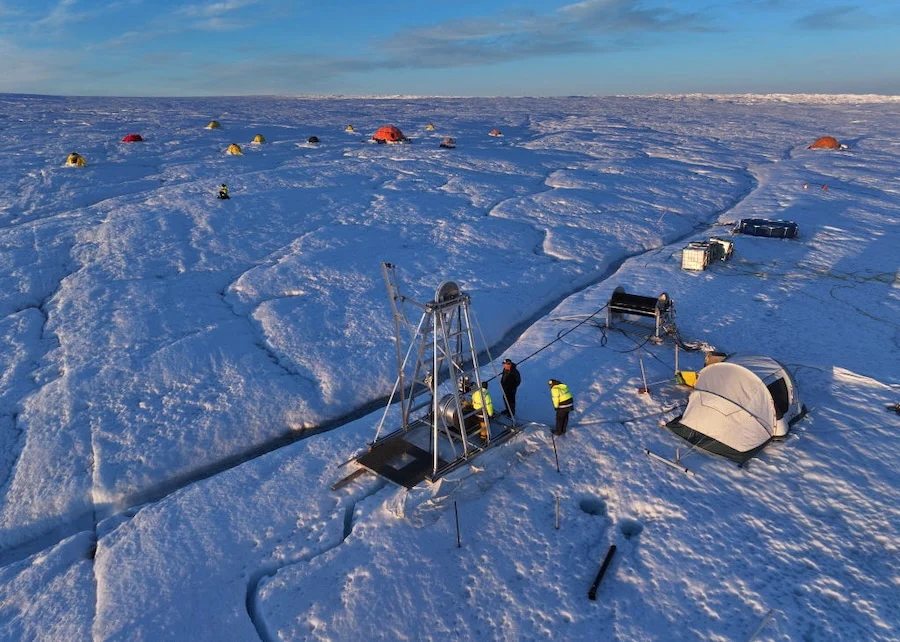
As global temperatures rise, the "wetland methane feedback" has become a point of intense scientific concern. Warmer temperatures and shifting rainfall patterns are causing tropical wetlands to expand and Arctic permafrost to thaw. Permafrost—ground that has been frozen for thousands of years—contains vast reserves of organic matter and trapped methane. As it melts, microbes reactivate and begin releasing carbon and methane into the air. Scientists warn that the Arctic region is currently on a trajectory to release emissions on par with a major industrialized nation, potentially triggering a "tipping point" where warming becomes self-sustaining and irreversible.

Similarly, the increasing frequency and intensity of wildfires create a secondary feedback loop. Large-scale fires not only release CO2 but also substantial amounts of methane. A study of California’s 2020 wildfire season found that the blazes contributed nearly 14 percent of the state’s total methane emissions for that year, further accelerating the warming that makes such fires more likely.
Deconstructing the ‘Bridge Fuel’ Myth
For over a decade, natural gas was marketed as a "bridge fuel" that would allow nations to transition away from coal toward renewables. The argument was based on the fact that burning natural gas for electricity produces about half the CO2 of coal. However, this narrative often ignores the "methane leakage" factor.
Recent analysis suggests that if as little as 0.2 percent of methane leaks during the lifecycle of natural gas—from extraction to transport—its climate impact becomes equal to or worse than coal over a 20-year horizon. Some studies of Liquefied Natural Gas (LNG) exports indicate that the energy-intensive process of cooling, shipping, and regasification makes LNG 33 percent more damaging to the climate than coal. Critics, including prominent climate campaigner Bill McKibben, argue that the massive build-out of LNG infrastructure in the U.S., Australia, and Canada threatens to lock in decades of high emissions, effectively canceling out progress made in the renewable energy sector.
Public Health and Economic Implications
The benefits of reducing methane extend beyond climate stabilization to immediate improvements in public health. Methane is a key precursor to the formation of ground-level ozone (smog). Unlike the ozone layer in the stratosphere that protects the Earth from UV radiation, ground-level ozone is a toxic air pollutant that damages lung tissue and exacerbates respiratory conditions such as asthma.

Currently, methane-driven ozone is responsible for approximately 500,000 premature deaths annually worldwide. It also takes a heavy toll on global food security by damaging crops. Estimates suggest that for every million metric tons of methane reduced, the world could prevent 1,430 heat-related and respiratory deaths and save 145,000 metric tons of essential crops like wheat and soy.
Pathways to Mitigation: Technology and Policy
The Intergovernmental Panel on Climate Change (IPCC) has stated that methane emissions must be reduced by 34 percent by 2030 to keep the goal of limiting warming to 1.5 degrees Celsius within reach. Fortunately, many solutions are already available and cost-effective.
In the energy sector, the International Energy Agency (IEA) estimates that 70 percent of methane emissions from oil and gas operations could be eliminated using existing technology, with 40 percent of those cuts coming at no net cost because the captured gas can be sold. Strategies include regular leak detection and repair (LDAR) programs and the elimination of non-emergency flaring and venting.
In agriculture, innovations such as adding seaweed (specifically Asparagopsis) to cattle feed have shown the potential to reduce enteric methane by over 80 percent. In rice farming, a technique known as "Alternative Wetting and Drying" (AWD) can cut emissions by nearly half by allowing paddies to dry periodically, disrupting the methane-producing microbes.

On the policy front, the Global Methane Pledge, launched at COP26, represents a significant diplomatic milestone. With over 150 nations committed to a 30 percent reduction in methane by 2030, the framework for action exists. However, implementation remains the primary hurdle. Despite the pledge, atmospheric methane concentrations reached record highs in 2023, highlighting a persistent gap between political commitment and industrial reality.
The Individual and Collective Mandate
While systemic change in the energy and agricultural sectors is paramount, individual actions play a supportive role. Transitioning to plant-forward diets and minimizing food waste can reduce the demand for high-methane agricultural products. In the home, replacing gas-fired furnaces and stoves with electric heat pumps and induction cooktops eliminates direct methane leakage within residential areas.
However, the scale of the methane crisis demands collective advocacy. Supporting organizations that monitor the LNG build-out and lobbying for stricter methane regulations are essential steps for citizens. The challenge of methane is urgent, but its short-lived nature offers a rare opportunity: by acting decisively now, the global community can achieve a rapid "win" in the fight against climate change, buying precious time to solve the longer-term challenge of decarbonization.

