
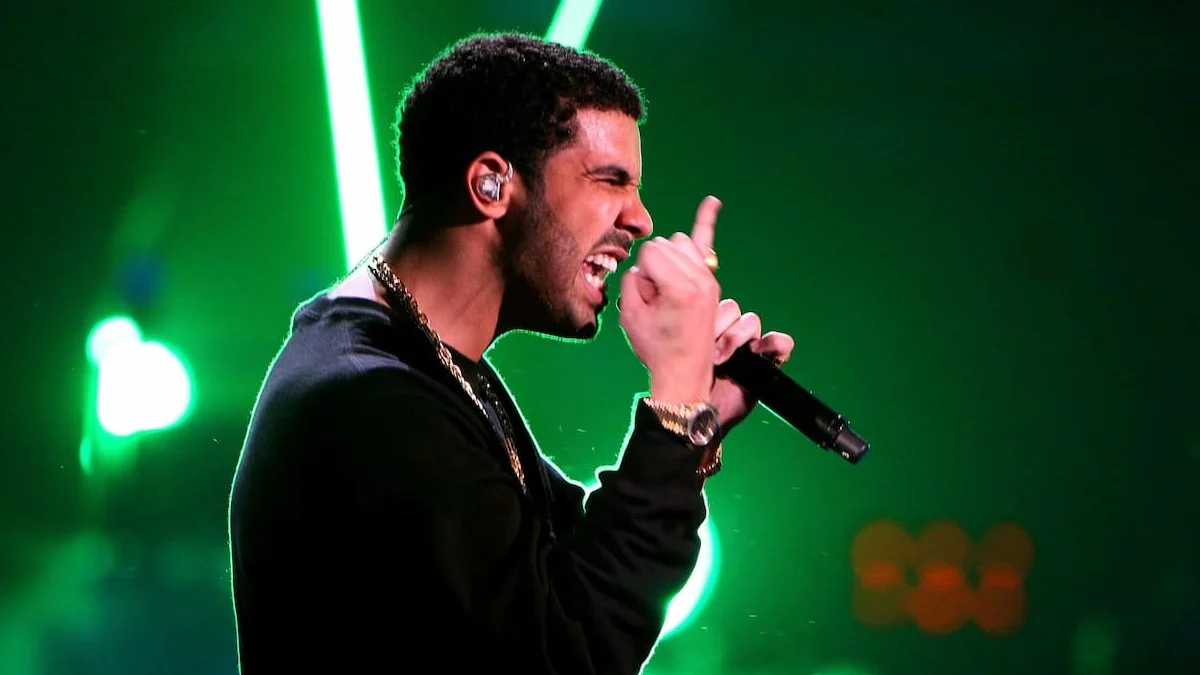
The landscape of the modern music industry is currently witnessing a historic shift as Aubrey “Drake” Graham, arguably the most commercially successful artist of the last decade, appears to be pivoting toward a confrontational stance against the very structures that facilitated his rise. For years, the Toronto-born artist has maintained a dominant position atop the global charts, but recent headlines suggest a growing rift between the rapper and the corporate entities that manage his distribution and recording rights. This friction has manifested not only through lyrical barbs directed at his contemporaries—including Kendrick Lamar, A$AP Rocky, and Rick Ross—but also through significant legal maneuvers aimed at Universal Music Group (UMG). This strategic defiance, while appearing sudden to casual observers, finds its roots in a decade-old philosophy regarding industry independence and a sense of obligation that has defined his career since its inception.
The Legal Battle Against Universal Music Group
At the center of Drake’s current industry friction is a series of legal filings directed at Universal Music Group, the parent company of his long-time label partners. In late 2024, legal representatives for Drake’s OVO firm filed a petition for pre-action discovery, a move that signals a potential full-scale lawsuit. The core of the complaint involves the Kendrick Lamar diss track "Not Like Us," which became a global phenomenon during the high-profile feud between the two rappers earlier this year.
Drake’s legal team has alleged that UMG engaged in deceptive practices to artificially inflate the success of "Not Like Us" while simultaneously working to suppress Drake’s own releases. The filings claim that UMG utilized "streaming bots" and "pay-for-play" schemes on digital service providers and FM radio to ensure Lamar’s track maintained its viral momentum. Furthermore, the petition suggests that UMG "picked sides" in the feud, prioritizing the narrative success of Lamar at the expense of Drake, despite both artists being signed to the UMG umbrella.
Industry analysts note that these allegations are particularly striking given Drake’s historical status as UMG’s "golden goose." In 2022, it was widely reported that Drake had signed a multi-faceted deal with UMG valued at over $400 million, a figure that includes recording, publishing, merchandise, and visual media projects. For an artist of this magnitude to turn his legal sights on his primary financier suggests a breakdown in trust that could have lasting implications for how major labels manage internal conflicts between their top-tier talent.
The Roots of Resentment: The 2011 Loyalty Clause
To understand Drake’s current disillusionment with the record label system, one must look back to the early stages of his career. While he has been a flagship artist for Young Money, Cash Money, and Republic Records (all under UMG), his personal philosophy has long leaned toward independence. In a seminal 2011 interview with Billboard, conducted shortly after the release of his sophomore album Take Care, Drake revealed that his decision to sign a major label deal was not born out of a desire for corporate validation, but rather out of a deep-seated sense of loyalty to his mentor, Lil Wayne.
"That was me being loyal. That’s why my deal is structured the way it is," Drake stated at the time. He admitted that if he could have found a way to ensure Lil Wayne benefited from an independent structure, he likely would have avoided the major label system altogether. Drake noted that he felt he only needed a label for distribution—the physical and digital logistics of getting music to the masses—but felt he possessed the creative and marketing acumen to handle the rest of his career autonomously.
This historical context provides a lens through which to view his current "Iceman" persona. For years, Drake functioned as the ultimate team player within the Young Money/Cash Money ecosystem. However, as the industry shifted toward streaming—a medium Drake mastered more effectively than perhaps any other artist—the necessity of the "distribution" he once sought from UMG has diminished. His current legal and social media campaigns suggest an artist who feels he has "paid his dues" to the system and is now ready to dismantle it.
A Timeline of Industry Friction
The path to Drake’s current isolation can be traced through several key milestones over the last 15 years:
- 2009: Drake signs to Young Money Entertainment after a historic bidding war. The deal is unique for its time, allowing Drake to retain significant creative control through his OVO brand.
- 2011: Drake expresses his preference for independent deals in national media, citing Lil Wayne as the sole reason for his major label affiliation.
- 2015: The "Meek Mill Beef" highlights Drake’s ability to leverage the internet and streaming culture to win public perception battles without traditional label intervention.
- 2018: Drake’s contract with Cash Money Records officially ends following the release of Scorpion. He begins negotiating directly with UMG.
- 2022: Drake signs a "Lebron-sized" deal with UMG, estimated at $400 million+. This deal is touted as the future of artist-label partnerships.
- 2024 (Spring): The rap feud with Kendrick Lamar erupts. Drake’s "Family Matters" is met with Lamar’s "Not Like Us."
- 2024 (Autumn): Drake files legal petitions against UMG, alleging stream manipulation and corporate bias.
The "Blog Era" Guinea Pig and the Digital Evolution
In his 2011 reflections, Drake described himself as a "guinea pig" for the blog era. He was one of the first artists to achieve global superstardom through internet-first marketing, bypassing the traditional radio-gatekeeper model that had governed the industry for decades. This experience gave him an early insight into the power of direct-to-consumer relationships.
"I’m not going to say they don’t have genius ideas that assist with careers," Drake said regarding label executives in 2011. "But the way I like to do it… I feel like our brand can only grow upward." This sentiment has remained a constant in his career. By releasing music through his own website and social media channels, Drake often bypasses traditional PR cycles, a move that has occasionally "strained relationships" with DJs and industry veterans who feel bypassed by his autonomy.
The transition from the blog era to the streaming era only reinforced Drake’s belief in his own self-sufficiency. As of 2024, Drake remains the most-streamed artist in the history of Spotify, a metric that grants him immense leverage. However, his current legal filings suggest that even with this leverage, he believes the "system" is rigged to favor specific narratives—specifically those that align with the interests of corporate executives rather than the artists themselves.
Market Implications and Professional Analysis
The implications of Drake’s war with UMG extend far beyond his personal brand. If a court finds merit in the claims of stream manipulation or "payola" involving "Not Like Us," it could trigger a seismic shift in how the music industry is regulated. For years, industry insiders have whispered about the use of "bot farms" to inflate streaming numbers, but a formal legal discovery process could force major labels to open their books and reveal the mechanics behind "viral" hits.
Furthermore, Drake’s stance encourages a new wave of "artist-as-platform" dynamics. By claiming he is "above the industry" on tracks like "ICEMAN," he is signaling to younger artists that the traditional path of label loyalty may be a relic of the past. If the world’s biggest artist feels he is being treated unfairly by the world’s biggest label, it raises questions about the viability of major label deals for artists who do not have Drake’s level of capital or influence.
Official Responses and Public Sentiment
Universal Music Group has largely remained silent regarding the specifics of the legal filings, typically a standard procedure in ongoing litigation. However, sources close to the label have previously emphasized their commitment to all their artists and denied any systematic efforts to undermine Drake’s career. Representatives for Kendrick Lamar have also refrained from commenting on the legalities of the "Not Like Us" streaming numbers, letting the track’s continued chart performance speak for itself.
Public sentiment remains divided. Fans of Kendrick Lamar view Drake’s legal actions as a "sore loser" tactic following a perceived defeat in their lyrical battle. Conversely, Drake’s supporters and industry skeptics see his actions as a necessary "whistleblowing" moment that exposes the dark underbelly of corporate music manipulation.
Conclusion: The Future of the "Iceman"
As Drake continues to navigate his third decade in the spotlight, his trajectory suggests a move toward total independence. Whether his legal actions against UMG result in a settlement, a victory, or a dismissal, the bridge appears to have been burned. The "loyalty" that kept him tethered to the major label system in 2011 has seemingly evaporated, replaced by a defensive posture intended to protect his legacy and his OVO empire.
The music industry now watches closely to see if the "guinea pig" of the blog era will become the catalyst for a new era of artist-led disruption. Drake’s career has always been defined by his ability to adapt to changing technologies and social climates; his current battle against the industry’s central powers may be his most ambitious attempt at adaptation yet. Time will tell if he can truly "beat the system," or if the system he helped build is too large for even its biggest star to topple.

