
Methane, a colorless and odorless hydrocarbon, has emerged as the most critical short-term lever in the global effort to stabilize rising temperatures. While carbon dioxide (CO2) remains the primary driver of long-term climate change due to its centuries-long persistence in the atmosphere, methane (CH4) is significantly more potent in the immediate term. As the primary component of natural gas, which currently generates approximately 25 percent of the world’s electricity, methane is responsible for roughly one-third of the global warming observed since the pre-industrial era. Despite its relatively short atmospheric lifespan of approximately 12 years, methane’s ability to trap heat is 86 times greater than that of CO2 over a 20-year period, making its reduction a priority for climate scientists and international policymakers alike.
The Chemical Composition and Origins of Methane
Methane consists of a single carbon atom bonded to four hydrogen atoms. It is abundant in nature and is generated through two primary pathways: geological and biological. Geologically, methane is formed deep underground when heat and pressure act upon organic matter over millions of years, creating the fossil fuel reserves currently extracted by the energy industry. Biologically, the gas is produced through methanogenesis—a form of anaerobic respiration performed by microorganisms known as archaea. These microbes thrive in oxygen-free environments, such as the waterlogged soils of wetlands, the digestive tracts of ruminant animals like cows and sheep, and the depths of landfills.
Since the Industrial Revolution, human activity has fundamentally altered the methane cycle. Atmospheric concentrations have soared by 265 percent, reaching 1,934 parts per billion (ppb) as of 2023. Current data indicates that approximately 60 percent of annual methane emissions are now anthropogenic, originating from agriculture, fossil fuel extraction, and waste management.

A History of Escalating Emissions and Measurement Discrepancies
The trajectory of methane emissions has followed a steep upward curve as global industrialization and dietary shifts toward meat consumption have accelerated. Throughout the 20th century, the expansion of the oil and gas industry and the intensification of livestock farming led to a steady rise in CH4 levels. However, the 2010s saw an unexpected and alarming surge in methane concentrations, which scientists have attributed to a combination of expanded fracking operations and climate-induced feedback loops in tropical wetlands.
Measuring these emissions has historically been a challenge, leading to significant gaps in official inventories. Two primary methodologies are employed: bottom-up and top-down. Bottom-up assessments estimate emissions by multiplying activity data—such as the number of cattle or the number of gas wells—by a standardized emission factor. Conversely, top-down approaches utilize airplanes, high-altitude sensors, and satellites to measure actual atmospheric concentrations.
Recent satellite data from organizations like GHGSat and the Environmental Defense Fund (EDF) have revealed that bottom-up estimates, such as those provided by the U.S. Environmental Protection Agency (EPA), often undercount emissions by as much as 60 percent. This discrepancy is largely due to "super-emitters"—specific facilities or incidents, such as major pipeline leaks or equipment failures, that release massive quantities of methane but are not captured in standardized averages. In 2022 alone, researchers identified over 1,000 super-emitting incidents, including one in Turkmenistan that released 427 metric tons of methane per hour.
The Principal Drivers: Agriculture, Fossil Fuels, and Waste
The global methane footprint is dominated by three sectors, each presenting unique challenges for mitigation.

Agriculture and the Livestock Challenge
Agriculture is the largest source of human-caused methane, accounting for roughly 40 percent of emissions. Within this sector, livestock—specifically ruminant animals—contribute 32 percent of the total. Through enteric fermentation, microbes in the digestive systems of cattle and sheep produce methane as a byproduct of breaking down cellulose. Manure management systems, particularly those used in large-scale pig and dairy farming, further exacerbate the problem. Additionally, rice cultivation contributes 8 percent of global emissions, as flooded paddies provide the ideal anaerobic environment for methane-producing archaea.
Fossil Fuel Extraction and the "Bridge Fuel" Myth
Fossil fuels account for 35 percent of anthropogenic methane. During the extraction of oil and coal, methane is often vented or flared if it is not captured for sale. In the natural gas sector, leaks occur at every stage of the supply chain, from the wellhead to the basement furnace.
For years, natural gas was promoted as a "bridge fuel" because it emits 50 percent less CO2 than coal when burned for electricity. However, recent analysis has debunked this narrative. If as little as 0.2 percent of methane leaks during production and transport, the climate impact of natural gas equals that of coal. New studies suggest that liquefied natural gas (LNG) may actually have a 33 percent higher global warming potential than coal over a 20-year horizon when leakage and the energy-intensive liquefaction process are considered.
Waste Management
Landfills and wastewater treatment plants contribute 20 percent of human-caused methane. As organic waste—such as food scraps and paper—decomposes in the oxygen-starved layers of a landfill, it releases significant quantities of CH4. With global solid waste production expected to rise by 73 percent by 2050, this sector represents the fastest-growing source of methane emissions.

Climate Feedback Loops and Natural Sinks
Beyond human activity, the climate crisis itself is triggering natural methane releases that threaten to spiral out of control. This phenomenon is known as a positive feedback loop.
The most concerning of these is the "wetland methane feedback." As global temperatures rise and rainfall patterns shift, tropical wetlands are expanding, and their microbial activity is accelerating. Between 2000 and 2020, wetland methane emissions increased at a rate higher than the most pessimistic scientific models predicted.
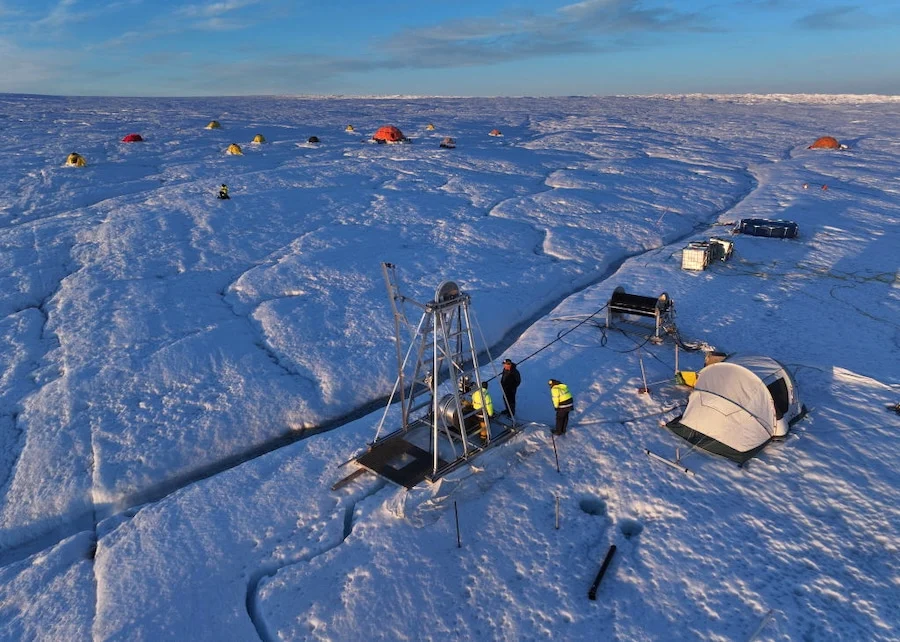
Similarly, the thawing of the Arctic permafrost poses a catastrophic risk. The permafrost acts as a massive carbon vault, containing 2.5 times more carbon than is currently in the atmosphere. As these frozen soils melt, they release both CO2 and methane. Arctic methane emissions have already increased by 9 percent since 2002, and the region is currently on track to match the emissions of a major industrialized nation if warming is not curtailed.
Public Health and Environmental Implications
The impact of methane extends beyond temperature rise. Methane is a primary precursor to ground-level ozone (smog), which forms when the gas reacts with other pollutants in the presence of sunlight. Unlike the protective ozone layer in the stratosphere, ground-level ozone is a toxic air pollutant.

Health data indicates that methane-generated ozone is responsible for approximately 500,000 premature deaths annually. It causes respiratory inflammation, triggers asthma attacks, and reduces lung function. Furthermore, ozone is detrimental to global food security, as it damages plant tissue and reduces crop yields. Experts estimate that every million metric tons of methane reduced would prevent 1,430 heat-related deaths and 4,000 asthma-related emergency room visits annually, while saving 145,000 metric tons of essential crops like wheat and rice.
Global Policy and the Implementation Gap
In response to the growing methane threat, the international community launched the Global Methane Pledge at COP26 in 2021. Led by the United States and the European Union, the pledge now includes 159 countries committed to reducing global methane emissions by 30 percent from 2020 levels by 2030.
While the pledge represents a landmark diplomatic achievement, real-world progress has been slow. Atmospheric methane reached record highs in 2023 and 2024. The International Energy Agency (IEA) has noted that while 80 percent of the oil and gas sector is technically covered by methane-reduction targets, the industry has yet to close the "implementation gap." Currently, only 13 percent of global methane emissions are subject to enforceable national policies.
Strategic Pathways for Mitigation
Despite the daunting data, the Intergovernmental Panel on Climate Change (IPCC) maintains that reducing methane emissions by 34 percent by 2030 is achievable with existing technology.

- Fossil Fuel Sector: The IEA estimates that 70 percent of methane emissions from oil and gas can be eliminated using current technology, and 40 percent could be cut at no net cost. This includes implementing leak detection and repair (LDAR) programs, replacing pneumatic controllers, and banning non-emergency venting and flaring.
- Agricultural Innovation: Solutions include changing livestock diets—such as adding seaweed (Asparagopsis taxiformis), which can reduce enteric methane by over 80 percent—and adopting "Alternative Wetting and Drying" techniques for rice cultivation to reduce the time paddies remain anaerobic.
- Circular Economy: Diverting organic waste from landfills toward composting and anaerobic digesters can significantly reduce waste-sector emissions while producing renewable biogas.
- Direct Removal: Emerging research into "methane removal" technologies—such as using iron salt aerosols to break down atmospheric methane or leveraging the methane-eating bacteria found in tree bark—offers potential long-term solutions, though these remain in the experimental phase.
Broader Impact and Future Outlook
The battle against methane represents both the greatest threat and the greatest opportunity in the current climate era. Because methane is a short-lived climate pollutant, cutting its emissions provides an almost immediate cooling effect, potentially shaving 0.2 degrees Celsius off global warming by 2050. This "quick win" could be the difference between crossing irreversible tipping points, such as the total loss of Arctic sea ice, and maintaining a habitable climate.
However, the continued expansion of LNG infrastructure and the persistence of "super-emitting" events suggest that the transition will require more than voluntary pledges. It will require rigorous satellite monitoring, stringent international regulations, and a fundamental shift in global energy and food systems. As climate campaigner Bill McKibben has argued, the sheer scale of the proposed gas build-out threatens to overwhelm all other climate progress. The coming decade will determine whether the world can successfully harness the "methane opportunity" or if the gas will continue to act as an invisible accelerator toward a climate tipping point.

