
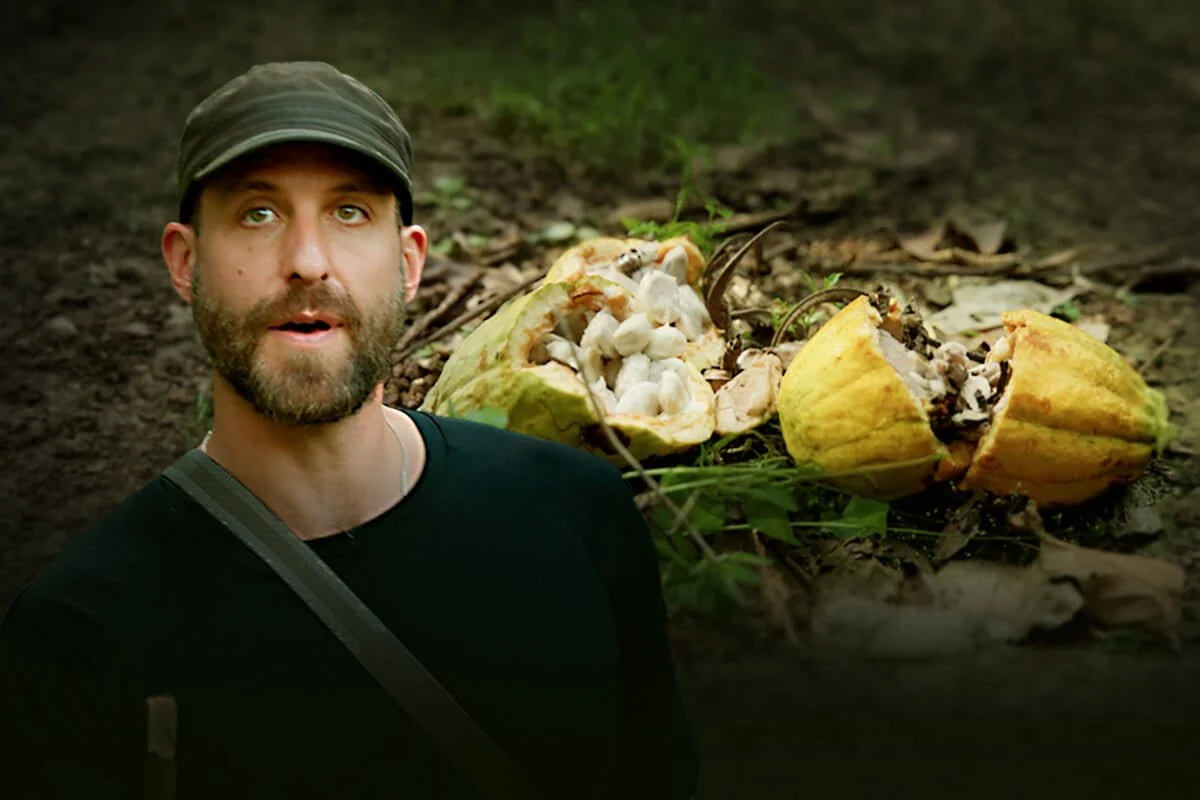
In the dense, humid stretches of Grand Gedeh County in southeastern Liberia, a new kind of gold rush is underway. It is not for minerals or precious stones, but for a crop that has already transformed the landscapes of neighboring nations: cacao. Known locally as "brown gold," the plant has become the primary driver of a rapid and often illegal expansion into the heart of the Upper Guinean rainforest, the last great forest remnant in West Africa. For decades, this ecosystem has survived the pressures of commercial logging and infrastructure development, but the global appetite for chocolate now threatens to erase what remains.
Liberia currently holds more than 50 percent of the remaining Upper Guinean rainforest, a biodiversity hotspot that once stretched across much of West Africa. As Côte d’Ivoire and Ghana saw their forest covers plummet to accommodate massive cocoa industries, Liberia’s forests remained relatively intact. However, satellite data and recent investigations reveal a troubling shift. Massive tracts of primary forest are being cleared at an accelerating rate, replaced by neat rows of young cacao trees. This expansion is moving into protected areas and proposed national parks, pitting the economic survival of local communities against the survival of some of the world’s most endangered species.
The Frontlines of the Cacao Frontier
The epicenter of this environmental struggle is Grand Gedeh, where the "cocoa fever" has infected every level of society. From subsistence farmers and local government officials to wealthy outside investors, the rush to plant cacao is viewed as a definitive escape from poverty. In the proposed Grebo-Krahn National Park, forest rangers and conservationists are engaged in a desperate game of cat-and-mouse with illegal farmers.
George, a representative of the Wild Chimpanzee Foundation, patrols these forests daily. His mission is to protect a landscape that is home to species found nowhere else on Earth, including the Western chimpanzee, the forest elephant, and the pygmy hippo. However, the task is becoming nearly impossible. "People are destroying the forest in the name of cocoa farming," George explains. The destruction is not merely the work of individual foragers but involves organized, large-scale operations. Some illegal farms discovered deep within protected zones span over 100 hectares—a massive footprint for an area intended for conservation.
The speed of the transition is staggering. Areas that were primary forest just twelve months ago are now populated by knee-high cacao saplings. For the conservationists, it feels like a losing battle. "Cocoa is winning the battle, and very fast," George notes. When rangers approach these illegal plots, workers often flee into the bush, leaving behind tools and evidence of a burgeoning industry that operates in the shadows of the law.
The Human Cost and the Migrant Influx
The expansion of the Liberian cocoa industry is heavily reliant on a migrant workforce, particularly from Burkina Faso. These workers, often referred to as "Burkinabe," bring with them years of technical expertise in cacao cultivation—knowledge honed in the now-depleted forests of Côte d’Ivoire. They are frequently invited by Liberian community leaders and landowners who lack the specific skills to manage cacao plantations but possess the land.
This demographic shift has created a complex socio-economic dynamic. While many locals see the Burkinabe as a means to transform their "huts into houses," the influx has also brought legal and ethical challenges. Rangers have encountered children working on these remote, illegal farms—children who should be in school but are instead caught in the crosshairs of a global commodity chain.
For the migrant workers, the motivation is simple: economic opportunity. They view the Liberian rainforest as a "greener pasture" compared to the exhausted soils of their home regions. For the Liberian landowners, the justification is equally pragmatic. When asked about the illegality of farming in protected zones, one local landowner responded with a question of his own: "I live on the land now. If you say I shouldn’t do [this], what do you expect me to do? How do you expect me to live?" This sentiment highlights the fundamental disconnect between international conservation goals and the immediate survival needs of one of the world’s poorest populations.
From the Forest Floor to the Global Market
The journey of a cocoa bean from a remote Liberian farm to a European chocolate bar is facilitated by a network of brokers and exporters. In Zleh City, the hub of the regional cocoa trade, brokers like Lincoln run the show. These middlemen are the primary beneficiaries of the "brown gold" rush. As the cocoa moves up the supply chain, its price increases, and so do the profits for those who control the logistics.
Interestingly, there is a profound lack of transparency at the local level. Farmers and regional brokers often have no idea who the ultimate buyers are. They sell to exporters in the capital, Monrovia, who then ship the product across the Atlantic. "We do not know which company it is—whether a European or an American company," says Lincoln. "We’re just here because we were living in poverty, and we’re seeing the cocoa bringing little money to us."
Data suggests that more than half of Liberia’s cocoa exports are destined for the European Union. This makes the EU the most influential player in the fate of Liberia’s forests. However, the link between the chocolate in a Brussels shop and the illegal clearing of a chimpanzee habitat in Grand Gedeh remains largely invisible to the average consumer.
The Legislative Shield: EUDR and its Delays
In an attempt to address its role in global deforestation, the European Union passed the European Union Deforestation Regulation (EUDR). This landmark legislation aims to ensure that products sold on the EU market—including cocoa, coffee, palm oil, and timber—are not linked to deforestation or forest degradation. Under the EUDR, companies would be required to provide geolocation data for the land where their commodities were produced, proving they did not originate from land deforested after December 31, 2020.
If strictly enforced, the EUDR could effectively shut down the Liberian cocoa trade in its current form, as much of the new production is occurring on recently cleared forest land. Delara Burkhardt, a Member of the European Parliament, emphasizes that the law is about taking responsibility. "What we are offering by setting standards for the European market is possibilities to have a more sustainable agricultural production in the original countries," she says.
However, the implementation of the EUDR has faced significant hurdles. Originally set to go into effect in late 2024, the regulation has been delayed following intense pressure from both international trading partners and European industries. These delays are seen by environmentalists as a major setback. "The delays are not technical issues; it’s a political decision," Burkhardt warns. For the forests of Grand Gedeh, every month of delay represents more hectares lost to the chainsaw and the torch.
A History Repeating Itself
The current trajectory of Liberia’s cocoa industry bears a haunting resemblance to the history of Côte d’Ivoire. In the late 20th century, Côte d’Ivoire became the world’s leading cocoa producer, but the cost was the near-total destruction of its rainforests. Today, Côte d’Ivoire has lost over 80 percent of its forest cover since the 1960s, largely due to cocoa.
Liberia is now at a crossroads. The country’s economy is fragile, and the allure of cocoa revenue is powerful. Yet, the environmental stakes could not be higher. The Upper Guinean rainforest is a critical carbon sink and a vital regulator of the regional climate. Its loss would not only mean the extinction of rare wildlife but would also destabilize the very environment that makes agriculture possible in the first place.
Implications and the Path Forward
The situation in Grand Gedeh illustrates the "green paradox" of modern development. To protect the climate and biodiversity, the world needs Liberia’s forests to remain standing. However, to achieve economic dignity, Liberians need a viable industry. Currently, cacao is filling that vacuum, but it is doing so at the expense of the nation’s natural heritage.
For a sustainable future, several interventions are necessary:
- Land Tenure Clarification: The "proposed" status of many national parks creates a legal gray area that farmers exploit. Formalizing these boundaries and providing clear land titles elsewhere could reduce encroachment.
- Support for Intensification: Instead of expanding into new forests, farmers need technical support to increase yields on existing agricultural land.
- Traceability Systems: If Liberia wants to maintain access to the European market, it must invest in the technology required to track cocoa from the farm to the port, ensuring it is "deforestation-free."
- International Compensation: If the global community wants Liberia to preserve its forests for the benefit of the planet, there must be financial mechanisms—such as carbon credits or direct conservation payments—that make a standing forest more valuable than a cocoa plantation.
As it stands, the "brown gold" of Grand Gedeh is a bittersweet commodity. It brings the promise of a zinc roof and a school uniform today, but it borrows that prosperity from the ecological stability of tomorrow. Unless the world’s appetite for chocolate is matched by a commitment to protecting the origins of its ingredients, Liberia may soon follow its neighbors into a future where the forest is only a memory.

