
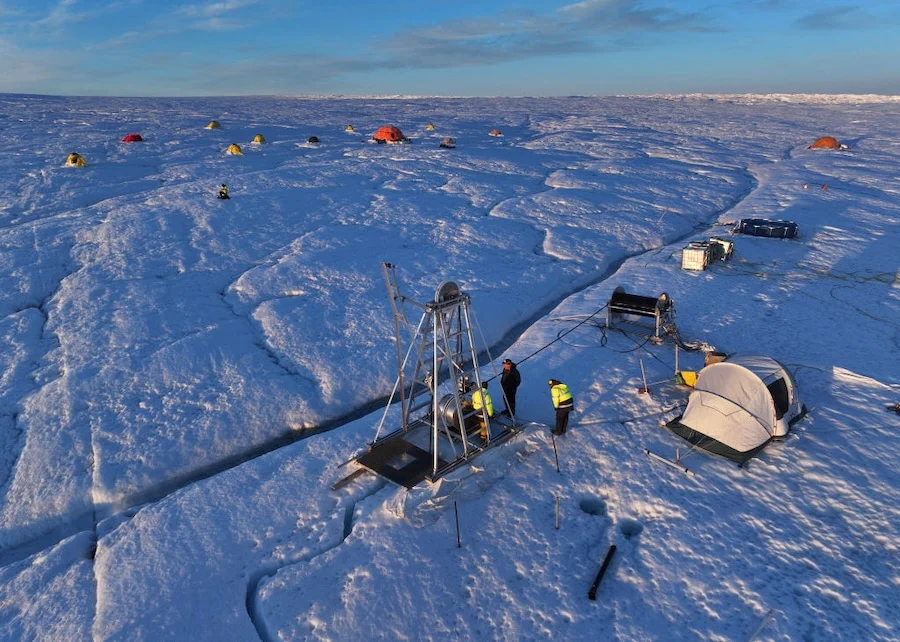
Methane, a colorless and odorless hydrocarbon, has emerged as a central focus of global climate policy due to its extraordinary potency as a greenhouse gas and its role as the second-largest contributor to the climate crisis. While carbon dioxide (CO2) remains the primary driver of long-term warming, methane (CH4) is responsible for approximately one-third of the global temperature rise observed since the industrial revolution. Composed of one carbon atom and four hydrogen atoms, methane is the primary component of natural gas, which currently accounts for roughly 25 percent of the world’s electricity generation. Despite its utility as an energy source, its tendency to leak into the atmosphere at every stage of production and its biological release from agriculture and waste systems have created a significant environmental challenge.
The Chemistry and Genesis of Methane
Methane is formed through two primary pathways: geological and biological. Geologically, the gas is produced over millions of years as heat and pressure act upon organic matter buried deep within the Earth’s crust. This process creates the fossil fuel reserves currently extracted for industrial and residential use. Biologically, methane is a byproduct of methanogenesis, an anaerobic respiration process carried out by microorganisms known as archaea. These microbes thrive in oxygen-free environments, such as the waterlogged soils of wetlands, the digestive tracts of ruminant animals like cows and sheep, and the depths of landfills.

In the atmosphere, methane behaves differently than carbon dioxide. While CO2 can persist for centuries, methane has a relatively short atmospheric lifespan of approximately 12 years. However, during its time in the atmosphere, it is far more effective at trapping heat. Over a 20-year period, methane is 86 times more potent than CO2 on a mass-for-mass basis. This potency drops to 28 times over a 100-year horizon, but the immediate impact of methane makes it a critical lever for climate action. Experts suggest that because methane exits the atmosphere quickly, reducing emissions today could lead to a rapid slowdown in the rate of global warming within the next two decades.
Evolution of Atmospheric Concentrations and Measurement
The concentration of methane in the atmosphere has reached unprecedented levels. As of 2023, the World Meteorological Organization reported that atmospheric methane reached 1,934 parts per billion (ppb), a 265 percent increase over pre-industrial levels. Roughly 60 percent of these emissions are attributed to human activities, including fossil fuel extraction, intensive livestock farming, and waste management.
Historically, measuring these emissions relied on "bottom-up" accounting, where researchers estimated total output based on facility counts and average emission factors. However, this method often fails to capture "super-emitter" events—localized incidents where massive amounts of gas are released due to equipment failure or intentional venting. Recent advancements in "top-down" measurement, particularly through satellite technology like GHGSat and the Environmental Defense Fund’s MethaneSAT, have revealed a stark discrepancy. Studies have shown that actual emissions from U.S. oil and gas operations are often 60 percent higher than estimates provided by the Environmental Protection Agency (EPA). In 2022 alone, satellites detected over 1,000 super-emitter incidents, including a massive leak in Turkmenistan that released methane at a rate equivalent to the hourly emissions of the entire nation of France.

Primary Sources of Anthropogenic Emissions
Human-caused methane emissions are driven by three major sectors: agriculture, fossil fuels, and waste.
Agriculture: The Leading Contributor
Agriculture is responsible for approximately 40 percent of human-caused methane. The largest share comes from enteric fermentation—the digestive process of ruminant livestock. As microbes break down food in the stomachs of cattle, sheep, and goats, they produce methane that is primarily released through burping. Livestock agriculture also generates methane through manure management, particularly in large-scale operations where waste is stored in anaerobic lagoons. Rice cultivation is another significant factor, contributing 8 percent of anthropogenic emissions. The flooded conditions of rice paddies create the perfect oxygen-poor environment for methane-producing archaea.
Fossil Fuels and the Extraction Penalty
The fossil fuel industry accounts for 35 percent of human-caused methane. This includes leaks from oil and gas wells, pipelines, and processing facilities, as well as "venting," where gas is deliberately released. Coal mining is also a major source; methane trapped in coal seams is released during the mining process or leaks from abandoned mines. Underground mines are particularly problematic, accounting for 70 percent of all coal-related methane emissions.

Waste Management and Landfills
Landfills and wastewater treatment systems contribute 20 percent of human-caused methane. As organic matter—such as food scraps and paper—decomposes in the oxygen-deprived environment of a landfill, it releases significant quantities of biogas. With global solid waste production expected to rise by 73 percent by 2050, the waste sector is projected to be the fastest-growing source of methane emissions if mitigation strategies are not implemented.
Natural Feedback Loops and Environmental Risks
While human activity is the primary driver of the current surge, natural sources account for 40 percent of methane emissions, with wetlands being the largest contributor. A concerning phenomenon known as the "wetland methane feedback" has emerged, where rising global temperatures and shifting rainfall patterns cause wetlands to expand and release more gas. Between 2000 and 2020, wetland emissions increased at a rate higher than even the most pessimistic scientific models predicted.
Further risks lie in the Arctic permafrost. These frozen soils contain vast amounts of organic matter and methane hydrates. As the Arctic warms at four times the global average, the thawing permafrost threatens to release "carbon bombs" that could trigger irreversible climate tipping points. Current data shows that methane emissions from Arctic and Boreal regions have already increased by 9 percent since 2002.

The "Bridge Fuel" Controversy and LNG Exports
For years, natural gas was marketed as a "bridge fuel" because it emits about half as much CO2 as coal when burned for electricity. However, recent life-cycle analyses have debunked this narrative. The process of liquifying natural gas (LNG) for export is energy-intensive and prone to leaks. Scientists have determined that if as little as 0.2 percent of methane leaks during production and transport, the climate impact of natural gas becomes equal to or worse than that of coal.
A 2023 study found that when methane leaks are fully accounted for, LNG has a 33 percent greater global warming potential over a 20-year period than coal. This has sparked intense debate over the expansion of LNG terminals in the United States, Australia, and Canada. Climate advocates, including Bill McKibben, argue that the sheer scale of the proposed LNG build-out could overwhelm global efforts to limit warming to 1.5 degrees Celsius.
Public Health and Economic Implications
Methane’s impact extends beyond temperature rise. It is a primary precursor to ground-level ozone, a hazardous air pollutant. Unlike the protective ozone layer in the stratosphere, ground-level ozone damages lung tissue and exacerbates respiratory conditions like asthma and chronic obstructive pulmonary disease (COPD). It is estimated that methane-generated ozone is responsible for 500,000 premature deaths annually worldwide. Furthermore, ozone reduces agricultural productivity by inhibiting plant growth, leading to the loss of millions of tons of staple crops like wheat, rice, and soy every year.

Pathways to Mitigation and Global Policy
Despite the challenges, the Intergovernmental Panel on Climate Change (IPCC) notes that cutting methane emissions is the fastest way to slow global warming in the near term. Existing technologies could reduce emissions from the oil and gas sector by 70 percent, often at little to no net cost because the captured gas can be sold.
Strategies for reduction include:
- In Energy: Implementing mandatory leak detection and repair (LDAR) programs, phasing out non-emergency flaring, and capping abandoned wells.
- In Agriculture: Utilizing feed additives like seaweed (which can reduce enteric emissions by up to 82 percent), improving manure management via anaerobic digesters, and adopting "alternate wetting and drying" techniques in rice farming.
- In Waste: Diverting organic waste from landfills through composting and installing gas-capture systems at existing waste sites.
On the international stage, the Global Methane Pledge, launched at COP26, represents a significant diplomatic milestone. With 159 signatory nations as of early 2025, the pledge aims to reduce global methane emissions by 30 percent from 2020 levels by 2030. While the pledge has galvanized political attention, implementation remains inconsistent. In 2023, only 13 percent of global methane emissions were covered by enforceable domestic policies.

Analysis of the Road Ahead
The trajectory of methane emissions in the coming decade will largely determine whether the world can meet the goals of the Paris Agreement. While individual actions—such as adopting plant-based diets and reducing food waste—are valuable, systemic change in the energy and agricultural sectors is paramount. The shift from "bridge fuel" rhetoric to a focus on total decarbonization marks a turning point in climate discourse.
As satellite monitoring becomes more ubiquitous, the era of self-reported, underestimated emission data is ending. This transparency will likely lead to stricter regulations and carbon pricing mechanisms specifically targeting methane. For policymakers, the dual benefit of methane reduction—slowing climate change while simultaneously improving public health and crop yields—provides a compelling economic and moral case for urgent action. The window for stabilizing global temperatures is narrow, and methane mitigation offers perhaps the most effective tool for immediate impact in an escalating climate emergency.

