
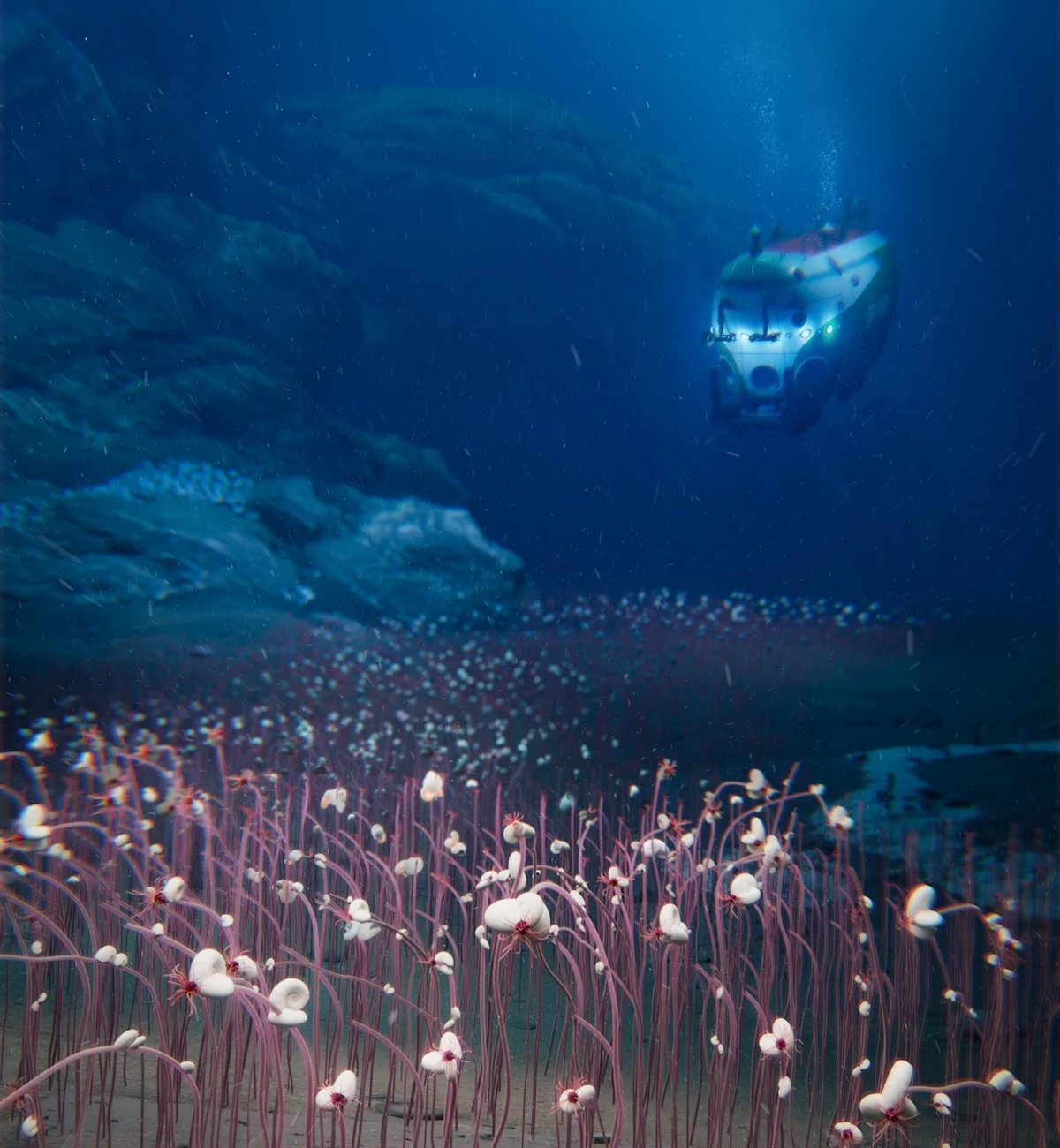
In a landmark expedition that has redefined the boundaries of known biology, a team of researchers from the Chinese Academy of Sciences has discovered the deepest and most extensive animal communities ever recorded on Earth. Utilizing the advanced manned submersible Fendouzhe, scientists identified vast colonies of mollusks, tubeworms, and other complex organisms thriving nearly six miles below the ocean’s surface in the Mariana Trench, as well as the Kuril–Kamchatka and western Aleutian trenches. The findings, published in the journal Nature, reveal a vibrant "oasis" of life in an environment previously characterized as a desolate, high-pressure desert.
The discovery was led by the Institute of Deep-sea Science and Engineering (IDSSE). According to the research team, these communities are not isolated pockets but represent a widespread ecosystem spanning more than 1,500 miles across the Pacific’s deepest troughs. These organisms exist at depths ranging from 3.6 to 5.92 miles (approximately 5,800 to 9,500 meters), far exceeding the depths of previously known high-density animal colonies. The study challenges long-held assumptions regarding the limits of life and the mechanisms of carbon cycling in the hadal zone—the deepest region of the ocean.
The Hadal Zone: Earth’s Final Frontier
The hadal zone, named after Hades, the Greek god of the underworld, refers to the deepest trenches in the ocean, typically starting at 6,000 meters (19,685 feet) and extending to the bottom of the Mariana Trench at approximately 11,000 meters (36,000 feet). These environments are characterized by extreme conditions: perpetual darkness, near-freezing temperatures, and hydrostatic pressures that can exceed 1,000 times the atmospheric pressure at sea level.
For decades, scientists believed that such depths could only support sparse populations of scavengers or single-celled organisms due to the lack of sunlight and the scarcity of food drifting down from the surface. However, the Fendouzhe expedition has provided visual and biological evidence that these trenches host flourishing ecosystems of "chemosynthetic" life. Unlike surface-dwelling animals that rely on photosynthesis—where plants convert sunlight into energy—these deep-sea creatures derive their sustenance from chemical energy.
The Science of Chemosynthesis in Deep Trenches
The newly discovered communities are sustained by a process known as chemosynthesis. In the absence of sunlight, microbes at the seafloor consume chemicals such as methane and hydrogen sulfide that seep out of the Earth’s crust. These chemicals are transported along geological faults that traverse the deep sediment layers of the trenches.
Isotopic analysis conducted by the IDSSE team indicates that the methane in these regions is produced microbially from organic matter deposited over millennia. These microbes form thick, "snow-like" mats on the seafloor, which serve as the foundation of the food web. Larger organisms, such as siboglinid tubeworms and bivalve mollusks, have evolved symbiotic relationships with these bacteria or feed on them directly.
Lead author Xiatong Peng noted that the geological similarities between the Mariana Trench and other hadal trenches suggest that these communities are likely more widespread than scientists once anticipated. The discovery of these "chemical-eating" colonies suggests that the deep ocean plays a much more significant role in the global carbon cycle than current models account for, as these organisms effectively sequester and process carbon in the Earth’s most extreme depths.
The Fendouzhe Expedition: A Technological Triumph
The discovery was made possible by the Fendouzhe (which translates to "Striver"), a state-of-the-art Chinese manned submersible capable of reaching the deepest points on the planet. During the 2024–2025 research cycle, the Fendouzhe conducted 23 dives into the Mariana Trench alone, allowing scientists to observe the seafloor in unprecedented detail.
Equipped with high-definition cameras, robotic arms for sampling, and sophisticated sensors, the submersible allowed researchers to document fields of tubeworms reaching up to a foot in length. They also observed mounds of clams, spiky crustaceans, sea lilies, sea cucumbers, and free-floating marine worms.
Mengran Du, a marine geochemist with the IDSSE and co-author of the study, described the experience of diving in the Fendouzhe as transformative. "Each descent transported me to a new deep-sea realm, as if unveiling a hidden world and unraveling its mysteries," Du said. She emphasized that the "astonishing abundance and diversity" of the life they found was the most groundbreaking aspect of the mission, describing the colonies as a "vibrant oasis in the vast desert of the deep sea."
Chronology of Mariana Trench Exploration
The Mariana Trench has long been a subject of fascination, but its extreme depth has made exploration difficult. The timeline of human and robotic interaction with the trench highlights the significance of the Fendouzhe’s findings:

- 1960: The bathyscaphe Trieste, carrying Jacques Piccard and Don Walsh, reached the bottom of the Challenger Deep (the deepest part of the Mariana Trench) for the first time. They stayed for only 20 minutes and reported seeing a flatfish, though this was later debated by biologists.
- 2012: Hollywood director and explorer James Cameron made the first solo manned descent in the Deepsea Challenger. He described the landscape as "desolate" and "lunar," observing very few large organisms.
- 2019: Victor Vescovo’s Five Deeps Expedition reached the bottom multiple times, discovering new species of snailfish and amphipods, but not the massive colonies described in the 2025 study.
- 2020–2025: The Fendouzhe began a series of intensive dives. Unlike previous "touch-and-go" missions, these expeditions focused on prolonged observation and systematic biological sampling across multiple trench systems.
The shift from viewing the trench as a "desolate" wasteland to a "flourishing" ecosystem marks a major turning point in oceanography.
Biodiversity and Species Observed
The diversity of life recorded by the Chinese team has surprised the global scientific community. The primary inhabitants of these hadal oases include:
- Siboglinid Polychaeta (Tubeworms): These worms lack a digestive tract and rely entirely on internal symbiotic bacteria to process chemicals from the water.
- Bivalvia (Mollusks): Thousands of clams were found clustered around methane seeps, forming dense beds that provide habitat for smaller invertebrates.
- Invertebrate Megafauna: The team documented sea lilies (crinoids), which are ancient animals related to starfish, and sea cucumbers that act as the "vacuum cleaners" of the deep-sea floor.
- Microbial Mats: Large white patches of bacteria were found covering the sediment, acting as a primary food source.
The sheer density of these animals—thousands of individuals in relatively small areas—indicates a highly efficient energy transfer system that survives despite the total absence of primary production from sunlight.
Implications for Deep-Sea Mining and Conservation
The discovery comes at a time of intense international debate regarding deep-sea mining. Many nations and private corporations are eyeing the ocean floor for "polymetallic nodules"—rocks rich in cobalt, nickel, and manganese essential for green energy technologies like electric vehicle batteries.
The International Seabed Authority (ISA), a United Nations-affiliated body, is currently in the process of drafting regulations for mineral extraction in international waters. However, marine biologists and environmental advocates have expressed grave concerns. The discovery of complex, high-density animal colonies at hadal depths suggests that mining activities could cause irreversible damage to ecosystems that we are only beginning to understand.
"These findings challenge the notion that the deep sea is a vast, empty space where mining would have minimal impact," said one independent marine researcher following the study’s release. "If these communities are as widespread as the study suggests, the environmental footprint of deep-sea mining could be catastrophic for biodiversity."
The "snow-like" microbial mats and the fragile tubeworm forests are highly sensitive to sediment plumes—clouds of dust stirred up by mining equipment—which could smother the organisms or disrupt the chemical seeps they depend on.
Rethinking the Deep-Ocean Carbon Cycle
Beyond the biological wonder of the discovery, the research has profound implications for climate science. The ocean is one of the world’s largest carbon sinks, and the role of the hadal zone in this process has been largely underestimated.
Current models of the carbon cycle focus primarily on the "biological pump," where carbon from the atmosphere is taken up by plankton and eventually sinks to the bottom. However, the IDSSE study shows that microbial methane production within the trench sediments provides a significant, alternative source of carbon that supports a massive biomass. Understanding how this carbon is sequestered or released in the deep trenches is crucial for creating accurate global climate models.
Conclusion and Future Research
The Fendouzhe’s discovery of flourishing animal communities at the Earth’s greatest depths has opened a new chapter in the study of life on our planet. It confirms that the hadal trenches are not just geological curiosities but are vital, living components of the global ocean ecosystem.
The researchers at the Chinese Academy of Sciences plan to continue their exploration, with future missions aimed at mapping the full extent of these chemosynthetic communities. As technology continues to bridge the gap between the surface and the abyss, the scientific community remains hopeful that further secrets of the "hadal oases" will be revealed, providing deeper insights into the resilience of life and the origins of biological diversity in extreme environments.
For now, the image of foot-long tubeworms and vast clam beds swaying in the dark, six miles beneath the waves, serves as a powerful reminder of how much of our own planet remains a mystery. The focus now shifts to the international community to determine how—or if—these newly discovered wonders will be protected for future generations.

