
A newly formed conservative super PAC, Defending Our Values, has initiated its first significant campaign investments, channeling support into two crucial Republican House races. This strategic move aims to bolster the GOP’s efforts to maintain its slim majority in the U.S. House of Representatives, with a specific emphasis on shaping future policy concerning artificial intelligence (AI). The organization, which had previously announced a substantial $15 million election effort, has now disclosed its initial beneficiaries: Rhett Marques in Alabama’s 2nd Congressional District and Scott Singer in Florida’s 25th Congressional District. These investments underscore the growing importance of AI as a policy battleground and the conservative movement’s intent to lead its legislative direction.
The Emergence of AI as a Political Battleground and Defending Our Values’ Mission
The rapid advancement of artificial intelligence has thrust the technology into the forefront of political debate, transforming it from a niche tech issue into a critical national policy concern. Lawmakers across the political spectrum are grappling with the multifaceted challenges and opportunities presented by AI, including the need for robust regulation, the imperative to foster American innovation, and the strategic competition with global rivals, most notably China. Defending Our Values PAC has positioned itself at the nexus of these discussions, asserting that conservative principles should guide the development and implementation of AI policy, rather than leaving the field predominantly to Silicon Valley executives or less ideologically aligned groups.
Super PACs, officially known as "independent-expenditure only committees," are political action committees that can raise unlimited sums of money from corporations, unions, associations, and individuals, then spend unlimited sums to overtly advocate for or against political candidates. Unlike traditional PACs, they cannot contribute directly to candidates or political parties. Defending Our Values, as a conservative super PAC, channels its resources into electoral campaigns where it believes its policy agenda, particularly on AI and Big Tech, can be most effectively advanced. Its stated mission extends beyond merely supporting candidates; it seeks to cultivate a legislative environment where American innovation thrives under a framework that protects consumers, especially children and families online, and ensures the U.S. maintains its technological supremacy against adversaries.
The group’s focus aligns with a broader sentiment among voters. A recent Fox News poll highlighted a significant shift in public perception, revealing that many Americans now view "Big Tech" as a greater threat to the United States than "Big Brother" (government surveillance). This sentiment provides fertile ground for political candidates who advocate for stricter oversight of technology companies and proactive AI regulation. Defending Our Values aims to identify and support candidates who are prepared to be vocal advocates for these issues on Capitol Hill, ensuring that the conservative viewpoint is well-represented in a policy area that will undoubtedly define the coming decades.
Strategic Investments in Key House Races
The Republican Party currently holds a precarious majority in the House of Representatives, making every competitive race critical to the balance of power. With the 2026 midterm elections on the horizon, the stakes are exceptionally high. Defending Our Values has identified Alabama’s 2nd Congressional District and Florida’s 25th Congressional District as key opportunities to not only secure Republican victories but also to elect legislators who will champion its AI-centric policy agenda. The organization’s initial investments are designed to provide early momentum to Marques and Singer, helping them navigate crowded primary fields and build name recognition for the general election.
Rhett Marques in Alabama’s 2nd Congressional District
Rhett Marques, an Alabama State Representative, is vying for the Republican nomination in Alabama’s newly redrawn 2nd Congressional District. The district, which has undergone significant redistricting, is expected to be one of the most competitive races in the country. Marques faces a crowded Republican primary field, indicating the intensity of the intra-party contest. His campaign has already garnered significant endorsements, including that of former President Donald Trump and current U.S. Senator Katie Britt, R-Ala., signaling strong establishment support within the state’s Republican apparatus.
The special Republican primary in Alabama is scheduled for August 11. Defending Our Values’ investment in Marques is intended to provide a crucial financial boost, enabling him to reach voters effectively in a densely populated primary. Should Marques emerge victorious from the primary, he is slated to face the incumbent, Rep. Shomari Figures, D-Ala., in what is anticipated to be a fiercely contested general election. Marques’ alignment with Defending Our Values’ objectives suggests he would be a strong proponent for conservative approaches to AI governance, data privacy, and national security in the context of technology. His background as a state legislator would provide him with legislative experience, albeit at a different level, to tackle complex policy issues.
Scott Singer in Florida’s 25th Congressional District
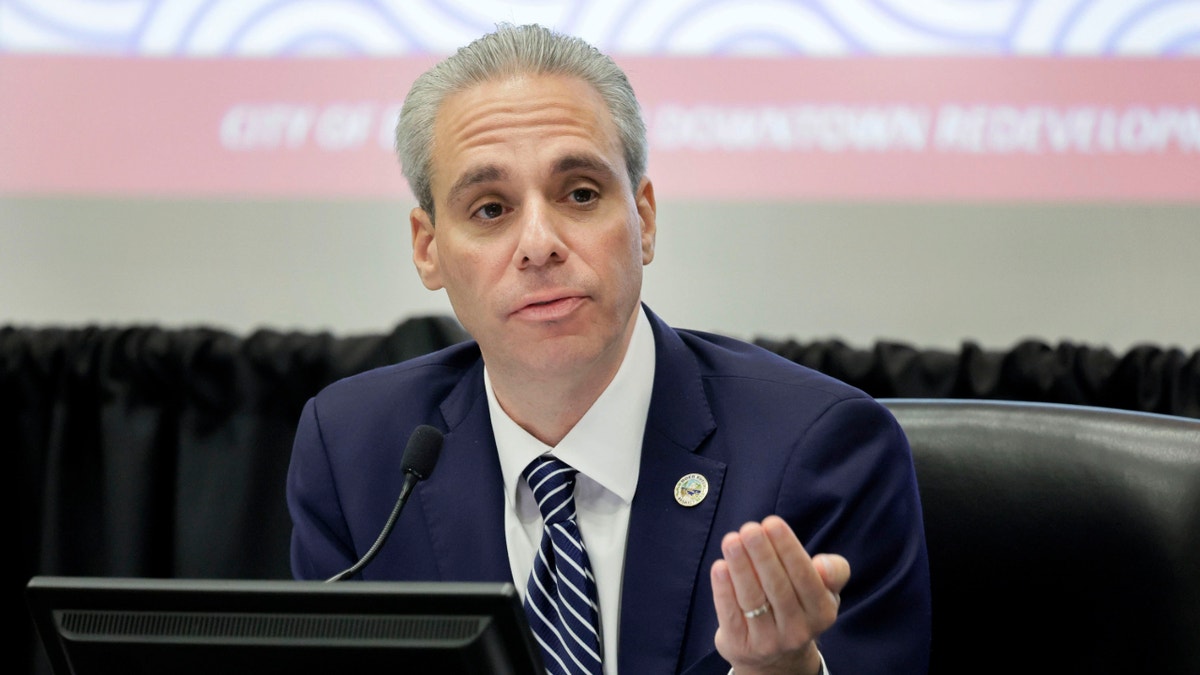
In Florida’s 25th Congressional District, Boca Raton Mayor Scott Singer is also competing in a crowded Republican primary. Singer’s municipal leadership experience could offer a distinct perspective on how technology impacts local communities, a viewpoint that could be valuable in broader AI policy discussions. His campaign has received endorsements from prominent Florida Republicans, including Florida Attorney General James Uthmeier, indicating his standing within the state’s political landscape.
The primary election for Florida’s 25th Congressional District is set for August 18. Similar to Marques, Defending Our Values’ support for Singer aims to give him a competitive edge in the primary, allowing him to differentiate himself from other contenders. If successful in the primary, Singer is expected to challenge Rep. Jared Moskowitz, D-Fla., in the general election. Moskowitz is known as one of former President Trump’s most vocal Democratic critics in Congress, setting the stage for a high-profile and potentially acrimonious contest. Singer’s commitment to addressing the challenges posed by Big Tech, strengthening online protections for children, and advancing American competitiveness in AI are key factors in the super PAC’s decision to back his candidacy. His experience as a mayor could lend credibility to discussions about the practical impacts of AI on local governance, infrastructure, and public services.
The Broader Implications for AI Policy and the 2026 Midterms
These initial investments by Defending Our Values PAC highlight several critical trends shaping the American political landscape:
- The Rise of Issue-Specific Super PACs: While super PACs have been a fixture of American elections for over a decade, the increasing specialization around specific policy areas like AI signifies an evolution in political advocacy. These groups aim to not only influence elections but also to cultivate a legislative agenda post-election.
- AI as a Defining Policy Area: The prominence of AI in these campaign investments underscores its rapidly increasing importance. It is no longer a peripheral issue but a central concern that will likely feature prominently in congressional debates on national security, economic competitiveness, and social welfare.
- The Battle for House Control: With a razor-thin Republican majority, every House race carries immense weight. The strategic targeting of these competitive districts by Defending Our Values indicates a sophisticated understanding of the electoral map and where resources can have the maximum impact on maintaining or expanding Republican control. Current projections suggest the House could flip with a shift of just a handful of seats, making these targeted investments incredibly impactful.
- Conservative Vision for Tech Regulation: Defending Our Values’ explicit goal to have conservatives, rather than "Silicon Valley executives," shape AI policy reflects a growing conservative movement to push back against the perceived liberal bias or unchecked power of large technology companies. This includes concerns over censorship, data privacy, and the influence of tech platforms on public discourse. The group envisions a future where AI is regulated through a lens of American values, ensuring innovation while safeguarding national interests and individual liberties.
- Geopolitical Competition with China: The emphasis on helping the United States "outpace China in artificial intelligence innovation" is a recurring theme in the super PAC’s messaging. This frames AI development not just as an economic or social issue but as a critical component of national security and global power dynamics. Concerns about China’s rapid advancements in AI, particularly its potential military applications, resonate across the political spectrum and are likely to drive bipartisan efforts, even if the regulatory approaches differ.
Potential Reactions and Future Outlook
The backing of these candidates by Defending Our Values PAC is likely to draw reactions from various quarters. Spokespersons for the PAC would likely emphasize the candidates’ commitment to responsible AI governance, online safety, and national security, positioning them as forward-thinking leaders essential for the future Congress. A hypothetical statement from a Defending Our Values representative might articulate: "Our investment in Rhett Marques and Scott Singer is a strategic commitment to electing leaders who understand the profound implications of artificial intelligence. These candidates are not just dedicated to winning their races; they are committed to ensuring that America leads in AI innovation responsibly, protecting our families and our national interests from unchecked technological power and foreign adversaries like China. We believe they will be powerful voices for conservative values in this critical policy arena."

Conversely, Democratic strategists might criticize the influence of super PAC money in elections, arguing that such external spending distorts the democratic process and prioritizes special interests over the needs of constituents. They might also highlight different approaches to AI regulation, perhaps emphasizing consumer protection and algorithmic fairness over national security or a more hands-off approach to innovation. A Democratic counter-narrative could focus on the potential for AI to exacerbate existing inequalities or the need for a more inclusive, globally collaborative approach to AI governance.
From the tech industry’s perspective, reactions could be mixed. Some companies might welcome the focus on American innovation and competitiveness against China, while others might express concern over the potential for overly restrictive regulations that could stifle growth or lead to a fragmented regulatory landscape. Industry associations might advocate for a balanced approach that supports both innovation and responsible deployment, potentially offering their expertise to lawmakers.
As the 2026 midterm cycle progresses, the visibility of AI as an electoral issue is expected to increase. The outcomes of races like those involving Rhett Marques and Scott Singer will not only determine the partisan control of the House but could also significantly influence the composition of key congressional committees responsible for technology and national security. The legislators elected in these crucial contests will have a direct hand in crafting the policies that will shape America’s technological future, its economic competitiveness, and its global standing in the age of artificial intelligence. The early and targeted financial interventions by groups like Defending Our Values PAC signal a new era where technology policy is no longer an afterthought but a central pillar of electoral strategy and legislative ambition.

