
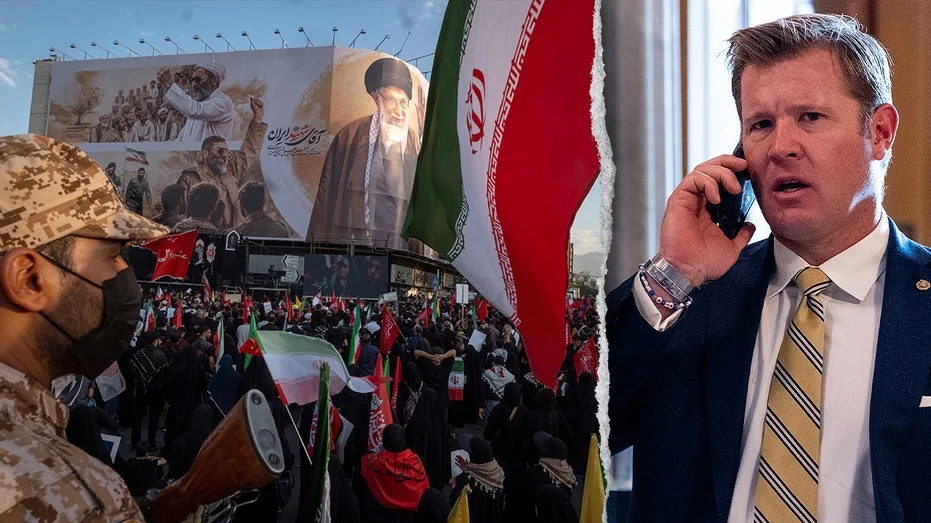
Sen. Tim Sheehy, R-Mont., delivered a profoundly emotional address on the Senate floor, visibly choking up as he brandished a bracelet commemorating a fallen friend, a soldier he tragically stated was "cut in half" by an Iranian bomb. This poignant moment underscored his fervent opposition to a Democratic-led initiative aimed at curtailing President Donald Trump’s executive authority in military engagements with Iran, transforming the procedural debate into a stark warning about the grave consequences of perceived inaction against Tehran. Sheehy’s impassioned remarks positioned the conflict as a generations-long struggle initiated by Iran, not by American presidential decree, arguing against any measure that might be interpreted as a weakening of resolve.
The Montana Republican, a decorated combat veteran, passionately argued against an Iran War Powers Resolution that sought to mandate the withdrawal of U.S. forces from hostilities against Iran unless explicitly authorized by Congress. The Senate, after a contentious debate, ultimately rejected the effort to advance the measure in a 47-49 vote on Thursday, signifying a narrow but decisive victory for those advocating for robust executive powers in confronting foreign adversaries. Before the vote, Sheehy forcefully contended that critics of current U.S. policy were overlooking a historical continuum of Iranian-backed attacks on American interests and personnel spanning several decades, an oversight he deemed perilous.
"We didn’t start this war, we did not. But, we will finish it," Sheehy declared from the floor, his voice thick with emotion. He acknowledged the prevailing sentiment against "forever wars" across the political spectrum, a common critique from both Democrats and Republicans. However, he swiftly pivoted, emphasizing the singular focus of those serving in uniform: "And I can promise you, being someone overseas wearing the uniform, when you’re fighting for your country, you don’t care what party’s in office." This statement sought to elevate the discussion beyond partisan politics, framing the confrontation with Iran as a duty transcending domestic divisions.
The Failed Resolution: A Challenge to Executive Authority
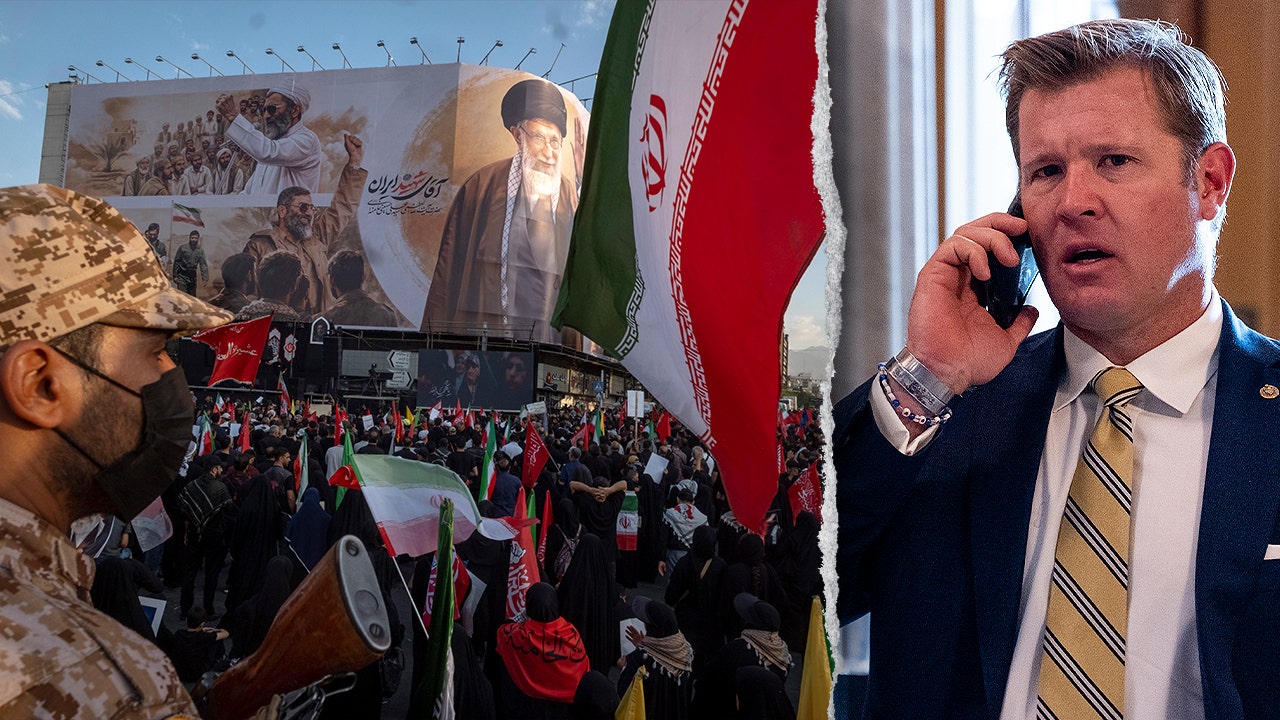
The Iran War Powers Resolution represented a significant attempt by a faction within Congress, primarily Democrats, to reassert legislative authority over military engagements. Rooted in the War Powers Resolution of 1973, which mandates presidential consultation with Congress before committing U.S. armed forces to hostile action and requires withdrawal within 60 to 90 days absent congressional authorization, such resolutions aim to prevent presidents from unilaterally initiating or prolonging conflicts. Proponents of the resolution argued that recent U.S. military actions targeting Iranian-backed militias and assets in the Middle East, particularly during the Trump administration, risked spiraling into a broader conflict without adequate congressional oversight. They cited the constitutional prerogative of Congress to declare war, enshrined in Article I, Section 8, as the ultimate authority for committing American troops to combat.
The resolution’s failure to advance, despite garnering significant support, underscored the persistent tension between the executive and legislative branches concerning foreign policy and military intervention. The 47-49 vote indicated that even among senators present, a simple majority was not achieved to move the measure forward, much less the 60 votes typically required to overcome a legislative filibuster for significant policy changes. This outcome reflected a complex interplay of factors, including concerns about projecting weakness to Iran, maintaining presidential flexibility in rapidly evolving security situations, and the inherent difficulties of bipartisan consensus on highly sensitive national security matters.
Decades of Conflict: Sheehy’s Historical Account of Iranian Aggression
Senator Sheehy passionately argued that while Democrats were correct in labeling the ongoing conflict a "war of choice," the choice was made not by the United States or any particular presidential administration, but by Iran’s revolutionary regime nearly five decades ago. "This is a war of choice. The Democrats are correct," Sheehy reiterated. "It’s a war of choice that was begun by a radical, lunatic band of terrorists that took over a beautiful nation 47 years ago." This reference pointed directly to the 1979 Iranian Revolution, which saw the overthrow of the U.S.-backed Shah and the establishment of an anti-Western Islamic Republic. This event fundamentally reshaped U.S.-Iran relations, inaugurating an era of animosity and proxy confrontations that continues to this day.
The former Navy SEAL then methodically recounted a litany of historical attacks he attributed to Iran and its proxies, weaving a narrative of sustained aggression designed to illustrate the long-standing nature of the threat.
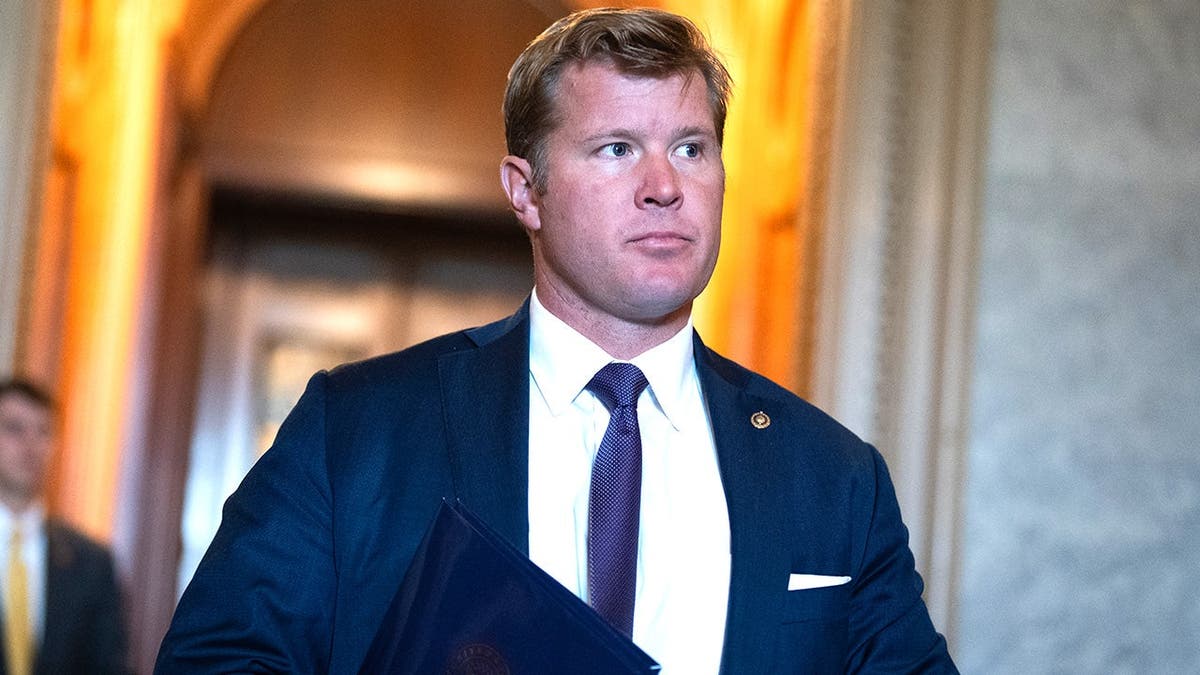
- The Iranian Revolution and its Aftermath (1979): The seizure of the U.S. Embassy in Tehran and the subsequent hostage crisis marked a dramatic break in relations, signaling Iran’s intent to challenge U.S. influence in the region. This period laid the groundwork for decades of mutual distrust and covert operations.
- Beirut Marine Barracks Bombing (1983): Sheehy invoked this devastating attack, carried out by Hezbollah (a group founded with significant Iranian support), which killed 241 American servicemen in Lebanon. This event remains a stark reminder of the human cost of Iranian-backed terrorism and a formative moment in U.S. counter-terrorism strategy.
- The Achille Lauro Hijacking (1985): While primarily attributed to the Palestine Liberation Front (PLF), a Palestinian militant group, Sheehy’s mention of this event in the context of Iranian-backed attacks highlights the broader tapestry of regional instability and anti-Western militancy that Iran has often sought to exploit or exacerbate. The PLF, though not a direct Iranian proxy like Hezbollah, operated within the wider network of anti-Israel and anti-Western groups that Iran cultivated.
- The Case of William Buckley (1985): Sheehy recounted the harrowing abduction and torture of William Buckley, then the CIA station chief in Beirut. "William Buckley was abducted in 1985," Sheehy stated. "He was skinned alive on camera by the Iranians." Buckley, kidnapped in March 1984 by Islamic Jihad (another Iranian-backed group), endured horrific torture before dying in captivity. His case became a symbol of the brutality employed by Iranian-backed entities against American personnel.
- The USS Cole Bombing (2000): Although officially attributed to Al-Qaeda, the attack on the guided-missile destroyer in Yemen’s port of Aden, which killed 17 American sailors, was cited by Sheehy as part of the broader pattern of anti-American violence in the region. While direct Iranian involvement in the USS Cole attack has not been definitively established, Iran’s continuous support for various militant groups operating against U.S. interests contributes to a general climate of hostility and regional instability.
- Modern Proxies and Continued Aggression: Sheehy further connected current threats to Iran, naming terrorist groups such as Hamas, Hezbollah, and the Houthis. He detailed how these entities, receiving significant financial, military, and logistical support from Tehran, serve as extensions of Iranian foreign policy, destabilizing the Middle East and directly targeting American allies and personnel. The recent Houthi attacks on commercial shipping in the Red Sea and drone attacks on U.S. bases in the Levant and Iraq, often resulting in American casualties, serve as contemporary examples of this ongoing proxy warfare.
"This regime that we are fighting does not care about our partisan politics," Sheehy asserted. "They don’t care who you voted for, who you pray to, or where you live. They want to kill all of us. And they don’t just say it, they actually do it. And they’ve been doing it for 47 years." This unequivocal statement aimed to unify senators against a common, existential threat, urging them to set aside political differences in the face of what he described as a relentless adversary.
The "War of Choice": A Debate on Origins
The debate over the "war of choice" encapsulates a fundamental divergence in how U.S. engagement with Iran is perceived. For Democrats advocating for the War Powers Resolution, the "choice" often refers to decisions made by recent U.S. administrations—such as the Trump administration’s withdrawal from the Iran nuclear deal (JCPOA) in 2018 and subsequent "maximum pressure" campaign—which they argue escalated tensions and risked direct conflict. Their perspective often emphasizes diplomatic solutions and international cooperation to de-escalate regional tensions and prevent what they see as unnecessary military entanglements. They contend that empowering Congress to authorize military force is crucial for ensuring public accountability and preventing open-ended conflicts.
Sheehy, however, flipped this narrative, asserting that the "war of choice" was irrevocably initiated by the Iranian regime in 1979. From his viewpoint, U.S. military actions are not provocations but rather responses to decades of unprovoked aggression, terrorism, and destabilizing activities orchestrated by Tehran. This interpretation casts the current U.S. posture as defensive and reactive, a necessary measure to protect American interests, allies, and personnel from a regime fundamentally hostile to the United States and its values. This framing seeks to legitimize ongoing military actions as a continuation of a defensive struggle rather than an offensive escalation.
The Bipartisan Divide on War Powers
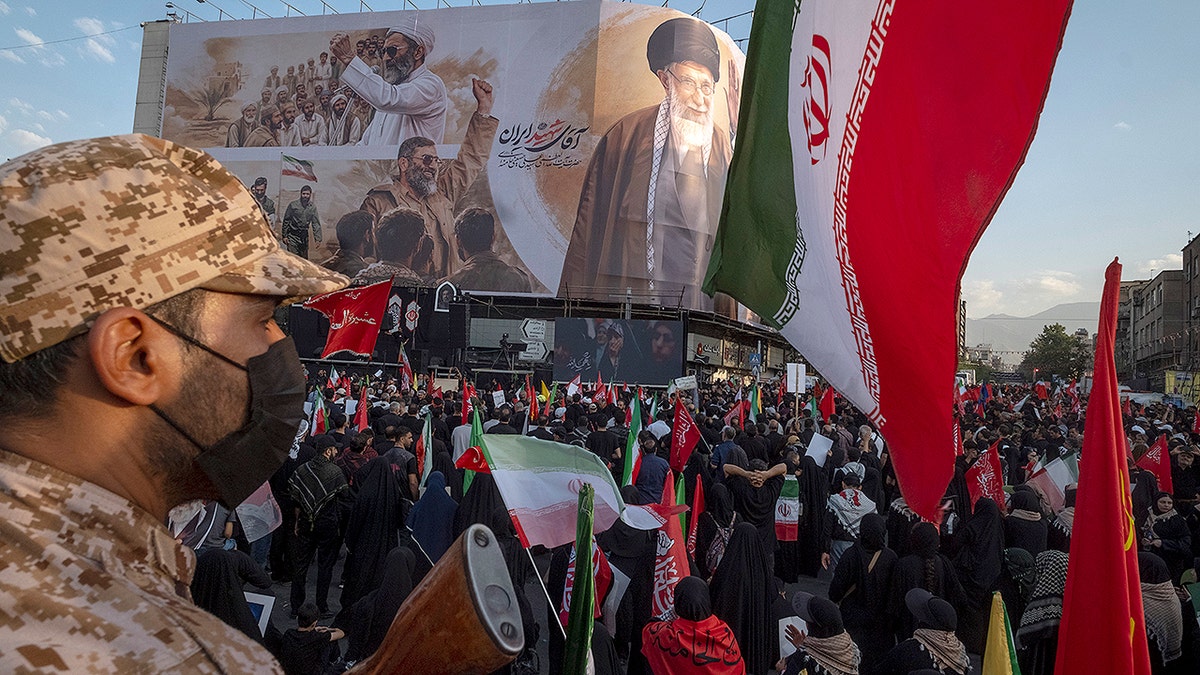
The 47-49 vote on the Iran War Powers Resolution highlighted a deep, albeit sometimes nuanced, bipartisan divide regarding the scope of presidential war powers and the appropriate U.S. strategy toward Iran.
- Democratic Push for Congressional Oversight: Many Democrats, along with some libertarian-leaning Republicans, have consistently advocated for stronger congressional oversight of military actions. Their concern often stems from a desire to prevent unilateral presidential decisions from entangling the nation in prolonged and costly conflicts without a clear national consensus. They point to past conflicts, such as the Vietnam War, as cautionary tales of executive overreach and the importance of legislative checks and balances. For them, requiring explicit congressional authorization for hostilities against Iran is a matter of constitutional principle and prudent foreign policy, aiming to avoid an accidental or undeclared war.
- Republican Stance and Executive Prerogative: The majority of Republicans, particularly those aligned with the Trump administration’s hawkish stance on Iran, generally oppose measures that they believe would tie the President’s hands in responding to immediate threats. They argue that the Commander-in-Chief needs flexibility and agility to protect U.S. forces and interests, especially in volatile regions like the Middle East where Iranian-backed proxies operate constantly. They often emphasize that legislative restrictions could be perceived as weakness by adversaries, emboldening groups like the IRGC. For these Republicans, Sheehy’s argument that Iran has been at war with the U.S. for decades justifies a proactive and decisive executive response.
The vote also reflected the ongoing influence of former President Trump, who had threatened "major military punishment" for Iran over future Houthi attacks. Republicans, for the most part, have fallen in line with Trump’s assertive approach, prioritizing a strong deterrent posture over legislative constraints.
Beyond the Floor: Implications for U.S. Foreign Policy
Senator Sheehy concluded his passionate appeal by characterizing Iran’s ongoing retaliatory attacks as "the flailing’s of a nation in collapse," rather than demonstrations of strength. He cited "an occasional missile strike" on commercial boats and U.S. military members in the Middle East as evidence of a desperate regime. This assessment suggests a belief that continued pressure, rather than de-escalation, is the path to ultimately weakening and defeating the Iranian threat. He implored his congressional colleagues to "think about the people who are deployed right now standing on that wall with a loaded weapon who volunteered to defend our country and our way of life" in what Sheehy unequivocally described as a "just war."
- Confronting a "Murderous, Savage Adversary": Sheehy’s rhetoric paints a picture of Iran as an irredeemable and fundamentally hostile entity that understands only force. This viewpoint implies that diplomatic engagement, while potentially useful in other contexts, is ineffective against a regime driven by an ideology of destruction. "Last time I checked, we wiped these bastards out… because they deserve it," Sheehy stated, referring to past confrontations. "We did not start a war with the Iranian Revolutionary Guard (IRGC), they started it with us 47 years ago and their attacks have gone unanswered for half a century. It is time to fix this problem and make sure another generation of Americans does not have to fight this murderous, savage adversary." This strong language signals a preference for decisive military action to neutralize the threat, rather than containing it through diplomacy.
- Regional Stability and Escalation Risks: The implications of this approach for regional stability are profound. A policy of aggressive confrontation, while aimed at deterring Iran, carries inherent risks of escalation. Any direct military confrontation between the U.S. and Iran could quickly draw in regional allies and adversaries, potentially igniting a wider conflict with devastating humanitarian and economic consequences. The ongoing proxy wars in Yemen, Syria, Iraq, and Lebanon, all influenced by Iran, demonstrate the fragile balance of power in the Middle East. The failure of the War Powers Resolution thus leaves the door open for continued executive-led actions, increasing the stakes for both confrontation and potential miscalculation.
- The Future of U.S.-Iran Relations: The Senate’s rejection of the resolution ensures that the executive branch retains significant latitude in responding to Iranian aggression. This outcome reinforces a policy trajectory that prioritizes deterrence and, when deemed necessary, military retaliation over legislative constraints. For the immediate future, this means a continuation of a robust U.S. military presence in the Middle East, vigilance against Iranian-backed threats, and the potential for targeted actions against Iranian assets or proxies. The debate, however, is far from over. As tensions continue to simmer in the Middle East, the question of who holds the ultimate authority to commit American lives to battle against Iran will undoubtedly re-emerge, reflecting the enduring struggle to balance presidential prerogative with congressional oversight in a complex and dangerous world.

