

The extraordinary, two-decade-long manhunt for Ronald L. Fischer, a fugitive from "America’s Most Wanted," has finally concluded with his capture aboard a sailboat off the New Jersey coast. Fischer, 69, vanished more than 20 years ago during his sexual assault trial in Rhode Island, orchestrating a meticulously planned disappearance that involved deceptive communications, canceled international flights, and the study of identity alteration techniques, as revealed in newly reviewed court documents. His apprehension last week, credited to an online sleuth’s tip, brings a measure of closure to a case that has spanned generations of law enforcement and highlighted the unwavering resolve of justice.
The Dramatic Capture: An End to 20 Years on the Run
The successful operation to apprehend Ronald L. Fischer unfolded dramatically last Thursday, bringing to an end one of the nation’s longest-running fugitive cases. Federal agents, acting on a crucial tip, intercepted the 56-foot sailboat named "Silver Lining" off the coast of New Jersey. Fischer, who had been living under the alias Richard Graydon for at least seven years, and potentially longer, was taken into custody without incident. The coordinated effort involved multiple federal agencies, including the FBI, the U.S. Marshals Service, and the U.S. Coast Guard, underscoring the significant resources dedicated to tracking down long-term fugitives. This highly anticipated capture culminates a relentless pursuit that began in April 2005 when Fischer, facing severe charges, chose to flee rather than confront the legal consequences of his actions.
The U.S. Marshals Service confirmed that the breakthrough in the cold case came from an "online sleuth," a testament to the increasing role of public engagement and digital forensics in modern law enforcement. While the specifics of the tip remain undisclosed, it provided investigators with the critical lead needed to pinpoint Fischer’s whereabouts after two decades of evading justice. His life aboard the "Silver Lining" suggests a transient existence, likely sailing between various coastal locations to maintain his anonymity and avoid detection. Authorities are now investigating when and how Fischer acquired the substantial vessel, believed to be worth over $1 million, and whether he alternated between living on the sailboat and staying on shore during his prolonged flight.
A Calculated Disappearance: The Preparations of a Fugitive
Newly reviewed court documents, specifically a federal affidavit filed in the U.S. District Court for the District of Rhode Island, paint a detailed picture of Fischer’s elaborate preparations for his disappearance. These documents reveal that his vanishing act was not a spontaneous decision but a carefully premeditated escape designed to ensure a long-term evasion of authorities.
Just days before his scheduled return to Rhode Island Superior Court, Fischer began systematically dismantling his previous life. On April 23, 2005, he sent an email to his attorney, explicitly stating his intention to flee the country. This communication, a critical piece of evidence, laid bare his determination to avoid conviction. Later that same evening, he made phone calls to each of his daughters, informing them of his impending departure from the United States. These personal goodbyes served as a stark indication of his resolve to sever ties and embark on a life as a fugitive.

Further investigative findings revealed Fischer’s attempt at misdirection. He contacted a New York travel agency and purchased an American Airlines ticket for a flight from Boston to London. However, this reservation was subsequently canceled, suggesting a deliberate attempt to mislead investigators into believing he had fled internationally via commercial air travel, while simultaneously keeping his actual escape route clandestine. Hours after canceling the London flight, surveillance cameras captured Fischer returning a rental car to an Enterprise location in Boston shortly after midnight. He was seen walking away, carrying two travel bags over his shoulder, a final glimpse of the man before he truly vanished into the shadows.
Fischer’s preparations extended to meticulously settling his affairs. He transferred vehicles to his daughters, instructed them to remove their personal belongings from his home, and disposed of a Jaguar automobile, effectively liquidating assets and minimizing any traceable connections to his past life. A search of his residence following his disappearance uncovered telling evidence: literature explaining methods for changing identities and strategies for vanishing without a trace. This discovery confirmed that Fischer had actively researched and planned his new life as an unidentifiable individual, aiming for what he reportedly described in an email to attorney Robert Mann as "a good, safe, secure and comfortable life" away from the clutches of the legal system. He stated his decision not to risk conviction in state court, opting instead for a life on the run.
The Rhode Island Trial and Conviction In Absentia
Ronald L. Fischer’s flight occurred amidst a critical juncture in his legal proceedings. He was on trial in Rhode Island Superior Court for first-degree sexual assault, a grave charge that carries significant penalties. His disappearance on April 23, 2005, abruptly halted the proceedings, leaving the court, the prosecution, and most importantly, the victim, in a state of uncertainty and prolonged anguish.
Despite Fischer’s absence, the judicial process continued. A jury, presented with the evidence, ultimately found him guilty of first-degree sexual assault. This conviction in absentia underscored the court’s determination to deliver justice, even when the defendant attempted to evade accountability. However, the verdict, while legally significant, could not bring true closure without Fischer’s physical apprehension. For two decades, a guilty verdict hung in the air, a constant reminder of an unfulfilled sentence and a perpetrator who had escaped. The Rhode Island State Police issued a wanted poster, circulating Fischer’s image widely, marking him as one of the state’s longest-wanted fugitives. The legal ramifications of his flight are now compounded, as he will not only face sentencing for the sexual assault conviction but also additional charges for unlawful flight to avoid prosecution.
The Enduring Manhunt: FBI, U.S. Marshals, and the Public’s Role
The capture of Ronald L. Fischer is a testament to the persistent and collaborative efforts of federal law enforcement agencies, bolstered significantly by public participation. The FBI and the U.S. Marshals Service have a long history of pursuing fugitives, often for decades, demonstrating an unwavering commitment to the principle that no one is beyond the reach of justice.
The U.S. Marshals Service, responsible for apprehending federal fugitives, played a central role in the prolonged search for Fischer. Their expertise in tracking individuals across state lines and internationally, often relying on a vast network of contacts and advanced investigative techniques, was crucial. The FBI’s involvement highlighted the severity of the case and the agency’s commitment to supporting state and local law enforcement in complex fugitive investigations.

"America’s Most Wanted," a television program that has been instrumental in the capture of over 1,200 fugitives since its inception, undoubtedly played a significant role in keeping Fischer’s case alive in the public consciousness. While the initial tip did not explicitly state it came directly from the show, the program’s model of leveraging public vigilance and providing avenues for anonymous tips aligns perfectly with the "online sleuth" scenario that led to Fischer’s capture. This case serves as a powerful reminder of the program’s enduring legacy and the critical role that informed citizens can play in aiding law enforcement.
Throughout the 20 years, investigators meticulously followed leads, analyzed patterns, and maintained a watchful eye, hoping for the slightest crack in Fischer’s carefully constructed new identity. His ex-wife, Dr. Nancy Stein, provided valuable early insights, telling investigators that Fischer was well-traveled and had friends in other parts of the world, including Brazil. She also believed he might attempt to charter a boat to escape, a prescient observation given his eventual capture on the "Silver Lining." These initial insights, combined with continuous investigative work, kept the search alive, even as years turned into decades.
Life Under an Alias: Richard Graydon and the "Silver Lining"
For two decades, Ronald L. Fischer shed his identity and assumed a new one, living as Richard Graydon. The U.S. Marshals Service estimates he had been using this alias since at least 2017, though it is possible he adopted it even earlier. Creating and maintaining a false identity for such an extended period requires extreme discipline, constant vigilance, and a significant degree of isolation. Fugitives often resort to cash transactions, avoid digital footprints, and sever all ties with their past to prevent detection.
Fischer’s choice of a sailboat as his primary residence and mode of transport is telling. A life at sea offers a degree of mobility and anonymity that a land-based existence often cannot. Sailboats can travel vast distances, dock in numerous ports, and provide a self-contained environment away from prying eyes. This lifestyle, while potentially romanticized, is also fraught with challenges for a fugitive. It requires constant maintenance, significant financial resources without a traceable income, and the ability to avoid suspicion during interactions with port authorities or other boaters. The estimated $1 million cost of the "Silver Lining" suggests Fischer either had substantial hidden assets from his previous life or managed to accumulate wealth discreetly while on the run.
The U.S. Marshals Service acknowledged that investigators believe Fischer likely left the U.S. by boat after his disappearance in 2005, aligning with his ex-wife’s earlier suspicions. His potential alternation between living on the sailboat and staying on shore indicates a strategic approach to maintaining his freedom, perhaps using shore stays for resupply, repairs, or to access services that are difficult to obtain at sea, while always being ready to disappear back into the open waters. This dual existence allowed him flexibility while minimizing exposure.
Implications for Justice and Closure
The capture of Ronald L. Fischer carries profound implications for the justice system and, most importantly, for the victims of his crime. It reinforces the principle that justice, though sometimes delayed, is not ultimately denied. A 20-year evasion might seem like a victory for a fugitive, but the eventual capture demonstrates the relentless nature of law enforcement and the enduring commitment to holding individuals accountable for their actions.
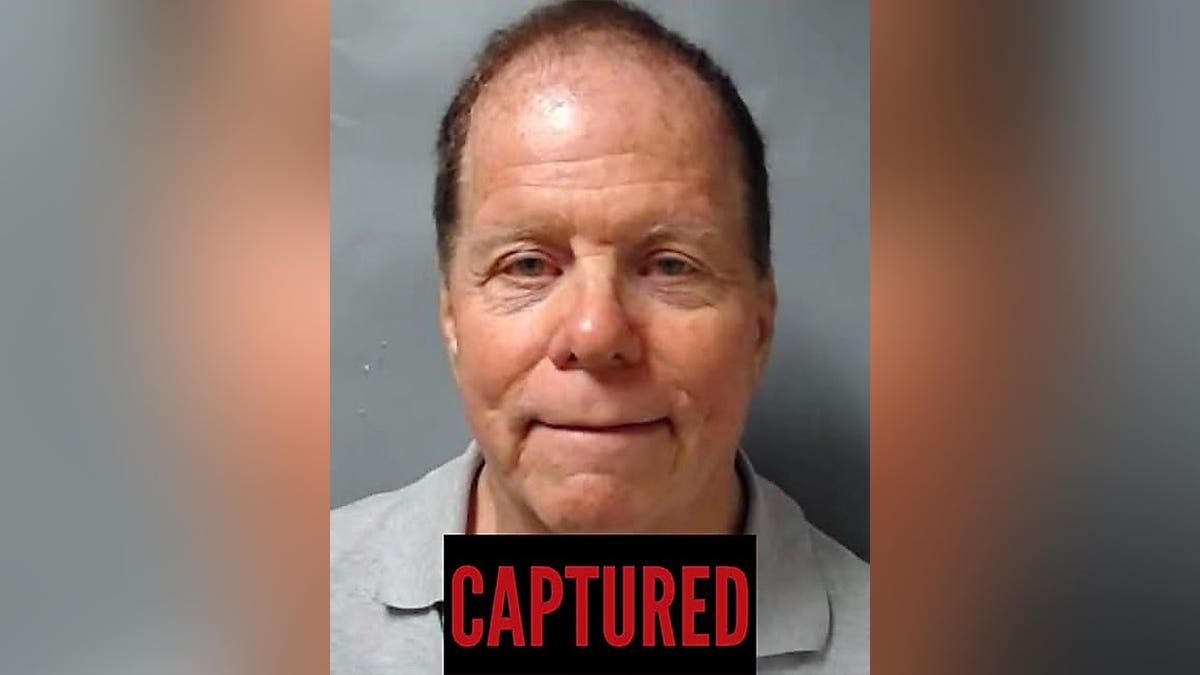
For the victim(s) of the sexual assault, Fischer’s apprehension offers a long-awaited sense of closure. The trauma of a crime is often exacerbated when the perpetrator remains at large, leaving an open wound and a feeling of unfinished business. While the capture cannot erase the past or undo the harm inflicted, it provides the opportunity for the victim(s) to finally see their assailant face the consequences of the guilty verdict rendered two decades ago. It signifies an end to the uncertainty and the knowledge that the person who inflicted such harm is no longer free.
This case also highlights the evolving landscape of fugitive apprehension. The role of an "online sleuth" underscores how digital communities and accessible information can contribute to solving cold cases. While law enforcement agencies possess sophisticated tools, the power of collective intelligence, especially in the age of widespread internet access, has become an invaluable asset. This collaborative model, combining traditional police work with public engagement, is increasingly effective in tracking down those who seek to evade justice.
What’s Next for Ronald Fischer: Legal Ramifications
Following his capture, Ronald L. Fischer faces immediate legal proceedings. He will first be processed and likely held in federal custody, given the unlawful flight warrant issued against him. This federal charge alleges that he traveled in interstate or foreign commerce to avoid prosecution, a serious offense that will add to his existing legal woes.
Subsequently, Fischer will be extradited back to Rhode Island to face sentencing for his 2005 first-degree sexual assault conviction. The intervening two decades, and his deliberate evasion of justice, are likely to be significant factors in the sentencing phase. Courts often consider a defendant’s flight as an aggravating circumstance, potentially leading to a harsher sentence. He may also face additional charges related to his identity fraud and any other crimes he might have committed while living under the alias Richard Graydon.
The U.S. Marshals Service has not yet released additional details about where Fischer spent the past two decades or the full extent of his activities as Richard Graydon. These details will likely emerge during court proceedings, providing further insights into the extraordinary lengths he went to evade capture and the life he built in the shadows. The conclusion of this extensive manhunt serves as a potent reminder that while the path to justice can be long and arduous, the pursuit of accountability for serious crimes remains an unyielding commitment for law enforcement agencies and the communities they serve.

