
While carbon dioxide remains the primary focus of international climate policy, methane—a colorless, odorless hydrocarbon—has emerged as the most critical variable in the effort to prevent catastrophic global warming in the near term. As the primary component of natural gas and a byproduct of both biological and industrial processes, methane (CH4) is responsible for approximately one-third of the global temperature increase recorded since the Industrial Revolution. Despite its relatively short atmospheric lifespan of roughly 12 years, its ability to trap heat is vastly superior to that of carbon dioxide, making it a "climate superpower" that offers both a significant threat and a unique opportunity for rapid temperature stabilization.
The Science and Measurement of a Potent Greenhouse Gas
Methane is a simple molecule consisting of one carbon atom and four hydrogen atoms. In the natural world, it is produced through two primary pathways: geological and biological. Geologically, methane is formed over millions of years as heat and pressure act upon organic matter trapped deep underground—the same process that creates oil and coal. Biologically, the gas is produced via methanogenesis, a process where specialized microorganisms known as archaea break down organic material in oxygen-poor environments, such as wetlands, the digestive tracts of ruminant animals, and the depths of landfills.

Historically, measuring methane emissions relied on "bottom-up" methodology. This approach involves taking localized measurements at a specific source, such as a single cow or a specific valve at a gas plant, and multiplying those figures by the total number of sources in a region. However, this method frequently underestimates the true scale of the problem. Recent advancements in "top-down" measurement—utilizing high-altitude aircraft and sophisticated satellite arrays like the Environmental Defense Fund’s MethaneSAT or NASA’s EMIT mission—have revealed a stark discrepancy. Satellite data frequently identifies "super-emitters," which are specific facilities or leak events responsible for a disproportionate volume of emissions. Studies have shown that actual emissions from the U.S. oil and gas sector may be 60% higher than official estimates provided by the Environmental Protection Agency (EPA).
A Chronology of Rising Concentrations and Feedback Loops
The concentration of methane in the atmosphere has reached unprecedented levels. In the pre-industrial era, methane levels hovered around 700 parts per billion (ppb). By 2023, that figure had surged by 265% to 1,934 ppb. The rate of increase has accelerated sharply over the last two decades, driven by a combination of industrial expansion and natural feedback loops.
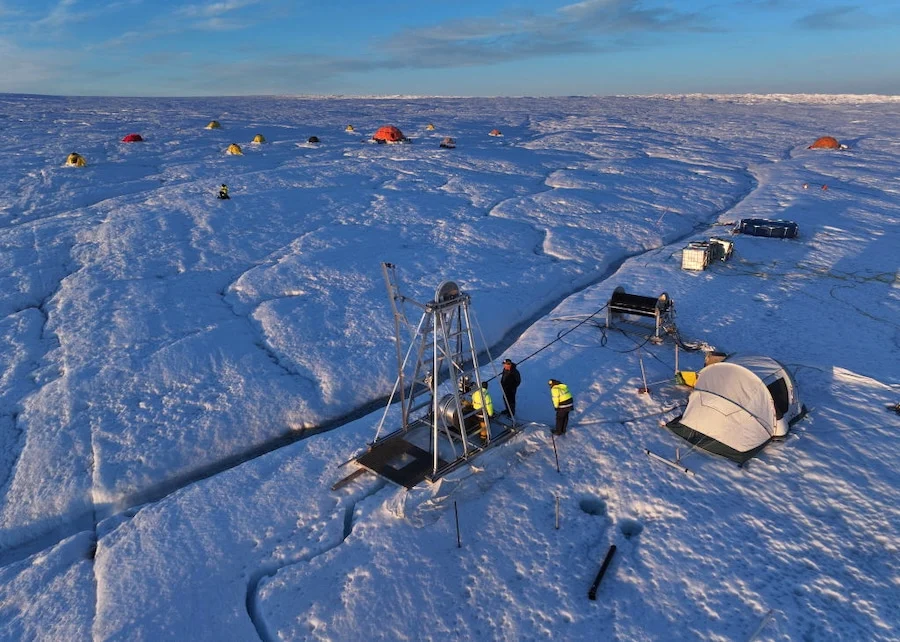
A primary concern for climatologists is the "wetland methane feedback." As global temperatures rise, tropical wetlands expand due to shifting rainfall patterns, while Arctic permafrost begins to thaw. Both processes release massive quantities of methane that were previously sequestered. In the Arctic, the permafrost contains roughly 2.5 times more carbon than is currently in the atmosphere. As this "permanently frozen" ground melts, it activates microbes that convert organic matter into methane, creating a self-reinforcing cycle where warming leads to more emissions, which in turn leads to more warming. Between 2000 and 2020, methane emissions from wetlands grew at a rate that exceeded even the most pessimistic scientific models, signaling that natural systems may be losing their ability to buffer human-caused changes.

Sectoral Contributions: Agriculture, Fossil Fuels, and Waste
Human activity is responsible for approximately 60% of current methane emissions, with three sectors dominating the landscape:
Agriculture and Livestock
Agriculture accounts for roughly 40% of anthropogenic methane. The largest share comes from enteric fermentation—the digestive process of ruminants like cattle, sheep, and goats. As global demand for meat and dairy continues to rise, particularly in emerging economies, these emissions are projected to increase. Rice cultivation is another significant contributor, as flooded paddies provide the anaerobic conditions necessary for methane-producing archaea to thrive.
The Fossil Fuel Industry
The extraction, processing, and transport of coal, oil, and gas contribute 35% of human-caused methane. In the oil and gas sector, methane is often intentionally vented or flared when infrastructure is lacking to capture it, or it escapes through accidental leaks in pipelines and storage tanks. Coal mining also releases "trapped" methane from coal seams, with underground mines being particularly gassy.

Waste Management
Landfills and wastewater treatment systems contribute approximately 20% of emissions. As organic waste decomposes in the oxygen-starved environment of a landfill, it produces "landfill gas," which is roughly half methane. With global solid waste production expected to rise by 73% by 2050, the waste sector represents the fastest-growing source of methane in many developing nations.
Debunking the Bridge Fuel Myth
For much of the 21st century, natural gas was marketed as a "bridge fuel" that would facilitate the transition from coal to renewables. Proponents argued that because burning natural gas produces 50% less carbon dioxide than coal, it was a climate-positive alternative. However, this narrative ignores the lifecycle of methane leakage.
Scientific analysis now suggests that the "climate advantage" of natural gas evaporates if the leak rate exceeds a mere 0.2%. Current data indicates that leakage across the global supply chain is often significantly higher. A 2023 study found that when methane leaks are accounted for, Liquefied Natural Gas (LNG) could have a global warming potential 33% higher than coal over a 20-year horizon. Furthermore, the expansion of LNG infrastructure—including massive export terminals in the United States, Australia, and Qatar—threatens to lock in decades of high-emission energy production, potentially neutralizing the progress made in the deployment of solar and wind energy.

Public Health and the Ozone Connection
Beyond its role in global heating, methane has a direct impact on human health. Methane is a primary precursor to ground-level ozone, a toxic air pollutant and a major component of smog. Unlike the protective ozone layer in the stratosphere, ground-level ozone irritates respiratory systems, reduces lung function, and triggers asthma attacks.
Conservative estimates link methane-generated ozone to approximately 500,000 premature deaths annually worldwide. It also causes significant damage to global food security by inhibiting the growth of staple crops. Research indicates that for every million metric tons of methane reduced, the world could prevent 1,430 heat- and respiratory-related deaths and avoid the loss of 145,000 metric tons of wheat, soybeans, maize, and rice.
Global Policy and the Path to Mitigation
The international response to methane reached a milestone at COP26 in 2021 with the launch of the Global Methane Pledge. Led by the United States and the European Union, the pledge now includes 159 countries committed to reducing global methane emissions by 30% from 2020 levels by 2030. If fully implemented, this goal could prevent 0.2°C of warming by 2050—a critical margin in the race to stay below the 1.5°C threshold established by the Paris Agreement.

However, a significant implementation gap remains. While 80% of the oil and gas sector is covered by various pledges, total emissions from the industry have continued to rise. Only 13% of global methane emissions are currently covered by enforceable national policies.
To bridge this gap, experts advocate for a multi-pronged strategy:
- Technical Fixes in Fossil Fuels: Implementing mandatory leak detection and repair (LDAR) programs and phasing out non-emergency venting and flaring.
- Agricultural Innovation: Introducing feed additives like seaweed (which can reduce enteric emissions by up to 82%), improving manure management through anaerobic digesters, and adopting "Alternate Wetting and Drying" techniques for rice cultivation.
- Circular Waste Economies: Diverting organic waste from landfills toward composting and biogas capture systems.
- Nature-Based Solutions: Protecting forests—where tree bark has been found to absorb methane—and restoring degraded wetlands to stabilize their natural methane cycles.
Implications for the Future
The fight against methane is uniquely time-sensitive. Because methane exits the atmosphere so much faster than carbon dioxide, cutting its emissions today results in a nearly immediate slowdown in the rate of global warming. This "fast-action" lever provides the global community with a rare opportunity to buy time for the more difficult, long-term task of decarbonizing the entire global economy.

However, the window for this opportunity is closing as natural feedback loops begin to take over. If human-caused methane emissions are not curtailed immediately, the resulting temperature spikes may trigger irreversible tipping points in the Arctic and tropical ecosystems, rendering subsequent human efforts moot. The transition from viewing methane as a secondary concern to treating it as a primary climate emergency is no longer just a scientific recommendation—it is a geopolitical necessity. The success or failure of the Global Methane Pledge will likely determine whether the 1.5°C target remains a viable goal or becomes a relic of a missed opportunity.

