
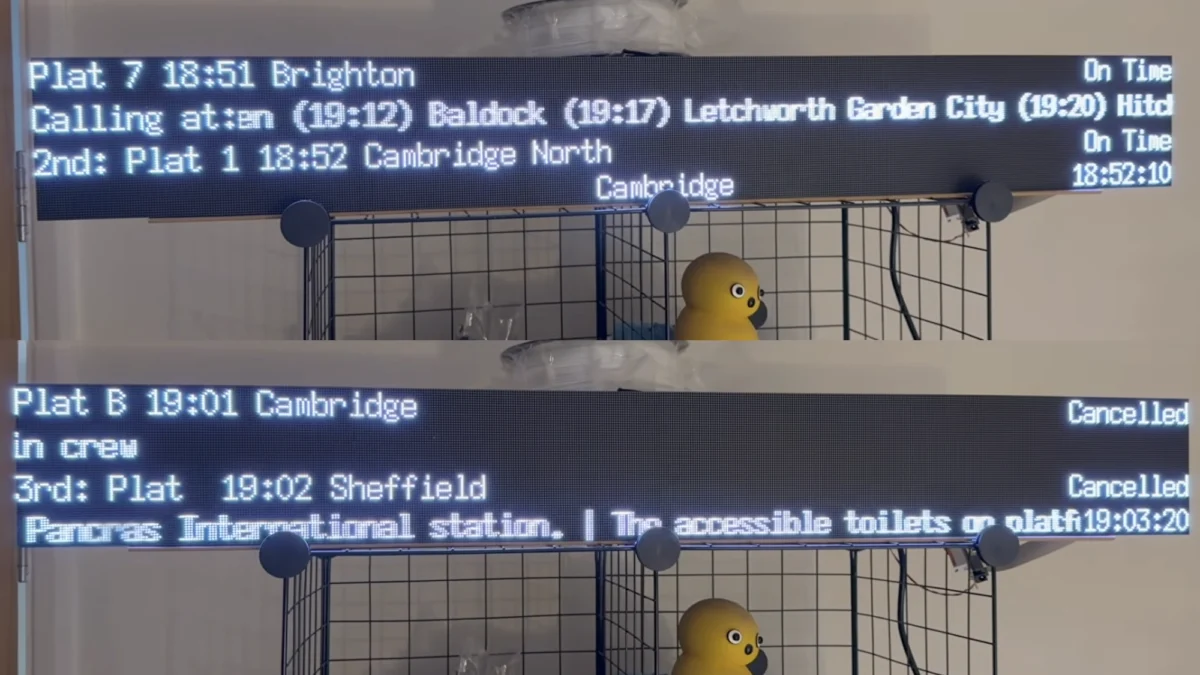
The rhythmic click-clack of train wheels, the ambient hum of a bustling station, and the mesmerizing display of the departure board – these elements combine to create a unique atmosphere, often associated with travel and anticipation. For many, the visual appeal of these large, illuminated boards, with their constantly updating streams of information, evokes a sense of nostalgia and wonder. However, this distinct aesthetic has traditionally been confined to the utilitarian spaces of train stations. This limitation has now been challenged by DIY enthusiast Jon Morris Smith, who has successfully designed and built a functional homebrew version of a train station departure board, bringing a touch of this iconic transit imagery into a domestic setting.
Smith, a known figure in the DIY electronics community and active on YouTube under the moniker Jon Morris Smith, documented his project on his website, "Another Partial Success." The motivation behind this endeavor stemmed from a lifelong passion for trains and a practical need for a personalized travel information display. As a regular commuter, Smith desired a departure board that could specifically showcase his usual travel routes, moving beyond a mere decorative replica to a genuinely useful piece of technology.
The Genesis of the Homebrew Departure Board
The journey began with Smith’s exploration of commercially available LED dot-matrix screens. He found that while these products existed, they often came with prohibitive price tags or demanded ongoing subscription fees for data access. This financial barrier spurred him to consider a more accessible, self-built solution. "My thought—How hard can it be? And here we are," he stated, encapsulating the DIY spirit of tackling challenges with resourcefulness.
This sentiment highlights a broader trend in the maker community, where individuals leverage readily available components and open-source technology to create custom solutions that are both cost-effective and highly personalized. The desire to replicate or enhance everyday objects with technological functionality is a driving force behind many successful DIY projects, democratizing access to sophisticated displays and information systems.
Technical Backbone: Raspberry Pi and LED Matrices
At the core of Smith’s creation is a 1GB Raspberry Pi 4, a compact and versatile single-board computer that has become a cornerstone of numerous DIY electronics projects. The Raspberry Pi 4’s processing power and connectivity options make it an ideal platform for managing real-time data and controlling display hardware.
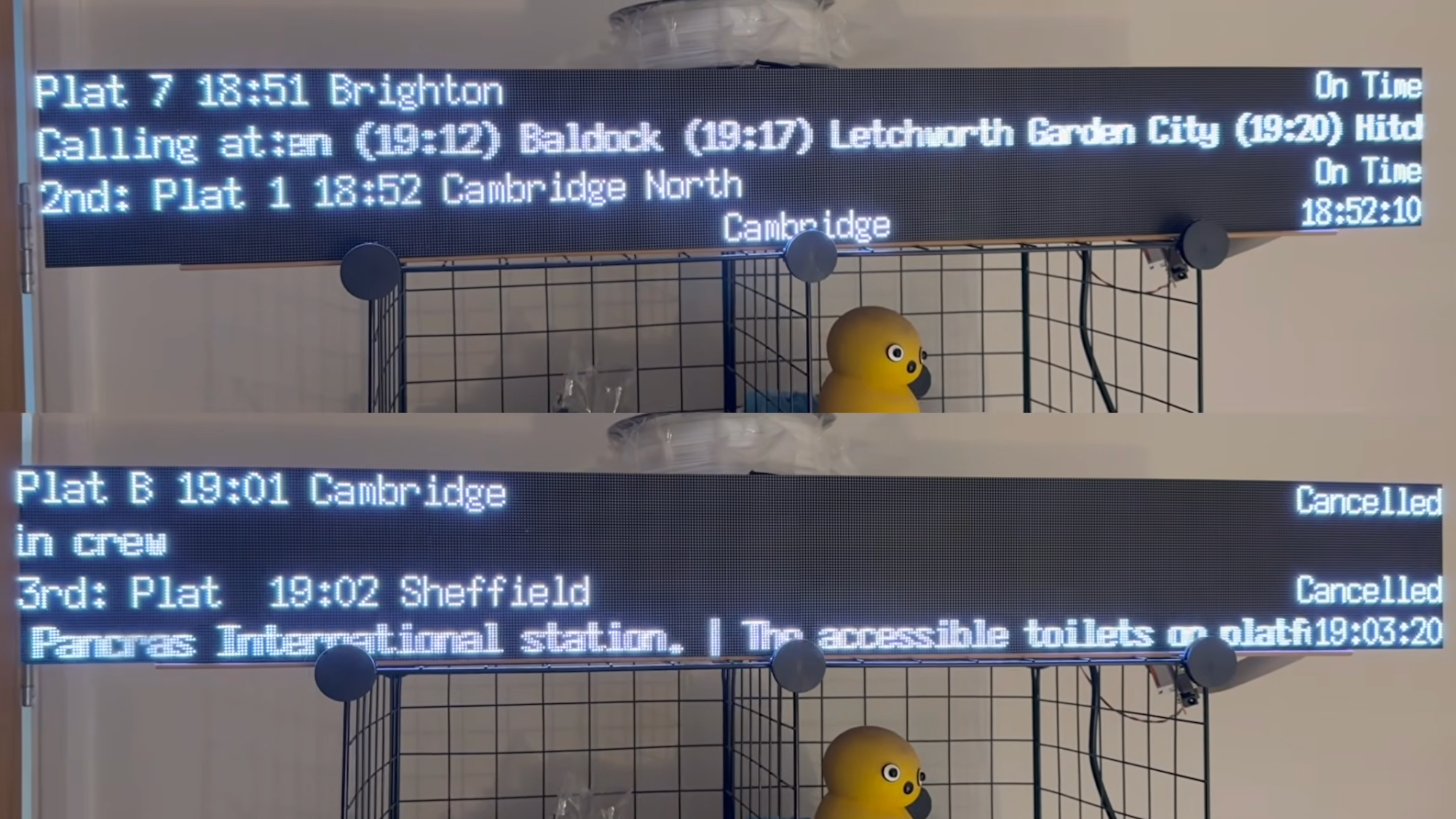
Smith connected the Raspberry Pi to a matrix board, which then interfaces with four LED matrices, each boasting a resolution of 128 by 64 pixels. This configuration allows for a detailed and clear display of information, mimicking the clarity of professional departure boards. The entire setup is powered by a robust 5-volt, 5-amp power supply, ensuring a stable and consistent visual output across all the LED panels. This attention to power management is crucial for the longevity and reliability of such electronic displays.
The software side of the project involved configuring the Raspberry Pi 4 to run specialized departure board software. Crucially, to provide real-time travel information, Smith integrated his system with the Rail Data Marketplace. This service acts as a gateway to live train data, enabling the display to update dynamically with departure times, destinations, and platform information.
The Data Dilemma: UK-Centric Information
A significant, albeit manageable, caveat to Smith’s current setup is the origin of the data. The Rail Data Marketplace is primarily a UK-based service. Consequently, the initial version of his departure board is optimized for displaying train information relevant to the United Kingdom. This means that users in other countries, such as the United States, would not be able to access their local train schedules directly through this specific integration.
However, Smith acknowledges this limitation and suggests a straightforward solution. He notes that with a bit of "fine-tuning," it would be possible to adapt the system to utilize domestic data sources. Websites like Train Tracking, which offer live train information for the United States, could serve as alternative data providers. This adaptability underscores the modular nature of the project, allowing for customization based on geographical location and data availability.
The implications of this UK-centric data source are important for potential replicators of the project. It signifies the need for users to research and identify equivalent real-time data providers in their respective regions. This could involve accessing public transport APIs, subscribing to specialized data services, or even developing custom web scrapers, depending on the availability and accessibility of local transit information. The success of such a project hinges not only on the hardware and software but also on the reliable acquisition of accurate, up-to-the-minute data.
Broader Impact and Future Possibilities
Jon Morris Smith’s homebrew departure board is more than just a clever gadget; it represents a fusion of passion, technical ingenuity, and the growing accessibility of sophisticated technology for hobbyists. The project demonstrates that the iconic elements of public infrastructure can be reimagined and integrated into personal spaces, enhancing both functionality and aesthetic appeal.

The implications of this project extend beyond train enthusiasts. It serves as an inspiration for anyone looking to create personalized information displays for their homes or offices. Imagine a departure board for flights, a real-time stock ticker with a retro aesthetic, or a dynamic display showcasing local weather patterns and news headlines – the possibilities are vast. The underlying principles of using a Raspberry Pi, LED matrices, and API integrations are transferable to a wide array of applications.
Furthermore, Smith’s approach of seeking cost-effective alternatives to expensive commercial products highlights the power of the DIY movement in fostering innovation. By sharing his process and findings, he contributes to a collective knowledge base that empowers others to embark on similar creative journeys. This open sharing of information is a hallmark of the maker community and drives technological advancement from the ground up.
While the current iteration of Smith’s departure board is designed to display UK train information, the underlying architecture is adaptable. The choice of a Raspberry Pi, for instance, opens up a world of programming possibilities. Developers could potentially create custom software that aggregates data from multiple sources, offering a truly global travel information hub. The inclusion of multiple LED matrices also suggests scalability; larger or more numerous matrices could be incorporated to create even more impressive displays.
The project also touches upon the concept of "smart homes" and personalized living. As technology becomes more integrated into our daily lives, the ability to customize and control our environment takes on greater significance. A departure board, while seemingly a niche item, fits perfectly into this paradigm, offering a personalized and aesthetically pleasing way to stay informed about essential aspects of one’s routine.
In conclusion, Jon Morris Smith’s homebrew train station departure board is a testament to the power of passion and ingenuity. It transforms a familiar public utility into a personalized piece of home technology, offering both practical utility and a unique aesthetic. As the project evolves and as similar endeavors gain traction, we can anticipate a future where iconic technological elements of our urban landscapes are democratized, bringing a touch of the extraordinary into our everyday lives. The success of this project underscores the continuous innovation occurring within the DIY and maker communities, pushing the boundaries of what is possible with accessible technology.

