
Orcas, the apex predators of the ocean, have long captivated scientists with their profound intelligence and formidable hunting prowess. These marine mammals are renowned for their sophisticated cooperative strategies, enabling them to tackle prey ranging from schools of fish to much larger marine mammals, including whales that dwarf them in size. Now, a groundbreaking discovery in the Gulf of California has brought to light a previously undocumented and astonishing hunting behavior: the deliberate shattering of sunfish through high-speed ramming. This intricate tactic, observed and meticulously documented by researchers, offers new insights into the adaptive feeding strategies of these enigmatic creatures and raises intriguing questions about their social dynamics and the unique physiology of their prey.
A Novel Predation Strategy Emerges
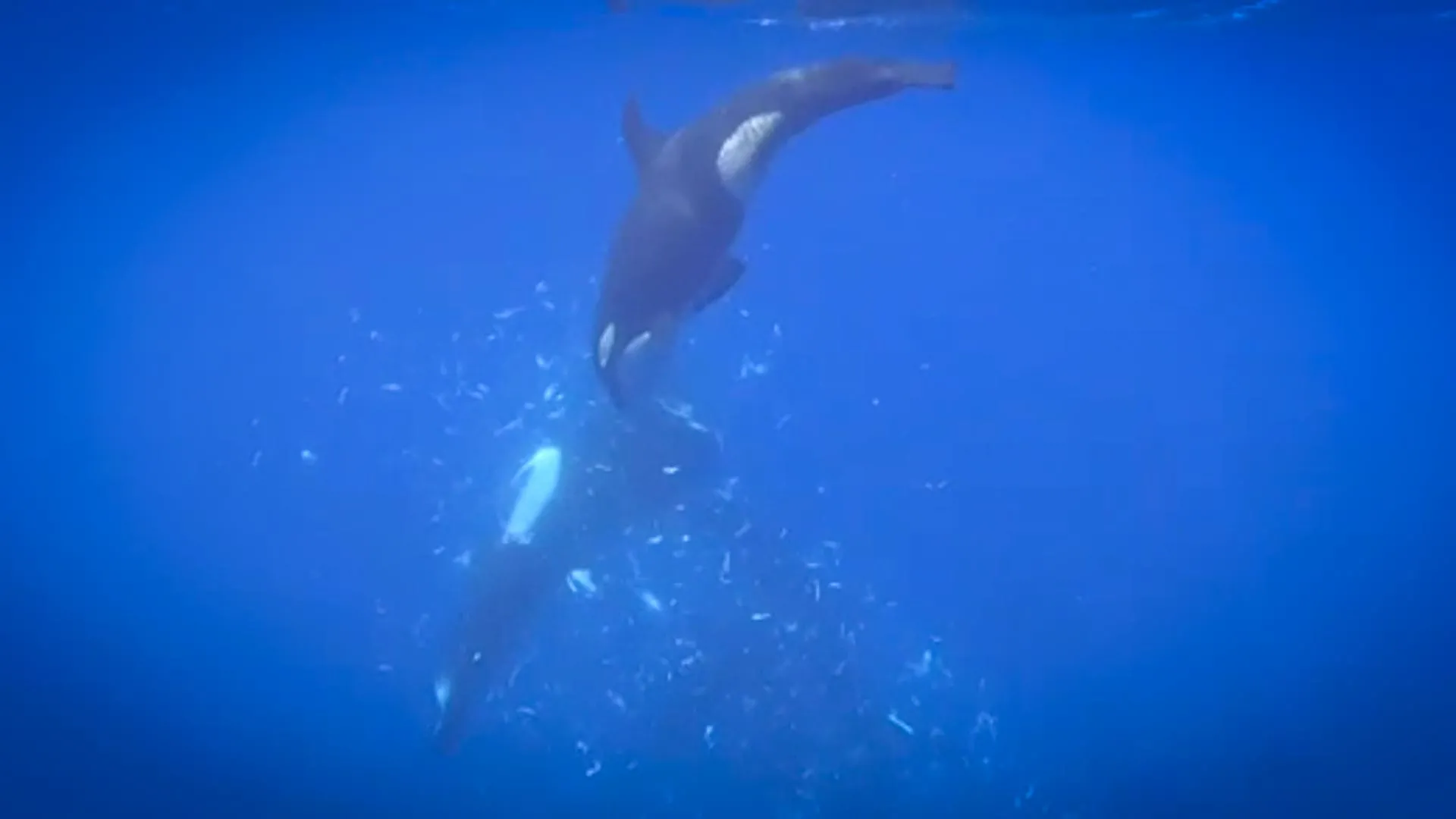
The research, published in the esteemed journal Frontiers in Ethology, details a remarkable scene witnessed by scientists: one orca strategically holding a sunfish, releasing it at a precise moment, allowing another orca to strike it with immense velocity. The impact causes the sunfish’s tissue to disintegrate into thousands of fragments, a behavior that has never been formally described in scientific literature.
Dr. Kathryn Ayres, lead author of the study and a scientist at Beneath The Waves, a non-profit organization dedicated to ocean health, described the observed phenomenon. "We document how one orca holds the sunfish and lets go just before another orca hits it at high speed, causing the tissue to break apart into thousands of pieces," Dr. Ayres explained. She further posited potential reasons for this extraordinary behavior. "We think this may help younger orcas feed more easily or it could also just be for fun. Orcas are known for playing with their food." This dual hypothesis suggests that the tactic might serve both a practical purpose in facilitating feeding for younger members of the pod and a recreational one, highlighting the complex cognitive abilities of orcas.
The Sunfish: A Vulnerable Giant
The sunfish, also known as Mola mola, is a truly remarkable fish. These marine behemoths can reach astonishing sizes, exceeding three meters in length and weighing up to a staggering 2,000 kilograms. Despite their immense size, sunfish are not immune to predation. They inhabit various depths of the ocean but frequently ascend to the surface. This behavior, often undertaken to regulate body temperature, bask in sunlight, or have ectoparasites removed by cleaner fish, unfortunately renders them vulnerable to attacks from predators like orcas.
Within the rich marine ecosystem of the Gulf of California, sunfish are a commonly sought-after prey item for local orca populations. The newly documented hunting method was observed across two distinct incidents, occurring approximately a year apart, underscoring its potential as a recurring and established behavior rather than an isolated anomaly.
Chronology of the Discovery
The initial observation occurred in July 2024. Dr. Ayres, present during this encounter, witnessed a group of orcas, including a juvenile, interacting with a deceased sharp-tail sunfish. The pod had evidently already subdued the prey. In a meticulously coordinated maneuver, a female orca secured a firm grip on the sunfish’s large tail fin, a strategic move that provided stability. Simultaneously, a male orca positioned itself for a high-speed charge.
At the critical juncture, the female released the sunfish, precisely as the male delivered a powerful ramming strike. The sheer force of the impact was so significant that it caused the sunfish’s tissue to shatter, dispersing fragments throughout the surrounding water. The juvenile orca then proceeded to consume the smaller, more manageable pieces, while the adult orcas focused on the larger remaining portions of the carcass, leaving the scattered fragments behind. A remarkable video capturing this event is available for public viewing, offering compelling visual evidence of this unique hunting technique.
The second incident, filmed by Héctor Franz in September 2025, mirrored the sequence of events observed a year prior: the deliberate holding, precise release, forceful ramming, and subsequent feeding. This corroboration of the behavior by independent observers and at a later date significantly strengthens the scientific validity of the findings.
A Sophisticated Food Processing Strategy
The aggressive ramming tactic employed by the orcas is not merely about subduing prey; it appears to be a highly effective method for processing it. Researchers have emphasized that ramming has not previously been documented as a specific strategy in the orca predation repertoire.
In both observed instances, the collaborative effort of the orcas was evident. One individual acted as an anchor, stabilizing the prey, thereby enabling the other to execute the ramming attack with enhanced accuracy and force. Given that the sunfish were already deceased when these processing events began, the researchers infer that the ramming was primarily employed to break down the prey, rather than to kill it.
The sunfish possesses a distinctive gelatinous outer layer, termed "capsule," and both this layer and its skin are inhabited by a complex microbiome. When the sunfish’s tissue is fragmented by the orcas’ powerful strikes, these microbial communities are dispersed into the surrounding water. This dispersal can alter the nutrient composition of the water, potentially creating a more accessible or digestible food source for the orcas.
Furthermore, this fragmentation may facilitate increased interaction between the sunfish’s native microbiome and the orcas’ own gut bacteria. Scientists hypothesize that such exposure could confer nutritional advantages or other physiological benefits, possibly including immune system regulation. The transfer of microbial communities from prey to predator is a fascinating area of research, and this orca behavior provides a novel context for exploring these interspecies microbial exchanges.
Facilitating Feeding for Young Orcas
One of the most compelling hypotheses for this elaborate sunfish-shattering tactic is its role in parental investment. By breaking down the large carcasses into smaller, more manageable pieces, the orcas may be making it significantly easier for their calves and juveniles to feed. This aligns with other well-documented orca behaviors, where adults often tear apart prey and share it with younger members of the pod.
"Orcas often tear apart prey and share it with other members of the group, including calves and juveniles," Dr. Ayres reiterated. This suggests a nurturing and socially cohesive aspect to the hunting strategy, reinforcing the strong familial bonds observed in orca societies.
However, the possibility that feeding is not the sole purpose of this behavior remains open. The interactions could also serve a social function, fostering group cohesion and strengthening bonds within the pod. Alternatively, as Dr. Ayres initially suggested, the orcas might simply be engaging in play. Orcas are known for their complex play behaviors, and the energetic act of shattering prey could be a form of amusement or skill development for younger individuals.
Insights into Sharp-Tail Sunfish Physiology
Beyond the orca’s hunting strategy, these observations may also shed light on the unique characteristics of the sharp-tail sunfish species. To date, this specific type of tissue fragmentation in response to impact has only been recorded in sharp-tail sunfish. This suggests that the tissue composition of this particular species may react distinctively to powerful physical forces. Larger sunfish species might possess a more robust tissue structure that resists fragmentation under similar conditions.
Further research is needed to confirm whether the same individual orcas were involved in both observed events. High-quality photographic evidence, particularly clear images of dorsal fins and distinctive eye patches, is crucial for accurately identifying individual orcas. Such identification would allow researchers to track individual hunting behaviors and social interactions over time.
"Collecting good identification photographs whenever possible is key: we are still seeing new techniques of how orcas hunt and process their prey," concluded Dr. Ayres. "They’re one of the most iconic marine predators in the world, yet they continue to surprise us." This sentiment underscores the ongoing mystery and wonder surrounding these intelligent marine giants, highlighting the critical importance of continued research and observation in unraveling the complexities of their lives. The Gulf of California, a biodiversity hotspot, continues to yield invaluable data on marine life, and this discovery is a testament to the power of dedicated scientific inquiry in revealing the hidden wonders of our oceans. The implications of this finding extend beyond orca behavior, potentially informing our understanding of marine food webs, microbial ecology, and the intricate evolutionary adaptations of both predator and prey.

