
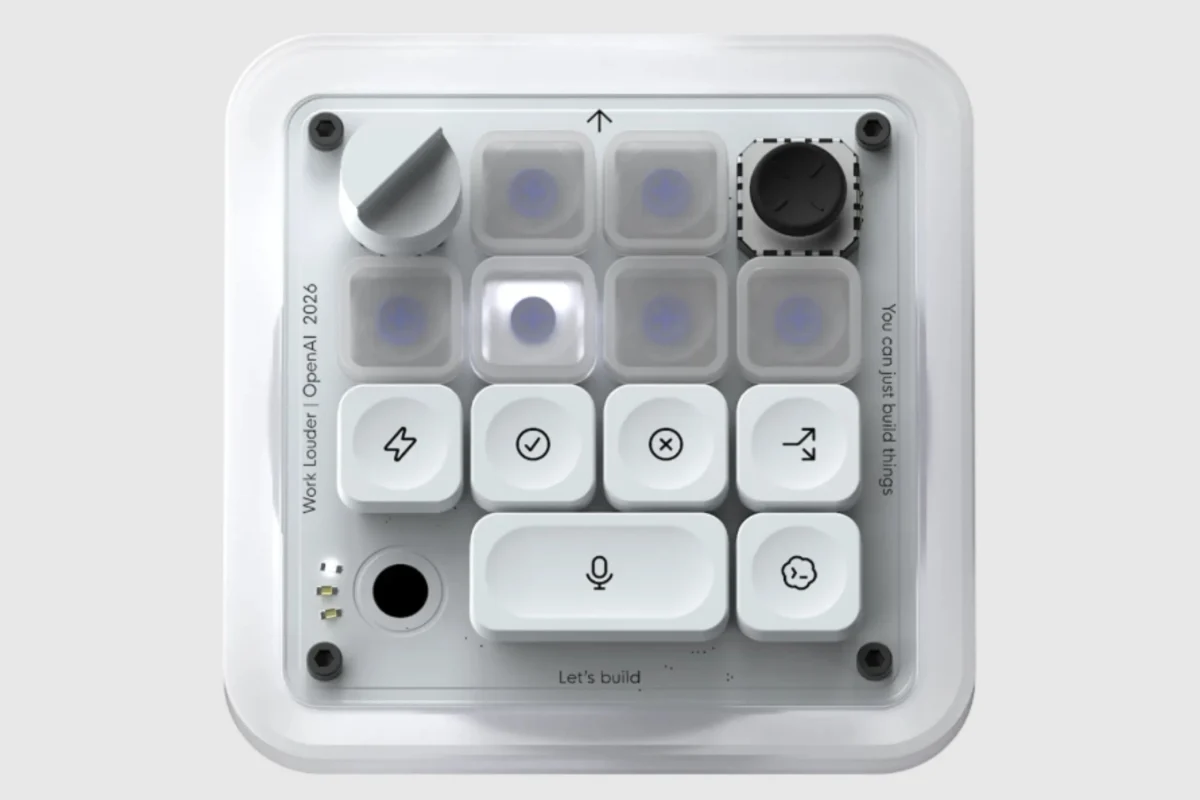
OpenAI, the artificial intelligence research and deployment company, has ventured into the hardware market with the release of its first physical product, dubbed "Micro." This compact keypad, developed in collaboration with specialty keyboard designer Work Louder, is positioned as an artisanal workspace novelty designed to enhance the user experience with ChatGPT and its associated AI tools. However, the launch arrives amidst significant legal and reputational challenges for the AI giant, casting a shadow over this ambitious hardware debut.
A Strategic Hardware Pivot: The Micro Keypad
The Micro keypad represents OpenAI’s initial foray into physical product design, aiming to bridge the gap between sophisticated AI models and tangible user interaction. Eschewing a traditional keyboard form factor, Micro is a minimalist device featuring twelve customizable keys. Six of these, designated as "agent" keys, are designed to be programmed for specific tasks within ChatGPT or its coding assistant, Codex. The remaining six are "command" keys, intended for controlling program functions. Users can connect Micro to their computers via Bluetooth or a USB cable.
The device’s design emphasizes a sleek aesthetic, with frosted keycaps and a premium build quality. A notable feature is the inclusion of a voice dictation button, allowing users to issue commands and requests to ChatGPT through spoken language. This functionality, combined with the customizable keys, aims to streamline workflows for frequent users of OpenAI’s AI services. The keypad’s lighting system offers visual cues: white for idle agents, blue for processing, green for task completion, and red for errors, providing an intuitive feedback mechanism.
Navigating Turbulent Waters: Legal and Development Clouds
OpenAI’s entry into hardware has not been without significant controversy. The company is currently embroiled in a high-profile lawsuit filed by Apple. Allegations suggest that OpenAI engaged in trade secret theft, a claim that has ignited what is expected to be a protracted legal dispute. This legal entanglement adds a layer of complexity to OpenAI’s expansion into new market sectors.
Further fueling scrutiny, news has emerged of another OpenAI hardware product in development: a screenless smart home speaker designed to integrate with ChatGPT. This project has reportedly involved former Apple engineers, raising eyebrows and potentially exacerbating tensions with its Cupertino-based rival. The dual development of these hardware products signals a broader strategic ambition by OpenAI to diversify its offerings beyond software and AI models.
Design and User Experience: A Niche Appeal
Upon initial handling, the Micro keypad impresses with its solid construction, leading to a lighthearted comparison to a functional paperweight. The packaging, a minimalist white box with a clean aesthetic, has also drawn comparisons to Apple’s signature product presentation, a detail that may or may not be coincidental given the ongoing legal proceedings.
Within ChatGPT, users can access a dedicated "Micro" tab for customization. This interface allows for fine-tuning of key assignments, brightness of key lights, and the specific ChatGPT sessions or projects to be linked to each key. This level of personalization is clearly geared towards power users who leverage ChatGPT extensively for a variety of tasks.
The voice dictation button is presented as a key convenience feature, enabling users to verbally articulate their requests. Holding the button and speaking initiates the dictation, with a subsequent tap on the "send" button submitting the prompt to the AI. This aims to reduce the need for manual typing, particularly for complex commands or lengthy queries.

The Critical Reception: Enthusiasm and Skepticism
Despite the technological sophistication and design efforts, the Micro keypad has met with a mixed reception, particularly from its intended audience of hardcore coders and tech enthusiasts. Reviews on platforms like Reddit have largely leaned negative, with some users dismissing the product as a "prank" or not a "real product." Criticisms often highlight the perceived lack of necessity for such a dedicated hardware interface when existing computer peripherals suffice.
Independent reviews have been even more pointed. The $230 price tag has been a significant point of contention, with reviewers noting the availability of cheaper DIY macro pads and off-the-shelf alternatives. One particularly harsh review from Aftermath characterized the Micro as "expensive" and "engineered to piss me off specifically," underscoring a sentiment that the product’s value proposition is questionable.
The learning curve associated with programming and operating the Micro is also a recurring theme. Users must familiarize themselves with the color-coded key indicators and commit to memory the specific project or command assigned to each customizable button. This learning investment, coupled with the potential for a week-long effort to fully optimize its functionality, leads to a crucial question: Is the Micro’s added convenience worth the effort compared to the familiarity and efficiency of a standard laptop keyboard and mouse?
An AI Power User’s Tool?
For individuals who do not frequently engage with AI tools like ChatGPT on a daily basis, the Micro may indeed feel like an unnecessary gadget. The reviewer’s personal experience suggests that for casual AI users, the device’s utility is limited, and its target demographic is likely those who integrate AI deeply into their professional or creative workflows.
However, for the dedicated ChatGPT power user with a disposable income of $230, the Micro could offer a unique and potentially enjoyable enhancement to their AI interactions. The ability to swiftly switch between various AI-driven projects and projects, combined with the voice dictation feature, can lead to a more efficient and engaging experience. The vintage-inspired hardware aesthetic and satisfyingly clicky buttons might also appeal to a specific segment of the tech-savvy consumer base.
Broader Implications for AI Hardware
The launch of Micro by OpenAI is more than just the introduction of a new peripheral; it signifies a significant strategic shift for an organization primarily known for its AI models. This move into hardware suggests a growing recognition that the interface through which users interact with AI is as crucial as the AI itself. As AI becomes more integrated into daily life and professional tasks, the demand for specialized hardware designed to optimize these interactions is likely to increase.
The success or failure of Micro could set a precedent for future AI hardware ventures. If it resonates with a dedicated user base, it could encourage other AI companies to explore similar hardware integrations. Conversely, a lukewarm reception might indicate that the market is not yet ready for such specialized AI peripherals, or that the current iteration of hardware solutions is not adequately meeting user needs or justifying its cost.
The development of Micro, especially with the alleged involvement of former Apple engineers and the ensuing legal battle, highlights the intense competition and strategic maneuvering within the technology sector. Companies are not only competing on the sophistication of their AI models but also on the ecosystem of products and services that surround them. The hardware component, once an afterthought for many software-centric companies, is rapidly becoming a critical battleground for market share and user loyalty.
The long-term implications of OpenAI’s hardware ambitions remain to be seen. The company’s stated goal is to ensure artificial general intelligence benefits all of humanity. If specialized hardware like Micro can demonstrably improve efficiency, creativity, or accessibility to AI for a significant portion of the population, it could indeed contribute to that overarching mission. However, the current landscape, marked by legal challenges and a mixed initial reception, suggests that OpenAI’s hardware journey is likely to be as complex and multifaceted as the AI models it seeks to enhance. The coming months will be crucial in determining whether Micro becomes a niche success story or a cautionary tale in the evolving narrative of AI hardware.

