
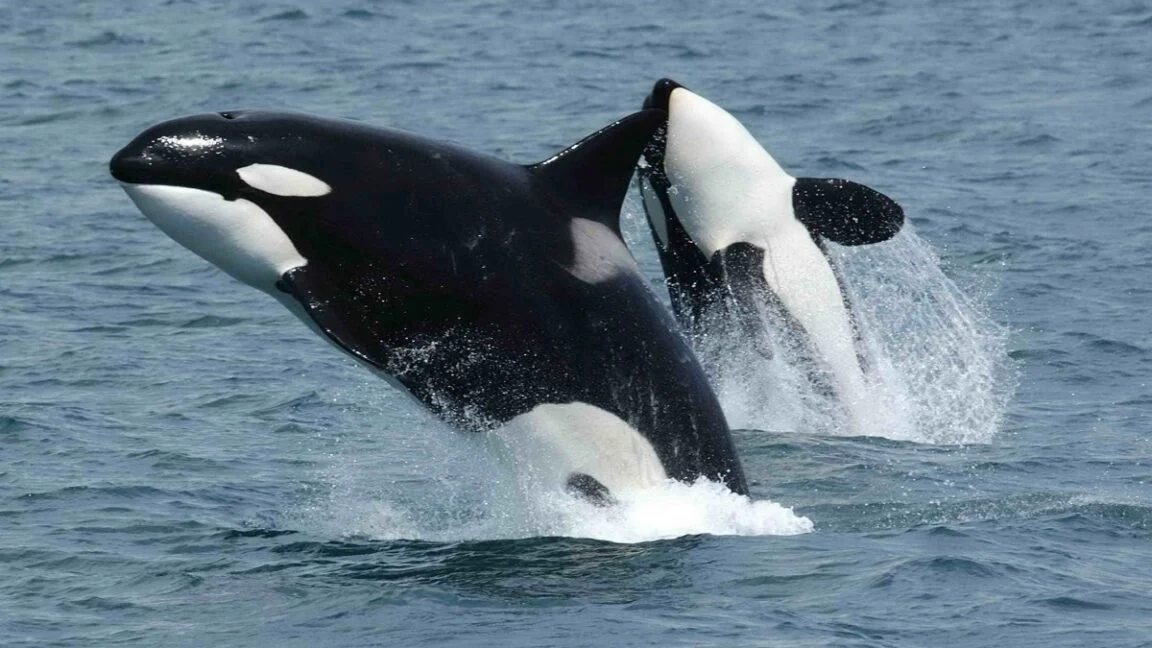
Numerous accounts in recent years have documented orcas exhibiting unusual and increasingly assertive behaviors, most notably their propensity for ramming boats, a phenomenon that has even led to the sinking of several vessels. Scientists have increasingly posited that these actions may stem from culturally learned behaviors, passed down through generations within orca pods. Now, striking new evidence has emerged from the Gulf of California, where orcas were filmed employing a remarkably coordinated and forceful strategy to hunt sunfish, literally shattering their prey into numerous fragments through sheer impact. This behavior, detailed in a recent paper published in the journal Frontiers in Ethology, goes beyond the typical methods orcas employ for consuming prey and suggests a potentially novel evolutionary adaptation in their hunting techniques.
The research, led by scientists from Beneath The Waves, a non-profit organization dedicated to ocean health, highlights an observed event where a pod of orcas, including adults and a juvenile, systematically attacked and dismembered a sunfish with an unprecedented level of force. Co-author Kathryn Ayres offered potential explanations for this aggressive feeding strategy, suggesting it could serve a dual purpose: to facilitate easier feeding for younger, less experienced orcas, or perhaps even as a form of play or social interaction. "Orcas are known for playing with their food," Ayres stated, hinting at the complex social and behavioral repertoire of these intelligent marine mammals.
Orcas are renowned for their sophisticated cooperative hunting techniques, which often involve coordinated efforts to subdue and kill prey. These strategies can range from elaborate herding maneuvers to the deliberate creation of waves to dislodge prey from ice floes. While orcas are known to strike or kill animals for consumption, they also sometimes engage in these actions without necessarily eating the prey, leading researchers to interpret such behaviors as social interactions, play, or even practice for developing hunting skills. Previous observations include orcas ramming whale sharks while another member of the pod held the prey steady, or herding mobile rays and blocking escape routes when hunting white sharks.
Traditionally, when hunting species like the sunfish, orcas typically employ a multi-stage approach. This usually involves targeting the pectoral fins, followed by a powerful slash across the body to remove the viscera. The final stage often sees the orca using its beak to extract the remaining flesh. However, the newly documented "ram-to-fragment" behavior appears to represent a significant evolution of this basic strategy, demonstrating a level of force and coordination aimed at completely breaking down the prey.
A Chronology of the Observed "Ram-to-Fragment" Behavior
The pivotal incident was first captured on video in July 2024, off the coast of San Jose del Cabo, Mexico. A tourism operator, whose identity has not been publicly disclosed in relation to the specific findings but whose footage forms the basis of the research, filmed a pod of three adult female orcas, one adult male, and one juvenile. Initially, the pod was observed catching and consuming a spine-tail devil ray.
Shortly after, the same operator documented a striking scene involving a sunfish. One of the adult female orcas was seen holding the carcass of a sunfish in her mouth. Preliminary examination of the carcass indicated a significant lateral wound, suggesting the viscera had already been removed, aligning with the initial stages of a typical orca feeding strategy.
The situation escalated when the male orca charged towards the carcass. The female orca released the sunfish just moments before the impact. Observers reported an audible "thud" upon collision, followed by the visible fragmentation of the sunfish carcass. Pieces of flesh and internal organs dispersed into the surrounding water. In the aftermath, the juvenile orca was observed actively feeding on the smaller fragments, while the adult orcas consumed the remaining larger portions of the now-split-open body. This sequence of events provided clear visual evidence of the "ram-to-fragment" technique.
The Science Behind the Shattering Impact
The sunfish, scientifically known as Mola mola, is the heaviest known bony fish in the world, with adult individuals weighing an average of over 1,000 kilograms (2,200 pounds) and some specimens exceeding 2,000 kilograms (4,400 pounds). Their flattened, disc-like bodies are covered in thick, leathery skin, making them formidable prey. The sheer force required to shatter such a large and robust animal underscores the immense power and coordinated effort of the orca pod.
The Frontiers in Ethology paper elaborates on the biomechanics and potential evolutionary advantages of this newly observed hunting method. Researchers hypothesize that by breaking the sunfish into smaller, more manageable pieces, the orcas can more efficiently access all edible tissues, including those deeply embedded within the body cavity. This could be particularly beneficial for younger orcas who may not possess the strength or dexterity to process a whole sunfish carcass through traditional means. Furthermore, the fragmentation process might also expose more surface area, potentially aiding in the dispersal and easier consumption of nutrients.
Supporting Data and Context
While this specific "ram-to-fragment" event is novel, it builds upon a growing body of research into orca behavior and intelligence. Studies on orca populations worldwide have consistently revealed complex social structures, advanced communication methods, and a remarkable capacity for cultural transmission of knowledge. The phenomenon of orcas ramming boats, which gained significant public attention starting around 2020, is a prime example. Researchers like those at the Iberian Orca Project have been meticulously documenting these interactions, suggesting they may originate from a specific group of orcas and have spread through social learning. The boat-ramming behavior is often characterized by targeted strikes at the rudders, leading some to speculate it is a form of play, protest, or even a learned response to perceived threats or negative encounters with vessels.
The Gulf of California, also known as the Sea of Cortez, is a highly biodiverse marine environment, supporting a rich array of marine life, including various species of whales, dolphins, sharks, and numerous fish species, including the sunfish. The presence of resident and migratory orca populations in this region makes it a crucial area for studying their feeding ecology and social dynamics. The abundance of prey, combined with the complex underwater topography, provides a dynamic environment for observing sophisticated hunting strategies.
Potential Implications and Broader Impact
The discovery of this explosive feeding technique has several significant implications for our understanding of orca behavior and marine predator-prey dynamics.
Evolutionary Adaptations: This behavior suggests that orcas are continually adapting their hunting strategies to exploit available prey more effectively. The "ram-to-fragment" method could represent a significant evolutionary advantage, allowing them to maximize energy intake from challenging prey like sunfish.
Social Learning and Culture: The potential for this behavior to be learned and passed down through generations further reinforces the concept of orca culture. If younger orcas are indeed benefiting from this technique, it is likely to be adopted and refined by future generations. This raises questions about the cultural evolution within different orca ecotypes.
Conservation and Management: Understanding the full spectrum of orca hunting behaviors is crucial for effective marine conservation. As human activities, such as shipping and fishing, increasingly interact with marine ecosystems, knowledge of how apex predators like orcas hunt and feed can inform strategies to minimize conflict and protect vulnerable species. The sophisticated nature of this hunting strategy also highlights the intelligence and adaptability of these animals, emphasizing the need for their continued protection.
Further Research: The findings from this study will undoubtedly spur further research into orca feeding ecology. Scientists will likely seek to observe this behavior in other regions and with different prey species to determine its prevalence and origins. Genetic and acoustic studies may also be employed to investigate potential differences in orca populations that exhibit such advanced hunting techniques.
The observation of orcas literally shattering a sunfish through sheer force is a powerful reminder of the complexity and ingenuity of the natural world. It underscores that even long-studied species can reveal new behaviors that challenge our current understanding and highlight the ongoing process of adaptation and learning within animal populations. As research continues, the mysteries of orca behavior, from their interactions with boats to their innovative hunting methods, will undoubtedly continue to unfold, offering invaluable insights into the intelligence and social lives of these magnificent marine predators.

