
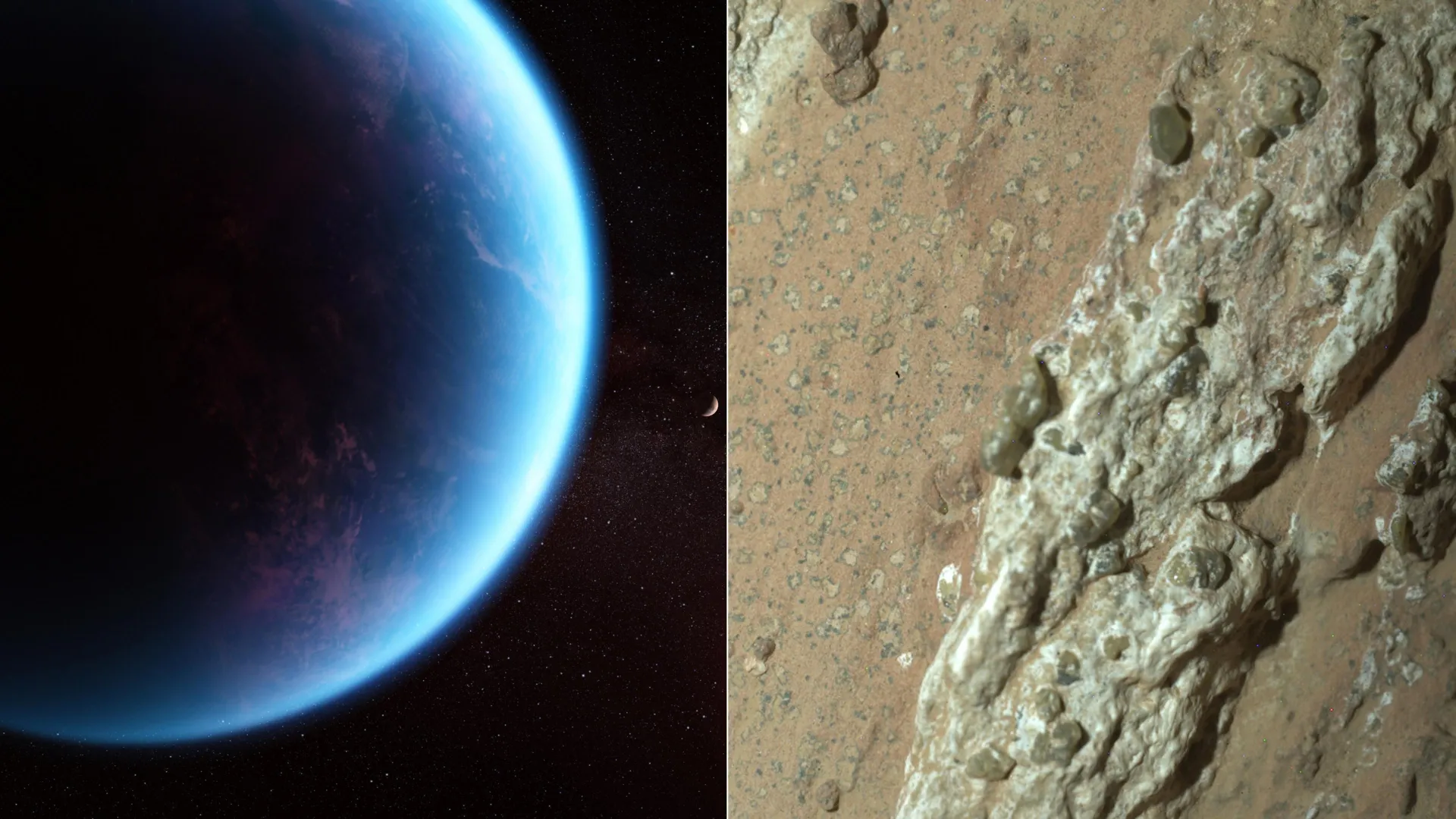
The quest to determine whether humanity is alone in the universe has long been the holy grail of modern science. In 2025, that quest seemed to reach a fever pitch with two high-profile announcements that captured the global imagination. First, researchers pointed to the exoplanet K2-18b, citing atmospheric data that hinted at the presence of biological markers. Shortly thereafter, NASA’s Perseverance rover discovered a rock formation at “Cheyava Falls” on Mars containing mineral patterns that mirrored biological processes observed on Earth. In both instances, media outlets and institutional spokespeople framed these findings as historic milestones. NASA Administrator Sean Duffy went as far as to label the Martian discovery as the “closest we have ever come” to confirming extraterrestrial life.
Yet, beneath the veneer of excitement, a critical question remained unaddressed: what does the broader scientific community actually think? For decades, the public has relied on the shorthand of “the science says” or “scientists believe,” phrases that imply a monolithic consensus where, in reality, there is often profound professional disagreement and uncertainty. To move beyond anecdotal soundbites, a team of researchers recently conducted a systematic survey of astrobiologists to map the distribution of expert judgment in the wake of these two major 2025 breakthroughs.
A Chronology of Anticipation
The scientific narrative of 2025 was defined by two distinct events that pushed the boundaries of astrobiology. In April 2025, a study published in the Astrophysical Journal Letters presented data from the James Webb Space Telescope (JWST) regarding K2-18b, an exoplanet located 120 light-years away. The researchers identified potential spectral signatures of dimethyl sulfide (DMS) and dimethyl disulfide. On Earth, DMS is almost exclusively produced by phytoplankton in marine environments. The detection triggered a flurry of international media coverage, with many outlets speculating that a habitable world had finally been identified.
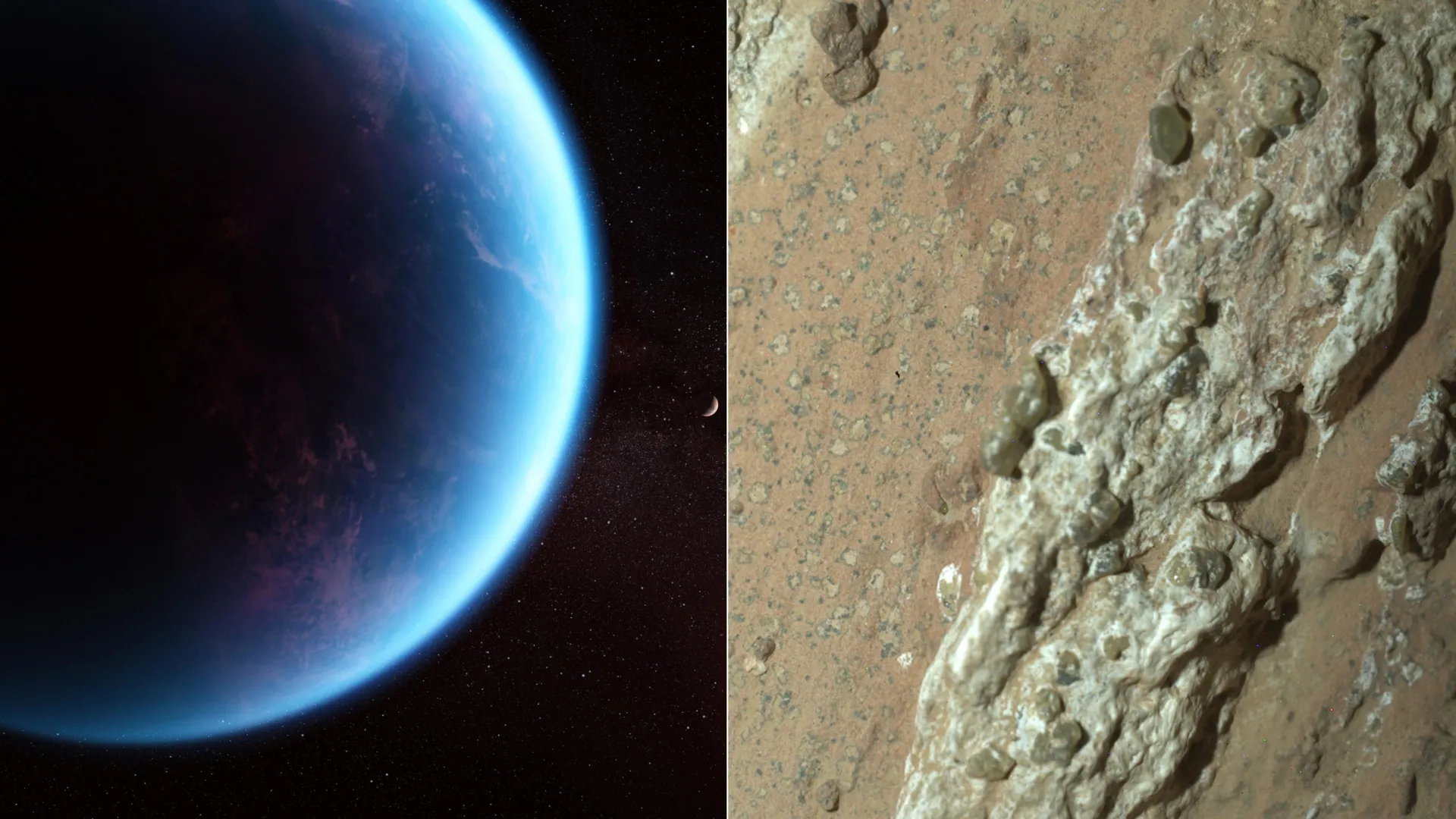
The excitement had barely subsided when, in September 2025, NASA shifted the focus back to our own solar system. The Perseverance rover, currently exploring the Jezero Crater on Mars, identified a rock sample nicknamed “Cheyava Falls.” The rock featured “leopard spots”—white mineral rings with black halos—that resemble the chemical signatures of microbial life found in ancient terrestrial rocks. Because this evidence was retrieved from the Martian surface rather than inferred from light-years away, it carried an immediate, tactile weight that the K2-18b data lacked.
Data-Driven Reality: The Expert Survey
To understand how these announcements landed within the specialized community of astrobiologists, researchers at the Centre for Scientific Community Opinion Polling and Evaluation (C-Scope) at Durham University launched a survey within days of each event. The survey queried hundreds of active astrobiologists globally, asking a direct, binary-focused question: did they believe these findings constituted probable evidence of extraterrestrial life?
The findings, published in the journal Nature Astronomy, revealed a landscape characterized by profound caution rather than certainty. Regarding the K2-18b atmospheric data, only 6.6% of respondents agreed that the evidence likely pointed to life. A commanding 65.4% disagreed, while 28.0% opted for a neutral stance. The Mars data yielded a slightly higher confidence interval, with 15.1% agreeing that the discovery likely indicated life. However, even then, 44.6% remained in disagreement, while 40.3% were neutral.
Perhaps more revealing than the “yes” or “no” votes was the internal migration of opinion between the two events. The percentage of astrobiologists who “strongly disagreed” with the life-claim fell from 35.1% in the K2-18b case to just 11.1% regarding the Martian rock. This indicates that while the community remained largely unconvinced, the availability of direct, physical evidence from Mars softened the skepticism of experts, moving the consensus away from outright rejection toward a more nuanced, tentative curiosity.
The Problem of “False Biosignatures”
The skepticism among experts is not rooted in a lack of imagination, but in the rigorous history of “false biosignatures.” Astrobiologists have spent years cataloging inorganic chemical reactions and geological processes that can mimic the appearance of biological activity. In the case of K2-18b, the challenge lies in the nature of atmospheric spectroscopy; signals from such extreme distances are easily distorted or misinterpreted.
For the Mars discovery, the challenge is geological. Mineral rings that look like biological structures can be formed through the precipitation of minerals in the presence of specific chemical gradients, even in the absence of any living organism. The scientific community is hyper-aware that the “extraordinary claims” of life require “extraordinary evidence,” a standard that remains difficult to meet when dealing with environments where we are still learning the fundamental geochemistry.
Official Responses and the Media Echo Chamber
The disconnect between public perception and expert opinion often stems from the way institutions disseminate information. When NASA or major research universities release findings, the language is often curated for maximum impact to maintain public support and funding. When Administrator Sean Duffy characterized the Cheyava Falls discovery as the “closest we have ever come,” he was technically correct in a historical sense, but the phrase was interpreted by many as an implication of success rather than an assessment of incremental progress.
This creates a cycle where the media amplifies the most optimistic interpretation, and the public is left with the impression that discovery is imminent. When that discovery does not manifest, the perceived failure can erode public trust in scientific institutions. By failing to communicate the nuances of uncertainty—that a biosignature is a potential sign of life, not a proof of it—the scientific establishment inadvertently sets itself up for a cycle of “hype and letdown.”
The Broader Implications for Scientific Discourse
The issue extends far beyond the search for alien life. In fields ranging from climate change mitigation and epidemiological modeling to the safety of artificial intelligence, the concept of a “scientific consensus” is frequently invoked as a blunt instrument. Politicians, activists, and news organizations often demand a singular, definitive answer from a scientific community that is, by its very nature, designed to debate, refine, and update its conclusions.
The work being done by organizations like C-Scope highlights the necessity of a more sophisticated approach to public science communication. If society is to rely on scientific guidance to make decisions regarding planetary health or emerging technologies, we must develop better frameworks for understanding where the consensus truly lies. This does not mean treating a majority opinion as an absolute, immutable truth. Rather, it means acknowledging that scientific knowledge advances through a process of trial, error, and the slow aggregation of evidence.
Conclusion: Moving Toward Evidence-Based Transparency
As we look toward future missions—such as the Mars Sample Return mission or the next generation of space-based telescopes—the frequency of these “potential discovery” announcements is likely to increase. If the public remains conditioned to view every new data point as a binary “life or no life” question, we risk losing sight of the incremental brilliance of the scientific process.
A more transparent approach would involve clearly defining the levels of confidence in a discovery, the alternative hypotheses that remain, and the specific hurdles that must be cleared to elevate a “potential biosignature” to a “confirmed biological discovery.” Science is not a destination where we reach a final, perfect answer; it is a rigorous, often slow-moving conversation. To truly understand our place in the universe, we must be willing to embrace the discomfort of the “I don’t know yet” that currently defines the state of the field. By moving away from the binary framing of scientific breakthroughs, we can build a more mature relationship with the information we receive, one that respects both the complexity of the research and the intelligence of the public.

