
The Anatomy of a Crisis
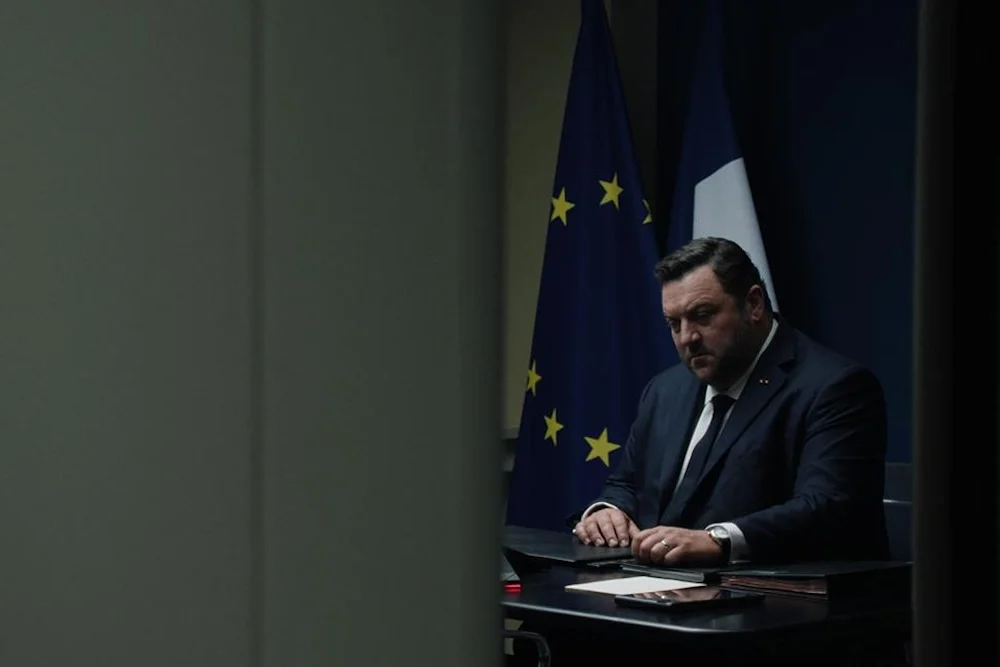
The central conflict of the film is sparked by the actions of a volatile Russian leader, Chernov, who exploits an assassination attempt—suspected by Western intelligence to be a state-sponsored false flag operation—to justify a massive escalation in the ongoing conflict against Ukraine. President Archambault, characterized by his deep-seated commitment to humanist principles, finds himself at the center of a geopolitical firestorm. As the film progresses, the viewer is introduced to the "Jupiter" bunker, a subterranean command center where the French executive branch retreats to weigh the agonizing choice between intervention and the risk of total nuclear war.
This scenario mirrors real-world concerns regarding the "escalation dominance" theory, which posits that a nuclear-armed state can use the threat of limited nuclear strikes to coerce opponents into backing down from conventional conflict. In the film, Chernov’s decision to detonate an atomic weapon over the Black Sea acts as a terrifying signal—a demonstration of intent meant to paralyze the Western alliance.
Chronology of Escalation
The film’s pacing is designed to mirror the rapid, compressed timeline of a modern nuclear crisis:
- Phase I: The Pretext. Following a suspicious assassination attempt, Russian forces significantly ramp up military operations against Ukraine. The international community, led by France, debates the legality and morality of unilateral intervention.
- Phase II: The Breach. Chernov executes a high-altitude nuclear detonation over the Black Sea. This act shatters the post-Cold War nuclear taboo and triggers the activation of the Jupiter protocols.
- Phase III: The Deliberation. Archambault gathers his cabinet, including the hawkish Minister of Defence (Reda Kateb), a pragmatic diplomatic adviser (Ella Rumpf), and Prime Minister Clara Boyer (Céline Sallette).
- Phase IV: The Ultimatum. As warheads are armed and the international order teeters on the brink, the administration faces the impossibility of a "clean" outcome. The film concludes on an ambiguous note, mirroring the uncertainty of the "Doomsday Clock" set by the Bulletin of the Atomic Scientists.
The Geopolitical Context: Why France Matters
In the context of the film, France’s position is unique. Unlike other NATO allies who refuse to commit military forces due to Ukraine’s status as a non-member, Archambault is forced to consider the moral and strategic weight of acting alone. Historically, France has maintained a doctrine of dissuasion—its own independent nuclear deterrent. This policy, dating back to the De Gaulle era, is designed to ensure that France never has to rely solely on the United States for its survival.
The film effectively uses this historical context to frame Archambault’s isolation. If France intervenes, it does so knowing that it is potentially triggering a direct nuclear exchange with a power that has already proven its willingness to break the nuclear threshold. The "Jupiter" bunker becomes a metaphor for the claustrophobic nature of this independent strategy: when a nation stands alone, the burden of the "nuclear button" rests entirely on one set of shoulders.
Analysis: The Human Element of the Nuclear Machine
A significant portion of the film’s narrative weight is carried by the tension between the procedural, cold-blooded requirements of statecraft and the personal humanity of those in charge. Denis Menochet’s performance emphasizes the "gimlet-eyed resolve" required to manage such a situation, yet the film notes a distinct lack of character depth regarding Archambault’s past. We learn of a personal tragedy involving his daughter, but the screenplay intentionally leaves his political affiliations and broader life story ambiguous.
This anonymity serves a specific purpose: it suggests that in the moment of crisis, the individual is subsumed by the office. The "President" is a vessel for the state’s will. However, critics point out that this abstraction can make the film feel sterile. By keeping the supporting cast—the advisors and ministers—largely as mouthpieces for opposing tactical viewpoints, Smia emphasizes the machine-like nature of the government over the messy, unpredictable nature of human emotion.
The Reality of Nuclear Strategy
The film’s bid for "ruthless realism" invites comparison to real-world nuclear protocols. During the Cold War, the concept of the "hotline" and the "Red Phone" were designed to prevent accidental war. Today, the variables have increased with the proliferation of hypersonic missiles and cyber-warfare capabilities that can blind early-warning systems.
In the film, the order to "let in as many as you can" when the bunker is approached by staff seeking shelter provides a brief, chilling glimpse into the class-based survivalism inherent in nuclear planning. Yet, Smia moves away from this quickly, opting to keep the camera focused on the high-level decision-makers. This narrative choice highlights the central tension of the film: the contrast between the global scale of the catastrophe and the narrow, featureless interior of the room where it is managed.
Implications for Global Security
The film’s conclusion—a "smash cut" to black—is perhaps its most honest moment. It underscores the reality that in a true nuclear crisis, there is no "winning" move. The decision to "blink" or to "escalate" carries consequences that will echo for generations.
The film serves as a sobering reminder of the fragile nature of current international security architectures. The reliance on individual leaders to interpret the intent of an adversary—such as deciphering whether a nuclear test is a bluff or a precursor to a wider strike—remains the greatest danger in modern geopolitics. The film successfully posits that we place an almost mythological amount of faith in the integrity and steadiness of these leaders. Whether that faith is justified is a question the film leaves for the audience to grapple with long after the credits roll.
Artistic Execution and Technical Direction
Visually, the film benefits from the work of cinematographer Nicolas Loir, whose focus on tight close-ups reinforces the theme of entrapment. The bunker is not presented as a high-tech fortress, but as a claustrophobic, dimly lit space that mirrors the shrinking options available to the French cabinet. The musical score by Olivier Marguerit acts as a rhythmic pulse, underscoring the ticking of the clock and the purposeful, if desperate, movements of the characters.
While the film adheres to the "prestige" aesthetic, its emotional impact is hindered by a reluctance to delve into the chaos that would inevitably accompany such a scenario. The orderly, procedural nature of the film’s "war room" sessions provides a stark contrast to the potential anarchy outside, perhaps suggesting that the government’s greatest fear is not just the bomb, but the loss of control over the narrative of the crisis.
Ultimately, Jupiter functions as a meditation on power. It asks the audience to consider: if you were the one with the authority to initiate or prevent the end of the world, would you be defined by your principles, or by the crushing weight of the necessity of the moment? By refusing to provide a clear answer, the film successfully captures the existential dread that has defined the nuclear age since its inception in 1945. It is a cinematic exercise in the limits of leadership and the terrifying, lonely nature of ultimate responsibility.

