
The Pacific Ocean is currently undergoing a thermal transformation that has meteorologists and climate scientists on high alert. As surface temperatures in the central and eastern Pacific climb more than 3 degrees Celsius above the historical average—a threshold significantly higher than the 1.5-degree benchmark typically used to classify a "strong" event—the world stands on the precipice of what could be one of the most intense El Nino cycles since global record-keeping began. While El Nino is a naturally occurring climate phenomenon that typically emerges every two to seven years, recent data suggests that the interplay between these natural cycles and anthropogenic climate change is creating a more volatile and dangerous atmospheric regime.
Understanding the El Nino Phenomenon
El Nino, or the El Nino-Southern Oscillation (ENSO), is characterized by the warming of ocean surface temperatures in the central and eastern tropical Pacific. This shift in the Pacific’s thermal profile alters the position of the jet stream, which in turn redirects weather patterns globally. Under normal conditions, trade winds blow from east to west, pushing warm surface water toward Indonesia and Australia, while cold, nutrient-rich water rises from the depths off the coast of South America. During an El Nino event, these trade winds weaken or reverse, allowing the warm water to pool eastward toward the Americas.
The consequences of this disruption are profound. Regions that typically experience high rainfall may suffer severe drought, while arid landscapes can be subjected to devastating, record-breaking floods. Furthermore, because the ocean acts as a massive thermal battery for the planet, the release of this excess heat into the atmosphere during an El Nino event frequently leads to record-shattering global average temperatures.
The Data Gap: Looking into the Past
For decades, scientists have struggled to differentiate between the natural variability of the ENSO cycle and the escalating influence of global warming. Reliable, high-resolution satellite monitoring of ocean surface temperatures only dates back to the early 1980s. This creates a "data gap" that makes it difficult to determine whether recent, hyper-intense El Nino events are merely outliers in a natural, long-term cycle or evidence of a trend driven by the burning of fossil fuels.
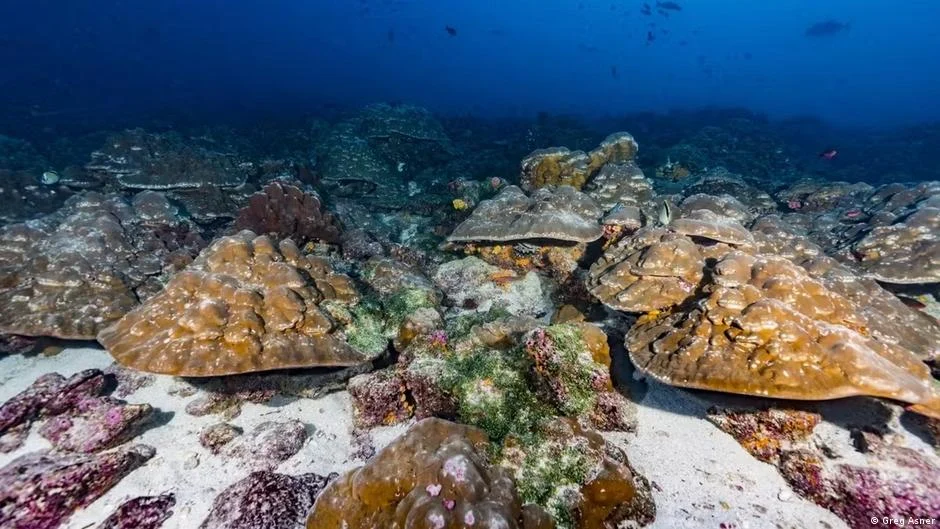
To bridge this temporal divide, researchers are increasingly turning to paleoclimatology, specifically the study of coral skeletons. A recent, landmark study published in the journal Science by a team led by Dr. Julia Cole of the University of Michigan has provided a vital breakthrough. By analyzing fossilized and living corals from the Galapagos Islands, researchers have been able to reconstruct ocean temperature variations over the past 1,000 years.

The Coral Archive: How Skeletons Record History
Corals function as natural climate archives. As they grow, they incorporate elements from the surrounding seawater into their calcium carbonate skeletons. By measuring the ratio of strontium to calcium and the ratio of oxygen-18 to oxygen-16 isotopes, scientists can calculate the water temperature at the time each layer of the skeleton was formed.
The Galapagos corals, which grow at a rate of one to two centimeters per year, provide a high-resolution timeline that reveals the intensity of past El Nino events. The findings of Dr. Cole’s team indicate a clear shift: El Nino events in the modern, post-industrial era are significantly more intense than those recorded in the pre-industrial past. This evidence suggests that while the ENSO cycle is a natural phenomenon, its current manifestations are being amplified by a warmer, carbon-heavy atmosphere.
Chronology of Modern Climate Impacts
The following timeline illustrates the escalating impact of recent El Nino cycles and the increasing frequency of extreme weather events:
- 1982-1983: An unexpectedly strong El Nino catches the global scientific community by surprise, causing massive coral bleaching and severe economic disruption due to agricultural failure.
- 1997-1998: A "Super El Nino" event leads to extreme heat and flooding, marking one of the first times the link between climate variability and global economic impacts is widely publicized.
- 2015-2016: A massive event causes global temperatures to spike, leading to widespread coral mortality and unprecedented wildfires in Australia and Indonesia.
- 2023-2024: A period of sustained heat in the Pacific, coupled with background anthropogenic warming, triggers another mass bleaching event, highlighting the vulnerability of marine ecosystems.
- 2027 (Projected): Climate models, bolstered by the new coral data, suggest an increased probability of further extreme eastern Pacific events, potentially leading to new global temperature records.
Scientific Perspectives and Limitations
While the study provides a compelling narrative, the scientific community maintains a balanced perspective regarding the interpretation of these findings. Professor Jens Zinke of the University of Leicester notes that the data aligns closely with advanced climate models, which have long predicted a higher frequency of extreme eastern Pacific El Nino events in the coming decades.
However, some experts remain cautious. Professor Andreas Fink of the Institute for Meteorology and Climate Research in Karlsruhe points out that coral records, while invaluable, are inherently local. "Direct comparisons with modern satellite data are fraught with uncertainty because the ocean is a complex, three-dimensional system," Fink explains. He notes that the regional limitation of the Galapagos samples means that while they offer a window into the past, they cannot provide a perfect, global-scale representation of historical ocean dynamics. Dr. Cole herself acknowledges these limitations, noting that the coral record is not continuous, covering only about half of the years over the past millennium.
Broader Implications for Global Stability
The implications of a more intense El Nino cycle extend far beyond marine biology. The humanitarian costs are substantial. In nations such as Peru and Ecuador, the agricultural sector faces the dual threat of catastrophic flooding and soil erosion. Conversely, in the Western Pacific, drought conditions increase the likelihood of devastating forest fires and water scarcity.

Furthermore, there is the issue of "feedback loops." As corals die due to heat stress—a process where the symbiosis between the coral and its energy-providing algae breaks down—the ecosystems they support collapse. This is not only a biodiversity crisis; it is a loss of the very archives scientists use to track climate history. If the world loses its coral reefs, it loses a primary tool for understanding the Earth’s natural climate rhythms.
Official Responses and Future Outlook
Global meteorological organizations, including the US National Oceanic and Atmospheric Administration (NOAA), continue to monitor the eastern and central Pacific with high-frequency sensors. Their advisory reports are increasingly focusing on the "non-linearity" of these events—the idea that the climate system is reaching tipping points where historical patterns may no longer accurately predict future outcomes.
As policymakers and environmental agencies look toward the 2030s, the consensus is shifting. The evidence from the coral record reinforces the need for robust climate adaptation strategies. If the intensity of El Nino is indeed being amplified by global warming, then the infrastructure, agricultural planning, and disaster response protocols of nations in the Pacific basin must be recalibrated to account for "Super El Nino" conditions as a recurring, rather than exceptional, reality.
Ultimately, the story of the corals is a cautionary tale. While the Pacific Ocean has always breathed in cycles of warming and cooling, human activity is causing that breath to become increasingly labored and feverish. The paleoclimatological data provided by Dr. Cole and her colleagues serves as a vital bridge between the past and the future, confirming that while we are still learning the full extent of our impact on the Earth’s climate, the signals from the deep are clear: the status quo is changing, and the time for reactive policy is rapidly drawing to a close. As the next major El Nino approaches, the world remains in a state of vigilant watch, waiting to see if the trends identified in the fossilized records will manifest in the coming years of the 21st century.

