

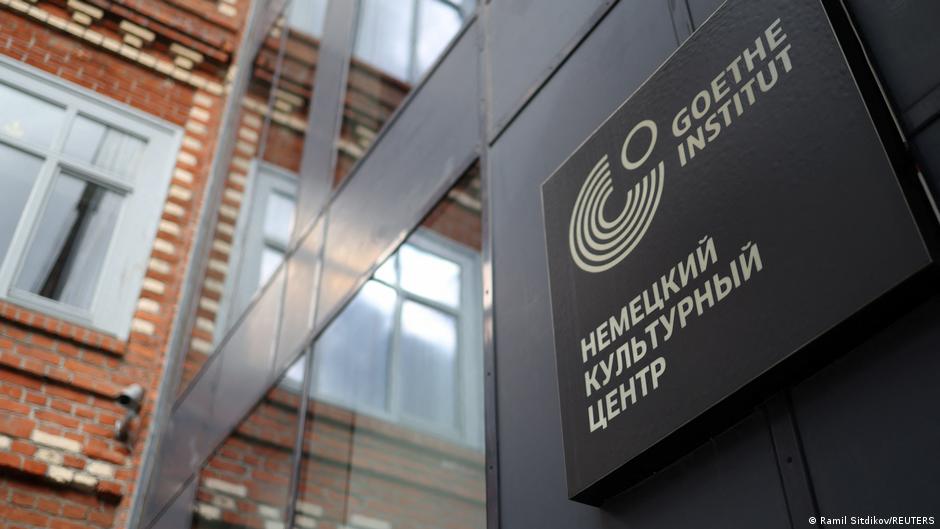
The imminent shuttering of the Goethe-Institut centers in Moscow, St. Petersburg, and Novosibirsk represents the final dismantling of a once-robust network of German cultural outreach in Russia. This decision, mandated by the Russian Foreign Ministry, serves as a retaliatory measure following Germany’s recent move to close the Russian House in Berlin and the Russian Consulate General in Bonn. The diplomatic friction traces its roots to a heightened state of tension regarding the ongoing war in Ukraine and, more recently, a direct allegation from German authorities regarding a thwarted act of sabotage on German soil.
The Catalyst: The Leipzig Airport Incident
The collapse of these cultural bridges follows a volatile diplomatic summer. In early September 2026, the German government officially accused Moscow of orchestrating an attempted drone attack at Leipzig airport. German intelligence and interior officials indicated that the operation was intended to cause significant infrastructure disruption, characterizing the act as part of a broader campaign of hybrid warfare.
In response, Berlin implemented a series of punitive measures: the closure of the Russian House, the expulsion of diplomatic staff associated with the consulate in Bonn, and the imposition of stricter visa requirements for Russian nationals. The Russian Foreign Ministry described these actions as "unfriendly and provocative," asserting that the subsequent closure of the Goethe-Institut was a necessary measure of reciprocity.
A Chronology of Declining Ties
The current impasse is the culmination of a long-term erosion of bilateral cooperation that has accelerated since the full-scale invasion of Ukraine in February 2022.
- 2011: Russia and Germany sign a bilateral intergovernmental agreement designed to foster cultural exchange, explicitly ensuring the legal protection and operational stability of cultural centers like the Goethe-Institut and the Russian House.
- February 2022: Following the invasion of Ukraine, Germany joins Western allies in imposing unprecedented sanctions on Russia, leading to a freeze in most high-level diplomatic exchanges.
- 2023–2025: Cultural cooperation remains under severe strain, with enrollment in German-language programs in Russia dropping from roughly 16,000 to 10,000 as public space for Western-affiliated organizations narrows.
- August 2026: German authorities detect an attempted drone attack at Leipzig airport, launching an investigation that leads to accusations against Russian state actors.
- September 2026: Germany closes the Russian House in Berlin and restricts visa access; Moscow orders the permanent closure of the Goethe-Institut’s remaining Russian operations by September 13, 2026.
The Human Cost: Data and Demographics
The Goethe-Institut has historically served as more than just a language school; it has been a primary hub for academic exchange, certification, and the dissemination of information about Germany. In 2025 alone, the organization facilitated approximately 22,000 examinations and saw 6,700 visitors to its libraries across its three Russian locations.
The sudden closure creates an immediate vacuum for several key demographics:
- Late Repatriates and Migrants: Ethnic Germans and their families seeking to return to Germany must provide certified proof of language proficiency as part of their resettlement documentation. Without local testing centers, these families face the logistical and financial burden of traveling to third-party nations to complete their requirements.
- Students: Thousands of Russian students planning to pursue higher education in Germany rely on the Goethe-Institut for internationally recognized language certificates.
- Language Educators: Teachers who have spent decades utilizing the institute’s resources—including modern textbooks and professional pedagogical training—are now finding themselves professionally isolated.
"The partnership with the Goethe-Institut was one of the most important pillars of our work," one Moscow-based teacher noted. "It provided us with the materials and the standards necessary to maintain global educational benchmarks."
Official Responses and the End of an Era
Gitte Zschoch, Secretary General of the Goethe-Institut, expressed deep regret over the forced exit. In a formal statement released on Tuesday, Zschoch emphasized that the closure is a profound loss for civil society. "No more books can be borrowed from our libraries, and no further training can be offered," she stated. "For people in Russia, this further restricts access to the German language, culture, and reliable information from and about Germany."
The German government has largely framed the closures as a regrettable but unavoidable consequence of Russia’s aggressive posture. Conversely, the Russian government maintains that Germany initiated the breakdown of the 2011 cultural agreement by targeting the Russian House, arguing that the closure of the Goethe-Institut is a standard application of the principle of reciprocity.
Analysis: Culture as a Political Hostage
Political analysts view the closure as a symbolic end to the "bridge-building" era of post-Cold War diplomacy. The 2011 agreement, which was intended to insulate cultural cooperation from political volatility, has failed to survive the realities of the current geopolitical climate.
By forcing the closure of these institutions, both states have effectively reduced their "soft power" footprint within the other’s borders. For Russia, the move signals a continued pivot away from European integration and a tightening of internal information control. For Germany, the departure signifies a realization that traditional cultural diplomacy is no longer viable when bilateral relations are characterized by allegations of state-sponsored sabotage.
The irony of the situation has not been lost on the public. Many Russians who rely on these services have pointed to the hypocrisy of the political class, noting that while the state restricts access to European culture for the average citizen, the elites continue to maintain their own ties to the West. The sentiment shared by many affected individuals is that cultural exchange should have remained a "protected zone," shielded from the escalating conflict.
Implications for the Future
The long-term impact of these closures remains to be seen. With the loss of physical infrastructure, it is unclear if alternative digital platforms or smaller, independent organizations will be able to fill the void. However, the designation of various international organizations as "undesirable" within Russia suggests a high risk for any entity attempting to step into the role previously occupied by the Goethe-Institut.
As of September 13, 2026, the physical presence of the Goethe-Institut in Russia will cease, leaving a void in the educational landscape that may take generations to repair. The event serves as a stark illustration of how contemporary conflicts are not only fought on the frontlines of battle but are increasingly played out in the arenas of education, information, and cultural soft power. As these doors close, the prospects for a future restoration of German-Russian cultural ties appear increasingly remote, signaling a new, more isolated chapter in European history.

