
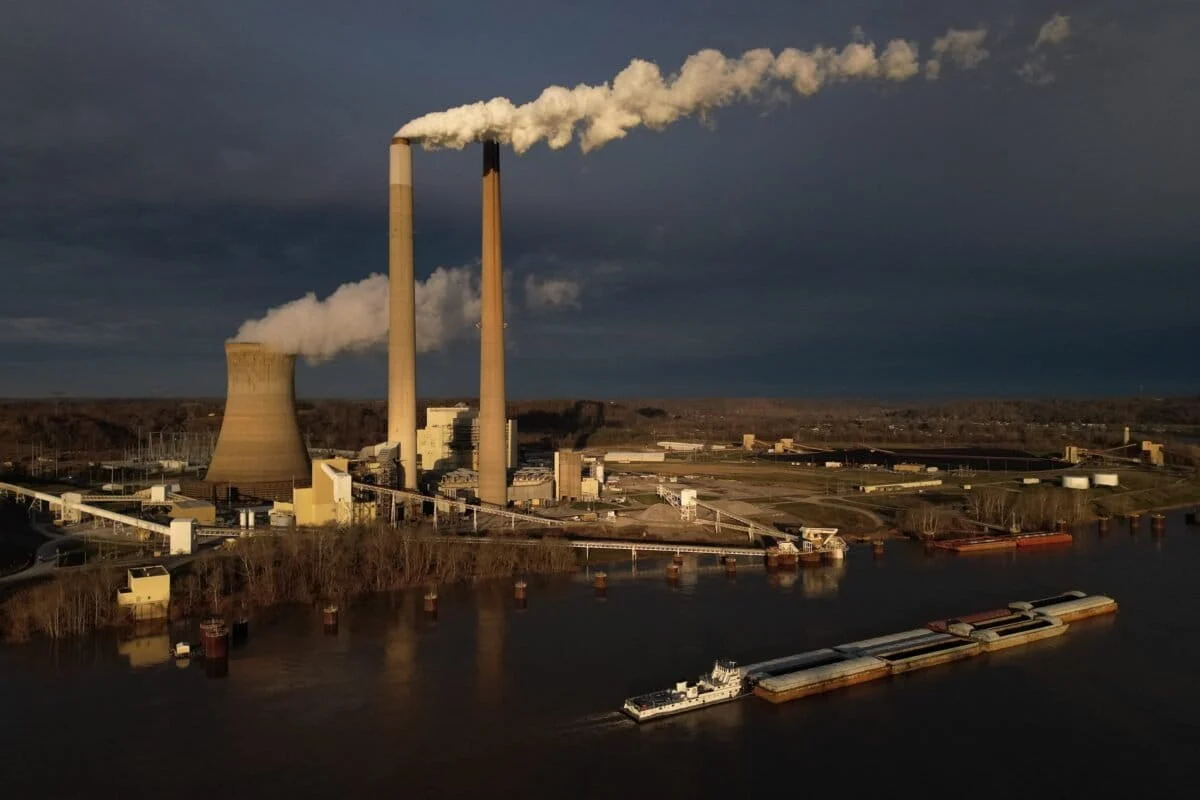
The Environmental Protection Agency has officially moved to repeal federal regulations that placed strict limitations on planet-warming greenhouse gas emissions from coal and natural gas-fired power plants. This decisive policy reversal, which the agency claims will eliminate more than $300 billion in cumulative compliance costs for the energy sector, is framed by the administration as a critical step toward "unleashing" American energy independence. The move marks a stark departure from the climate-centric regulatory frameworks pursued by the Biden and Obama administrations, signaling a pivot toward market-driven utility management.
A Fundamental Shift in Energy Policy
For years, federal oversight of the power sector has centered on the "Clean Power Plan" and its subsequent iterations, which sought to aggressively phase out carbon-intensive energy production in favor of renewables. By repealing these mandates, the EPA is effectively removing the regulatory pressure that compelled utility companies to shutter aging, inefficient, or high-emission coal plants.
EPA officials argue that the previous mandates were overly prescriptive, forcing utilities to make investment decisions based on federal climate targets rather than grid reliability or consumer cost. Under the new policy, utility companies will have broader discretion to extend the operational lifespans of existing facilities, a move the agency asserts will stabilize energy prices and ensure a more resilient power grid against peak demand spikes.
Historical Context and Chronology of Regulation
The trajectory of U.S. power plant regulation has been characterized by intense legal and political volatility over the past two decades.
- 2015: The Obama administration introduces the Clean Power Plan, establishing the first-ever national standards to limit carbon dioxide emissions from existing power plants.
- 2017–2019: The Trump administration initiates the repeal of the Clean Power Plan, replacing it with the Affordable Clean Energy (ACE) rule, which focused on heat-rate improvements at individual plants rather than a broader transition to cleaner fuel sources.
- 2021–2023: The Biden administration prioritizes the "Power Plant Rule," aiming to leverage carbon capture and storage (CCS) technology and hydrogen co-firing to drastically reduce emissions by 2030 and 2040.
- 2025–2026: The current administration moves to vacate the most stringent components of these rules, citing excessive economic burdens and technical infeasibility for many legacy plants.
This latest action represents the third major shift in regulatory strategy in less than a decade, creating a "regulatory whiplash" that many utility providers have cited as a major hurdle in long-term infrastructure planning.
Economic Implications and Cost-Benefit Analysis
The EPA’s estimate of $300 billion in savings is derived from projections regarding capital expenditure, fuel switching, and the avoidance of early retirement for power generation assets. Proponents of the repeal argue that the cost of compliance with prior emission standards was disproportionately passed on to consumers in the form of higher utility bills.
However, economists and environmental analysts point to the "hidden" costs of this deregulation. While the industry may save on capital costs, public health and environmental advocates argue that the increase in particulate matter, sulfur dioxide, and nitrogen oxides will lead to higher long-term healthcare expenditures. Independent studies from organizations like the American Lung Association have historically noted that the health costs associated with coal-fired pollution—ranging from respiratory illness to cardiovascular disease—often eclipse the short-term financial savings realized by energy producers.
Industry and Stakeholder Reactions
The energy sector remains divided on the repeal. Large utility companies that have already invested billions into wind, solar, and battery storage infrastructure may find themselves in a precarious position. These companies have spent the last several years reallocating their portfolios to align with federal green energy incentives and internal ESG (Environmental, Social, and Governance) goals.

"The industry needs consistency," noted one industry consultant familiar with the transition. "Utility planning occurs on a 20- to 30-year horizon. When the regulatory environment shifts every four years, it becomes impossible to make efficient capital allocations."
Conversely, groups representing coal-dependent regions and traditional energy providers have lauded the move. For states like West Virginia, Wyoming, and Kentucky, the repeal is viewed as a lifeline for local economies that rely on the extraction and processing of fossil fuels. Regional power cooperatives argue that the flexibility to keep older plants online provides a necessary safety net against the intermittent nature of renewable energy sources.
Environmental Impact and Climate Trajectory
The repeal has drawn sharp criticism from environmental advocacy groups, who argue that the action is inconsistent with international climate commitments. Under the Paris Agreement, the United States pledged significant reductions in greenhouse gas emissions. Independent climate models suggest that the relaxation of these rules could lead to a substantial increase in power sector CO2 emissions over the next decade.
The EPA’s justification rests on the claim that technological advancements in carbon capture and the emergence of small modular nuclear reactors (SMRs) will eventually provide a market-based solution to emissions, rendering federal mandates unnecessary. However, critics point out that these technologies are not yet deployed at the scale required to offset the continued reliance on fossil fuels, nor are they currently cost-competitive with natural gas or renewables.
Future Outlook: Legal Challenges and Grid Reliability
Legal experts anticipate a wave of litigation following the EPA’s announcement. Environmental law firms, likely backed by coalitions of states, are expected to challenge the repeal in federal court, arguing that the EPA has failed to fulfill its statutory obligations under the Clean Air Act to regulate pollutants that endanger public health.
The legal battle will likely hinge on the "major questions doctrine," a judicial principle that limits an agency’s authority to enact broad regulations that have vast economic or political significance without explicit congressional authorization. The Supreme Court has previously signaled skepticism toward sweeping regulatory overhauls initiated solely by executive agencies, which may favor the current administration’s move.
Furthermore, the issue of grid reliability remains central to the debate. As the U.S. continues to electrify sectors like transportation and heating, the demand for power is projected to grow significantly. The debate over whether to retain older, dispatchable coal and gas plants versus investing in high-capacity transmission and renewable storage will be the defining energy issue of the next decade.
Conclusion
The EPA’s decision to repeal greenhouse gas emission limits on power plants is a definitive statement of policy priorities. By favoring immediate economic relief and operational flexibility for traditional energy producers over aggressive decarbonization targets, the agency is signaling a return to a more traditional energy model.
As the legal challenges mount and the energy industry adjusts to this new reality, the broader impact on the U.S. climate strategy will become clearer. While the administration promises a more affordable and reliable energy future, the long-term consequences for the environment and the country’s global standing on climate change remain the subject of intense, ongoing debate. Whether this policy shift will lead to a new era of energy prosperity or a stall in the transition to a sustainable power grid is a question that will be answered in the coming years by both the courts and the market.

