
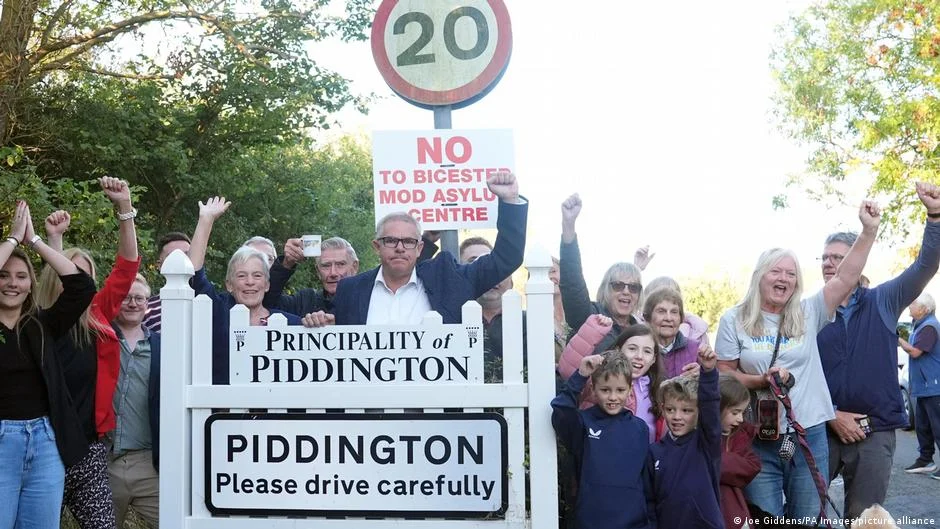
The quiet, rural village of Piddington, located approximately 25 kilometers northeast of Oxford, has become the epicenter of a unique constitutional standoff. With a population of roughly 350, the community recently organized a symbolic "referendum" to declare independence from the United Kingdom, rebranding itself as the "Principality of Piddington." While the vote holds no legal weight in Westminster, the move serves as a stark manifestation of the growing friction between rural communities and the central government regarding the management of asylum seeker accommodation.
The protest centers on the Ministry of Defence (MoD) Bicester Site A, a decommissioned military facility earmarked by the government for the housing of up to 1,250 male asylum seekers. For the residents of Piddington, the prospect of an influx of residents more than triple the size of their own population has prompted concerns regarding local infrastructure, public safety, and the character of their rural environment.
A Chronology of the Dispute
The tension in Piddington is the latest chapter in a broader national struggle to address the legacy of asylum accommodation in the United Kingdom.
- July 2026: The British government publishes a formal Q&A document outlining its intentions for MoD Bicester (Site A), proposing the site as a "basic, safe" accommodation facility to replace the use of commercial hotels.
- Early September 2026: Anxiety within the Piddington parish council intensifies as details regarding the potential scale of the project become public. Local activists begin lobbying against the proposal.
- September 16, 2026: The village holds a symbolic referendum. Out of 312 ballots cast—representing a turnout of nearly 92%—285 residents vote in favor of secession, while 26 vote against it.
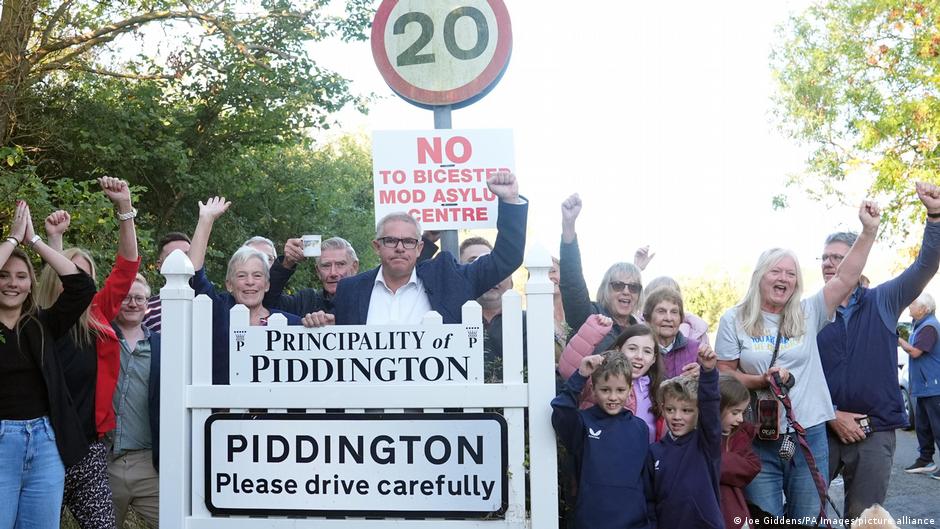
- September 18, 2026: Celebrations occur near the village sign, where locals display placards declaring the formation of the "Principality of Piddington."
- Late September 2026: The story gains traction nationally, prompting responses from government ministers and local council officials regarding the risks of social polarization.
Data and Demographic Impact
The scale of the proposed facility at MoD Bicester is the primary driver of local apprehension. The government’s proposal to house 1,250 males aged 18 to 65 creates a significant demographic imbalance. In a village of 350 people, the arrival of such a population represents a 357% increase in the immediate vicinity, raising questions about the capacity of local healthcare, transport, and policing services.
Government documents acknowledge that the site is remote, a common trait for military bases chosen for their distance from urban centers to facilitate training exercises. However, experts in social policy have noted that this very isolation creates a "double-edged sword." While it keeps the facility separate from densely populated areas, it also creates logistical hurdles for the asylum seekers themselves, who would be situated far from essential services, legal aid, or community support networks.
Official Responses and the Government Position
The newly installed administration of Prime Minister Andy Burnham finds itself in a precarious position. Inheriting a complex backlog of asylum cases and a public weary of the financial burden of hotel usage—which has cost taxpayers billions over the last decade—the government is under immense pressure to find permanent, cost-effective solutions.
Culture Secretary Lisa Nandy has defended the move, characterizing the use of military sites as a "better option" than the continued reliance on private hotels, which the government maintains is unsustainable. Prime Minister Burnham has publicly promised to review the concerns raised by the Piddington community, acknowledging the gravity of the situation while reaffirming the government’s duty to distribute asylum seekers fairly across the country to prevent the concentration of populations in any single region.
However, the government’s rhetoric has done little to quell the anxiety in Oxfordshire. A spokesperson for the Oxfordshire County Council warned that the project risks turning the area into a "lightning rod" for radicalized elements. There is a documented fear that the site could attract opportunistic far-right agitators, potentially triggering the same type of civil unrest seen earlier this month in Portsmouth, where anti-migrant demonstrations devolved into confrontations with police.
The Broader Political Landscape
The Piddington vote is a microcosm of the shifting political allegiances in the UK. The rise of populist parties such as Reform UK and Restore Britain has fundamentally changed how immigration is discussed at the local government level. These parties have effectively tapped into a vein of dissatisfaction in rural England, where traditional Conservative and Labour strongholds are facing pressure from voters who feel that the "national interest" is being sacrificed at the altar of bureaucratic convenience.
The "Principality of Piddington" movement, while tongue-in-cheek, carries a serious message: the traditional relationship between the central state and the periphery is fraying. When a village as small as Piddington resorts to the language of secession, it indicates a breakdown in the perceived social contract. Residents argue that "proportionality" is missing from the government’s decision-making process. They contend that the government is rushing the plan through to meet internal deadlines without adequately assessing the capacity of the local infrastructure to absorb such a sudden demographic shock.
Implications for Future Policy
The government’s plan for MoD Bicester is still subject to rigorous feasibility studies and planning permissions. The Home Office has committed to a "phased approach" to occupancy, suggesting that the site would not reach its 1,250-person capacity overnight. Additionally, the government has promised that the site would be self-sufficient, including on-site laundry, communal areas, and 24-hour security monitoring via CCTV and private security contractors.

Yet, these assurances have not pacified the local population. The fear remains that even with security measures, the sheer number of people living in a remote, enclosed environment creates a high risk of social friction. Furthermore, the 10-year operational horizon cited by the government suggests that this is not a temporary emergency measure but a long-term shift in how the UK manages its asylum seeker population.
Analysis: A Test of Governance
From a policy perspective, the situation in Piddington represents a failure in early-stage stakeholder engagement. By the time the local community felt compelled to vote for "secession," the government’s plan was already well-advanced. This reactive style of governance often leads to the escalation of local grievances into national controversies.
The challenge for the Burnham administration is to balance its statutory obligations under international and domestic law—to provide safe, legal, and dignified housing for asylum seekers—with the democratic rights of local residents to have a meaningful say in their own community’s development. If the government fails to manage the rollout of the Bicester site, it risks further alienating rural voters and providing more ammunition for populist movements that capitalize on the perceived disconnect between the metropolitan political elite and the rural public.
As the "Principality of Piddington" continues to hold its ground—at least in a symbolic sense—the standoff serves as a reminder that the national debate on migration is not just about border policy or legal statutes; it is about the practical, everyday reality of life in the communities where these policies are implemented. Whether the government can bridge the gap between national necessity and local consensus remains one of the defining challenges of the current parliamentary term. With the clock ticking on the 2029 deadline for moving asylum seekers out of hotels, the Piddington case will likely serve as the benchmark for how the UK handles the inevitable friction of this massive logistical transition.

