
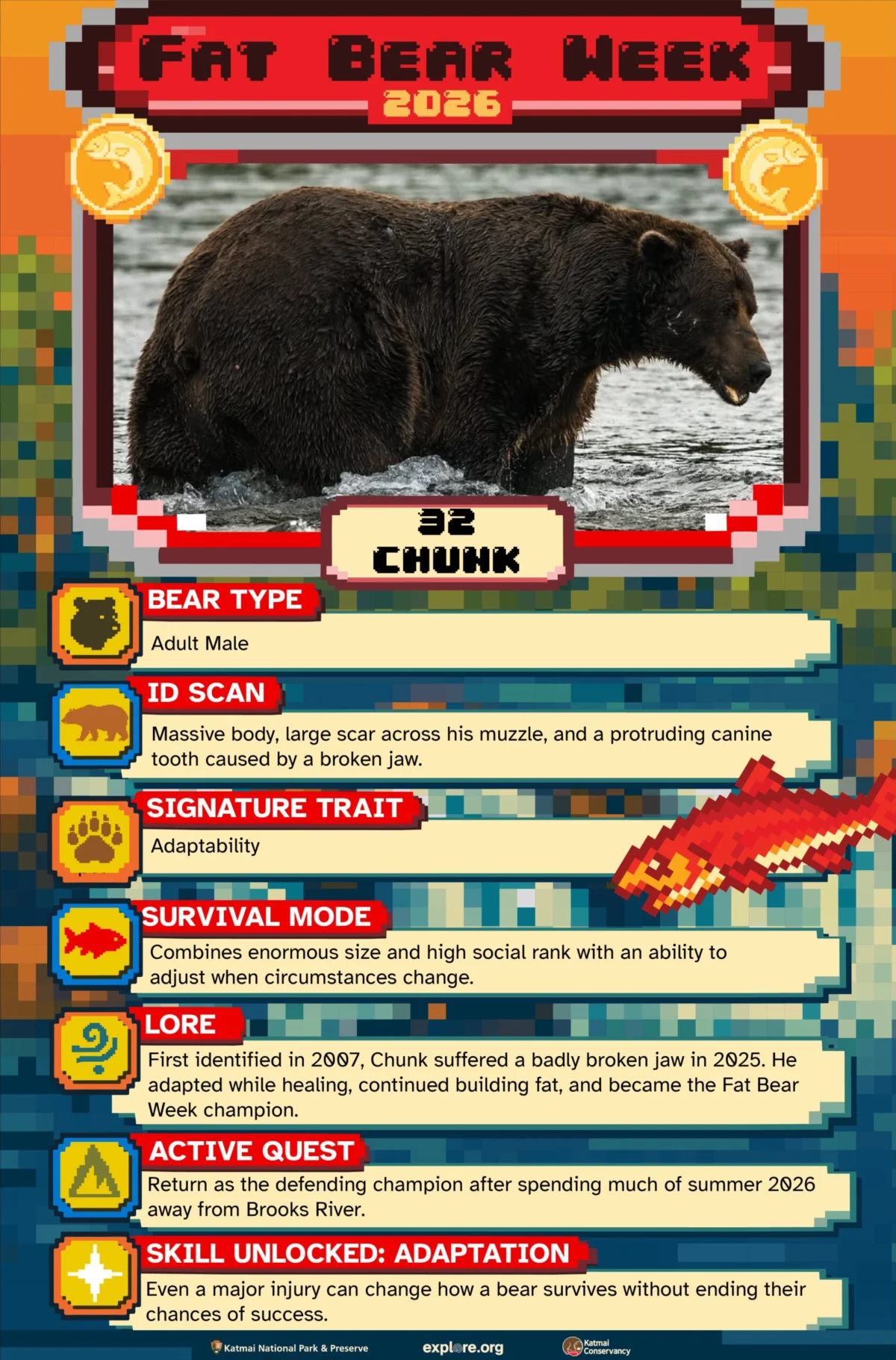
The 2026 iteration of Fat Bear Week, the annual digital tournament celebrating the successful weight gain of brown bears in Katmai National Park and Preserve, has reached a critical juncture, marked by both historic voter turnout and significant shifts in the competition’s hierarchy. As of September 24, 2026, the tournament has moved beyond its initial stages, punctuated by the high-profile elimination of the 2025 defending champion, Bear #32 (Chunk). This competition, hosted by Explore.org in partnership with the National Park Service, serves as an educational bridge between the public and the ecological realities of Alaska’s wilderness, transforming the biological necessity of hibernation preparation into a global participatory event.
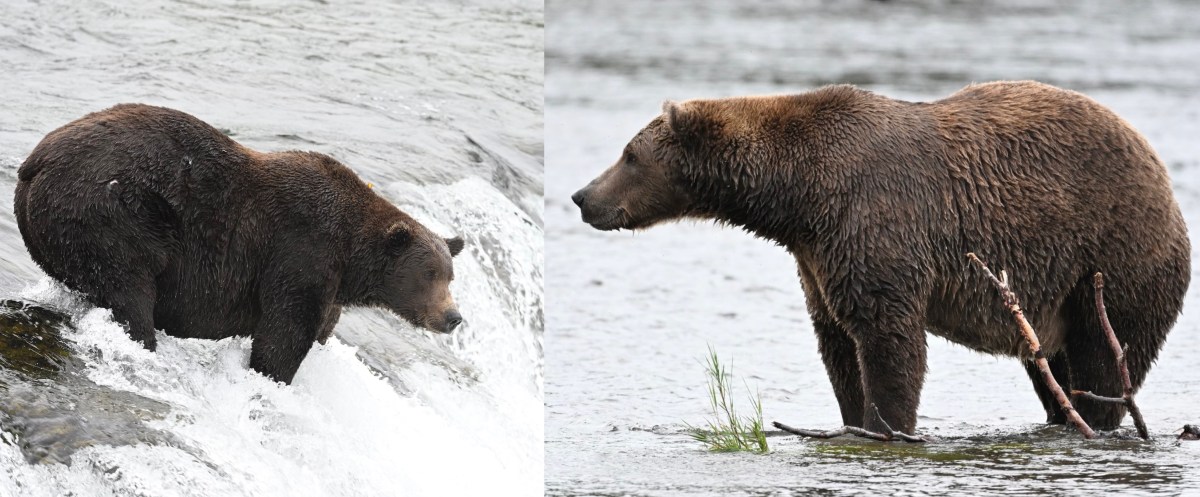
The tournament began with unprecedented momentum, leading to technical challenges that necessitated a restructuring of the voting schedule. After a record-breaking Day 1 that saw traffic volumes exceed the capacity of the hosting servers, organizers implemented a staggered schedule to accommodate the surge in interest. This delay allowed for the continuation of Round 1, Part 1, followed by the commencement of Round 1, Part 2, on September 24. These adjustments underscore the cultural phenomenon that Fat Bear Week has become since its inception in 2014, evolving from a simple social media poll into a significant driver for wildlife conservation funding and environmental awareness.
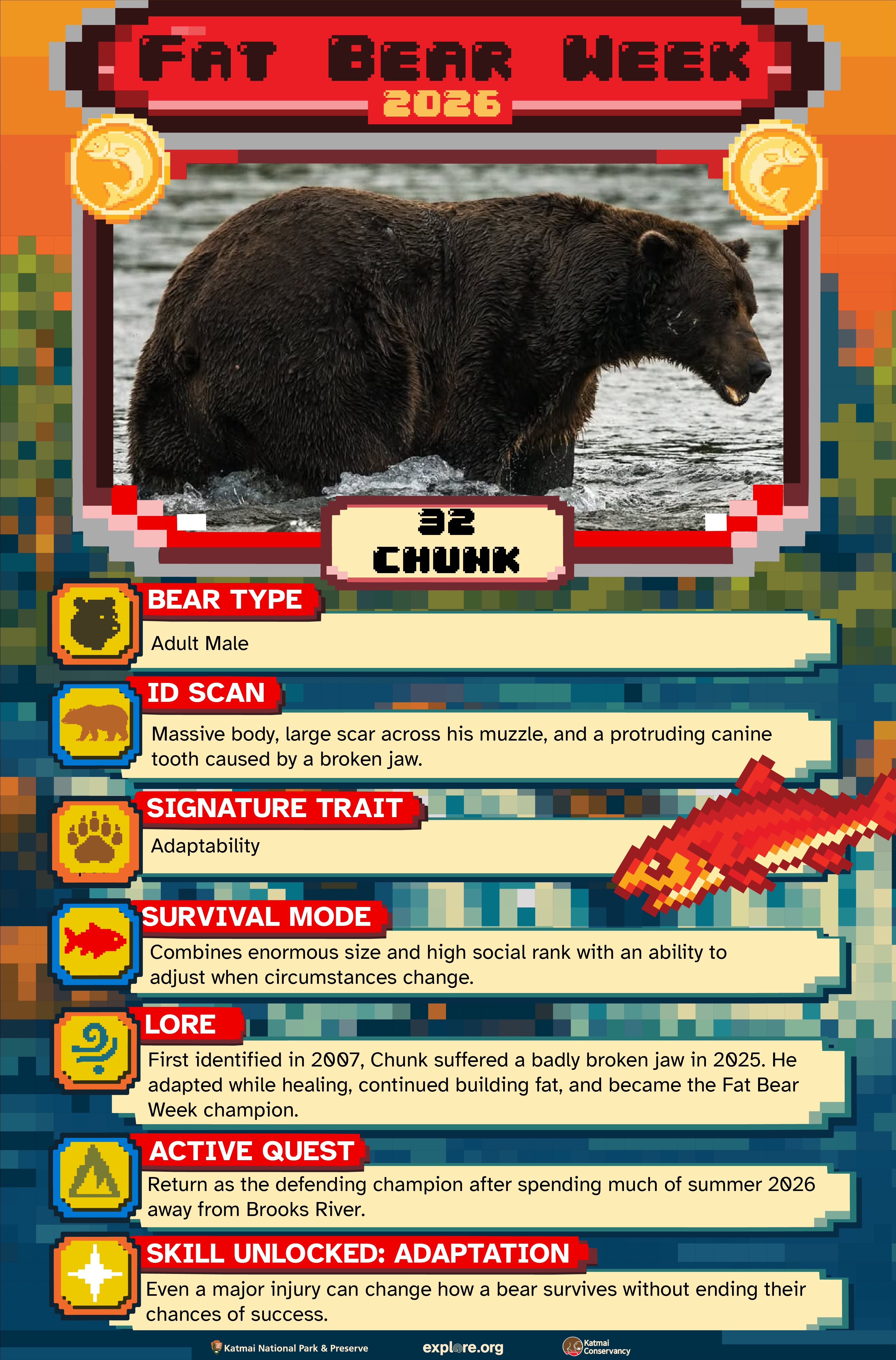
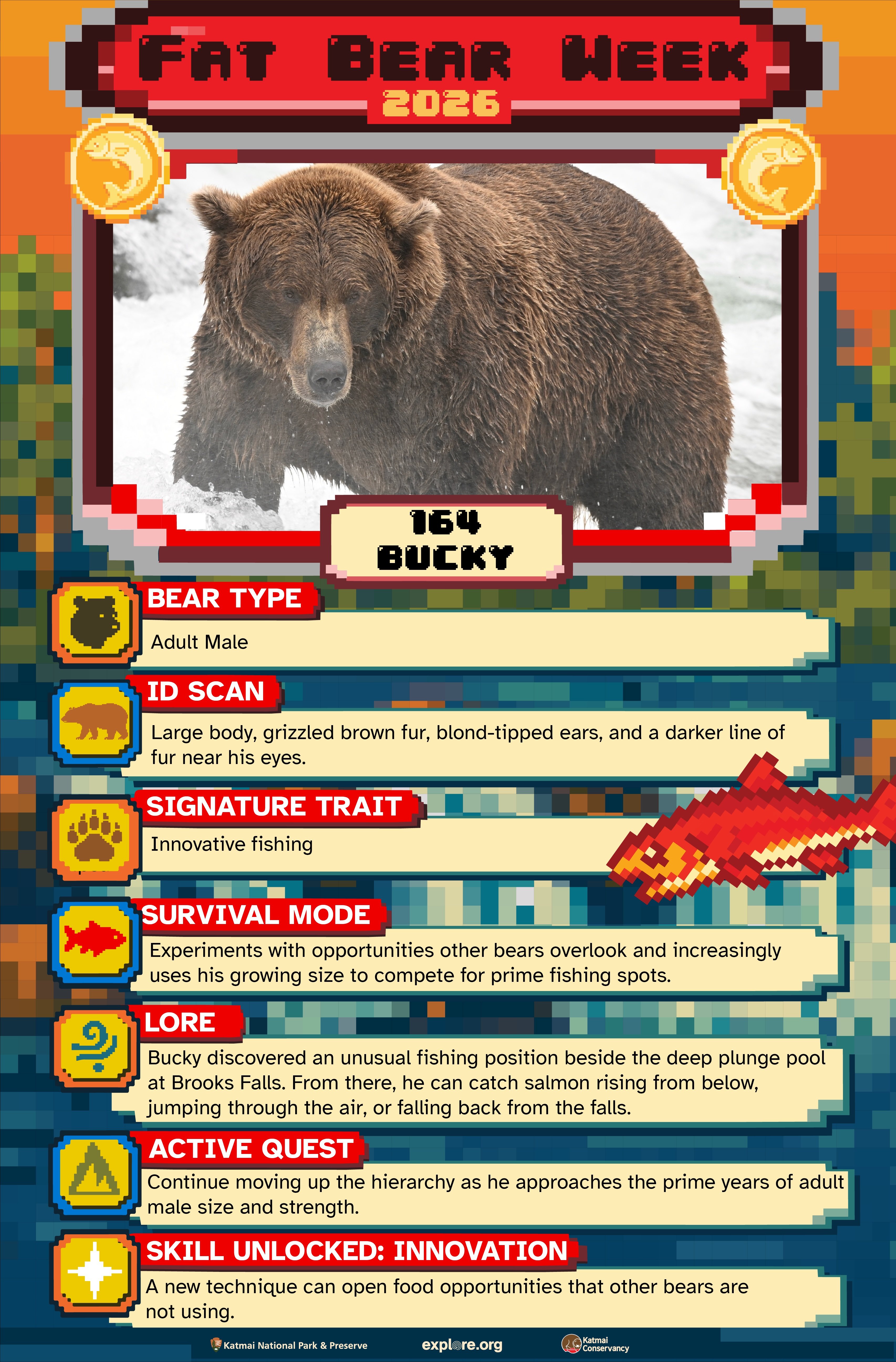
The recent match between Bear #32 (Chunk) and the formidable newcomer Bear #164 (Bucky Dent) served as the primary highlight of the second half of the first round. Chunk, who reclaimed his title in 2025, entered the 2026 season with a complex narrative, having been absent from public view for much of the early summer. His return, coinciding with the announcement of the bracket, was met with high expectations from his dedicated fanbase. However, the rise of Bucky Dent represents a shift toward valuing innovative behavioral adaptations. Bucky Dent’s unique fishing technique—positioning himself in the deepest plunge pools under Brooks Falls to capture salmon as they navigate the turbulent water—has been cited by park biologists as a prime example of individual learning and problem-solving among brown bears. His victory over the incumbent champion highlights the volatility of the bracket and the constant flux of dominance within the Brooks River ecosystem.
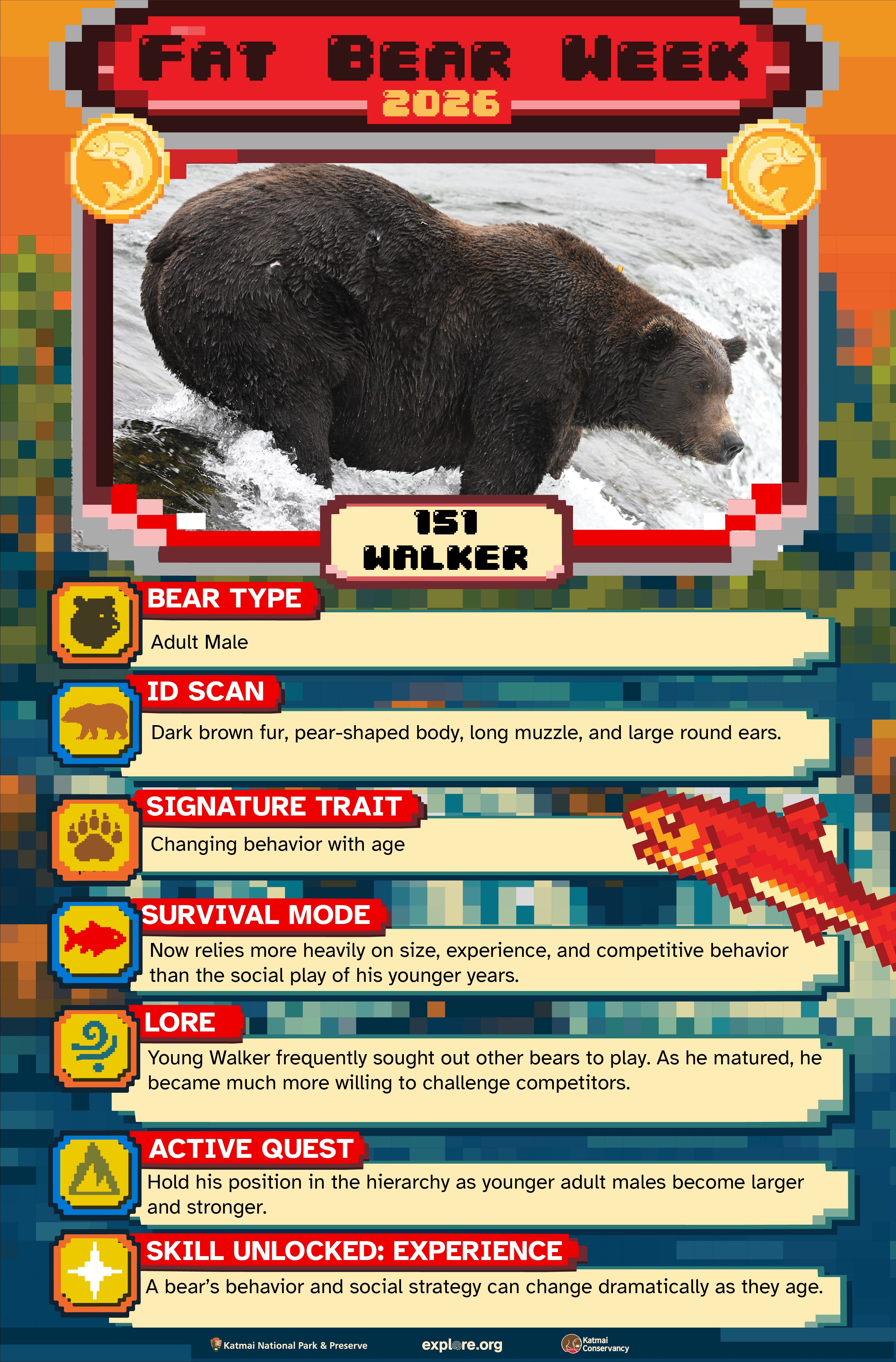
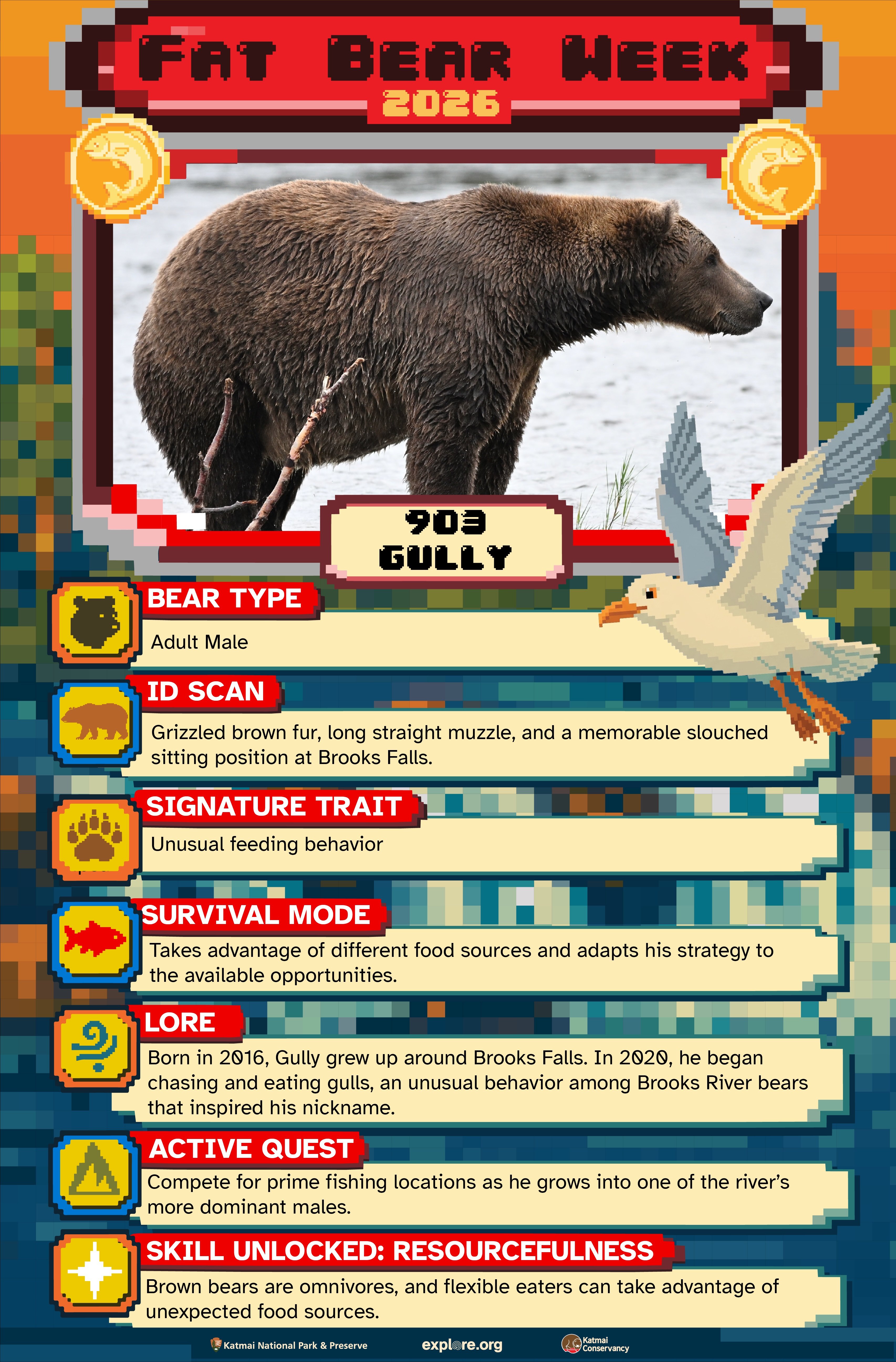
In the parallel contest between Bear #151 (Walker) and Bear #903 (Gully), observers witnessed a collision of two distinct developmental trajectories. Walker, a long-time fixture of the Brooks River, has historically been categorized by his steady, dominant presence. Often compared to the archetypal "regular" in a local community, his transition this year into a more assertive, aggressive defender of his fishing territory reflects the intense competition for caloric resources that defines the pre-hibernation period. Conversely, Gully, the progeny of the two-time champion Grazer, represents the next wave of competitive bears. His specific niche behavior of predating on gulls, which earned him his moniker, has provided him with a supplementary protein source that has contributed to his rapid ascent in the local social hierarchy.
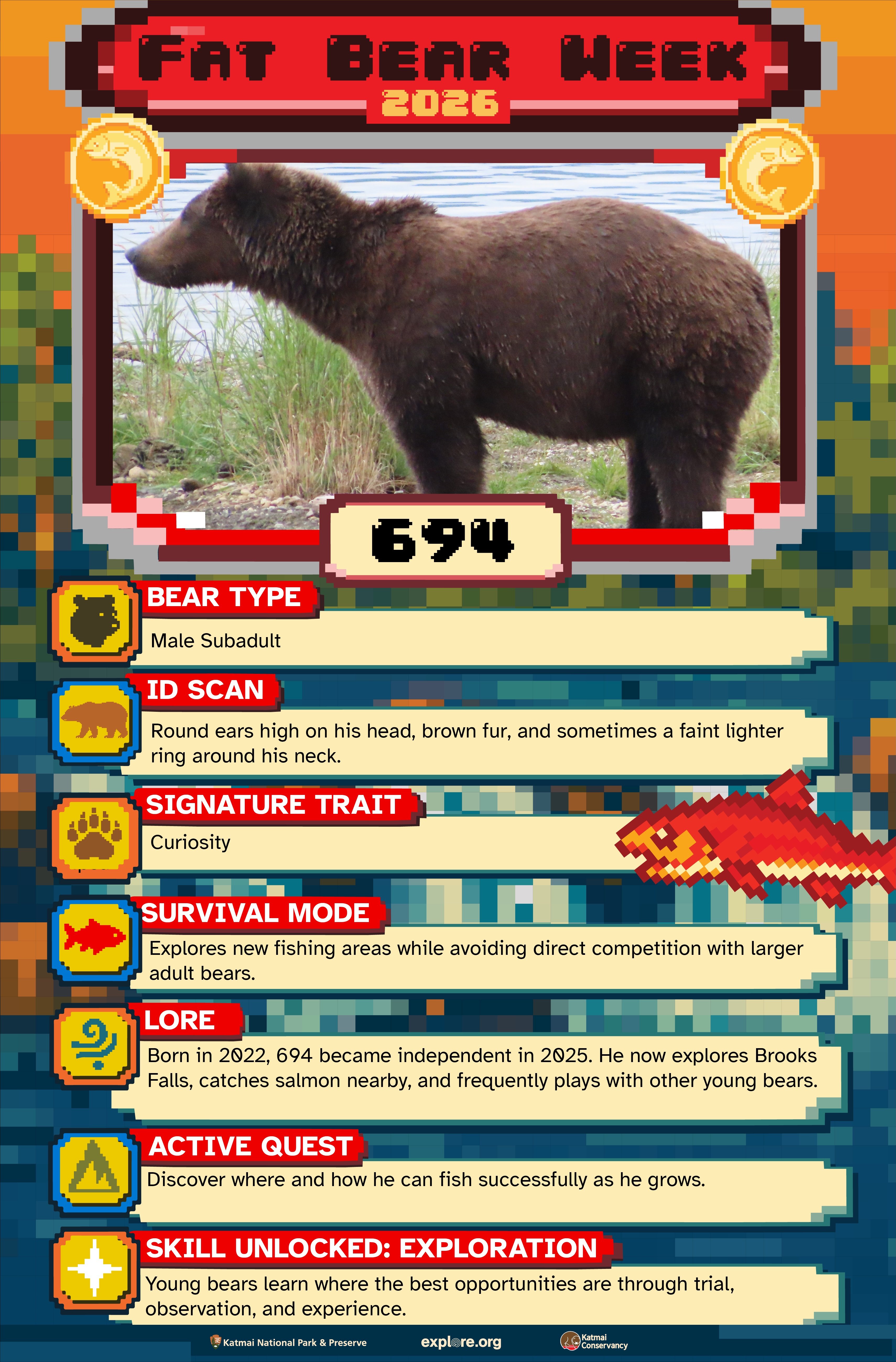
The subadult bracket has introduced a new layer of complexity to the tournament, focusing on the future of the Katmai population. The competition between Bear #694 and Bear #620—a member of the unique "Brady Bunch" blended family—showcases the social complexities of brown bear upbringing. The survival of these younger bears is contingent upon their ability to adapt to the competitive pressures of the falls, a challenge that is often amplified by their mothers’ strategies. Bear #610 and Bear #89 (Backpack) also represent survival stories, having overcome significant physical injuries earlier in their lives to reach maturity. These stories are vital to the public’s understanding of the natural selection processes occurring within the park, demonstrating that the "fat" aesthetic celebrated during this week is fundamentally a metric of survival and physical resilience.
The logistical implications of such high engagement cannot be understated. When a digital event aimed at conservation causes widespread technical infrastructure failure, it indicates a profound public investment in wildlife science. The National Park Service and Explore.org have responded by maintaining transparency regarding the scheduling delays, ensuring that the integrity of the voting process is preserved. The extension of the voting window serves as an acknowledgment of the global community’s role in this event, ensuring that the eventual crowning of the 2026 champion on September 29 remains a democratic and representative process.
Beyond the entertainment value of the tournament, Fat Bear Week provides a critical platform for the Katmai Conservancy and its associated initiatives, such as the Otis Fund. Named in honor of Bear #480 (Otis), a legendary figure in the competition’s history who passed away in 2024, the fund supports ongoing research and habitat protection. The decision by Explore.org to match donations made during the tournament window is a strategic effort to convert the temporary surge in attention into long-term financial support for park operations. These funds are essential for the maintenance of the bear-viewing infrastructure, which provides the very data (via live webcams) that allows for the scientific observation of these animals.
From an ecological perspective, the weight gain observed in these bears is a barometer for the health of the Bristol Bay salmon run. The salmon are the primary nutrient source for the bears; therefore, the competitive intensity seen at Brooks Falls is a direct response to the annual salmon availability. When viewers observe a bear like Bucky Dent or Chunk accumulating mass, they are witnessing the conversion of ecological productivity into biological capital. The bears’ ability to "fatten up" is the most critical factor in their reproductive success and mortality rates during the winter. Consequently, the tournament indirectly educates the public on the importance of maintaining robust salmon populations and protecting the riparian environments that support them.
The 2026 bracket also reflects a changing of the guard. With the departure of long-standing champions like Otis and the defeat of recent winners like Chunk, the competition is becoming more diverse. This diversity is not merely in the number of competitors but in the variety of strategies employed. The "innovators" like Bucky Dent, the "survivors" like 610, and the "territorial defenders" like Walker represent the spectrum of behaviors that allow these apex predators to thrive in one of the most densely populated brown bear habitats in the world.
As the tournament progresses toward its final rounds, the focus will inevitably shift toward the specific physical transformation of the finalists. Biologists monitor these changes not for the sake of the competition, but to track the body condition index of the population. While the public votes for their favorite personality, they are simultaneously participating in a massive, distributed data-collection effort that reinforces the necessity of the Katmai National Park and Preserve.
The implications for the broader field of conservation are clear: gamification, when executed with scientific accuracy and a commitment to animal welfare, is a potent tool for environmental advocacy. By providing a human-centric narrative—complete with names, family histories, and personal struggles—the tournament bridges the cognitive gap between humans and large carnivores. It transforms the bear from an abstract symbol of wilderness into an individual with a specific life history.
In conclusion, the 2026 Fat Bear Week stands as a testament to the enduring appeal of the natural world. The technical hurdles encountered during the opening phase do not detract from the success of the initiative; rather, they demonstrate the scale of its impact. As the final rounds approach, the focus remains on the biological reality of the Brooks River: the relentless pursuit of calories, the navigation of social hierarchies, and the ultimate, singular goal of surviving the coming winter. The tournament is, at its core, a celebration of the resilience of the Katmai brown bear population and a vital reminder of the interconnectedness of our global ecosystems. Through the lens of this competition, the public is invited to witness not just a game, but the ongoing, high-stakes evolution of one of North America’s most iconic species. Whether or not a clear successor to the title emerges, the true beneficiaries remain the bears themselves, whose lives are protected by the funds and awareness generated during this annual, high-fat, high-stakes event.

