
The Chronology of the Encounter
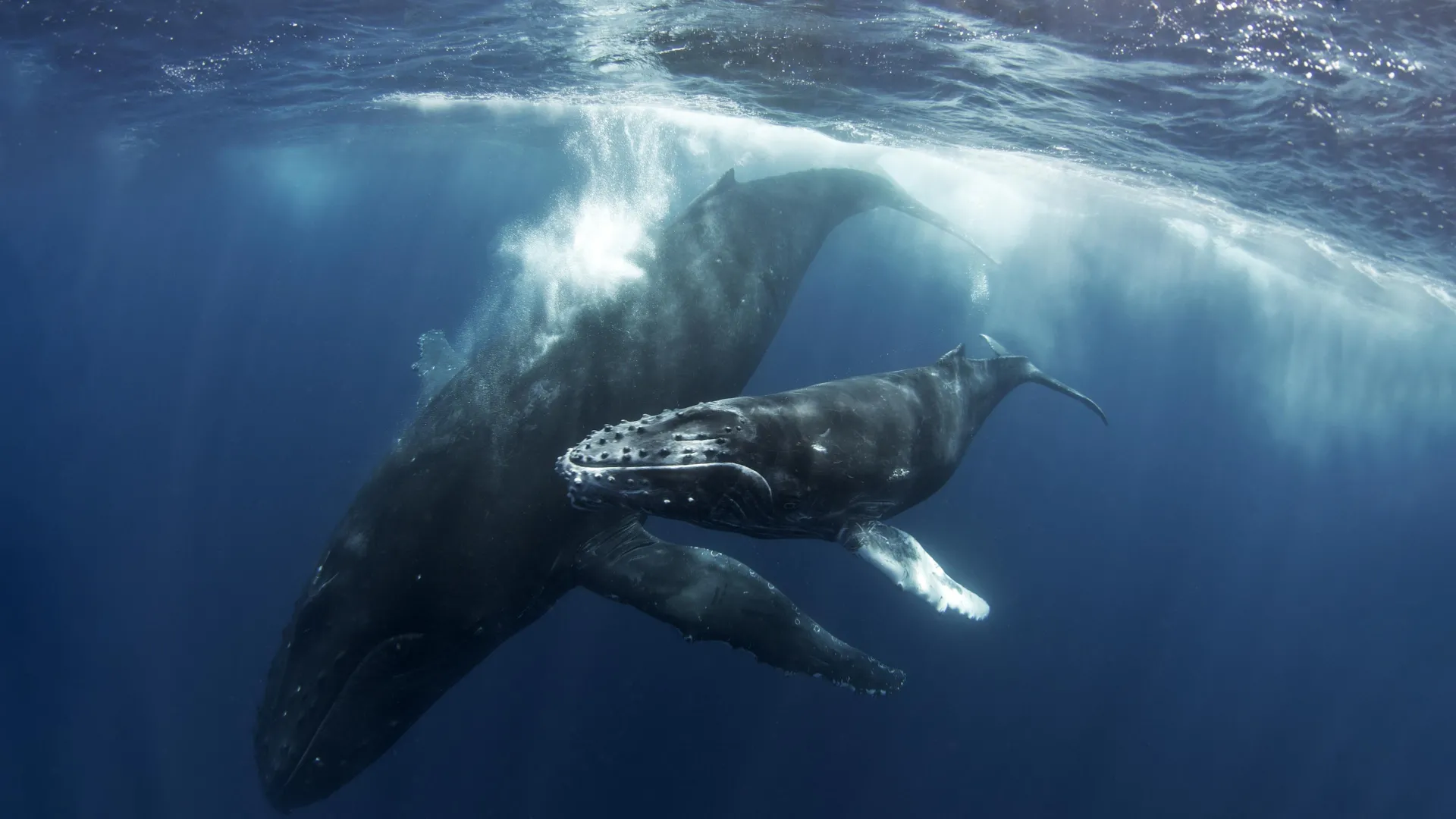
The incident began when the Sea World Foundation rescue team, led by Captain Andrew Mulville, was patrolling the waters off the southern Gold Coast. The team initially observed two adult whales swimming in tandem—a female humpback and an escort whale. While the presence of an escort is common in humpback social structures, the behavior of the mother caught the team’s attention due to its unusual, lethargic, and protective nature.
Upon closer inspection, the researchers identified that the female was tending to a deceased calf. What followed was a multi-hour display of profound maternal investment. The mother did not abandon the carcass, as is sometimes observed in nature when survival instincts override parental bonds. Instead, she remained in the immediate vicinity of the calf, physically positioning her body to shield it and maintaining consistent, close-range proximity.
Captain Mulville noted that the behavior was profoundly disorienting to the human observers, who initially mistook the pair for whales resting at the surface. As the reality of the situation became clear, the team documented a series of interactions—including prolonged eye contact and subtle tactile movements—that suggested the mother was attempting to stimulate or remain connected to the calf. The researchers suspect this vigil likely extended for days, far beyond the initial observation window, indicating a sustained psychological or instinctual attachment that defies the common perception of marine animal behavior.
Scientific Context: Toothed vs. Baleen Whales
To understand the significance of this observation, one must contrast it with existing marine biology literature. Much of what is currently known about post-mortem behavior in cetaceans is derived from studies of odontocetes, or toothed whales, such as dolphins, orcas, and pilot whales. These species are highly social and are frequently documented "carrying" their dead offspring for days or even weeks. This behavior, often interpreted by researchers as a grief-like response, involves the mother lifting the calf to the surface to assist with respiration, a futile act that underscores the intensity of the maternal bond.
Dr. Olaf Meynecke of Griffith University’s Whales and Climate Research Program highlights that the humpback whale—a baleen whale—exhibits a different behavioral profile. Unlike their toothed cousins, humpback whales are generally considered to be less socially bonded in terms of long-term group cohesion. Consequently, the documented "attentive behavior" shown by this mother is a rare departure from the norm. The mother did not attempt to surface the calf; rather, she maintained a vigil under the water, demonstrating a nuanced form of post-mortem interaction that suggests a higher level of cognitive awareness than previously attributed to this species.
Data and Behavioral Analysis
The study, titled "First documentation of humpback whale (Megaptera novaeangliae) post-mortem attendance of a stillborn" and published in Discover Animals, serves as a foundational piece of evidence in the growing field of cetacean cognition. The team categorized the observed actions as "care-giving" or "nurturing," noting that the mother’s movements were consistent with the physiological responses seen in other highly intelligent, socially complex mammals, including primates and elephants.
From a statistical standpoint, neonatal mortality in humpback whales is difficult to quantify due to the vast, inaccessible nature of their migratory paths. However, reports of post-mortem attendance are statistically rare in peer-reviewed literature. By systematically recording this event, the Griffith University team has provided a baseline for future comparison. The data collected during this encounter—including the duration of the vigil, the proximity maintained by the mother, and the lack of aggressive or dismissive behavior toward the deceased—provides a roadmap for how scientists might classify "grief" in non-human subjects.
Official Responses and Academic Implications
The response from the broader marine biology community has been one of cautious fascination. While researchers are careful to avoid anthropomorphizing the whales—attributing human emotions to animals—there is an increasing consensus that the term "grief" may be a valid descriptor for the behavioral patterns observed.
"Understanding how non-human animals respond to death provides a window into their emotional lives, social bonds, and cognitive capacities," Dr. Meynecke explained. He emphasized that this is not merely a story about a sad animal, but a vital inquiry into the evolutionary biology of baleen whales. If humpback whales possess the capacity for such profound post-mortem attachment, it suggests that their social structures are more intricate than historically assumed, potentially involving complex memory, social recognition, and emotional regulation.
For the Sea World Foundation, the event highlights the importance of the "Rescue and Research" model. By integrating rescue operations with academic study, the team was able to witness a fleeting, natural phenomenon that would have otherwise gone unrecorded. Captain Mulville’s account serves as a critical qualitative data point, reinforcing the necessity of human observation in understanding the "hidden" lives of whales.
Broader Impact on Marine Conservation
This event also prompts questions about the impact of external environmental stressors on whale populations. As ocean temperatures rise and noise pollution disrupts traditional migratory and reproductive patterns, the energy expenditure required for a mother to stay with a dead calf—forgoing feeding and risking exposure to predators—becomes a significant biological cost.
The study suggests that future research must prioritize the systematic documentation of neonatal mortality. By monitoring these events, scientists can better understand the pressures facing whale populations in the 21st century. If mothers are spending significant amounts of time in mourning or care-giving post-mortem, this affects their overall health, recovery time between pregnancies, and the energy stores necessary for their long-distance migrations to Antarctic feeding grounds.
Furthermore, the observation opens a new dialogue regarding the ethics of human intervention. While the team observed this instance without interference, the question of whether to intervene in cases of animal distress remains a complex ethical dilemma. For now, the scientific community is focused on data collection. Each documented instance contributes to a growing mosaic of knowledge that is slowly replacing the "black box" view of whale psychology with a more nuanced, scientifically grounded understanding of these massive, sentient beings.
Conclusion: The Future of Whale Research
The 2025 Gold Coast observation remains a landmark case study. As technology improves—with the deployment of more sophisticated drones, underwater acoustic sensors, and satellite tracking—the ability to study such rare events will increase. The goal is to move from anecdotal reporting to a comprehensive model of whale behavior that incorporates cognitive, emotional, and evolutionary perspectives.
As the scientific community continues to digest the findings published in Discover Animals, the humpback mother’s vigil stands as a poignant reminder of the unknown depths of animal behavior. It challenges the human perspective, forcing a reconsideration of what it means to experience loss in the natural world. Whether these behaviors are purely instinctual or rooted in a more sophisticated emotional capacity, the event underscores the profound connection between mother and calf—a bond that persists, even in the face of death, beneath the surface of the world’s oceans. The research conducted by Griffith University and the Sea World Foundation provides the essential evidence required to bridge the gap between observation and understanding, ensuring that the legacy of this encounter informs our stewardship of these majestic marine mammals for generations to come.

