
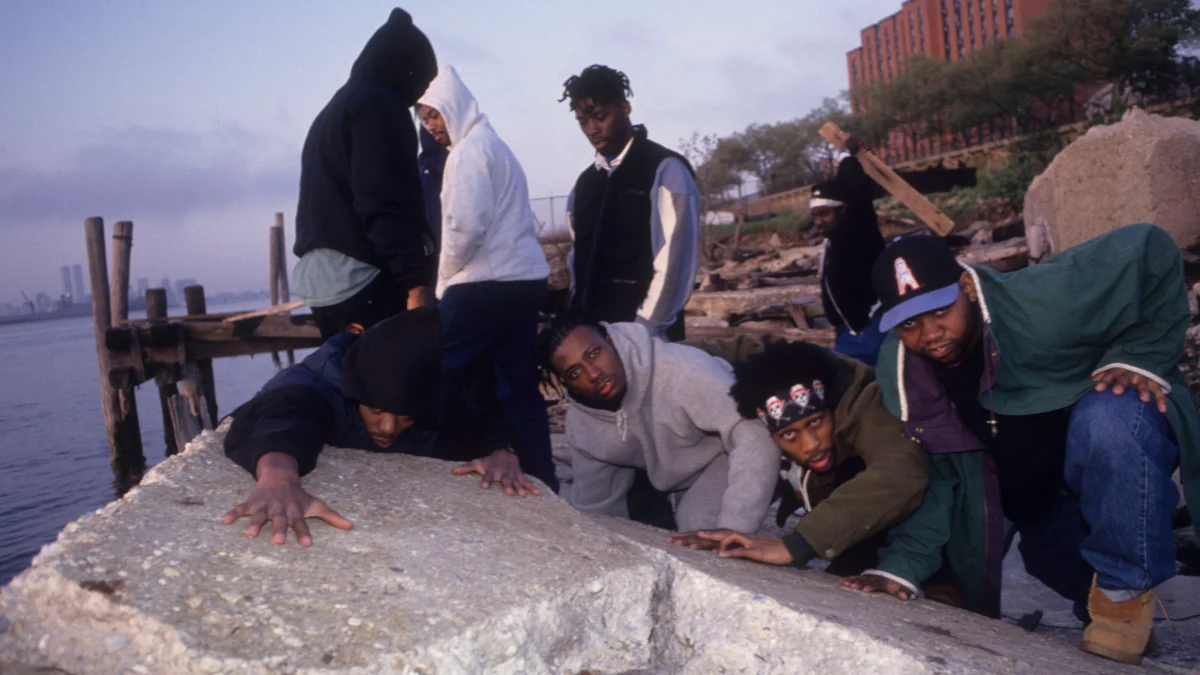
For decades, the cultural resonance of the Wu-Tang Clan has extended far beyond the traditional boundaries of hip-hop, permeating fashion, cinema, philosophy, and modern lexicon. While long-time aficionados are well-versed in the group’s intricate mythology, the uninitiated may overlook the profound cornerstone upon which the entire enterprise was built: traditional Chinese martial arts. This synthesis of Eastern philosophy and gritty New York lyricism was driven primarily by the group’s visionary leader, Robert Diggs, globally recognized as the RZA. By merging the cinematic folklore of 1970s and 1980s kung fu cinema with the spiritual tenets of Chan Buddhism, the RZA engineered a cultural touchstone that forever altered the landscape of American music.
The Genesis of a Movement: From Grindhouse Cinemas to Global Stardom
The nomenclature of the Wu-Tang Clan is directly derived from the 1983 martial arts classic Shaolin vs. Wu-Tang. The film presents a narrative driven by a classic rivalry between two distinct kung fu schools: the Shaolin temple and the Wu-Tang swordsmen. In 1992, a pivotal moment in hip-hop history occurred when the RZA and his cousin Russell Jones—the eccentric and brilliant mind known as Ol’ Dirty Bastard—frequented a gritty New York City grindhouse theater to view the picture.
At the time, the New York independent hip-hop scene was heavily saturated with gritty street narratives, yet few artists possessed the conceptual framework to elevate street life into a grand mythological struggle. For the RZA, the film transcended mere entertainment; it provided a rich metaphorical landscape. He recognized striking parallels between the fierce competition of New York rap battles and the martial arts rivalries depicted on screen. This cinematic encounter served as the foundational spark for the collective, laying the groundwork for an empire that would soon dominate the international music charts.
The Chronology of Convergence: RZA and Shi Yan Ming
The RZA’s dedication to martial arts quickly evolved from a passive appreciation of cinema into an active, disciplined lifestyle. This personal evolution took a transformative turn in 1995 when the producer crossed paths with Shi Yan Ming, a revered Shaolin monk who had established the first USA Shaolin Temple in New York City.
The journey of Shi Yan Ming to the United States constitutes a remarkable chapter in cultural exchange. In 1992, Shi defected from China while visiting San Francisco as part of an official delegation representing the Shaolin Temple at the invitation of the American Kung Fu Association. Seeking personal freedom and an opportunity to spread the teachings of Chan Buddhism and martial arts, he left his delegation and eventually made his way to New York. There, he founded his temple, introducing authentic Shaolin practices to a new audience.
Through a mutual acquaintance, the RZA and Shi Yan Ming were introduced in 1995. The meeting yielded an immediate intellectual and spiritual rapport. Shi, accustomed to teaching traditional students, was profoundly surprised by the American hip-hop producer. Rather than approaching kung fu as a mere physical exercise, the RZA had independently amassed a comprehensive collection of martial arts films and philosophical texts, teaching himself the fundamentals of Chan Buddhism—the religious foundation of Shaolin teachings.
In a 1999 joint interview with Kung Fu Tai Chi Magazine, Shi reflected on his initial impressions of the rap icon, noting his deep reverence for spiritual traditions. According to Shi, the RZA approached the philosophy with an open mind, demonstrating profound respect for diverse belief systems, whether Christian, Buddhist, or Taoist. This ecumenical worldview resonated deeply with Shi, facilitating a swift transition from casual acquaintanceship to a traditional master-student relationship.
Cultivating Discipline: The RZA’s Martial Arts Practice
By the late 1990s, the RZA had fully committed himself to rigorous physical and mental training under Shi Yan Ming. Reflecting on his background prior to meeting the monk, the RZA admitted that his expertise was initially theoretical. He noted that he possessed no formal martial background aside from extensive reading of Eastern philosophies. However, under Shi’s tutelage, that theoretical knowledge was translated into physical discipline.
By 1999, after three years of consistent training at the Shaolin Temple, the RZA earned the respect of his peers and instructor alike. Shi frequently described the hip-hop impresario as a remarkably dedicated, humble, and hardworking student who approached his physical training with the same meticulous precision he applied to crafting beats in the recording studio. This personal discipline directly informed the operational ethos of the Wu-Tang Clan, where individual members honed their lyrical skills with the rigorous dedication of martial arts masters perfecting their forms.
Deconstructing the Masterpiece: Enter the Wu-Tang (36 Chambers)
The synthesis of martial arts lore and hardcore hip-hop culminated definitively on November 9, 1993, with the release of the group’s landmark debut album, Enter the Wu-Tang (36 Chambers). The album’s title and sonic texture represent a masterclass in cross-cultural pastiche, weaving together disparate elements from at least three foundational kung fu films.
The primary influence, Shaolin vs. Wu-Tang, provided not only the conceptual framework for the group’s name but also served as a rich audio landscape. The RZA ingeniously extracted and sampled English-dubbed dialogue from the film, scattering these gritty, atmospheric voice clips throughout the album’s tracks. These audio samples immediately established a cinematic tension, framing the gritty realities of Staten Island—jokingly referred to by the group as "Shaolin"—within an epic martial arts narrative.
Furthermore, the album title pays explicit homage to two other cinematic milestones. The phrase "Enter the" was drawn from the iconic 1973 Bruce Lee film Enter the Dragon, a global phenomenon that introduced mainstream Western audiences to martial arts culture. Meanwhile, "36 Chambers" directly references The 36th Chamber of Shaolin, a legendary 1978 martial arts film starring Gordon Liu, which details the grueling physical and mental trials required to achieve mastery. By superimposing these narratives onto their own artistic debuts, the Wu-Tang Clan framed their entry into the music industry as an arduous quest for self-mastery and enlightenment.
Supporting Data and Cultural Impact
To understand the broader implications of the Wu-Tang Clan’s integration of martial arts, one must examine the demographic and cultural shifts within 1990s American hip-hop. During an era when East Coast hip-hop was dominated by mafioso rap and traditional street narratives, the Wu-Tang Clan introduced an entirely new lexicon. Terms like "Shaolin," "Chambers," and references to mystical sword techniques entered the mainstream vernacular of millions of young listeners.
Data from the Recording Industry Association of America (RIAA) underscores the commercial viability of this unconventional approach. Enter the Wu-Tang (36 Chambers) was certified platinum by the RIAA, selling over three million copies worldwide and laying the economic foundation for a sprawling business enterprise. The group members subsequently negotiated a groundbreaking record contract that allowed each artist to sign solo deals with different labels while remaining part of the collective—a business maneuver modeled after the cooperative yet independent structures observed in martial arts clans.
Official Responses and Industry Analysis
Cultural historians and musicologists have frequently analyzed the intersection of hip-hop and Asian martial arts culture pioneered by the Wu-Tang Clan. Industry analysts note that this cultural exchange was not merely a superficial aesthetic choice, but a genuine act of cross-cultural translation. By framing marginalized urban experiences through the noble, disciplined lens of Shaolin philosophy, the RZA provided a psychological armor for Black youth navigating systemic poverty and institutional neglect.
Sociologists point out that the appropriation of martial arts mythology offered an alternative mythology to Western individualism. Instead of glorifying isolation, the Wu-Tang Clan emphasized collective strength, mutual respect, and spiritual elevation—values directly inherited from the Chan Buddhist traditions studied by the RZA and taught by Shi Yan Ming.
Broader Implications for Modern Entertainment
The enduring legacy of the RZA’s immersion in Shaolin culture continues to reverberate across contemporary media. The blueprint established by the Wu-Tang Clan paved the way for future generations of artists to openly integrate global philosophies and diverse cinematic traditions into popular music.
Moreover, the personal bond forged between the RZA and Shi Yan Ming helped bridge communities that previously existed in cultural silos. The USA Shaolin Temple became a meeting ground for musicians, actors, and seekers interested in the intersection of physical discipline and artistic expression.
Ultimately, the transformation of Robert Diggs into the RZA, and the subsequent birth of the Wu-Tang Clan, stands as a testament to the power of cross-cultural synthesis. By looking to the ancient temples of China and the grindhouse theaters of New York City, the group constructed an everlasting cultural monument—proving that the way of the sword and the rhythm of the boom-bap are inextricably linked in the pursuit of artistic excellence.

