
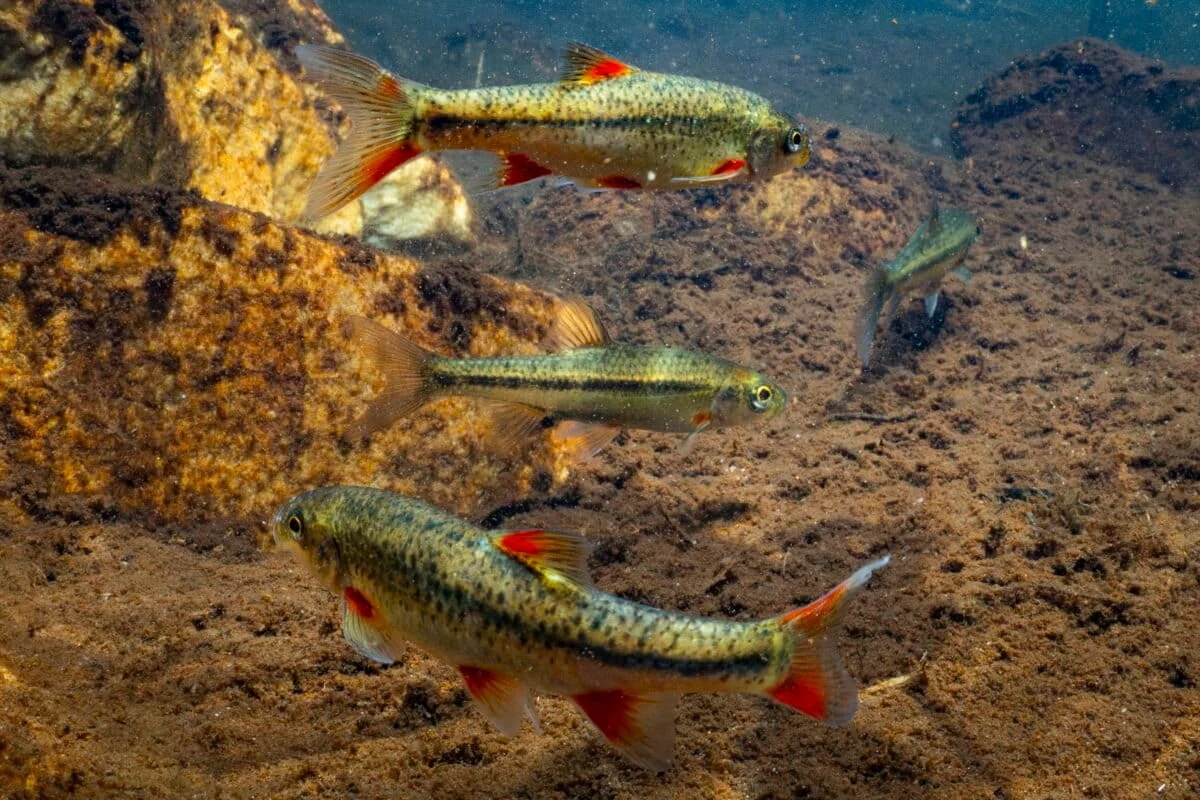
Two hours north of Cape Town, in the rugged landscape of the Western Cape, an ambitious ecological intervention is rewriting the survival narrative for one of South Africa’s rarest freshwater fish. The Breekkrans River Restoration Project, a collaborative effort spearheaded by the Freshwater Research Centre (FRC), Cape Nature, and the Fynbos Fish Trust, has achieved a significant milestone in biodiversity conservation: the total eradication of invasive spotted bass from an eight-kilometer stretch of the Breekkrans River. This success has effectively quintupled the available habitat for the critically endangered doring fiery redfin (Pseudobarbus doring), a species that had been pushed to the brink of extinction by the presence of a non-native apex predator.
The doring fiery redfin, a small but ecologically vital species endemic to the region, serves as a canary in the coal mine for the health of the Western Cape’s river systems. Prior to the project’s intervention, these fish were relegated to a fragile two-kilometer refuge—a narrow corridor of water that the bass had been unable to penetrate due to natural topographical barriers like waterfalls. With the removal of the predatory pressure from the spotted bass, the redfin have begun to reclaim their ancestral range, signaling a rare win in the global fight against the impacts of invasive species on freshwater ecosystems.
The Legacy of Introduction: A Century of Ecological Disruption
The crisis facing the doring fiery redfin is rooted in the colonial-era appetite for recreational angling. In the late 1930s, the introduction of non-native sport fish—specifically bass species from North America—was encouraged across South Africa to bolster the tourism and fishing industries. At the time, the long-term ecological consequences of introducing aggressive, carnivorous fish into isolated, specialized river systems were poorly understood.
Martine Jordaan, a faunal ecologist at Cape Nature, notes that the very traits that make the spotted bass an ideal quarry for anglers—its voracious appetite, agility, and aggressive territorial behavior—are the same traits that render it a devastating invasive force. In the confined, nutrient-poor, and high-energy river systems of the Western Cape, the spotted bass functions as an apex predator with no natural population checks. Because most native South African freshwater fish species are small, rarely exceeding 12 centimeters in length, they are essentially defenseless against the predatory onslaught of the spotted bass.
As the bass population expanded, it followed a predictable pattern: moving upstream until confronted by significant natural barriers. This forced the native species into smaller and smaller headwater refuges, often leading to fragmented populations that were increasingly susceptible to disease, genetic bottlenecks, and environmental fluctuations. By the time the Breekkrans River Restoration Project was conceived, the doring fiery redfin had been reduced to a critical population size of only a few hundred adults, leaving them one natural disaster or localized event away from total extinction.
Chronology of the Restoration Effort
The Breekkrans River Restoration Project began in earnest in 2023, following years of planning, monitoring, and stakeholder consultation. The project was designed as a multi-year, multi-phase operation targeting the Southern Hemisphere’s summer months, when water levels are lower and fish populations are more concentrated, making detection and removal more efficient.
- 2023 (Phase I): The project team initiated the removal of spotted bass from the primary target zones. Using a combination of mechanical removal methods, including electrofishing—which uses a low-voltage electrical current to temporarily stun fish for easy capture—as well as netting and specialized spear-fishing, teams worked to systematically purge the river.
- 2023-2024 (Infrastructure): A critical component of the project involved the installation of a downstream fish barrier. This engineering feat was designed to prevent the re-entry of spotted bass from lower, untreated sections of the river, ensuring that the restored habitat remained protected.
- 2024 (Assessment and Expansion): By early 2024, post-eradication monitoring revealed that not only were the bass absent, but the doring fiery redfin had begun migrating into the newly cleared reaches. Monitoring data confirmed that the species’ range had expanded from 2 kilometers to 10 kilometers.
Scientific Methodology and Technical Execution
The success of the Breekkrans project challenges the prevailing assumption that invasive fish species are impossible to eradicate once they have established a foothold. While chemical eradication (such as the use of rotenone) is often faster, it carries significant risks to non-target species and water quality. The Breekkrans team opted for a mechanical approach, which, while more labor-intensive, is environmentally sensitive and highly selective.
Jeremy Shelton, a freshwater conservation ecologist at the FRC, explains that the mechanical removal process required precision. Electrofishing requires trained technicians to navigate the river, ensuring that the electrical current is applied in a way that minimizes stress to the native fish, which are quickly released back into the water after the invasive species are removed. This approach allows for continuous monitoring of the native population’s health throughout the process.

The data gathered during this period has provided an unprecedented look at how quickly native fish populations can rebound when the primary pressure of predation is removed. According to reports from the FRC, all native species within the study area exhibited signs of recovery, including increased recruitment rates and a broader distribution across the river’s length.
Official Responses and Institutional Collaboration
The partnership between the FRC, Cape Nature, and the Fynbos Fish Trust highlights the importance of institutional synergy in modern conservation. Cape Nature, as the provincial authority, provided the regulatory framework and oversight necessary for the project to proceed on protected land. The FRC provided the scientific expertise to design the barrier systems and monitor the population recovery, while the Fynbos Fish Trust offered crucial logistical and financial support.
Jordaan emphasized that the success of the project is not merely a localized victory but a proof-of-concept for the entire region. “All species experience an increased range, and this was a direct result of removing that predatory impact of the spotted bass,” she noted during a briefing. The institutional response has been overwhelmingly positive, with stakeholders now looking to identify other high-priority river systems in the Western Cape that could benefit from similar intervention strategies.
Broader Implications for Freshwater Conservation
The implications of the Breekkrans restoration extend far beyond the recovery of the doring fiery redfin. South Africa’s freshwater ecosystems are among the most threatened in the world, with many endemic fish species facing dual pressures from invasive species and the impacts of climate change, such as droughts and habitat degradation.
The ability to prove that mechanical eradication is a viable, permanent solution changes the calculus for conservationists. Historically, many invasive fish management projects were abandoned due to the perception that the cost-to-benefit ratio was unsustainable. By demonstrating that an entire eight-kilometer stretch can be cleared and maintained through a combination of physical barriers and targeted removal, the Breekkrans project has provided a blueprint for future river restoration efforts.
Furthermore, this project emphasizes the concept of “refuge management.” By securing the headwaters and primary corridors of a river, conservationists can create resilient zones where native fish can survive the hotter, drier conditions predicted by climate change models. The recovery of the doring fiery redfin is a testament to the resilience of nature when the anthropogenic pressures—such as the introduction of invasive predators—are reversed.
Challenges and Future Outlook
While the results are promising, the project leaders are quick to caution that the battle is ongoing. Invasive species management is rarely a "set it and forget it" task. Constant monitoring of the fish barrier is required to ensure that no bass bypass the structure during high-flow events. Additionally, the project team must remain vigilant against the "re-introduction" of bass by human actors, a common issue in areas where recreational angling is popular.
Moving forward, the FRC and its partners intend to use the Breekkrans data to lobby for larger-scale freshwater conservation initiatives. The project has successfully moved the needle from “emergency response” to “active habitat restoration,” a significant shift in the conservation strategy for the Western Cape.
As the doring fiery redfin population continues to stabilize and expand, it stands as a living reminder of the importance of protecting endemic biodiversity. The project has proven that while the damage done to ecosystems over the last century is profound, it is not necessarily irreversible. Through diligent, science-based intervention, the tide can be turned in favor of the species that have called these rivers home for millennia. The Breekkrans River is no longer just a site of conflict; it is a laboratory for recovery and a beacon of hope for freshwater conservation across Southern Africa.

