
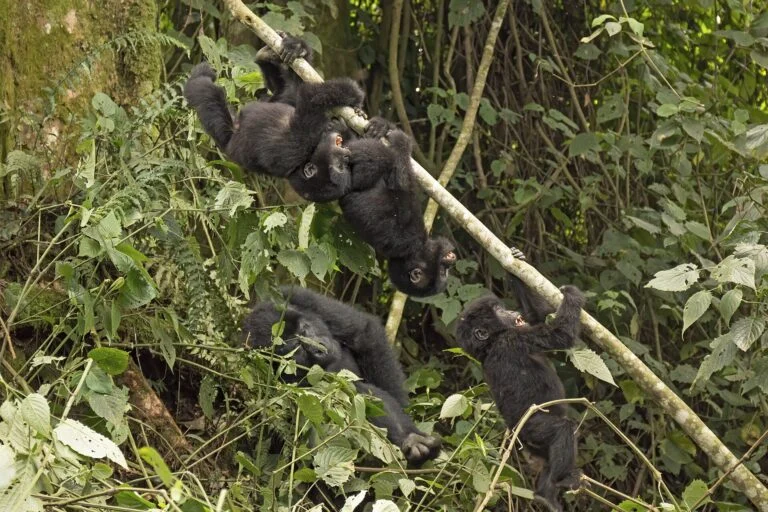
The Netherlands has formally committed 500 million dollars over the next decade to the Tropical Forest Forever Facility (TFFF), a landmark financial instrument designed to provide long-term, sustainable funding for the preservation of the world’s most critical ecosystems. This substantial capital injection represents a major milestone for the facility, which was inaugurated by Brazil during the 30th U.N. Climate Change Conference in November 2025. By leveraging an endowment-based model, the TFFF seeks to fundamentally alter the economic incentives that drive deforestation, aiming to protect between 800 and 900 million hectares of tropical forest—a landmass roughly 200 times the size of the Netherlands.
A New Paradigm for Forest Finance
The TFFF operates as a sovereign wealth fund, a sophisticated financial architecture that moves beyond traditional, often sporadic, international aid. The core objective is to aggregate contributions from governments, private investors, and institutional donors to build an endowment fund with a long-term target of 125 billion dollars. Currently, total commitments stand at approximately 7.8 billion dollars.
The mechanism is designed to generate consistent investment returns, which are then distributed to tropical nations as performance-based payments. These disbursements are conditional; participating countries receive funds only as long as their forest cover remains intact, effectively creating a financial opportunity cost for activities like industrial logging, large-scale mining, and illegal cattle ranching. By providing predictable, long-term revenue, the facility attempts to make "standing forests" more economically viable than the "cleared land" alternatives that have historically fueled biodiversity loss and carbon emissions.
Chronology of the TFFF Development
The emergence of the TFFF follows years of international frustration regarding the lack of permanent financing for nature-based climate solutions. The following timeline outlines the rapid development of this initiative:
- November 2025: Brazil officially launches the Tropical Forest Forever Facility at the 30th U.N. Climate Change Conference, proposing a collaborative model involving the World Bank, Indigenous communities, scientific bodies, and private sector stakeholders.
- September 2026: Reports emerge regarding the urgent push to raise 2.7 billion dollars in bridge funding to ensure the facility meets its initial operational deadlines.
- October 26, 2026: Following a high-stakes presidential election in Brazil, the Netherlands announces its 500-million-dollar pledge, marking the largest single-country commitment to the facility to date.
- Late 2026 and Beyond: The TFFF prepares to scale its satellite-based monitoring protocols, which serve as the "ground truth" for verifying forest protection and triggering fund disbursements.
Contextualizing the Political Landscape
The Dutch investment arrived just one day after a decisive runoff election in Brazil, where incumbent President Luiz Inácio Lula da Silva secured a victory over challenger Flávio Bolsonaro. The election carried immense weight for global climate policy; Lula da Silva has staked his administration’s reputation on the goal of reaching zero deforestation by 2030, a stark contrast to the platform of his opponent, who had signaled an intention to halt the demarcation of Indigenous lands and potentially roll back environmental protections.
The timing of the pledge is widely viewed by political analysts as a vote of confidence in the Brazilian government’s renewed commitment to environmental stewardship. However, the reliance on national political cycles introduces a layer of vulnerability. Critics argue that the success of the TFFF is tethered to the political stability of host nations. If future administrations move to prioritize extraction over conservation, the facility’s governance structures will face an unprecedented stress test.
Economic Skepticism and Expert Analysis
Despite the enthusiasm surrounding the Dutch investment, the TFFF is not without its detractors. Environmental economists have raised substantive concerns regarding the facility’s long-term solvency. Bard Harstad, an economist at Stanford University, has emerged as a vocal critic of the endowment model. In his assessment, the facility rests on the assumption that the fund can generate sufficient returns to simultaneously satisfy private investors—who expect a market-rate yield—and provide enough compensation to tropical nations to discourage deforestation.
"The finance model is inherently optimistic," Harstad noted in correspondence regarding the fund’s structure. His primary concern is that if the investment returns fail to meet projections, the fund may be unable to fulfill its promises to participating nations. "If those funds do not materialize as promised, the disillusionment could cause long-term damage to the credibility of international forest conservation efforts, potentially poisoning the well for future policy initiatives for decades to come."

Harstad further argues that the facility faces a "reversibility risk." Even with financial incentives, a change in government policy in a participating nation could lead to the sudden abandonment of conservation goals, rendering the long-term investment moot. As an alternative, Harstad advocates for the use of sustainability-linked bonds (SLBs). Such instruments, which have been successfully piloted in countries like Uruguay, tie the interest rate of sovereign debt to environmental outcomes. In this model, if a country reduces its deforestation rate, its cost of borrowing decreases, creating a direct, market-driven financial incentive that is integrated into the nation’s broader fiscal policy.
The Role of Transparency and Monitoring
Central to the TFFF’s defense against criticism is its commitment to transparency. The facility relies on a multi-layered monitoring framework that integrates satellite imagery with ground-level scientific data. By digitizing the monitoring process, the TFFF aims to ensure that payments are based on objective, immutable metrics.
This technological approach is intended to build trust with private sector donors, who are often wary of "greenwashing" or the misallocation of funds. By providing a clear, audit-ready record of forest health, the facility hopes to attract further institutional capital from pension funds and ESG (Environmental, Social, and Governance) investment portfolios that require rigorous proof of impact.
Broad Implications for Biodiversity and Climate
The protection of 800 to 900 million hectares of tropical forest is not merely a regional priority; it is a global climate imperative. These forests serve as the planet’s primary terrestrial carbon sinks and are essential for maintaining global weather patterns. The destruction of these ecosystems is a leading driver of both climate change and the current biodiversity crisis, characterized by the rapid extinction of species and the collapse of essential ecosystem services.
Organizations such as the World Wide Fund for Nature (WWF) have hailed the Dutch contribution as a "major breakthrough." Merijn van Leeuwen, director of Nature Conservation with WWF-Netherlands, noted that the infusion of capital is a critical signal to the international community that the protection of tropical forests is a viable, high-priority investment category.
Conclusion: A High-Stakes Financial Experiment
The Tropical Forest Forever Facility represents one of the most ambitious attempts to bridge the gap between global finance and environmental preservation. By treating tropical forests as a global asset class, the TFFF seeks to bypass the limitations of traditional, donation-based conservation. However, the path forward is fraught with systemic risks.
Whether the facility can achieve the $125 billion endowment target, weather the volatility of global financial markets, and survive the shifting tides of national politics remains to be seen. The success of the Dutch investment will likely serve as a litmus test for the entire model. If the TFFF can demonstrate consistent, transparent, and effective results, it may well become the blueprint for future efforts to value the world’s most critical ecosystems. If it falters, it may serve as a cautionary tale about the dangers of applying market-based solutions to complex environmental challenges.
For the time being, the global conservation community remains in a state of watchful optimism. The next decade will be decisive, not only for the integrity of the tropical forests themselves but for the credibility of the financial instruments designed to save them. As the TFFF begins its operations with the support of the Netherlands, the eyes of economists, climate scientists, and policymakers will remain fixed on the data, waiting to see if this financial innovation can truly outpace the pressures of deforestation.

