
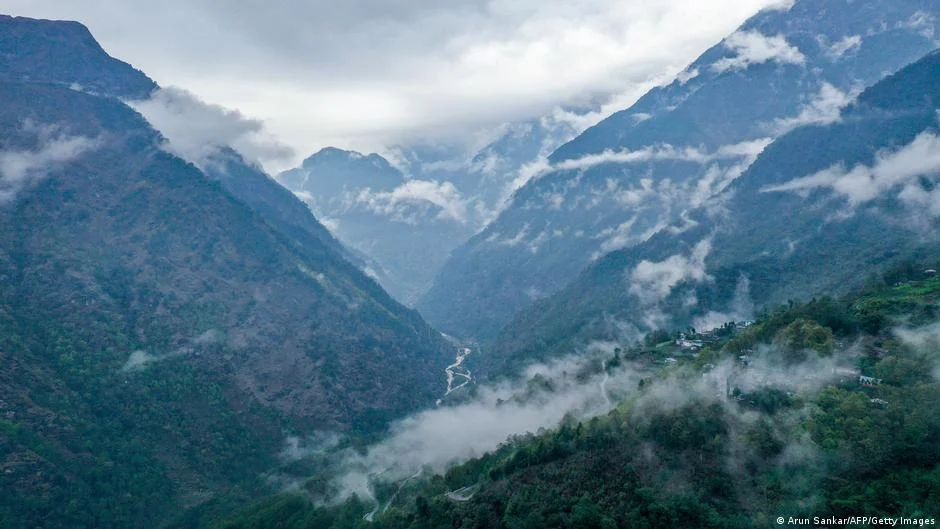
The fragile stability of the 3,488-kilometer Line of Actual Control (LAC) has been called into question once again following revelations by the Indo-Tibetan Border Police (ITBP) regarding a series of persistent face-offs with Chinese forces in the northeastern state of Arunachal Pradesh. Director General Shatrujeet Kapur recently confirmed that the border region has become a flashpoint for renewed friction, noting that encounters between Indian soldiers and the Chinese People’s Liberation Army (PLA) have occurred at multiple, disparate locations along the high-altitude terrain. These developments have reignited domestic concerns in New Delhi regarding the security architecture of the Himalayan frontier and the efficacy of recent diplomatic attempts to de-escalate long-standing territorial disputes.
A Chronology of Disquiet: From Galwan to the Present
The current instability must be viewed through the lens of the 2020 Galwan Valley crisis, a watershed moment in Sino-Indian relations. In June 2020, the strategic landscape of the border underwent a tectonic shift when a violent clash in eastern Ladakh resulted in the deaths of 20 Indian soldiers and four Chinese personnel. That incident, which marked the first time in decades that the border had seen lethal combat, effectively ended a period of relative, albeit uneasy, calm.
Since the 2020 tragedy, the two nations have engaged in more than 25 rounds of talks between their Special Representatives to negotiate a path toward disengagement and de-escalation. However, as evidenced by the recent reports from Arunachal Pradesh, the transition from military standoff to lasting peace remains elusive. The current situation, described by officials as a series of "face-offs," underscores the volatility inherent in a border that is neither clearly demarcated on the ground nor mutually agreed upon by the two nuclear-armed neighbors.
The Geography of Discontent
The core of the issue lies in the lack of a mutually recognized boundary. India adheres to the McMahon Line, a 1914 colonial-era demarcation established by the British Empire, which defines the border between Arunachal Pradesh and Tibet. Beijing, however, does not recognize the validity of the McMahon Line, frequently referring to the Indian state of Arunachal Pradesh as "South Tibet."
This fundamental disagreement creates a "deep zone of overlapping claims," according to regional security experts. Because both sides conduct routine patrols based on their own respective perceptions of the LAC, it is mathematically and geographically inevitable that patrols will cross paths in disputed sectors. As former Indian ambassador to China, Gautam Bambawale, noted, the absence of a defined line means that friction is a structural feature of the border, rather than an aberration.
Strategic Infrastructure and Modernization
The complexity of the current standoff is exacerbated by a massive surge in infrastructure development. Analysts at Jawaharlal Nehru University have pointed to the eastern sector—specifically the area bordering Arunachal Pradesh—as a focal point for Beijing’s long-term strategy. The construction of a 60,000-megawatt hydropower project in the Medog region of Tibet has necessitated a significant influx of Chinese engineers, military personnel, and heavy machinery.
This mobilization has transformed the operational environment. China’s Border Defense Regiments (BDR) have invested heavily in high-altitude logistics, advanced surveillance, and rapid-deployment infrastructure. Director General Kapur’s assessment suggests that India faces a significant challenge in matching this pace of modernization. The technological and logistical gap, if left unaddressed, could force India into a reactive posture, where its ability to monitor or deter Chinese incursions is constrained by the speed of Beijing’s regional development.
Official Responses and the Political Fallout
The reaction within the Indian political establishment has been markedly bifurcated. Arunachal Pradesh Chief Minister Pema Khandu has sought to downplay the severity of the reports, characterizing the encounters as routine incidents inherent to an undemarcated border. His comments, intended to reassure the public and maintain regional stability, have nonetheless drawn sharp criticism from the opposition.
The Indian National Congress, led by party figures like Jairam Ramesh, has accused the ruling Bharatiya Janata Party (BJP) of engaging in "deafening silence" and failing to hold Beijing accountable for its actions. The opposition argues that by framing these transgressions as mere "patrolling pattern changes," the government is failing to assert India’s sovereignty.
At the federal level, the Ministry of External Affairs has adopted a cautious tone. Spokesperson Randhir Jaiswal attributed the latest tension to Chinese forces diverging from established patrolling patterns, a phrasing that acknowledges the shift without escalating the rhetoric to the level of an international crisis. Conversely, Chinese Foreign Ministry spokesperson Guo Jiakun has remained steadfast in the official Beijing position, stating that Chinese forces are conducting "normal patrols" in accordance with bilateral agreements and rejecting any accusations of wrongdoing.
Implications for the Diplomatic Thaw
The timing of these face-offs is particularly sensitive given the efforts made by Prime Minister Narendra Modi and President Xi Jinping to stabilize the bilateral relationship. Following their interactions at the BRICS summits in Kazan and New Delhi, as well as the SCO summit in Tianjin, both nations had appeared to be moving toward a managed coexistence. This included the gradual restoration of direct flight paths and the easing of economic restrictions that had been in place since 2020.
However, the "fragile thaw" is now threatened by the persistent reality on the ground. Experts like Alka Acharya argue that without a definitive shift toward disengagement and mutual restraint, these tactical face-offs will continue to act as a ceiling on the progress of diplomatic relations. Even if the current incidents do not escalate into full-scale conflict, they perpetuate a cycle of distrust that prevents the two nations from addressing larger economic and geopolitical challenges.
Analytical Outlook: Is the Status Quo Changing?
The primary question for security analysts is whether these latest incidents represent a qualitative shift in Chinese strategy. Ashok Kantha, a former Indian ambassador, notes that while patrols in the eastern sector have been a reality for years, the depth of these incursions is the metric that matters most. If Chinese forces are establishing permanent footprints in areas previously considered Indian-controlled, it would constitute a direct violation of the 1993, 1996, 2005, 2012, and 2013 border management agreements.
These treaties explicitly forbid either side from altering the status quo through unilateral action. If those agreements are being bypassed, the diplomatic framework that has governed the border for three decades is effectively in a state of collapse.
Conclusion
As the situation in Arunachal Pradesh continues to evolve, the burden of proof rests on the transparency of both nations. For India, the challenge lies in balancing its military readiness with its desire for a stable regional environment. For China, the challenge remains whether its infrastructure and territorial claims can be pursued without triggering a permanent strategic rivalry with its southern neighbor.
As of now, the lack of official, granular data regarding the specific nature of these "face-offs" leaves the public and international observers in a state of uncertainty. What is clear, however, is that the Himalayan frontier remains one of the most volatile borders in the world, where the promise of a diplomatic reset is constantly tested by the cold reality of shifting troop patterns in the clouds of the high Himalayas. Until a definitive, negotiated boundary is established, these incidents are likely to remain a recurring feature of the regional landscape, serving as a reminder that the path to peace between India and China is paved with unresolved history and a fragile, contested geography.

