
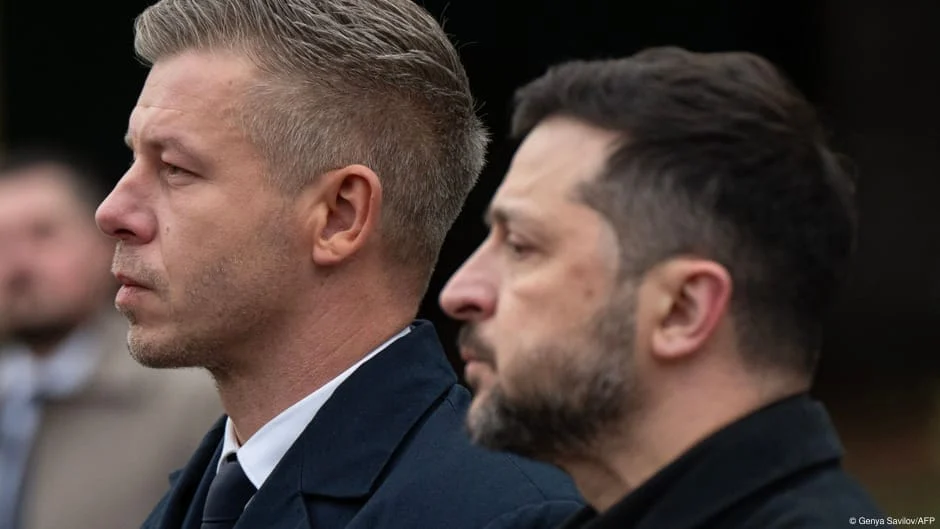
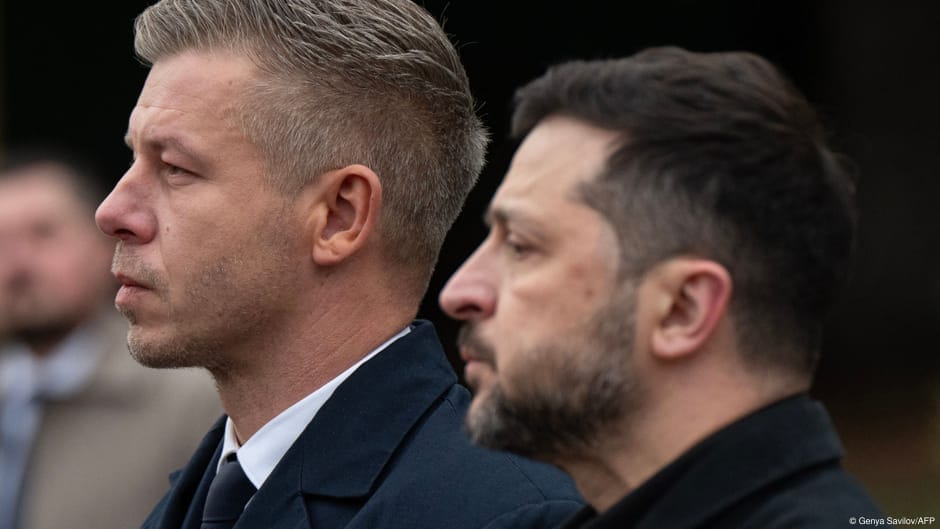
The location and the gesture were carefully chosen: Hungarian Prime Minister Peter Magyar and Ukrainian President Volodymyr Zelenskyy stood side by side, laid flowers, and bowed their heads at a somber military cemetery in the center of Uzhhorod. This site, holding the remains of soldiers who perished in the ongoing Russian war of aggression, served as the starting point for a visit intended to signal a profound departure from the hostile rhetoric that defined Budapest-Kyiv relations for years. By choosing to begin his first official visit to Ukraine at a memorial rather than a government building, Prime Minister Magyar sought to underscore a newfound commitment to solidarity that his predecessor, Viktor Orban, had systematically dismantled.
Uzhhorod, historically known as Ungvar, serves as the capital of the Transcarpathia region. This territory is a vital focal point for bilateral relations, home to approximately 80,000 ethnic Hungarians. The presence of these citizens, thousands of whom are currently serving on the front lines of the war against Russian forces, creates a human link that makes the conflict feel geographically and emotionally proximate for Hungary in a way that differs from other EU member states.
A Chronology of Diplomatic Transformation
The meeting in Uzhhorod represents the culmination of a months-long effort to thaw relations. To understand the gravity of this "historic day," one must look at the recent trajectory of the Hungary-Ukraine relationship:
- 2022–2025: The Orban Era: Under the administration of Viktor Orban, relations between Hungary and Ukraine reached a nadir. The Hungarian government frequently blocked EU financial aid packages for Kyiv, vetoed high-level diplomatic meetings, and engaged in a consistent smear campaign that characterized the Ukrainian state as a "mafia state" and a "lawless country."
- Early 2026: Peter Magyar rises to prominence on a platform of domestic reform and a pivot in foreign policy, explicitly promising to reset ties with neighboring Ukraine.
- May 2026: Magyar officially takes office as Prime Minister, signaling a shift in tone toward European institutions and Kyiv.
- June 2026: Hungary presents a 10-point plan regarding the protection of ethnic minority rights in Ukraine, which becomes a focal point for future negotiations.
- September 2026: A diplomatic friction point occurs in the Hungarian parliament regarding the "Carpathian Eight" initiative, though it is later characterized by Magyar as a misunderstanding.
- November 2026: The meeting in Uzhhorod occurs, serving as a symbolic and practical reset, with both leaders publicly emphasizing a desire for cooperation over confrontation.
The Economic and Strategic Rationale for Cooperation
While the symbolic gestures at the cemetery set the tone, the substantive portions of the visit focused on economic and infrastructure integration. The discussions were pragmatic, addressing the immediate needs of both nations.
Central to the talks was the subject of energy security. Hungary has expressed interest in providing diesel supplies to Ukraine, a critical requirement for the latter’s defense and civilian infrastructure during the winter months. Conversely, the discussions explored the potential for greater usage of Ukraine’s vast natural gas storage facilities by Hungarian firms. This symbiotic relationship, if fully realized, would integrate the energy grids of the two nations more deeply, creating mutual dependencies that are often the hallmark of stable diplomatic partnerships.
Furthermore, the leaders discussed infrastructure projects that had previously been stalled. The opening of new border crossings and the establishment of a direct rail link between Budapest and Kyiv were identified as priorities. Such projects are not merely logistical; they are essential for the economic recovery of the region and for facilitating the integration of the Ukrainian economy into the broader European single market.
Domestic Challenges and Public Sentiment
Despite the high-level rapprochement, the political landscape remains complex. Prime Minister Magyar operates in a country that is deeply polarized regarding the war in Ukraine. According to a November 2026 poll by the international think tank Globsec, approximately 33% of Hungarians now support the provision of military aid to Ukraine. While this figure represents a significant increase compared to the sentiments measured during the Orban years, it confirms that a substantial portion of the Hungarian electorate remains skeptical or wary of deep involvement in the conflict.

Magyar’s rhetoric reflects this delicate balancing act. While he has moved away from the pro-Russian stance of his predecessor, he maintains that Hungary will not engage in direct arms deliveries or allow the transit of weaponry across its territory. This nuanced position allows him to project a stance of "defensive sovereignty" while simultaneously pursuing normalization with Kyiv. Political analysts note that his visit to Transcarpathia was as much a message to his own constituents as it was to the Ukrainian government, framing the trip as a defense of Hungarian interests and the rights of the Hungarian minority.
Addressing the Minority Rights Question
A primary source of tension in the past was the status of ethnic Hungarians in Ukraine. The Hungarian government had long accused Kyiv of infringing upon the linguistic and educational rights of this minority group. However, Ukraine has taken significant steps to address these concerns, largely to facilitate its own aspirations for European Union integration.
In October 2026, the Ukrainian parliament passed a comprehensive law on minority language rights that meets and, in some areas, exceeds European standards. This legislative move was a direct response to the 10-point plan provided by Budapest earlier in the year. By addressing these domestic grievances, Kyiv effectively neutralized one of the primary justifications Hungary had previously used to block EU accession talks. As a result, Hungary has removed its veto on opening key negotiating clusters for Ukraine’s path to the EU, marking a significant victory for European unity.
Implications for the European Union
The reset between Budapest and Kyiv has implications that extend far beyond the two borders. For the European Union, the obstructionist policies of the previous Hungarian government had become a source of profound frustration. The reversal of this policy is expected to streamline decision-making in Brussels regarding Ukraine’s accession and the broader support package for the nation’s war effort.

Daniel Hegedus, a political scientist at the Institute for European Politics in Berlin, noted that while the Uzhhorod meeting was a "symbolic milestone," the real challenge lies in the sustainability of these relations. "It will be important to see how the two political leaders capitalize on the symbolic political capital generated by this meeting," Hegedus observed. The meeting has proven that, given sufficient political will, a deeply entrenched diplomatic stalemate can be transformed into a functional, if not yet perfectly aligned, set of bilateral relations.
Looking Toward the Future
No observers are suggesting that this meeting marks the immediate end of all disputes. Differences remain, particularly regarding the nuances of the conflict and the long-term vision for the region’s security architecture. However, the absence of overt discord during the press conference and the shared commitment to "constructive relations" represent a clear shift from the past.
The willingness of both President Zelenskyy and Prime Minister Magyar to engage in direct, face-to-face dialogue has already begun to lower the temperature of the discourse. By moving away from propaganda and toward concrete, albeit difficult, negotiations, the two countries have signaled a return to conventional diplomacy. As the region continues to grapple with the instability caused by the war, this bilateral reset provides a necessary foundation for the broader integration of Ukraine into the European fold and the stabilization of Central Europe.
The path forward will undoubtedly be tested by domestic political pressures in both countries and the evolving nature of the war. However, by establishing a framework for dialogue in the heart of the region they both claim to care for, Magyar and Zelenskyy have taken a significant step in reorienting their nations toward a future of cooperation rather than perpetual, destructive friction. The success of this initiative will be measured not by the rhetoric of a single afternoon, but by the tangible outcomes of the economic agreements, infrastructure projects, and minority rights protections that were discussed in Uzhhorod.

