
In a significant escalation of the ongoing battle over the future of the Line 5 oil pipeline, Michigan Governor Gretchen Whitmer announced on Tuesday a formal pause on all pending and previously issued state permits related to the construction of a replacement tunnel beneath the Straits of Mackinac. This directive, aimed at the Michigan Department of Environment, Great Lakes and Energy (EGLE), marks a pivotal moment in a decade-long struggle to balance energy infrastructure needs against the profound ecological risks posed to the Great Lakes.
The decision arrives as the administration grapples with the fallout of a recent Michigan Supreme Court ruling, which invalidated a separate permit for the project on the grounds that state regulators had failed to adequately assess the cumulative environmental impact of the pipeline’s operation. The Governor’s office has signaled that EGLE must now conduct a more rigorous, comprehensive review of the project’s potential threats before any further regulatory action can proceed.
A Chronology of Controversy
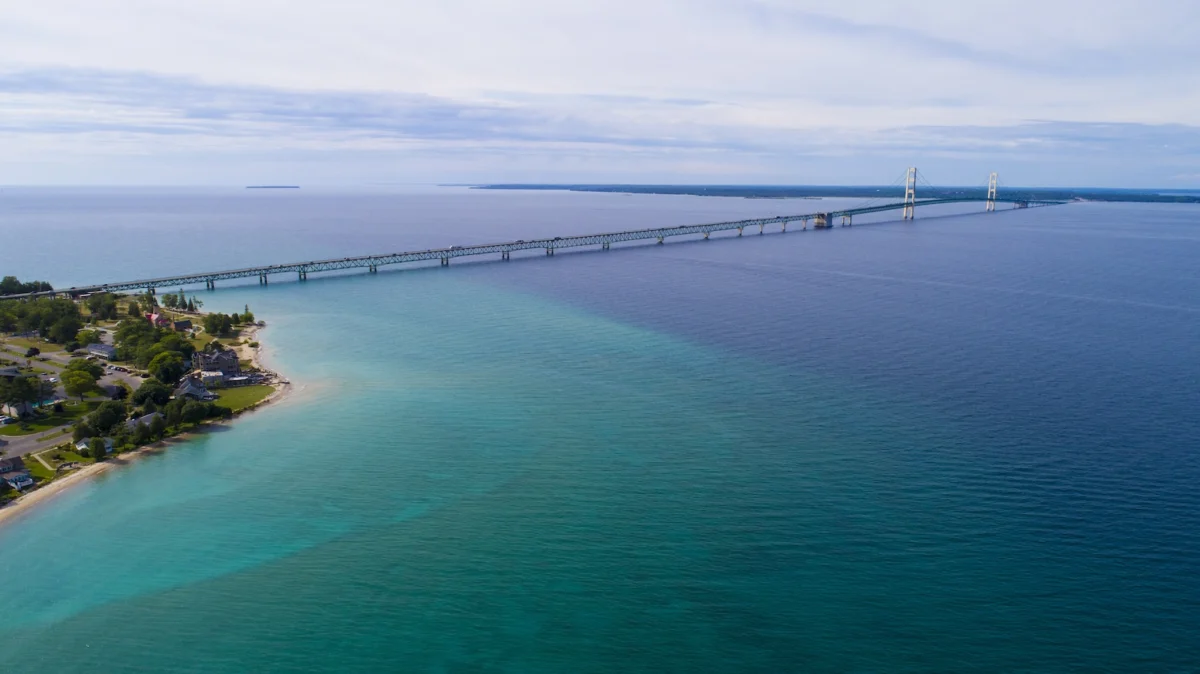
The Enbridge-owned Line 5 pipeline, a critical artery for energy transport since its commissioning in 1954, carries approximately 23 million gallons of oil and natural gas liquids daily across 645 miles from Superior, Wisconsin, to Sarnia, Ontario. The specific segment currently under scrutiny is a four-mile stretch that traverses the Straits of Mackinac, the narrow, high-velocity waterway connecting Lake Michigan and Lake Huron.
The timeline of this dispute underscores the entrenched nature of the conflict:
- 1953–1954: Line 5 is constructed and begins operation, crossing the Straits of Mackinac.
- 2010: A massive Enbridge oil spill on the Kalamazoo River highlights the vulnerability of the Great Lakes basin to pipeline failures, sparking renewed public concern over the integrity of aging infrastructure.
- 2018: Under then-Governor Rick Snyder, the state reaches an agreement with Enbridge to replace the dual underwater pipelines with a single pipe housed in a concrete tunnel beneath the lakebed.
- 2020: Governor Whitmer and the Michigan Department of Natural Resources move to revoke the 1953 easement for the pipeline, citing public trust violations and safety risks, sparking a series of high-stakes federal and state lawsuits.
- 2021: EGLE issues initial permits for the tunnel construction.
- 2024: The Michigan Supreme Court strikes down a lower-level permit, ruling that the environmental impact review was insufficient.
- November 2024: Governor Whitmer mandates a pause on all outstanding permit actions, citing the need for a "comprehensive" look at environmental risks.
Ecological and Cultural Stakes
The Straits of Mackinac are more than just a logistical bottleneck; they are a vital hub of biodiversity and cultural significance. Environmental scientists have long warned that a rupture in the Straits—which are prone to some of the most complex currents in the Great Lakes—could result in an "irreparable" disaster. Current modeling suggests that, depending on seasonal flow conditions, an oil spill in the Straits could spread rapidly, fouling hundreds of miles of shoreline and destroying sensitive wetlands that provide critical habitat for migratory birds and native fish species.
Beyond the biological concerns, the pipeline represents a direct affront to the Anishinaabe peoples, whose ancestral ties to the Straits are foundational to their creation stories. The area serves as a significant burial ground and remains a sacred landscape. Tribal leaders have consistently argued that the continued operation of the pipeline violates treaty rights and ignores the long-term stewardship responsibilities they hold toward the Great Lakes.
Economic and Energy Security Perspectives
Enbridge Energy, for its part, maintains that the pipeline is essential for regional energy stability. The company argues that the tunnel project is the safest way to mitigate risk, as it would effectively place the pipeline in a contained, hardened structure far below the lake floor, eliminating the risk of anchor strikes or corrosion from turbulent water currents.
"Line 5 delivers the energy people depend on every day," said Enbridge spokesperson Ryan Duffy in a recent statement. "At Enbridge, we remain committed to that purpose and equally committed to safeguarding the Great Lakes."
However, critics point out that the company’s safety claims have been undermined by recent events. In Wisconsin, a recent spill involving a portion of the Line 5 network resulted in the release of approximately 1.3 million gallons of gas, forcing a temporary shutdown and reigniting fears about the company’s operational standards.
Implications of the Permit Pause
The decision to freeze the permits is seen as a major victory for environmental advocates, such as the Groundwork Center for Resilient Communities. Ashley Rudzinski, the organization’s climate and environment program director, noted that the administration is finally aligning its regulatory actions with its public rhetoric regarding the protection of the Great Lakes.
Yet, the legal landscape remains muddled. While the state has placed a hold on its internal permitting process, the project has already secured some federal approvals from the U.S. Army Corps of Engineers. This creates a regulatory tug-of-war that may ultimately require intervention from federal courts to resolve.
Furthermore, as Governor Whitmer approaches the end of her second and final term, the political implications are significant. The transition to the administration of Governor-elect Jocelyn Benson will be closely watched by both industry lobbyists and tribal advocates. Whether the momentum of this pause continues or faces new hurdles depends on how the state frames its legal requirements in the coming months.
Future Outlook and Legal Analysis
From a policy standpoint, the pause forces a "reset" on how Michigan approaches infrastructure permits. By requiring a more robust environmental review, the administration is effectively raising the bar for any fossil fuel project seeking state approval. This strategy serves two purposes: it provides a buffer against further litigation by ensuring that administrative records are more legally defensible, and it signals a shift toward a more precautionary approach to industrial projects in sensitive watersheds.
However, the legal path forward is fraught with complexity. Enbridge is likely to argue that the pause constitutes an arbitrary and capricious delay, potentially setting the stage for new litigation. Meanwhile, the coalition of tribes and environmental groups represented by organizations like Earthjustice is expected to continue its push for a total decommissioning of the pipeline, arguing that no amount of engineering can fully mitigate the risk of transporting crude oil through the heart of the Great Lakes.
As the state moves to implement this pause, the broader debate continues to rage: Is it possible to maintain the energy status quo while honoring the environmental and cultural imperatives of the 21st century? For the people of Michigan, and the millions who rely on the Great Lakes for drinking water and economic vitality, the answer to that question will likely define the region’s environmental policy for the next generation.
With the administration doubling down on its demand for a more holistic review, the focus now shifts to EGLE’s ability to conduct an assessment that satisfies the stringent requirements laid out by the Michigan Supreme Court. For now, the tunnel project remains in a state of suspended animation—a reflection of the deep-seated tension between the infrastructure of the past and the ecological demands of the future.

