

The upcoming episode of CBS News Sunday Morning, hosted by Jane Pauley, brings a diverse lineup of segments that delve into the intersections of geopolitics, medical innovation, cultural history, and international espionage. As the program continues its long-standing tradition of in-depth investigative reporting and human-interest storytelling, the November 29, 2026, broadcast will highlight the complexities of executive authority, the evolution of neurodegenerative research, and the persistence of traditional artistry.
The Geopolitical Implications of Geographic Renaming
A primary focus of this week’s coverage centers on the Trump administration’s recent executive action concerning Lake Ontario. In a move that has sparked significant debate regarding the limits of executive power, President Trump has formally declared that the 7,300-square-mile body of water, currently shared by the United States and Canada, shall henceforth be referred to as "Lake America."
This development is situated within the broader context of a deepening trade war between the two North American neighbors. Historically, the naming of major geographic features has been a collaborative process governed by international boards such as the United States Board on Geographic Names (BGN) and the Permanent Committee on Geographical Names (PCGN). By bypassing these established channels, the administration’s directive raises questions about the unilateral authority of the executive branch to alter established global nomenclature. Critics have characterized the move as legally tenuous and performative, while supporters view it as a bold assertion of national identity. National correspondent Robert Costa will explore the cartographic and diplomatic fallout of this decision, examining the historical precedence—or lack thereof—for such a declaration.
Medical Breakthroughs: From Autopsy to Living Diagnosis
In a segment produced for the health desk, "48 Hours" correspondent Erin Moriarty examines the transformative progress in the diagnosis of Chronic Traumatic Encephalopathy (CTE). The report centers on the life and legacy of Jim Musuraca, a former University of Notre Dame football standout and New York City attorney who struggled with cognitive decline in his later years.

For decades, CTE—a progressive, degenerative brain disease found in athletes and others with a history of repetitive brain trauma—could only be diagnosed post-mortem. The case of Musuraca, whose own autopsy findings provided critical data points, represents a turning point in sports medicine. Researchers are now utilizing the longitudinal data from studies involving Musuraca and other former athletes to develop a non-invasive, blood-based diagnostic test. This breakthrough has profound implications for the sports industry, insurance liability, and the long-term health management of current and retired professional athletes.
Artistic Mastery and Cultural Heritage
The intersection of art history and contemporary expression will be explored through two distinct profiles. Correspondent Alina Cho provides a comprehensive look at the Whitney Museum of American Art’s latest exhibition, "Roy Lichtenstein: Like New." The exhibition highlights the enduring impact of Lichtenstein’s pop art, specifically his iconic 1963 offset lithograph, "Crying Girl." The segment explores how Lichtenstein’s work challenged the boundary between commercial art and high-culture aesthetics, a legacy that continues to influence modern visual media.
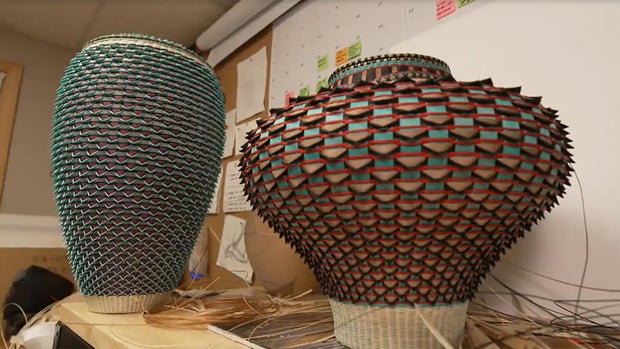
Complementing this look at fine art, correspondent Martha Teichner highlights the work of Jeremy Frey, a master basket weaver from the Passamaquoddy tribe in Maine. Frey, a recipient of the MacArthur "genius grant," represents a living link to indigenous craft traditions. His process, which involves the meticulous preparation of black ash wood, is framed by the artisan as a meditative and life-saving endeavor. The segment serves as an examination of the value of "compulsive art" and the necessity of preserving indigenous techniques in an era of rapid technological mass production.
Cinematic Portraits and Biographical Storytelling
The film industry segment features a dual focus on historical resilience and modern psychological drama. Correspondent Jim Axelrod interviews actor David Corenswet and director Jonathan Levine regarding their new biopic, "Mr. Irrelevant." The film recounts the true story of John Tuggle, a running back who, in 1983, was the final player selected in the NFL Draft. Tuggle’s narrative, which follows his battle with cancer while attempting to establish himself in professional football, serves as a study in perseverance.
In the "Sunday Profile," correspondent Tracy Smith sits down with Pedro Pascal to discuss his role in the upcoming feature "Behemoth!" Directed by Tony Gilroy, the film depicts a world-class cellist confronting the shadows of his past. The interview explores Pascal’s career trajectory, moving from his early days as a struggling actor to his current status as a household name through performances in major franchises such as "The Mandalorian" and "The Last of Us."

Global Security: Espionage and the Honey Trap
The broadcast will also address a high-stakes geopolitical narrative concerning Jensen Huang, the CEO of Nvidia. Reports indicate that Huang has allegedly been the target of a "honey trap"—a classic espionage tactic involving the use of romantic or sexual enticement to gain access to sensitive information or influence decision-making.
Given Nvidia’s pivotal role in the global supply chain for advanced computer chips—a sector valued at $3 trillion—the allegations touch upon significant national security concerns, particularly regarding trade tensions with China. Correspondent Holly Williams reports on the historical prevalence of seduction as an intelligence-gathering tool, providing context on how these operations function in the modern digital age where corporate leaders have become prime targets for state-sponsored influence campaigns.
The Almanac and Ongoing Features
As is standard for the Sunday Morning format, the broadcast will include an "Almanac" segment reflecting on historical events occurring on November 29, as well as an "In Memoriam" passage honoring figures who have passed away during the week. The "Sunday Profile" and "Arts" segments remain staples of the program’s commitment to profiling both cultural icons and those working in traditional crafts.
For viewers interested in the culinary arts, the "Sunday Morning" 2026 Food Issue Recipe Index remains available online, offering a repository of recipes curated by top chefs and food writers. This digital archive complements the broadcast’s commitment to providing utility-driven content alongside its investigative reporting.
Analysis of Current Programming Strategy
The structure of the November 29, 2026, episode reflects a strategic effort to balance high-level political reporting with human-centric narratives. By placing the "Lake America" controversy alongside medical and technological developments, the show maintains its role as a mirror of contemporary American life.
The inclusion of segments like the CTE diagnostic research highlights the program’s dedication to science journalism, while the profiles on Jeremy Frey and Pedro Pascal illustrate a continued focus on the human condition. The report on the Nvidia security breach serves as a stark reminder of the global nature of modern industry, emphasizing that the risks faced by national security entities are increasingly shared by the private sector.
Production and Accessibility
"CBS News Sunday Morning" continues to be produced under the direction of executive producer Rand Morrison. The program is broadcast every Sunday at 9:00 a.m. ET, with a streaming availability on the CBS News app starting at 11:00 a.m. ET. Full episodes and on-demand segments are accessible via Paramount+ and various digital platforms, including Roku, Apple TV, and Amazon FireTV.
The show maintains an active presence across multiple social media platforms, including Twitter/X, Instagram, TikTok, and Bluesky, allowing for community engagement. Viewers are encouraged to submit their own "sun art"—the program’s iconic visual trademark—to the dedicated email address, [email protected], continuing a tradition that has become synonymous with the broadcast’s identity over its multi-decade history. As the news cycle continues to accelerate, "Sunday Morning" remains committed to its pace of thoughtful, paced reflection, offering a sanctuary of long-form journalism for its weekly audience.

