
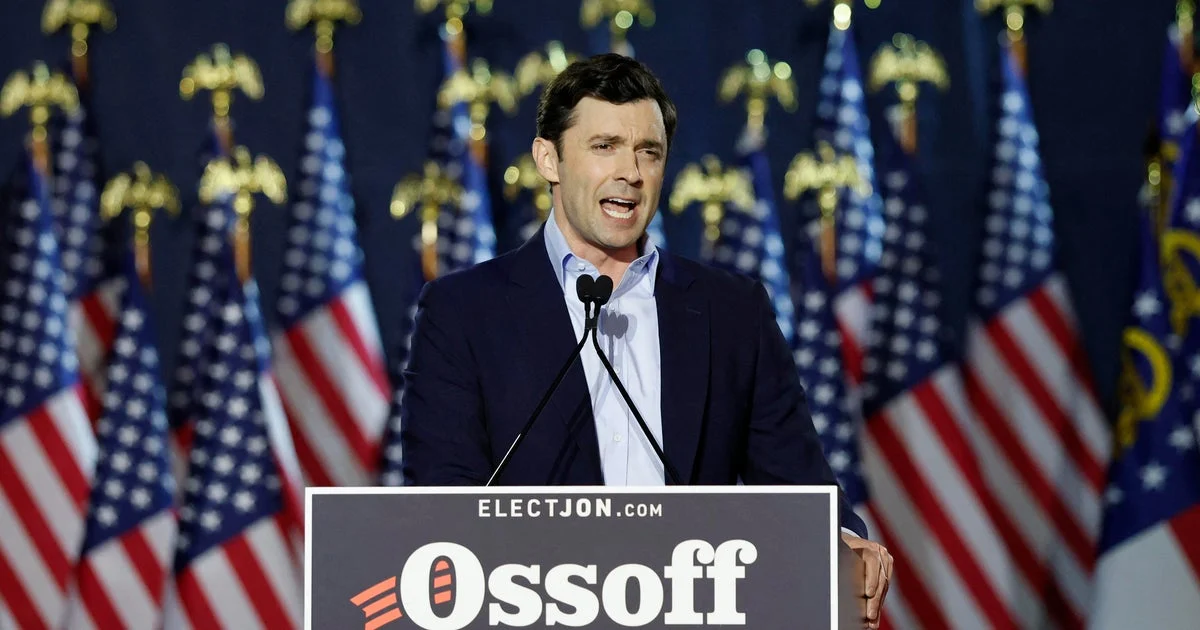
The landslide reelection of Democratic Senator Jon Ossoff in Georgia has fundamentally altered the political calculus for the 2028 presidential cycle, positioning the 39-year-old lawmaker as a focal point of national interest. Following a commanding 18-point victory over Republican challenger Mike Collins—a margin that starkly contrasts with the narrow two-point gap observed in the 2024 presidential contest—Ossoff has emerged as a rare Democratic success story in a fiercely competitive battleground state. While the Senator has publicly dismissed the notion of a White House bid, his ability to assemble a diverse, cross-demographic coalition has provided political strategists with a potential blueprint for future Democratic national campaigns.
A Shifting Political Landscape in the South
The 2026 midterm election results in Georgia represent a significant correction in the state’s political trajectory. Two years prior, President Donald Trump carried the state by approximately two percentage points, underscoring the GOP’s hold on the region. Ossoff’s performance in the recent cycle, however, suggests that the "Trump coalition" is not immutable. By securing 93% of the Black vote and making unprecedented gains among non-college-educated White voters and White evangelicals, Ossoff demonstrated that a moderate, message-driven campaign could effectively bridge the gap between traditional Democratic strongholds and alienated swing voters.
The data reveals that Ossoff managed to improve his standing across almost every key demographic. While Kamala Harris trailed in key metrics during the 2024 cycle, Ossoff captured 40% of the White vote, a 12-point increase over Harris’ performance. Perhaps more crucially, his success with Latino voters—a demographic that has historically been fluid in Georgia—suggests a pivot in the efficacy of Democratic outreach. In precincts with high concentrations of Hispanic residents, the shift was dramatic; districts that favored Trump by double digits in 2024 swung heavily toward the Democratic ticket in 2026.
Chronology of a Rising Political Brand
Jon Ossoff’s ascent is not a sudden phenomenon but the result of a deliberate, multi-year strategy focused on constituent accessibility and legislative pragmatism.
- 2020-2021: Ossoff wins his initial Senate seat in a high-stakes runoff, signaling the changing demographics of Georgia.
- 2024: The presidential election sees a tightening of the state, with Donald Trump securing a narrow victory, leaving Democrats searching for a new path forward in the South.
- 2026 (August): The campaign intensifies, with Ossoff focusing on economic affordability and immigration oversight, effectively insulating himself from some of the broader party critiques.
- 2026 (October): During a high-profile debate, Ossoff is pressed on his 2028 ambitions, responding with a flat dismissal of a presidential run.
- 2026 (November): Election Day results confirm a decisive 18-point victory, sparking immediate speculation from polling firms and political analysts.
The Moderation Dilemma in the Primary Process
Despite the enthusiasm surrounding his general election performance, Ossoff faces a unique challenge common to Southern Democrats: the ideological gap between winning a battleground state and capturing a party primary. Political science professor Charles Bullock of the University of Georgia notes that while Ossoff’s moderate stance is the engine of his success in Georgia, it could prove to be a "tougher sell" in a national Democratic primary.
"He comes across, and tries to present himself, as a moderate," Bullock explains. "The issues he stresses are things which are within the broad mainstream of ‘These would be good things.’ But the question remains: How would he play elsewhere?"
National primary voters often prioritize ideological purity, whereas Georgia general election voters prioritize stability and economic pragmatism. Ossoff’s record reflects this tension. His support for the Laken Riley Act and his hesitation to fully embrace "Medicare for All" have drawn criticism from the party’s progressive wing. Conversely, his critical stance on certain military conduct in Gaza and his efforts to restrict specific weapons sales have caused friction with some traditional pro-Israel donors and voters. This balancing act will likely be the primary line of inquiry for any national campaign, should he choose to pursue one.
Data-Driven Insights: The Coalition Blueprint
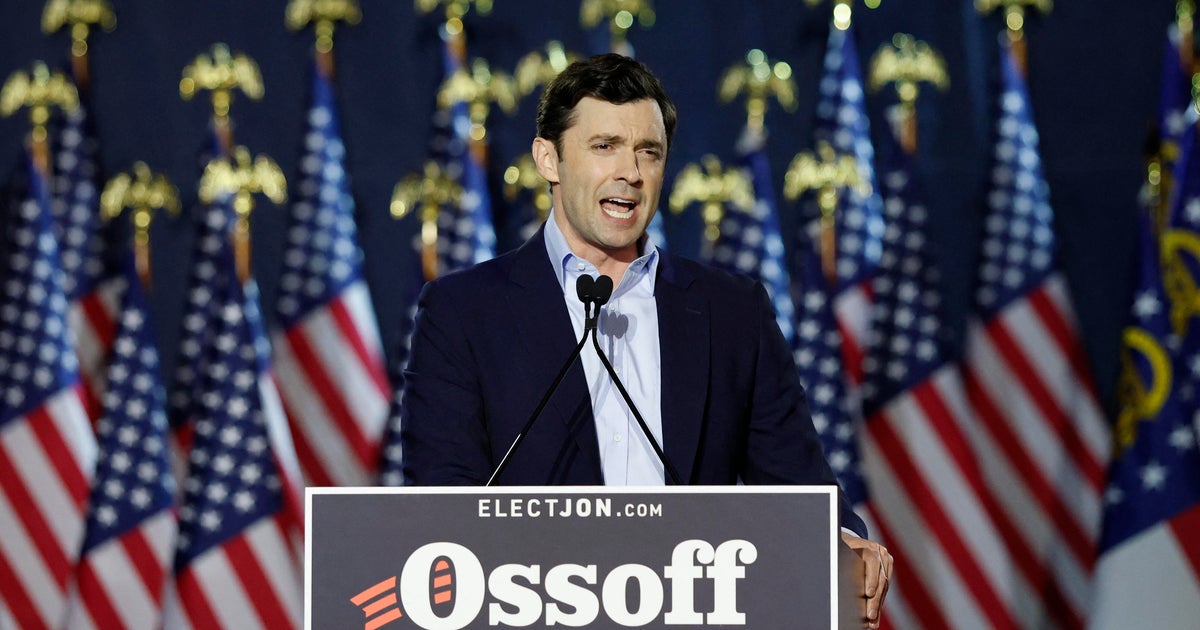
The strength of Ossoff’s coalition lies in its breadth. According to recent exit polling, the Senator’s ability to split the 45-and-older vote—a group that often leans Republican—was pivotal. By securing 85% of voters under the age of 29, he maintained the necessary energy from the party’s base while simultaneously peeling off moderate conservatives who were wary of recent GOP rhetoric.
The gains among Latino voters in Georgia are particularly noteworthy for national planners. Jerry Gonzalez, CEO of the GALEO Impact Fund, attributes this success to a combination of economic anxiety and Ossoff’s proactive oversight of immigration facilities. "Things are really expensive," Gonzalez noted. "The price and affordability were a big driving issue." By addressing these tangible, pocketbook concerns alongside systemic issues, Ossoff created a platform that felt relevant to the daily lives of his constituents rather than purely partisan.
National Implications for the 2028 Primary
The Democratic National Committee (DNC) has significantly altered its early primary calendar to reflect the growing influence of Black and Latino voters. With states like South Carolina, Nevada, and New Mexico occupying the lead spots, the strategic map has shifted away from the traditional dominance of Iowa and New Hampshire.
This new calendar plays directly into the strengths of a candidate with Ossoff’s demographic appeal. With over 4.2 million Latino voters residing in the first six states of the new primary lineup, Ossoff would, in theory, be perfectly positioned to capitalize on his proven ability to mobilize this critical constituency.
However, the field is already crowded. Early polling from Emerson College shows Ossoff polling at 17%, narrowly edging out figures like Kamala Harris and Alexandria Ocasio-Cortez. While these numbers are largely speculative, they indicate that there is a significant appetite within the party for a "fresh face" who can demonstrate results in hostile or neutral territory.
Official Responses and Future Outlook
While Senator Ossoff has consistently maintained that he has "zero interest" in a White House run, political insiders suggest that the sheer scale of his victory has changed the environment. The "latitude to think about it more seriously," as described by Jerry Gonzalez, is a sentiment shared by many in the donor class who are weary of the instability of the current political cycle.
As the party looks toward 2028, the central task will be to prevent the GOP from reassembling the coalition that brought Donald Trump to power in 2024. If the Democrats choose to run a candidate who mirrors the ideological profile of the national party, they risk losing the very voters who moved back toward the center in 2026. If, however, they choose to lean into the "Ossoff model"—prioritizing regional appeal and a broad-based, pragmatic platform—they may find a viable path to the White House.
For now, Ossoff remains in the Senate, focused on his legislative agenda. Whether this is the beginning of a long-term national campaign or merely a successful tenure as a state representative remains to be seen. What is clear, however, is that the Georgia Senate seat has become the most important laboratory for the future of the Democratic Party. The coming months will likely see increased scrutiny of his legislative votes and his ability to maintain his current coalition, providing a clearer picture of whether he will remain a regional powerhouse or eventually ascend to the national stage.

