
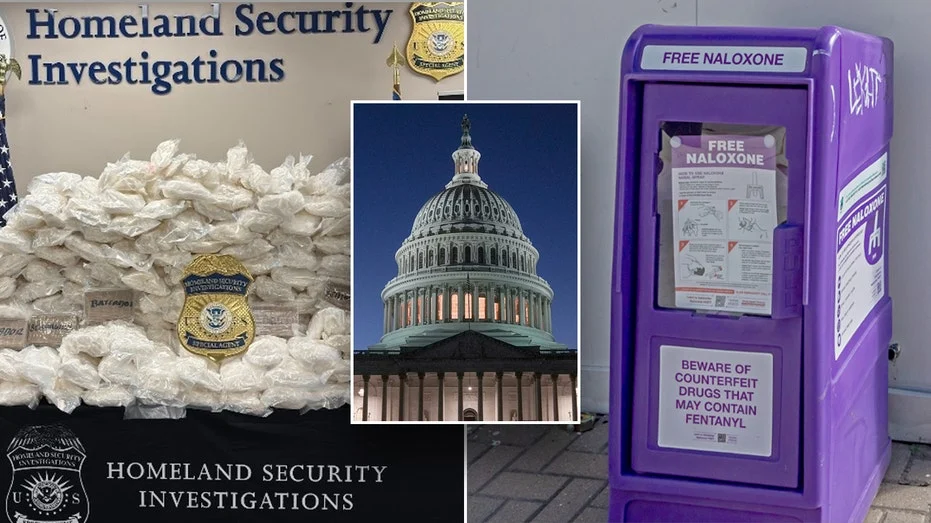
WASHINGTON — The United States is approaching the ongoing synthetic opioid epidemic entirely backward, according to industry leadership, by relying almost exclusively on reactive measures rather than proactive immunization. In a recent interview, ARMR Sciences CEO Collin Gage asserted that the conventional public health and law enforcement paradigms—which focus heavily on reversing overdoses with agents like naloxone after they have already begun—fail to stop the mounting death toll at its source. Instead, Gage and his firm are advocating for a fundamental overhaul of national drug strategy, centering on an experimental fentanyl vaccine designed to act as a preventative biological shield in the human bloodstream.
The debate over how to combat synthetic opioids comes at a time when federal agencies, local law enforcement, and health officials continue to grapple with record numbers of overdose fatalities driven by illicit fentanyl, carfentanil, nitazenes, and other potent analogs. As lawmakers in Washington navigate shifting political landscapes and evaluate new counter-narcotics proposals, biotech innovators are pushing for federal recognition of synthetic drugs not merely as traditional narcotics, but as distinct biological threats requiring advanced biodefense solutions.
Shifting the Treatment Paradigm from Reaction to Prevention
For decades, the standard response to an opioid overdose has relied on emergency interventions administered after exposure has occurred. While medications such as naloxone have saved countless lives by temporarily reversing respiratory depression during an overdose crisis, public health advocates argue that this approach treats only the symptom rather than addressing the underlying disease of substance use disorder.

Gage contends that true resolution of the crisis requires looking at addiction and poisoning through the lens of traditional preventative medicine. Much like inoculations against infectious diseases, a preventative therapeutic could fundamentally alter the risk profile for individuals vulnerable to exposure, whether through accidental ingestion, occupational hazard, or substance use disorder.
"If you look at the overdose crisis like any other health crisis, really as a disease, you’ll know the best way to treat a crisis is by preventing it altogether," Gage explained. "We need to completely overhaul the treatment paradigm and focus on preventing these deaths with new innovative therapeutics, rather than continuing the same approach that historically has led to tens of thousands of deaths, hundreds of thousands of deaths over the last several years."
By introducing a therapeutic that blocks synthetic molecules from binding to opioid receptors in the brain, developers hope to neutralize the drug before it can cause fatal central nervous system depression. This biological approach functions similarly to a molecular filter or a "bulletproof vest" in the bloodstream, intercepting illicit substances before they can inflict biological harm.
Synthetic Drugs as a Unique Biothreat
The characterization of illicit fentanyl and its chemical variants has increasingly intersected with national security discussions. Federal administrations have previously weighed classifying high-potency synthetic opioids under broader national security frameworks, mirroring strategies traditionally reserved for weapons of mass destruction.

Gage highlighted the designation of illicit fentanyl as a critical turning point for shifting federal agencies toward a biodefense posture. However, he emphasized that emerging synthetic threats possess unique characteristics that differentiate them from classical chemical warfare agents like sarin gas or biological agents like anthrax. While traditional agents often require sophisticated state-level laboratory infrastructure and specialized handling to produce and disseminate, pharmaceutical-based synthetic opioids can be rapidly synthesized, modified, and distributed globally via the dark web and international supply chains.
This accessibility has fueled a decentralized and shifting market of chemical analogs. Substances such as carfentanil—a tranquilizer thousands of times more potent than morphine—alongside emerging nitazenes and medetomidine combinations, present continuous challenges for border security, forensic laboratories, and frontline emergency personnel. Law enforcement agencies nationwide frequently report hazardous encounters where first responders fall ill merely from secondary exposure to airborne or skin-contact residues during routine searches and seizures, underscoring the urgent need for personal protective measures that extend beyond physical gear.
Inside the Clinical Pipeline: How the Fentanyl Vaccine Works
ARMR Sciences is currently navigating the early stages of clinical evaluation, with Phase 1 and Phase 2 trials underway to assess the safety, pharmacokinetics, and efficacy of its experimental vaccine candidate. The primary objective of these trials is to determine how effectively the therapeutic can stimulate the immune system to generate specific antibodies that bind to fentanyl molecules in the bloodstream.
When a vaccinated individual is exposed to fentanyl, these circulating antibodies selectively recognize and trap the drug molecules, preventing them from crossing the blood-brain barrier. Because the molecular complex is too large to enter the brain and activate opioid receptors, the user does not experience the euphoric high or the life-threatening respiratory depression characteristic of an overdose.

Developers note that this mechanism is designed to complement existing comprehensive treatment models rather than replace them. While initial target populations for such therapeutics may include high-risk groups such as military personnel, law enforcement officers, and emergency medical technicians operating in high-exposure environments, clinical researchers foresee broader eventual applications for individuals undergoing rehabilitation for substance use disorder, providing a biological safeguard against relapse-related fatalities.
Addressing Safety, Transparency, and Ingredients
As biotechnology companies seek federal clearance and public trust for novel interventions, scrutiny over product safety and formulation transparency has intensified. Public health discourse has increasingly focused on the elimination of unnecessary additives, heavy metals, and potential toxins from medical products—a priority championed by federal health officials and regulatory leaders.
In alignment with these growing transparency standards, ARMR Sciences has taken the unusual step of publishing its full product formulation publicly. Company leadership emphasizes that the vaccine design deliberately excludes heavy metals and unverified adjuvants, reflecting a broader cultural shift toward rigorous ingredient scrutiny within the pharmaceutical and health sectors.
Furthermore, proponents of the technology argue that destigmatizing the conversation around synthetic drug mitigation is vital for bipartisan cooperation. Lawmakers from across the political spectrum have increasingly acknowledged that the synthetic opioid crisis transcends geographic, racial, and socioeconomic boundaries, affecting urban centers, suburban communities, and rural counties alike.

The Personal Stakes and the Path Forward for Congress
For many leaders within the biotechnology and advocacy sectors, the push to reform addiction medicine and adopt preventative biodefense strategies is driven by personal experience. Gage has noted that his advocacy is deeply rooted in family history, having witnessed close relatives struggle with substance use disorders and experiencing the loss of personal acquaintances to preventable overdoses.
"Passion is born from internal suffering," Gage remarked, emphasizing the human cost of the crisis. "No family should look over and see an empty chair at the dinner table. No kid should be hiding in their room because they’re scared if a parent is suffering from an addiction issue. I want to prevent that happening from any American across the country."
As a new congressional session prepares to convene in Washington, policy experts expect synthetic drug policy, border interdiction, and healthcare innovation to remain prominent legislative priorities. Proponents of preventative biotechnology are urging lawmakers to approach the issue as a unified, non-partisan imperative—dubbed by advocates as a "red, white and blue" priority—focused on expanding the toolkit available to public health systems.
While clinical trials remain ongoing and regulatory approvals will require extensive safety and efficacy data before any wide-scale deployment, the debate signals a potential turning point in how the United States envisions the future of addiction medicine. By moving beyond a strictly reactive posture and exploring active immunological defense, researchers hope to establish a durable framework capable of turning the tide against the most lethal drug crisis in modern American history.

For individuals or families seeking confidential support regarding substance use concerns, resources remain available nationwide. The Substance Abuse and Mental Health Services Administration (SAMHSA) operates a free, confidential, 24/7 National Helpline at 1-800-662-4357.

