

The 2026 midterm elections in Texas marked a historic pivot in the state’s political landscape, culminating in a Democratic sweep of every statewide office. Among the most consequential outcomes was the election of Jon Rosenthal to the Texas Railroad Commission (RRC), a powerful regulatory body that has been under exclusive Republican control since 1990. Rosenthal’s victory, achieved in a race against Republican Bo French, signals a potential, albeit measured, shift in how the Lone Star State oversees its massive oil and gas sector. While Rosenthal enters the commission as a minority voice against two Republican incumbents, his election brings a new emphasis on administrative transparency, budget expansion, and environmental accountability to an agency long characterized by its industry-friendly approach.
The Texas Railroad Commission, despite its name, has not regulated rail travel for decades; instead, it serves as the primary arbiter of the state’s energy production. Given that Texas produces nearly half of the United States’ crude oil, the RRC is arguably the most influential state-level energy regulator in the country. The agency’s operations—which include the permitting of wells, the management of pipeline safety, and the oversight of environmental compliance—carry national significance. Historically, the commission has operated with a deregulatory philosophy, often mirroring the interests of the energy companies that contribute heavily to the campaigns of its commissioners.
A Chronology of the 2026 Campaign
The path to Rosenthal’s election was paved by both shifting political tides and the self-inflicted struggles of his opponent. Bo French, a former Tarrant County Republican Party chair, saw his candidacy collapse under the weight of national scrutiny regarding his public conduct. In September 2026, French faced widespread bipartisan condemnation for a racist social media post targeting South Asian students at a University of Texas football game. This incident followed revelations of previous inflammatory rhetoric, including a 2025 online poll where French questioned whether “Jews” or “Muslims” posed a greater threat to the United States.
As prominent Republican figures distanced themselves from French’s rhetoric, momentum shifted toward Rosenthal. Rosenthal, a mechanical engineer with over 25 years of experience in the oil and gas industry and a veteran of the Texas House of Representatives, positioned himself as a pragmatic moderate. He coined the phrase “drill, baby, drill Democrat,” arguing that the state’s economic vitality and environmental stewardship are not mutually exclusive. His campaign focused on the necessity of professionalizing the commission, increasing public access to regulatory proceedings, and tackling the growing crisis of orphaned wells.
Data-Driven Challenges: The Orphaned Well Crisis
One of the most pressing issues facing the commission is the proliferation of orphaned and “zombie” wells. According to data from the Energy Information Administration (EIA) and various environmental monitoring groups, thousands of abandoned wells across Texas are leaking methane—a greenhouse gas with a global warming potential significantly higher than carbon dioxide over a 20-year horizon.

While the RRC set a record by plugging over 2,000 orphaned wells in the 2025–2026 fiscal year, the rate of abandonment continues to outpace the rate of remediation. This trend is driven by the economic reality of low-producing wells, which are often left behind by companies when they become unprofitable. Rosenthal has proposed a dramatic increase in the commission’s biennial budget, suggesting a jump from the current $500 million to $1 billion. He argues that this infusion of capital is essential to "turbo-charge" plugging operations and move toward a more proactive regulatory posture that prevents wells from being abandoned in the first place.
The Dynamics of a Three-Member Commission
Rosenthal joins a board currently composed of Wayne Christian and Christi Craddick. The commission has recently moved to insulate itself from public scrutiny, most notably through an August 2026 policy change that eliminated the guarantee of public comment periods at monthly meetings. This shift, championed by Christian, requires a specific request from a commissioner for public testimony to be placed on the agenda.
Christian’s tenure has been marked by a confrontational style, including his absence from legislative hearings meant to address the agency’s transparency and his use of profanity when addressing critics from watchdog organizations like Commission Shift. Conversely, Craddick has occasionally diverged from the commission’s hardline stance. Analysts suggest that Rosenthal may find common ground with Craddick on procedural matters, potentially creating a new voting bloc that could force the commission to adopt more open-meeting standards.
Virginia Palacios, executive director of Commission Shift, notes that while the election of a single Democrat will not result in a total reversal of the RRC’s deregulatory history, it provides a crucial platform for reform. “It is a possibility that if we have someone like Jon Rosenthal, who ran his campaign on the idea that open meetings should be open, you could potentially have two commissioners that would vote for an open public meeting policy,” Palacios stated.
Legislative Influence and Future Outlook
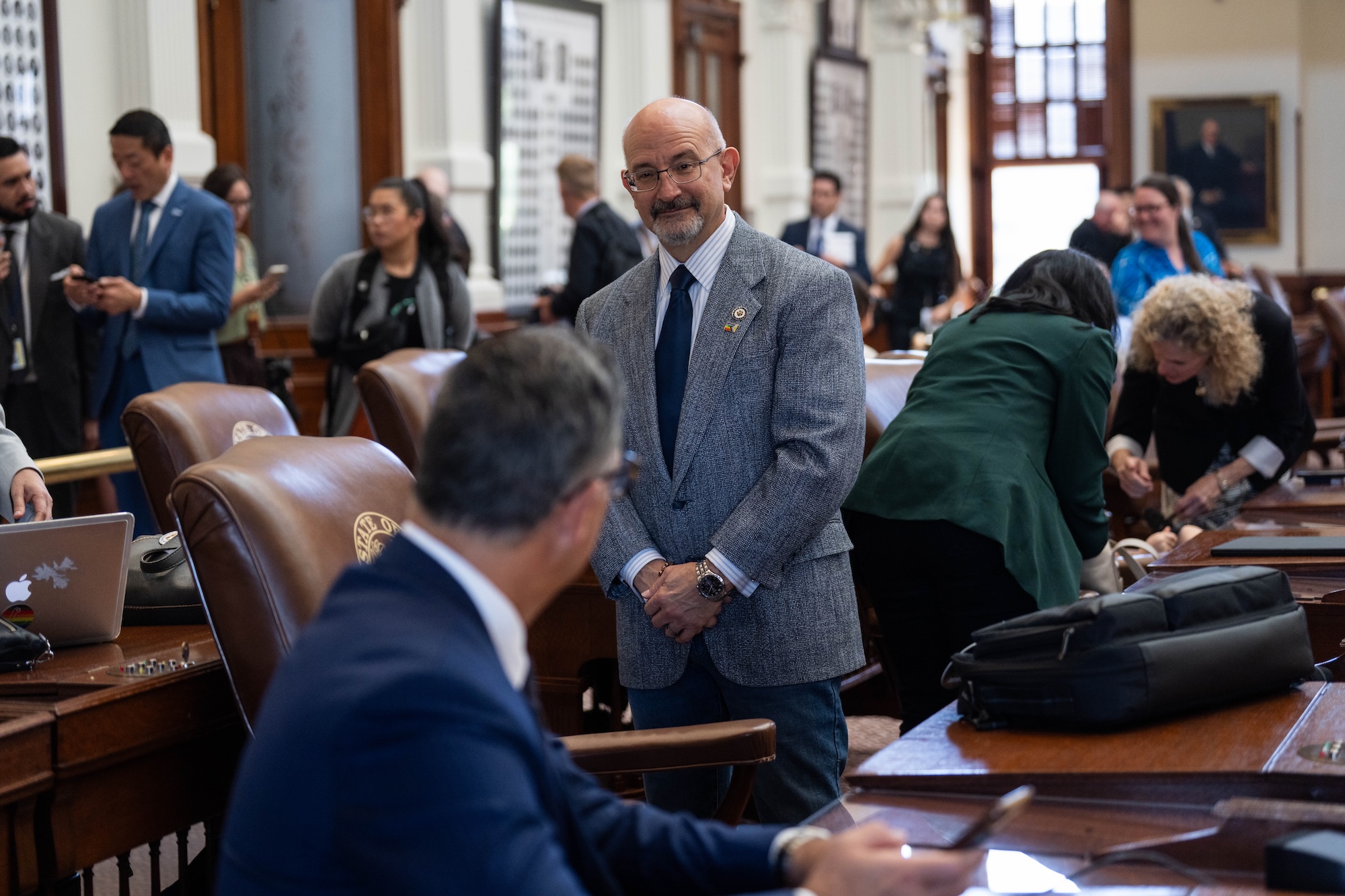
Rosenthal’s most significant asset may be his legislative experience. Unlike previous commissioners who functioned largely as independent executives, Rosenthal maintains strong ties to the Texas Legislature. As the state moves into a session with a newly empowered Democratic presence in the House, Rosenthal is uniquely positioned to lobby for his budget proposals.
Governor-elect Gina Hinojosa and the new legislative majority have yet to formalize their stance on the RRC’s funding. However, Rosenthal remains optimistic about his ability to navigate the political landscape in Austin. “In this new environment, I might be one of the Railroad Commission’s more valuable players,” Rosenthal said during a post-election press conference. “Because some of the lobbyists or agency personnel are not used to walking into a Legislature controlled by the Democrats. I know how to talk to Democrats because I am one. And it will be my job to help educate my former colleagues about how important this is.”
Broader Implications for Energy Policy
The election of Rosenthal carries implications that extend beyond the borders of Texas. As a major energy exporter, Texas’s regulatory decisions influence the national energy transition and the pace at which the industry addresses infrastructure leaks and environmental degradation. The RRC’s historical refusal to acknowledge the full scope of its environmental mandate has been a point of contention for years. By advocating for regional community liaisons and more frequent public meetings, Rosenthal is attempting to change the culture of an agency that many critics describe as “captured” by the industry it oversees.
Furthermore, the focus on methane emissions from orphaned wells aligns with broader federal initiatives, such as the U.S. EPA’s methane reduction programs. A more cooperative relationship between the RRC and federal agencies could accelerate the deployment of technology to detect and seal leaks. However, the success of these initiatives will depend heavily on whether the Texas Legislature supports the necessary funding, and whether the commission’s internal dynamics allow for a pivot toward more robust oversight.
As Rosenthal prepares to take office, the energy industry and environmental groups alike are watching closely. The transformation of the RRC from a purely rubber-stamp body into one where dissenting views are heard and public accountability is debated represents a significant evolution in Texas politics. While the “drill, baby, drill” Democrat may not satisfy those seeking an immediate cessation of fossil fuel extraction, his focus on the mechanics of regulation—transparency, funding, and maintenance—may prove to be the most effective strategy for managing the legacy of Texas’s long-standing energy boom.
The coming months will serve as a test of this new political reality. If Rosenthal can successfully bridge the gap between industry interests and the public demand for environmental protection, he may serve as a blueprint for how state-level regulators can operate in an era of heightened political polarization and climate urgency. The RRC, often relegated to the background of state politics, is poised to become a central arena for the next phase of the energy debate in Texas.

