
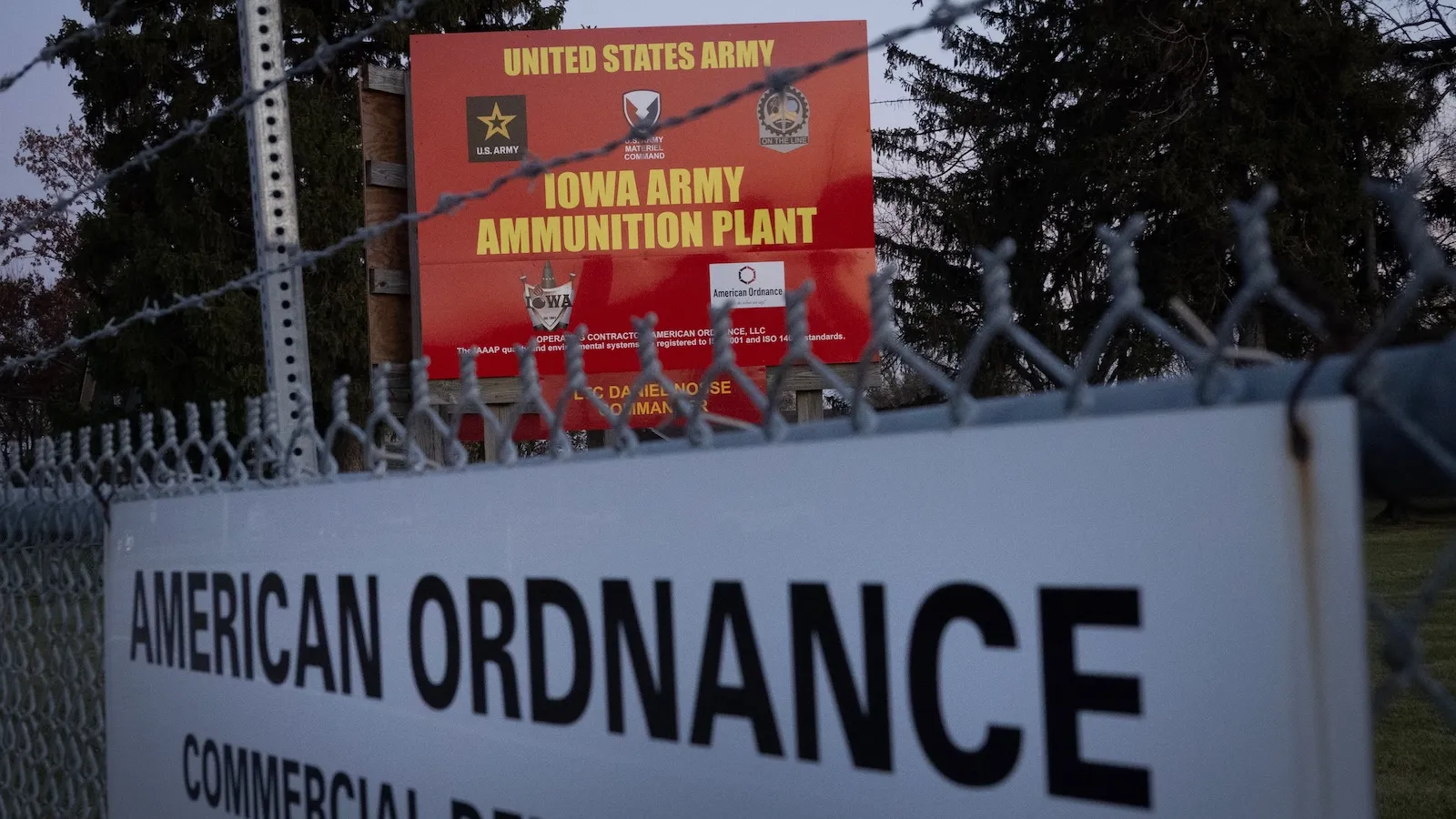
After months of intense public anxiety, political friction, and a flurry of last-minute legal maneuvers, the U.S. Army successfully completed the controlled destruction of approximately 9,700 pounds of degraded lead azide at the Iowa Army Ammunition Plant in Middletown, Iowa. The operation, which took place on a crisp Wednesday morning, concluded in a matter of seconds, producing two distinct booms and wispy white plumes that dissipated rapidly into the winter sky. While the detonation itself was visually unremarkable, it marked the climax of a significant environmental and public safety controversy that drew national scrutiny and mobilized hundreds of federal personnel.
A Chronology of the Crisis
The situation began in March, when routine inspections at the sprawling military facility—a site with a long, complex history of munitions production—revealed that 68 drums of lead azide had reached a dangerous state of decay. Lead azide is a potent primary explosive, a chemical compound used as a detonator to initiate larger, more stable explosive charges. Over time, the material had undergone a process of crystallization, rendering it hypersensitive to the slightest environmental stressors, including vibration, friction, or fluctuations in temperature.
By late spring, the Army’s internal assessment deemed the materials too unstable for transport. Removing the drums from the site posed a significant risk of a spontaneous, uncontrolled detonation. Consequently, the Army, in consultation with the Environmental Protection Agency (EPA) and the Bureau of Alcohol, Tobacco, and Firearms (ATF), formulated a plan to neutralize the threat through an on-site controlled detonation.
The public phase of the operation began in earnest in the fall. On November 16, the EPA issued an emergency permit authorizing the blast. However, the plan met immediate resistance from local communities, environmental advocacy groups, and elected officials who feared that the destruction of nearly five tons of lead-based explosive would release toxic dust over neighboring homes, farmland, and the Mississippi River watershed.
The conflict escalated into the courtroom, where environmental organizations, including Earthjustice, filed suit to block the detonation, arguing that the Army had failed to adequately assess the long-term health risks to the surrounding population. A federal appeals court ultimately cleared the path for the operation on November 23, lifting an administrative stay and allowing the Army to proceed.
The Scope of the Operation
The scale of the detonation was unprecedented for the facility. While the Army frequently manages the disposal of munitions, the quantity of lead azide involved in this operation—nearly 9,700 pounds—pushed the boundaries of standard disposal procedures.
To mitigate risks, the EPA mobilized a massive response effort. Approximately 300 employees and contractors were deployed to the Middletown area. Before the detonation, the team established an extensive baseline of environmental data, collecting over 1,200 samples of air, soil, dust, and water. This data was intended to provide a "before and after" snapshot of the local environment, allowing officials to determine whether the blast resulted in any significant deposition of lead particles.
The detonation occurred at approximately 9 a.m. on Wednesday. In the hour following the blast, the EPA’s real-time air monitoring network, which had been positioned in a strategic radius around the plant, reported zero detection of airborne lead. This initial data provided a sigh of relief for regional authorities, though officials cautioned that the absence of immediate airborne contaminants does not equate to a total absence of environmental impact.
The Chemical Threat: Why Lead Azide Matters
The concern surrounding lead azide is rooted in the inherent properties of lead itself. Unlike organic compounds that break down into less harmful components over time, lead is an element. It is persistent, bioaccumulative, and highly toxic to human biology.
"Lead is an element, and it doesn’t break down," noted Robert Hirschfeld, director of water policy at the Prairie River Network. "Those health risks persist as long as the lead does."
From a physiological perspective, lead is a potent neurotoxin. There is no known "safe" level of lead exposure, particularly for vulnerable populations such as children and pregnant women. Exposure to lead particles—whether through inhalation of dust or ingestion of contaminated water or food—is linked to severe cognitive impairment, developmental delays, central nervous system damage, and cardiovascular issues. Because the lead azide was in a powder-like, crystalline state, the primary fear was that the force of the detonation would aerosolize the material, allowing it to travel miles downwind and settle on residential properties and agricultural fields.
Agricultural Implications and Food Safety
The geographic footprint of the potential fallout zone included approximately 350 farms. The U.S. Department of Agriculture (USDA) and the Iowa Department of Agriculture issued guidance to regional farmers ahead of the blast, recommending that livestock be sheltered indoors and that hay and water sources be covered to prevent contamination from potential settling dust.
The long-term impact on the food supply remains a subject of ongoing analysis. State agricultural officials are now working with producers to conduct systematic testing of soil and forage. The goal is to identify any areas where lead deposition occurred and ensure that no contaminated agricultural products enter the commercial supply chain. Farmers have been urged to remain vigilant and report any signs of lead poisoning in livestock, which can include neurological symptoms, weight loss, and reduced milk production in dairy herds.
Official Responses and Political Fallout
The operation served as a flashpoint for political tension between federal authorities and state leadership. Iowa Governor Kim Reynolds and Governor-elect Rob Sand, among other high-ranking officials, had publicly called for a delay, citing concerns over a lack of transparency and the potential for long-term public health consequences.
The Army maintained throughout the process that the detonation was a necessary evil. According to experts like Greg Domski, an associate provost and professor of chemistry and biochemistry at Augustana College, the stability of the aged lead azide had reached a critical threshold. "The lead azide has aged. It’s become unstable to the point where moving it or even allowing it to sit… could lead to a spontaneous explosion," Domski explained. In this context, the Army argued that a controlled, planned detonation was significantly safer than the risk of an unpredictable accident occurring in an unmanaged fashion.
Moving Forward: Monitoring and Remediation
While the primary detonation phase has concluded, the work of the EPA and the Army is far from over. The focus has shifted from pre-blast monitoring to post-blast environmental auditing. Teams are currently scouring the area in the projected path of the plume to collect samples of soil and surface water.
This phase is critical for determining if and where lead particles were deposited. If the testing reveals concentrations of lead above established safety thresholds, the Army will be tasked with a comprehensive cleanup effort. This may involve the removal of topsoil or the remediation of affected water sources, a process that could span months or even years.
For the residents of Middletown and the surrounding communities, the immediate threat of a catastrophic explosion has been mitigated. However, the underlying anxiety regarding potential long-term exposure to heavy metals remains. As the data from the post-blast samples begins to emerge, the transparency of the Army and the EPA will be essential in maintaining public trust.
The incident at the Iowa Army Ammunition Plant serves as a stark reminder of the legacy of military infrastructure. As the Department of Defense continues to manage and dispose of aging munitions across the United States, the Middletown operation will likely serve as a case study for future disposal projects. It highlights the delicate balance between the urgent necessity of neutralizing unstable ordnance and the obligation to protect the health and safety of the civilian populations that live in the shadows of these industrial-military sites.
For now, the air remains clear, the monitoring stations continue to transmit data, and the communities surrounding the plant are waiting for the final word on the safety of their homes and their harvest. The operation is over, but the environmental assessment has only just begun.

