
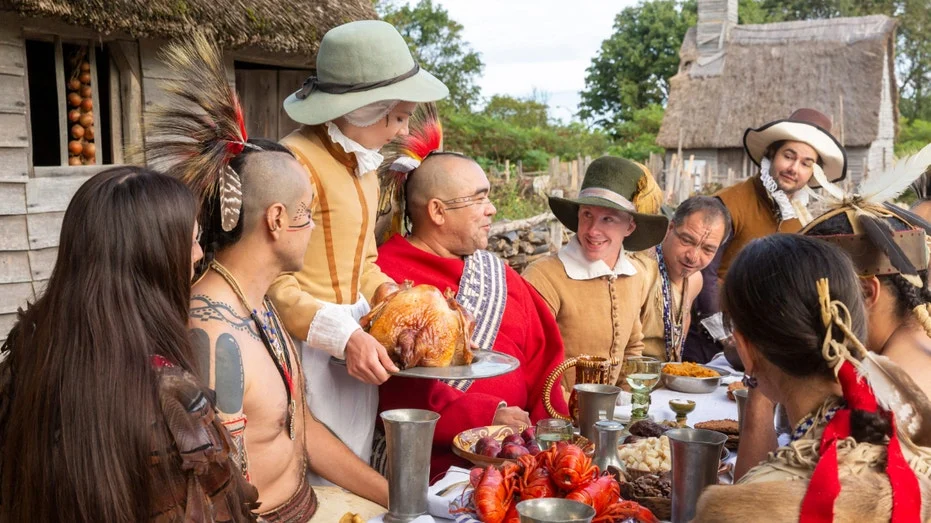
For decades, Thanksgiving has served as a cornerstone of American culture, traditionally observed as a day for familial gathering, gratitude, and the commemoration of the 1621 harvest meal shared between the Wampanoag people and the English colonists at Plymouth. However, in recent years, this narrative has faced mounting scrutiny within American educational institutions. From elite universities to local K-12 school districts, a growing movement is challenging the traditional celebration, characterizing it instead as a "National Day of Mourning" and an occasion to highlight the historical traumas of settler colonialism.
This cultural shift has manifested through a series of campus events, revised curricula, and administrative statements that aim to provide an "intersectional lens" on the holiday. While supporters argue these initiatives foster inclusivity and historical accuracy, critics contend they represent an ideological departure from American traditions and a revisionist approach to the nation’s history.
A Growing Trend on University Campuses
The movement to re-evaluate Thanksgiving has gained significant momentum on higher education campuses across the United States. Throughout November—which also coincides with Native American Heritage Month—universities have organized programs designed to move students away from the conventional celebratory narrative.
On November 18, George Washington University held a seminar titled "Breaking Bread: The Cost of Celebration." The event was structured to encourage students to analyze Thanksgiving, alongside other holidays like Independence Day and Christmas, through a framework of "belonging, exclusion, cultural erasure, and historical harm." According to the university’s event description, the initiative sought to facilitate dialogue regarding "historical memory, social responsibility, and the complexities of celebrating within a diverse society."
Similarly, the University of Wisconsin at Milwaukee hosted an "AlterNative Giving" gathering on November 17. Organized by the American Indian Student Center and the Electa Quinney Institute for American Indian Education, the event served as a direct counter-programming effort. Organizers explicitly stated the goal was to offer an alternative to traditional narratives, focusing instead on "Indigenous ways of knowing, being, and giving" rather than the colonial history often associated with the holiday.
Salem State University has gone further by explicitly labeling the holiday as a "National Day of Mourning" in official communications. The institution’s website includes a formal land acknowledgment, detailing that the university sits on the ancestral homeland of the Massachusett tribe. The statement acknowledges the "genocide and forced removal" of these people, framing the land as "stolen" and prompting a re-evaluation of the holiday’s celebratory nature.
Other institutions, such as Occidental College, have officially characterized the holiday as a "reminder of settler colonialism and its devastating impact on Indigenous individuals, communities and tribes." This sentiment is echoed at the Pratt Institute and the University at Albany, both of which have integrated the "National Day of Mourning" terminology into their academic and student life calendars.
The Shift in K-12 Education
The re-examination of Thanksgiving is not confined to the collegiate level; it has increasingly permeated K-12 classrooms. In Loudoun County, Virginia, parents have voiced concerns over lesson plans that present the holiday through a lens of systemic injustice. These curricula often prioritize the perspectives of Indigenous groups who view the holiday as a commemoration of the beginning of their displacement.
The San Diego County Office of Education has issued guidance acknowledging the holiday’s conflicting meanings. Their official messaging highlights that while Thanksgiving is a time for many families, it carries "very different meanings" for Native communities. Furthermore, school districts like Oregon’s Bethel School District have incorporated resources such as "Decolonizing Thanksgiving: A Toolkit for Combatting Racism in Schools" into their official equity and inclusion platforms. These materials are intended to provide teachers with frameworks to discuss the holiday in ways that emphasize historical grievances.
Historical Context and the Origins of the "Day of Mourning"
To understand the current discourse, it is necessary to examine the origins of the "National Day of Mourning." The concept was established in 1970 by the United American Indians of New England (UAINE). The protest was initiated by Wamsutta Frank James, a Wampanoag activist, who was invited to speak at a 350th-anniversary dinner commemorating the landing of the Pilgrims. After organizers reviewed his speech and found it insufficiently celebratory, they asked him to change his remarks. James refused, and in response, he and other activists gathered on Cole’s Hill in Plymouth, Massachusetts, to hold a protest instead.
Since that inaugural event, the National Day of Mourning has become an annual tradition, occurring every Thanksgiving. It serves as a stark reminder of the long-standing tensions surrounding the holiday. While the movement remained a niche protest for decades, the current trend reflects its integration into mainstream institutional policies, driven by a broader national focus on Diversity, Equity, and Inclusion (DEI) initiatives.
Implications and Public Debate
The integration of these perspectives into public education has sparked a contentious debate regarding the role of universities and schools in shaping national identity.
Supporters of the "decolonization" approach argue that education should prioritize the voices of marginalized groups, asserting that history is often taught through a biased, triumphalist lens. They contend that by acknowledging the darker chapters of American history—including the impact of disease, warfare, and forced displacement on Indigenous populations—students develop a more mature and empathetic understanding of the country’s origins.
Conversely, critics, including various advocacy groups and parents, argue that these initiatives promote a cynical, divisive view of American history. They express concern that focusing exclusively on "settler colonialism" ignores the cultural significance of the holiday for the vast majority of Americans, who view it as a secular day for gratitude and family cohesion. There is also a concern among some educators that such narratives can alienate students from their own heritage and foster resentment rather than critical inquiry.
The Role of Institutional DEI
The rise of these programs coincides with a broader national debate over the efficacy and ideological leanings of DEI departments in higher education. Critics argue that these departments often push a singular political agenda, labeling it "institutional bias." Legislative efforts in several states, including recent attempts to restrict or eliminate state-funded DEI programs, are a direct response to the perception that universities are prioritizing social activism over academic neutrality.
Observers note that the "decolonization" of holidays like Thanksgiving is often a byproduct of a specific administrative culture that views the American founding through a critical theory lens. As these concepts move from academic seminars into official student programming and K-12 curricula, the potential for social friction increases.
Future Outlook
As the United States approaches future holiday seasons, it is likely that the divide over the meaning of Thanksgiving will continue to widen. While many families will continue to observe the holiday in traditional ways, the institutional messaging within the classroom and the campus quad is undergoing a fundamental transformation.
For educational institutions, the challenge lies in balancing the mandate to provide comprehensive, inclusive history with the responsibility of serving a diverse public that holds varying views on national traditions. Whether these initiatives lead to a deeper understanding of American history or further exacerbate cultural polarization remains a subject of ongoing concern for administrators, parents, and policy-makers alike.
Ultimately, the evolving discourse around Thanksgiving reflects a larger, unresolved question about how a pluralistic society reconciles its complex history with its shared traditions. As the landscape of American education continues to adapt to shifting cultural priorities, the debate over whether to celebrate or mourn on the fourth Thursday of November is set to remain a fixture of the national conversation for the foreseeable future.

